Spiritual enlightenment: powerful teachings from Robert Adams

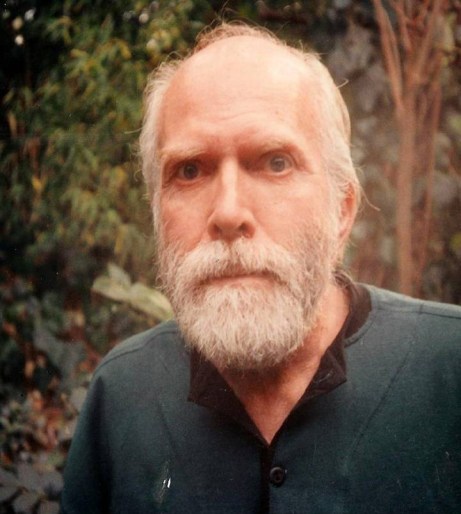
Robert_Adams.jpg

Robert Adams (1928-1997), who I think I can rightly call a devotee of Ramana Maharshi, taught in his later years in the USA. From what I’ve read of his teachings, they are incredibly similar to the verbal teachings of Ramana Maharshi, and also have a sense of openness, precision and clarity.

I’ve trawled through a few of his writings and put together some excerpts that I hope will be of benefit to the seeker of spiritual enlightenment. This is not meant to represent the complete scope of Robert Adam’s teachings, but just to highlight some key points that leapt out to me as I read through. I particularly concentrated on the role of thought in Robert Adam’s teachings.

I have bolded some phrases that seemed important to me and also interspersed some very brief comments in red. Again, I hope this is of benefit to you.


Firstly, some teachings about ‘no thoughts’, which will be expanded upon later on. In the initial quotes Robert says ‘no thoughts’, but in the later quotes he explains exactly what this means.


Sitting here quietly, peaceful, without thoughts then you are the unblemished Self. The ultimate reality, this is you right now. As soon as you start thinking about it, it goes away, it changes, it’s not you any longer, it’s your humanhood. So when I say to adore your Self I am referring to adoring yourself as God, as the ultimate reality which is really you. But if you think of yourself as a human being with problems who makes mistakes you cannot adore yourself at all. You condemn yourself you put yourself down.


Liberation means that you’re totally and completely free, without thoughts. There are no thoughts in the Self. If there were thoughts in the Self, it wouldn’t be the Self. For the Self is only one and all-pervading. When you become absorbed in the Self, it’s completely different than what you ever believed. It’s not explainable. But as far as you’re concerned, you become totally free, happy, peaceful. There is no longer anyone to argue with or become upset over. This is the Self.


It’s very simple, no thoughts and you’re free.


Now a bit about a method of creating a state in which there are no thoughts:

See what you’re doing now. You’re thinking. That spoils it. Learn to stay without thought. Even if for a few seconds. It’s hard isn’t it. This is the reason you have to ask yourself, “To whom do these thoughts come?” It’s only a modality to cause you to stop thinking. (slight pause)

Some of you are beginning to feel what I’m talking about. No thoughts. Nothing to remember. Nothing to do. When thoughts come to you about your affairs, about your predicament, realize that you have surrendered your affairs and your predicament to the Self and all is well.

In other words there should be no situation that appears strong enough to set you off. Feeling miserable or feeling too happy. No thing should have that power. It’s called the thoughtless state.

It’s really not that hard. Let go. Close your eyes, it’ll help. If you have to do something, observe your breath. But if you can’t, forget about your breath. After all, to whom does the breath come? To the body. Since there is no body there is no breath. Then what is? I-am. What is I-am? Silence. Open your heart, let go. There is no past, no future. No thing can ever harm you. You exist in eternity. Be still. The breath does not exist any longer. There never was a body.

There is only that. Silence.


Your job is to stop thinking. To remove the thoughts. The thoughts are your Master now. That make you feel sad or happy, good or bad. Why do you feel this way? For your thoughts since you were a little kid have been impressed by the world conditions, by your parents, by your school, by your church and they have convinced you and programmed you to believe this is good, this is bad, this is right, this is wrong. Only when you have this are you successful. If you don’t have certain things you are a failure. It is the thoughts that tell you these things. Again if there are no thoughts there is noone left to tell you anything. This is called liberation, moksha, freedom. You begin where you are now. You begin with yourself. You question yourself. You inquire, “Who am I?” You sit in the silence. If thoughts come you inquire, “To whom do they come? You become still.”


When the mind is quiet the thoughts subside. When there are no thoughts there is the self. So all these practices are really to quieten the mind, not for any other purpose. No matter what form of sadhana you’re practicing. Whether you’re a Jnana or bhakta or karmic yoga or anything else they’re really the same. All of these practices are simply to quieten the mind. To make the mind one pointed. When the mind becomes one pointed self-inquiry becomes very easy. Then the mind will disappear completely and you’ll be free.


And what about feelings?

Body sensations are the same as thoughts. As you keep inquiring, “Who am I?” And you stay in the space between the answer, between the question. Then the body thoughts become less and less and the thoughts become less and less, they’re the same thing. The feelings and the thoughts are nothing as you practice sel finquiry. You ask, “Who does this come to? It comes to me. I think this. Who am I?” And when you keep still your body sensations will slow down, as well as your thoughts. And soon there will be no body sensations, there will be no thoughts. There will be nothing. So body sensations are the same as thoughts. When one goes the other goes also. You cannot have body sensations without thoughts. There has to be a thought about a body sensation. So when the thoughts dissipate, the body sensations will also dissipate.


Is no-thoughts the same as self-realisation?

The no mind state is when you’ve come from practicing, to the place in the silence. Where there are no thoughts bothering you any longer. You get there through self inquiry. That is the fastest way. But that is not self-realization. Self-realization is when the mind is pulled into the spiritual heart…

…Liberation, moksha, self-realization is when the mind that’s left over in the silence is pulled completely into the spiritual heart. At that time your whole mind, the I dissolves completely and you are free.

So the no mind state is a very high state. It’s the state of bliss. But there is still somebody left to experience the bliss. When the bliss is pulled into the heart there is no one left to experience anything. Therefore you no longer say, “I’m in the no mind state.” At that time there is nothing to say. Can you understand that?


I’m scared. What will happen if I don’t think?

The thoughts and the ego are synonymous. As the thoughts slow down, the ego slows down, and begins to also disappear with the thoughts. When there are no thoughts, there’s no ego. When there’s no ego, there’s nobody left to think. Then the question you will ask is, “How do I function without thinking?” As I mentioned in the beginning, the sage’s thoughts are like a burnt rope. They appear to be real, but they’re not. In other words, your thoughts are not real. They are false. How do you function without thoughts? Very well, thank you.

Many of you still believe you have to have thoughts to function. You think you’ll become a vegetable, but you will be spontaneous without thoughts. You’ll be motivated by the Self. You will know what to do, where to go, whom to speak to, whom not to speak to, much better than you do now, much, much better. Things will happen to you spontaneously. Everything we always talk about is very paradoxical, and the paradox here is, even though you have no thoughts, you will still think about certain things. It has to be done. But there’s absolutely no thinker alive. There’s no thinker. There is no one left to think, yet you still appear to be thinking about certain things, so you can function. It’s similar to what we were discussing on Sunday. People always ask me, “What do you see? Do you see the world?” Of course I see the world. If I didn’t see the world, I wouldn’t be able to function. But I see the world as the Self. In other words, I see the world as images on reality, like in the movies, the images on the screen. I’m able to see the screen and the images at the same time. I see reality and I see the images. So it is with the thoughts, the same thing with the thoughts. You appear to be thinking, but you’re not thinking. This is a very important point to remember. You will think whatever you have to think about, but the thoughts will be dead, like the burnt rope, like the fan with the plug pulled out, but the blades are still spinning, until they stop.


But can we really stop our thoughts? It that actually possible?

Now really, no Sage on this earth or anywhere else really stops the thoughts. As long as you see a body, and you call that body the Sage, there will always be some sort of thinking in that body, some sort of thought. For instance I can be sitting here and I’ll say to myself “when I go home I’m going to eat a dish of ice-cream”. This is a thought. But what happens when I say it and what happens when you say it?

When I say it, when I think it, it is similar to a burned rope. A burned rope may appear to be strong, but when you pick it up, it turns to ashes. It’s burned. There’s nothing there. When you say it, it is like a real rope, not burned. You give it energy, you give it power. Again when the Sage thinks of something, it is like a fan that has been pulled out of the socket. It’s still turning, but there’s no power. The power is dead. The power has been cut off. In other words, the source of a Saint is dead. The source of the Sage has no power, no power whatsoever. This is why it is said, a Sage does not think. A Sage has no thoughts. What it really means is that the Sage’s thoughts are dead.

When the thoughts are dead, you live in ABSOLUTE REALITY. You live in PURE AWARENESS. When the thoughts are dead you live in SAT-CHIT-ANANDA, in NIRVANA. So what do you have to do to also cease thinking, so the thoughts can become dead? You simply do not attach yourself to the thoughts. By not attaching yourself to the thoughts, by not reacting to the thoughts, by not responding to the thoughts, they lose their power and begin to fade away. Yet do not give them any energy. Do not give them any power. Do not say to yourself, I have to stop my thoughts. Do nothing like this. Just slow down, slow down. Let the thoughts do what they may. Allow the thoughts to go their own way. Do nothing with your thoughts. Do not think about them. Do not fight them. And above all, do not try to stop them. You may think this is so difficult, but it’s not.

It’s like when you first wake up, before the thoughts come. You’re still drowsy from sleep. And when the first thoughts come to you, you hardly pay any attention to them. That’s the attitude to have.  


 A different approach to/clarification of the practice – no need to remove thoughts

It has come to my attention that many of you are trying to stop your thoughts, control your thoughts. You cannot really do this. Trying to stop your thoughts, as Ramana Maharshi says, is like a thief becoming a policeman to catch the thief. In other words, the thief that becomes the policeman will not catch the thief, because he is the thief himself.. And so it is with our minds. When we use the mind to stop the thoughts, the mind will not stop the thoughts at all, because the mind wants to go on living.

Stopping the thoughts is annihilating the mind, and the mind does not wish to be annihilated. The mind wants to live on to fill you full of nonsense, superstitions. Therefore we do not try to stop, the thoughts. What do we really do? We do absolutely nothing. There is really nothing you have to do to make the thoughts cease. Always remember when you do things according to the Sadhanas you’ve learned, the spiritual exercise you’ve practice, the meditations, the yoga. This will make you free for a couple of moments, and then the thoughts will come back to you with full force, knocking you over. You cannot stop the mind or control the mind with spiritual practice.

Again you cause the thoughts to cease by doing absolutely nothing. By being your SELF. And all the scriptures we read, unless the mind stops spinning there will be no realization, no liberation. Only when the mind stops, the thoughts cease to be, is there liberation. Yet we use the words “to stop the mind, to stop, the thoughts”. This is sort of a misnomer. For again you have to use the mind to stop the thoughts, and the mind does not want to do this. It does not wish to cease thinking.

Yet by ceasing to think, you do acquire unalloyed happiness, infinite peace, Divine Bliss. When the thoughts do stop, these verities come forward, and you become free. You do not have to watch the thoughts, analyze the thoughts, be the witness to the thoughts, or observe the thoughts in any way whatsoever. All of these symptoms simply make the mind stronger really.


Ignore the thoughts completely, totally, absolutely. Again, do not fight your thoughts. Ignoring your thoughts is not fighting your thoughts. Do not try to change your thoughts. Above all do not try to stop your thoughts.


What is the best way to deal with thoughts?

It makes no difference if the thoughts are good or bad, they’re both impostors. In reality there are no good thoughts, there are no bad thoughts. We’re not trying to replace bad thoughts for good thoughts. We’re trying to LEAVE THE THOUGHTS ALONE. Not to do a thing about them. I want to make this perfectly clear. This is the highest way to handle your thoughts.


Do not be in conflict with your thoughts and the self. When there is no conflict there are no thoughts. Thoughts only appear because there’s conflict. By conflict I mean, you’re worrying about getting rid of your thoughts, you’re doing sadhana, meditation, pranayamas, japa. All of these things cause conflict. For aren’t you saying, “I’m doing these things to become liberated. I’m doing these things to become free.”

The reason there’s a the conflict is because you’re already free and liberated. Therefore when you give yourself the information that you have to do something to become liberated, there is immediately conflict. This is the only problem you have. It is your conflict. And this conflict comes from programming when you were a child, from samskaras, from previous existence, things that you took with you, the habits that are inside of you, that you believe you are.

This is where the conflict comes from. For it tells you, “I’m just a human being, I’m just a frail body. I have to suffer sometimes, sometimes I have to be happy.” This is all a lie. There never was a you that has to suffer. There never was a you that has to be happy.


Thoughts are an optical illusion:

Do not analyze what I am saying. Do not even agree with what I’m saying. Just be open. Open your heart by remaining still, silent. Allow the thoughts to come, do try not to stop them. Do not judge your thoughts, analyze your thoughts, or try to change your thoughts, or try to remove your thoughts. This will put you back in conflict with your thoughts. Do not even observe your thoughts. Do not even be the witness to your thoughts. Why? Because in reality there are no thoughts. The thoughts that you think you’re thinking, are an optical illusion. It is false imagination. Don’t you see? Everything that you’re thinking about is false. There is no thinker and there are no thoughts. So why have you been practicing all these exercises all of your life? It’s like a person in the ocean going in search for water. Awaken. Be free. Be yourself.


I know it’s difficult for some of you to think that you have to do absolutely nothing to become free, because you’re already free.


No thoughts can liberate you

Just the idea of wanting to awaken is a mistake. Just the feeling that I want to become awake, I want to become self-realized, I want to be liberated, is a mistake, for it’s part of the thinking process, and the thinking process can never liberate you. There are no thoughts that can liberate you. There are no emotions or feelings that can liberate you, awaken you, make you free.


Question: So when you say don’t think, you don’t mean stop all your thoughts. You mean stop identifying with the thoughts that are occurring.

R: Yes. Thoughts come before the thinker comes on the picture.

Question : So is there any point where they stop, where the thoughts do stop?

R: The thoughts do stop, yes, and you just act spontaneously. But they appear like thoughts, but they are no longer thoughts. For instance if I think I’m getting up off this chair, the thought had to come to me spontaneously, but that’s the end. So I’m not really thinking about getting off the chair. I just did it.

Q: That’s like the end, the duration, is no longer present. The thought arose, died, there was no concern.

R: That’s right.

Q: There is no separation between the thought and the action.

R: Exactly. It’s all one.

Q: So really what happened is you lost all sense of division like there was separate thought entities. They come, they end, another one comes, it’s just like, right?

R: There’s no beginning and no end.

Q: So actually non-duality is the real thing, even with thoughts, and what appears to appear is the I or the one concerned with the thoughts, and that’s when duality surges up.


Does a Jnani have thoughts?

Question: Robert I have a problem with this thing about thoughts, ultimately thoughts are the manifestation of the Self. I don’t know if I’m wrong but, if that’s the case the thoughts are non-dual per se. Duality comes only when there is somebody who believes they’re the thinker. So thoughts per se like in the case of the Jnani, he has thoughts but there is nobody to think about? I mean that’s the way I see it.

R: The Self is self-contained and the Self really does not manifest thoughts to begin with. Thoughts are an illusion and like you say, the Jnani does have thoughts. But the thoughts of the Jnani can only goes this far and they stop. But they do not bring on any more karma, they do not disturb the Jnani at all. They have no value whatsoever to the Jnani. The thoughts come very lightly, very slowly, they come and they go, they come and they go. There is no permanent thought. But the thoughts do not come from the Self. The Self is the Self. They appear to come from the Self. Just like the world appears, the body appears, the thoughts appear.

Therefore when you follow the I like we said in the beginning and we realize the thoughts and the body is attached to the I, when the I goes everything else goes. Thoughts go and everything goes. So don’t try to really stop your thoughts, get rid of the I that thinks the thoughts. See the difference? Whenever I tell you stop thinking, I mean catch the I that thinks. Find the source of the I that thinks. And the thoughts will stop by themselves.


Question: Robert, in several traditions I see, I think they talk about realization it comes along with the elimination of thoughts. Is that true or is the thinker which is creating that and thoughts are still happening in the Jnani? Of course I believe that thoughts are happening in the Jnani it’s just that he doesn’t identify with them or he doesn’t think? 

R: That’s true. They like bounce off. The thoughts come and disappear at the same time. They come and they’re gone, they come and they’re gone.

Q: That’s right, you don’t dwell on them do you?

R: Exactly.

Q: But the Jnani or the realized one doesn’t see them as factual things.

R: Indeed that’s right. No the thoughts are just return to nothing. They come and they melt. Like ice. They come and they melt and they go, and they come and they melt and they go.

Q: No clinging whatsoever?

R: No clinging, no attachment.

Q: So that’s what it means, elimination of thoughts?

R: Yes, you can say that. 

Q: Because actually thoughts will always happen, within the nature of things while you are living in this world.

R: It’s not like the thoughts that the average person has. The thoughts that come to me. I realize that they’re not real. So I just look at them and they go away.

Q: So they acquire a new quality?

R: They’re a different quality of thought. But you’re right as long as there’s something present, some part of the body is still present, thoughts come, but they don’t come to me. They just pass through. Like empty mind.


Do thoughts even exist?

In reality there are no thoughts. There is no one trying to stop them. There is no liberation, there is no bondage. There is nothing. You’re using the same nothing to stop your thoughts. Do nothing. Because you are nothing. Nothing plus nothing makes nothing. Can you see why I tell you to do nothing now? Because you’re using your real nature when you do nothing. YOU are your SELF YOU are the ABSOLUTE REALITY when you are NOTHING. Consequently when you are doing something to stop your thoughts, you’re fooling yourself. Nothing will ever happen. Like I say, you will acquire a little peace, that’s it. But by slowing yourself down, saying nothing, hearing nothing, doing nothing, being nothing, your thoughts will stop completely, totally absolutely. And as I mentioned before, you will feel beautiful happiness, peace of mind, bliss, you’ll be free.


Consciousness has no thoughts. (SB: But if consciousness is all there is how can thought be outside of all there is.) Thought is not outside of all there is, thought is part of the ego, part of the non-existence. Thought does not really exist. It’s like the body that doesn’t really exist. And the world does not really exist. And the mind does not really exist. And karma does not really exist. So thought does not really exist.

Q: So the motion doesn’t really exist?

R: Motion doesn’t really exist.

Q: That is why it’s an illusion. It just appears pretty real.

R: An illusion does not really exist.


What about the doer?

Question: And the difference is between those thoughts which have a claim in it and those thoughts which do not.

R: Have a claim?

Q: Yeah, those claims that I’m doing something.

R: You have to realize, “I am not the doer.” And when those thoughts come, ask yourself, “To whom do they come?” And they’ll disappear. Is that what you mean?

Q: No, because you were talking about the thoughts of a Jnani that they had different thoughts and I would take it that those thoughts don’t have any claim of doing?

R: Oh I see what you mean, right. That’s right.

Q: And other thoughts have a claim of doing.

R: Yes.

Q: So there’s a difference between those which have a claim and those which don’t.

R: A Jnani has no attachment to his thoughts whatsoever. They mean nothing, they’re valueless.


Does the ‘illusion of life’ disappear when you are self-realised?

There’s only consciousness and whatever appears in consciousness is an image…Like still life and when you realize who you are, you realize that you are the consciousness and not the still life. And the still life becomes an illusion. But it’s still there. But you’re aware that it’s not reality. You realize that everything is non reality. But it exists as an image in the Self.

Like the images in the mirror. They appear to exist. But you can’t do anything with them, because if you try to grab them you grab the mirror not the image. Consciousness is the same way. When you try to grab anything, you find it’s illusory. It doesn’t exist. Only consciousness exists.

So you ask, what about everything in the room, it appears to be real. That’s part of the dream, it’s part of the illusion. When you have a dream, you dream that everything exists, the world exists, the universe exists, people exist and you’re going through all kinds of periods, problems and delusions, but then you wake up and it’s gone. So when you wake up you laugh, for you realize it has all been a dream and only the Self exists, and you are that.


Does consciousness even exist?

Q: But when you say that consciousness exists that’s looking at it from a relative point of view. In itself consciousness doesn’t have a feeling of I exist.

R: Of course, you’re right. But to explain it you have to use some words…There is no consciousness, there is no existence, there’s no Self. So let’s keep still then.


Final ‘thoughts’!

It is the I, or the thinker, or the knower who has to be eliminated. For in reality there is absolutely nothing to know. If you are all-pervading, omnipresent, omniscient, omnipotent, what else do you want? You’ve got everything. You are everything.

So when you try to know something, you’re making a grave mistake. This is a very important point. Remember this. In Advaita Vedanta, the knower is the last to go. What comes after the knower? Silence! There is nothing else.


The highest path of Jnana is no thinker left to think at all. Nobody is home. There is a total blank. There is no one around to do any thinking or preparing anything or trying to solve a problem or trying to do anything. At that stage you’re totally free.


You always have to think. Why do you have to think? You think you have to think, yet there is no thinker. You think you have to know, yet there is no knower. You think you have to be. There is no being. There just is, and you are that is-ness.

A simple and highly effective spiritual practice: self-enquiry and vipassana

water oceanic

Variations of this practice are found in both Buddhism and Vedanta, and it is so simple yet highly effective, so without further delay:

  1. Sit in a comfortable position
  2. Relax. Maybe focus on your breath, think nice thoughts, forget about your day, whatever works for you.
  3. Once relaxed allow your focus to come to your direct present experience
  4. Come into contact with your sense of ‘me’ or ‘I’. Where is this sense located? How does it feel? Perhaps it is in the head or in the chest? Perhaps it is behind the eyes?
  5. Now the important part: notice and realise that this sense of ‘me’ is seen, ie. it is an object of perception, and not ‘that which sees’, the subject, otherwise know as ‘you’.
  6. If you don’t get part (5), then think about it for a bit, as that is the key part of the practice. Please note that this is not about some philosophical notion of self or true self, so don’t worry if you don’t quite agree with the conceptual aspects of this practice. Do it anyway, as it has practical value in allowing us to break free of this parasite-of-habit, the ‘I’ or ‘me’.
  7. Rest in un-attached awareness devoid of a ‘me’.
  8. If the sense of a ‘me’ comes up again, take time to feel and get to know it, then go back to (5) – realise that this sense of ‘me’ is seen, it is an object, and so it is not ‘you’.
  9. Rest in un-attached awareness devoid of a ‘me’.
  10. As we rest here, the attachment to a ‘me’ gradually over time reduces, so this practice has an effect in both giving and strengthening insight (into no-self) and removal of the habitual tendency (vasana) to identify as a me. For more on this see here.


If enlightenment is unconditioned and causeless, then how can a ‘spiritual practice’ lead you to it?

Q. If enlightenment is unconditioned and causeless, then how can a ‘spiritual practice’ lead you to it, as all practices are in the conditioned realm of cause and effect? I’ve heard teachers (some of whom claim not to be teachers) say that Enlightenment is uncaused: it either happens or it doesn’t, and there is nothing you can do about it because there is no you anyway. Does this sound right to you?

Tom: Hi _____, thanks for your question. It depends how you use the words. I actually think the more radical expression of non-duality that you describe is incredibly potent and hits right at the nub of the matter, but that it is not for everyone, and for many it can also be detrimental, at least initially, as it can lead to a premature hopelessness and despair. I say premature, as later on this may be exactly what is needed to stop the apparent seeker in their tracks and for realisation to beautifully dawn!

Enlightenment is a conditioned event in time

Regarding enlightenment, I would not say that enlightenment is unconditioned or causeless, in fact quite the opposite, but let me first explain what I mean by the word ‘enlightenment’ in this context. Enlightenment, as I use the word, is a phenomena or event that occurs ‘within the dream’, so to speak, in which, figuratively speaking, the dream character realises they are in a dream and that they are a dream. Note that I say figuratively speaking as I am not saying that life is actually a dream, but just using a dream as an imperfect analogy.

There is a before enlightenment and after enlightenment, so it is something that occurs in time. Sure, when enlightenment happens, it is also seen that the enlightenment was always fully present the whole entire time, even when it wasn’t realised, but that is only realised after enlightenment! For me, I don’t even know when exactly my enlightenment happened, as it was a slow burn, and I only realised what had happened sometime afterwards, but even in this example, we can see there was still a before enlightenment and after enlightenment, and in this way enlightenment could still be said to have been an event, albeit one that took place over a longer time-frame.

Prior to enlightenment, Freedom or Wholeness is not realised, even though it was always present. It is this realisation I am referring to here as ‘enlightenment’. So that’s the first thing, to realise that enlightenment is a conditioned phenomenal time-bound event in which ever-present unconditioned Freedom is recognised.

So that’s the first thing, to realise that enlightenment is a conditioned phenomenal time-bound event in which ever-present unconditioned Freedom is recognised. 

All events have (apparent) causes

Once we accept this, then we can start to look to see if there are any proximate causes of enlightenment. As all phenomena (apparently) exist in a world of cause and effect, in which there is the appearance of rule and laws, such as the law of gravity and so forth, we should be able to investigate and see if there are certain factors that can increase the chances of enlightenment happening. If we can find out what these factors are, then perhaps we can increase our own chances of enlightenment, and this is where various spiritual-type practices and activities can come into play.

Isn’t this all just reinforcing the false notion of a ‘me’?

At this point in the conversation, some people counter this by saying that there is nobody here who can do any of this, that there is no ‘I’. Enlightenment either happens or it doesn’t happen, and there is nothing you can do about it because the ‘I’ that thinks it can do something is actually an illusion.

Now this is true. These statements are directly pointing at the heart of the matter, pointing out to the apparent seeker the illusion of separation.

However, does relentlessly pointing this out actually help the apparent seeker break through the veil of illusion? Well, yes, it definitely can. Simple repetitive hammering home the essential point can eventually work, which is why at the start of this response I said that this type of teaching is incredibly potent.

However it is not the only way, and sometimes it is less effective than other ways (and of course sometimes is more effective than other ways too).

If someone asked you how to play tennis, would you say there is nothing you can do to play tennis? That playing tennis will either happen or not happen as the ‘I’ that thinks it can chose to learn to play tennis is an illusion? Or would you perhaps suggest tennis lessons or something similar, as you know that in the (apparent) world of cause and effect, tennis lessons increases the chances of being able to play tennis, even though this is not guaranteed?

Enlightenment is a phenomenon like any other – it has causes and effects

You see, once you have realised that enlightenment is an event like any other, that it occurs following an apparent set of causes and conditions, some of which can be determined and modified, then we can start to see how powerful practices can be along this path.

If we find a set of factors that increases the likelihood of enlightenment occurring, then we can start to put these factors into place, just like the person who wants to play tennis can book themselves onto tennis lessons, buy a decent tennis racket and a good pair of tennis shoes, and learn the rules of the game.

When looking at more traditional teachings, sages in centuries gone past have discovered a variety of these factors that increase the likelihood of enlightenment. I discuss some of them here.

The Grand Illusion

On one hand there is no choice, there is nobody here, and all there is is Freedom – yes – and there is nothing you can do about any of this. On the other hand, there are proximate causes to enlightenment, which, from the point of the (illusory) seeker who has not realised ‘there is nobody here’, can be utilised to their advantage in seeing this.

When it is seen, then it is also seen that all practices are also part of this Grand Illusion, often, at least initially, fuelling the ‘I’ and the suffering that goes alongside it.

See also: Can you teach enlightenment?


.


Why do so many people practice self inquiry by Ramana Maharshi incorrectly?

ramana maharshi

Q. Why do so many people practice self inquiry by Ramana Maharshi incorrectly? Ramana said the question ‘who am I’ should not be asked but one should put the attention on the “I” inner feeling. Sadhu Om and Sri Muruganar confirmed that that’s the correct way to practice.

Tom: Yes, true. Perhaps it was because Ramana gave slightly different instructions to different people. For some he said to ask the question verbally, to others he said be with the feeling ‘I’, to others he simply said ‘Summa iru’ (Be still).

A common instruction he gave was to dive into the heart…Anyway, all these methods culminate in the same place, and that is the key.

A living teacher can be very useful in finding how the living teaching interacts with the living seeker.

To confuse things more, Ramana also said there is no fixed teaching, and to some he prescribed work and chores, to others meditation, and so on.

That said, here is a collection of quotes from Ramana’s teachings that I compiled that may be helpful to some, with a brief summary at the end, best wishes:

Ramana Maharshi: the path to self-realisation

Here is one possible summary of the essence of Ramana’s teachings:

Ramana Maharshi: Self-abidance, the ‘vision of God’ and the end of suffering

How to meditate for spiritual enlightenment

buddha side

Meditation can serve many purposes: increased happiness, improved concentration and academic performance, clarity and insight into everyday issues, improved health and sleep, etc. This article’s meditation will likely help with all or most of these, but the end goal is none of the above. The goal here is total freedom, enlightenment, nirvana or moksha (all are used as synonyms here). I have included some Sanskrit words in brackets in case you are interested.

Contemplate this

No object, gross or subtle, can lead to lasting fulfillment.

I recommend you contemplate deeply on this.

For most of us, after a little contemplation, this becomes obvious to us. However,we can go further: if we continue on this contemplation, we can start to realise that even seeking momentary pleasure or momentary fulfillment in objects is a cause of suffering. Subtlely,  we still believe that our fulfillment lies in obtaining contact with the objects of our desire. Subtlely, we are reinforcing the sense of ‘I’ or ‘me’, also known as the ego, and the root cause of suffering is continued.

Contemplate deeply on this.

First, that objects cannot give us lasting fulfillment. Secondly, that getting involved in the world of objects in order to be psychologically fulfilled is already the path of ignorance and suffering.

Similarly, seeking enlightenment or liberation in the world of objects or using an object such as thought as a means of enlightenment is also futile. So, what to do?

‘Look within’

When this is realised at a deeper and deeper level within ourselves, dispassion (vairagya) arises. We ‘turn away’ from worldly objects, meaning we no longer look for happiness in objects.

Remember, that experiences are also objects – they are known to us, they are felt and perceived, and they, like other objects, come and go. Peace, love, oneness – all these can be experienced, and all experiences come and go. Insight into the impermanence of phenomena leads to not clinging to such experiences. This is called ‘turning inwards’ or ‘looking within’.

The role of a formal practice

For most people, I recommend a formal practice of spending as much time as you can each day without engaging with thoughts, whilst still remaining awake and aware (ie. not in trance and not asleep).

Formal practice is useful as ignorance, or taking yourself to be a separate self, is so deeply ingrained, that even when the mind is ordinarily quiet in everyday life, it is still stained with this ignorance that is merely dormant, and so insight does not manifest (unless the seeker is especially ripe/ready). A period everyday of being away from thoughts, upon which ignorance depends, is of a great benefit and can greatly quicken the spiritual search.

Actually doing a formal practice, as opposed to simply talking about silence and so on, is one of the best ways of taking the spiritual quest out of the mind or intellect, and transforming clever concepts into genuine spiritual understanding and insight.

Not doing a spiritual practice is one of the best ways of remaining caught in the clutches of the intellect and ego for years to come. Often the mind will come up with reasons and select teachings that say no practice is required, so beware the tendency of the ego to find a way to perpetuate itself rather than foster its own demise.

Sit in a comfortable position with your back upright. This is so you don’t fall asleep and are able to maintain a serene stability of mind for an extended period of time. Having a practice in the same place and the same time of day can be a useful aid to this, as the mind becomes trained to become quiet at that time and place over time.

‘But I don’t like to meditate’

Meditation is not for everyone, and my writings are tips for you to take on board and apply to your life as you feel is best. If you don’t like meditation, then I would recommend you try some other kind of formal practice, be it chanting, yoga or mindfulness, as you see fit. Over time the idea is that these practices will calm your mind, and purify and balance your energies and you will start to be naturally drawn to a more contemplative peaceful (sattvic) practice.

‘I want to meditate but my mind is too busy’

If you feel drawn to meditation, but your mind is too noisy, then, like the example above, I would try some preliminary practices first, such as light exercise, hatha (physical) yoga, chanting or breathing exercises. Try meditation immediately after one or more of these preliminary practices and your mind should be considerably quieter.

Follow your heart and intuition and do what you feel drawn to. Allow this to be your practice as long as it feel right for you. There are no strict rules and better to follow your own genuine path (swadharma) rather than someone else’s if it doesn’t feel right.

A method of meditation

  1. Prior to meditation, start by chanting for 3-5 minutes. This cleanses the energetic system and allows for a deeper and more awake meditation.
  2. Take your time to settle down and allow the mind to become calm. I find that spending 2-3 minutes allowing myself to sit with my eyes open and take in my surroundings is helpful in transitioning between being engaged with the world to meditation.
  3. Also take time to feel the body, allowing each part of the body to be experienced, and also allow each part of the body to relax. Pay particular attention to the forehead, jaw, and shoulders, where a lot of tension is often held. If you can, energetically allow the sense of you to drop down into your chest and belly area and feel relaxed.
  4. Allow the mind to become relaxed. Take up the attitude that everything is welcome here, and allow everything to come and go. Sensations, sounds, thoughts, all can come and go. Accept what is. Allow your mind to become light, carefree and happy. Happy acceptance is the general aim, not to be a state of mind that is forced, but to be allowed to arise.
  5. Now start to withdraw your  mind. Use an anchor if required: this can be a mantra (a sound that is repeated, such as ‘Om’, which can be repeated for example on every outbreath), an object (either real external object, or better still, a visualised object), or the breath. As the meditation progresses the anchor should become gradually more subtle, so I often start with counting my breaths, then I let go of counting and just stay with the breath, then I just stay with the feeling of peace and happiness for as long as I feel until I am ready for the next step:
  6. By now the mind should be relatively quiet and also stable in that quietude. There are several options of what you can do here, and as everyone is different, the exact method will vary from person to person. Essentially, notice that even peace and quietude are subtle objects. Either let them go or be aware of them whilst simultaneously knowing they are not you and that you and ‘your bliss’ do not depend on them. Here we are getting in touch with that which is not an object, that which is ever present, that which does not come and go, that which is the nature of presence-awareness-bliss (sat-chit-ananda), that which is the essence of who you are (atman), or pure subjectivity (drik). This process of separating the perceiver/subject (drik) from that which is perceived/objects (drisya) is technically known as discrimination (viveka), or discernment.
  7. Follow your intuition. The key is to not focus on objects, not to engage with the world of objects, not to identify with the body-mind and to also question this notion of ‘I’. You can rest in I AM and eventually you will see that this I AM is also an object that appears to the ‘real I’ which is not an object. This is the approach from the ‘sat‘ (being) aspect of sat-chit-ananda (reality) Or you can let yourself be aware of awareness, that which is not an object, that which you are, and allow the brightness of awareness to vividly shine and outshine all objects, consuming all objects in its dazzling light. This is the approach from the ‘chit‘ (consciousness-awareness) aspect of reality. Or you can bathe in the happiness that arises when there is no concern for objects and deriving happiness from the myriad phenomena that rise and fall – thus approaching reality from its ‘ananda’ (blissful/happiness) aspect. A fourth method is to ask ‘Who am I’, and search for the root of the ‘I thought’, as prescribed by Ramana Maharshi, and allow this to take you to the Source, which is none other than reality itself, and abide there until all tendencies to identify as a separate ‘I’ or ‘me’ are rooted out. See here for more details on this.
  8. Note that while it is important not to ultimately get caught up in feelings of bliss and peace, or get similarly locked into a trance state, it can be of benefit to linger here for a while. Why? Because it feels good and it is purifying. The effects of lingering in peace eventually do wear off, but they still have some provisional purifying effect and have value in countering negative tendencies and bad habits/psychological states we may be prone to entering into. Eventually, when the time is right, we can let go of peace and bliss too, but no rush is needed in all this. All in good time. ‘Good things come to those who wait.’
  9. Be happy, relax, do not cling, have faith

In summary

Contemplate how all objects, gross and subtle, cannot lead to enlightenment complete, and rest in your true nature, devoid of objects and full of peace and bliss.

Establish a daily practice and do not allow reasoning from the ego to convince you otherwise. Note how the the ego may resist this. The ego is prone to selecting teachings that lead to its continuance rather than its demise.

Use preliminary techniques relating to the world, body and mind as suits your disposition and take your time. Use an anchor if required, and eventually allow this to give way to a deeper silence in which you are fully awake and aware. There is no rush and this should be enjoyable and relaxing rather than hard work.

Play the long game rather than strive for short term gains. Relax.

Allow yourself to feel any phenomena – notice they are not the essence of you, the subject. Locate the sense of ‘me’, and notice this too is an object. Rest in that ‘placeless place’ where no objects are.

Trust your intuition and be careful not to fall asleep or get (too) caught up in experiences including peace and bliss.

Best wishes to you, practice, practice, practice, and please get in touch if you feel I can be of assistance

🙏


Krishnamurti: how am I to be free, free to live happily?


krishnamurti

The following is written by Jiddu Krishnamurti, taken from BULLETIN 6, 1970

…the centre says to itself: how am I to be free, free to live happily, completely, openly, and act without sorrow or remorse? But it is still the centre asking the question. The centre is the past. The centre is the ‘me’ with its selfish activities which knows action only in terms of reward and punishment, achievement or failure, and its motives, causes and effects. It is caught in this chain and the chain is the centre and the prison.

There is another action which comes when there is a space without a centre, a dimension in which there is no cause and effect. From this, living is action. Here, having no centre, whatever is done is free, joyous, without pain or pleasure. This space and freedom is not a result of effort and achievement, but when the centre ends the other is.

But we will ask how can the centre end, what am I to do to end it, what disciplines, what sacrifices, what great efforts am I to make? None. Only see without choice the activities of the centre, not as an observer, not as an outsider looking inward, but just observe without the censor. Then you may say: I cannot do it, I am always looking with the eyes of the past. Be aware, then, of looking with the eyes of the past, and remain with that. Don’t try to do anything about it; be simple and know that whatever you try to do will only strengthen the centre and is a response of your own desire to escape.

So there is no escape, no effort and no despair. Then you can see the full meaning of the centre and the immense danger of it, and that is enough.

Many ways to Freedom

There are many ways that can lead an apparent individual person to freedom, a freedom that is already totally here and present and yet not always recognised or acknowledged.  There is the method of direct pointing, the path or understanding or knowledge, the path of devotion or surrender or love, the path of mindfulness, or through meditation. These are just some of the many ways, and eventually they all converge and are seen to be the same One Path (if taught correctly).

There are paths that require no belief and no faith, and others that are faith based. Some paths delve into the esoteric whereas others do not venture away from normal, direct, everyday experience. Some ways rely heavily on words, concepts and thought, (which are hopefully later dismantled) and others transmit  the teachings non-verbally.  Some (most) paths initially seem to reinforce the sense of a separate ‘I’ whereas others vehemently deny this appearance of separation from the outset.

There are countless other adjuncts that can also be useful, such as prayer, chanting, physical exercises and other ritualistic and more formal practices.

Or perhaps none of the above are required.

My view is that all these teachings and paths (including those that deny any teaching, path or way) can often play a valuable role in the journey of a seeker, and the exact shape of a seekers path varies considerably and is ultimately unique. However there are some general trends that generally apply, and understanding these tends to quicken the path as well as make it considerably easier. I summarise these trends in this article here.

In today’s spiritual market place, many teachings are available and the seeker can often find themselves somewhat confused and disillusioned with the teaching, teacher or path that was meant to lead them home, but for some reason didn’t live up to expectation. Many teachers only teach in the way that worked for them, and sometimes they denigrate other ways that are, superficially at least, contrary to what worked for them.

When I was seeking, my journey lead me to explore quite a lot of spiritual teachings, both traditional and non-traditional, and I began to see how they all potentially fitted together. I especially explored Yoga, Vedanta and Buddhist teachings, and have been studying each of these teachings for over 20 years now. My sense is this understanding of how this realisation can be shared in a number of different ways is particularly valuable in a world of plurality where seekers come from many different backgrounds with many different experiences and there are many seemingly contradictory teachings on offer. The result is the seeker is often left in confusion and perhaps even disillusionment about how to go forwards, and there is often a sense of isolation as how best to proceed.

I humbly offer you what I have learnt in order to facilitate your Jouney Back To Your-Self, to the Here/Now, in order to recognise this Freedom that already is here. My plea is that you approach what I have to offer with kindness and an open heart, be willing to look beyond the words I use and be open to what they may be pointing to, and also to be open to the non-verbal aspects of the teaching and transmission. This plea is not for my sake, but I think you will find that this open kindheartedness is a major key in unlocking the door which is always open, but apparently hides what is already fully present.

In ages gone by, as well as today, this perennial teaching has been expressed in a multiplicity of ways, and paradoxically, the most accurate verbal expression is not always the most conducive for a genuine and full transmission to occur. In fact I have found that in many cases that when a genuine realisation have been achieved, it often leads to a unique way of talking about and expressing this, a way that is not simply a parroting of myself or any other teacher, but a unique expression due to the unique body-mind it is being expressed through.

I express this Freedom in different ways at different times, and if you decide to spend time with this expression that occurs through me, I hope you will see how there is no real difference in these expressions. Seeing unity amidst this apparent diversity will surely go a long way to improving mutual respect and understanding between individuals and traditions, as well as allow the teachings to reach those whom it may not ordinarily reach.  We can also be aware of how not all teachings are equal, how some teachings are limited and even sometimes dangerous, and when certain teachings will be more effective in given circumstances.

If you feel I can be of any benefit to you, please contact me or attend one of my meetings

With best wishes

Tom


FACEBOOK LIVE Satsang this Thursday 8pm (UK time)

So following last week’s Facebook live event I’ve decided to hold another one this week:

When: This Thursday 7th December 2017 at 8pm (UK Time)
Where: just click on my facebook page at the time above. You can find it here: www.facebook.com/tomdas.nd

You can ask questions by posting comments in the comments bar. I hope to see you then!

With love

Tom

Here’s the link to my previous Facebook Live video last week, enjoy!

Are spiritual teachings prescriptions or descriptions? Sudden vs. gradual teachings. Is a practice required?

Also see:

Zen (Ch’an) Master Yuanwu: The Sure Way to Enlightenment, The Way of Zen
Buddhism: How enlightenment happens
False enlightenment
3 stories of awakening: no path vs sudden path vs gradual paths to enlightenment

Q.  Hi Tom, often you talk about spiritual teachings as something you have to do, like a spiritual practice such as devotion or enquiry, but in my experience the most effective spiritual teachings are not really teachings or prescriptions but the best teachings are descriptions. Does that make sense? What are your thoughts?

Tom: Hi _____, yes that’s a really good point, especially as you near the end of your spiritual search or spiritual journey, descriptions become more important than prescriptions. Essentially the higher teachings are descriptions and the lower teachings are prescriptions. Let me explain:

Descriptions

The higher teachings simply describe your normal everyday experience, pointing out the Freedom that already is. This is why some higher teachings are called pointers. They are pointing out what already is the case.

They are not saying you need to do anything or become anything, they are not saying you have to improve in some way, but are pointing out the illusion of separation that when believed in causes suffering. Examples include statements like ‘there is no separate self’, ‘there is no doer’, ‘there is only god’, ‘all is one’, ‘awareness always is’.

These teachings are descriptions. These descriptions can trigger an insight, or in-seeing, into something about life as it already is, but has thus far not been recognised/realised.

Prescriptions

Now the prescriptions, the lower teachings: these teachings tell you that you have to do something, they prescribe you something do to, such as meditation, chanting, physical exercises, be near the guru or some other kind of action to do. Prescriptions are instructions to be carried out by the body mind. They are often teachings for the ego, and are something for the ego to do, and so may serve to perpetuate the ego and can often actually reinforce the sense of self/ego/separation.

Prescriptions are instructions to be carried out by the body mind. They are often teachings for the ego, and are something for the ego to do, and so may serve to perpetuate the ego and can often actually reinforce the sense of self/ego/separation.

Perhaps implicit in this type of teachings is that you are not quite good enough as you are and that you have to improve or change in some way. There is also, perhaps, the idea of spiritual progress here, the idea of a path that can be travelled and a destination to be reached. All this is implied in prescriptive practices.

Notice that I write ‘perhaps’ and ‘often’ because practices are not necessarily bad, as I explain below.

Prescriptions as descriptions

There is also a third way of looking at this, which is that teachings that prescribe certain activities or practices can also be seen to be descriptions when looked at in another way, and so what appears to be a lower teaching can then be seen to be a higher teaching.

For example, the practice of mindfulness in which the seeker is instructed to ‘be mindful’ or ‘be aware of the present moment’ can be instead seen as a description of the way things already are, ie. awareness is already aware of whatever is being experienced, regardless of whether or not the mind is caught up in thoughts or not. The instruction of ‘be aware’ has been trumped by the pointer or description that ‘you are already aware’ or ‘awareness is already here.’

Similarly with ‘be unattached’, or ‘be loving’, or ‘be at peace’ – these prescriptions can be seen as descriptions of life as it already is, without having to lift a finger:  ‘be unattached’ becomes a description of awareness that is already unattached and ever-free, ‘be loving’ becomes a description of awareness that already fully embraces, ‘loves’ and is one with the totality of every experience, and ‘be at peace’ points out that awareness is a synonym for peace in that it is a constant in a world of impermanent transitory objects. All things come and go, awareness just is. We could continue: the prescription ‘let go’ becomes a pointer at  the fact that awareness has already ‘let go’ as it is and always has been unattached.

Descriptions are not necessarily better

As I said at the start of this answer, descriptions become more important towards the end of your seeking journey and they are essentially the higher teachings. Descriptions act as pointers that can trigger insight into the illusion of separation. Does this mean they are better? Many would say yes, but I disagree, at least partially. Both prescriptions (practices) and descriptions (pointers) are useful to different people depending where they are.

Practices are useful to purify the mind, reduce neurotic and addictive habitual tendencies, which results in a calm and peaceful mind that is able to better understand the pointers. As the mind becomes calmer, more psychologically integrated and mature, and happier, the pointers work much better and can trigger a ‘shift’ as intended.

Practices are useful to purify the mind, reduce neurotic and addictive habitual tendencies, which results in a calm and peaceful mind that is able to better understand the pointers.

Here, where the mind is already relatively pure, happy and calm, pointers/descriptions become increasingly important. What is interesting is that most spiritual teachings in the public domain tend to be action orientated, ie. practices/prescriptions. Most people when they encounter spirituality never even hear of direct pointers or so-called radical non-duality, so in this context of lack, the pointing teachings/descriptions become even more important.

That said, many seekers do not possess calm, contended happy minds, and so a practice/prescription becomes much more important, at least initially. I often come across seekers who are addicted to the radical non-dual teachings but their minds are still gripped strongly by illusion and as a result the chaotic and addictive habitual tendencies of body and mind doesn’t allow the pointers to truly hit home apart from on the intellectual conceptual level. The pointers do not penetrate the heart as the heart is barricaded in by a barbed-wire fence of intellect and concepts, often non-dual concepts.

These seekers are often lured in by the possibility of a quick, easy and instantaneous enlightenment in which one single ‘ah-ha’ moment will result in the total annihilation and vapourisation of all their pain, suffering and negative habits into a giant puff of smoke, and they will emerge An Enlightened Master from the Instantaneous School of Awakening. And while that may apparently happen for some, for most a process of purification is required, both before and after awakening.

Non-dual prescriptions

Yes, purification is also often required after awakening, and this is why I said ‘perhaps’ above when talking about the prescriptive teachings. Even when the illusion of separation has been seen through, spiritual practices may still be useful. Here, after awakening, practices no longer perpetuate the ego or false sense of self/separation that may happen during seeking.

Just as an enlightened sage can take driving lessons to learn to drive or buy an electric toothbrush to better clean their teeth, they can also utilise spiritual, physical and psychological practices to make their lives more comfortable on the social, physical and psychological levels.

Now practices fulfil a practical function. Just as an enlightened sage can take driving lessons to learn to drive or buy an electric toothbrush to better clean their teeth, they can also utilise spiritual, physical and psychological practices to make their lives more comfortable on the social, physical and psychological levels. They refine the body and mind and remove negative habitual tendencies which in turn results in less suffering on the relative level (of things or objects) and eases the flow of energy in the body. This improves alignment with life and also improves social and physical functioning as a result. As the mind is purified, psychic and intuitive channels are also allowed to more fully open and wisdom can pour in this way too. Lastly, it is this purifying aspect of the teaching that leads to a more ethical way of living and is the link between love, ethics and spirituality.

Lastly, it is this purifying aspect of the teaching that leads to a more ethical way of living and is the link between love, ethics and spirituality.

I often describe this as a process of heart opening in which the conceptual understanding sinks down into the energetic and emotional heart and eventually the knot of the ego is cut when the egoic tendencies have been removed, either by life or with the additional help of a more formal spiritual practice. Here the sense of individuality is lost at an energetic level as well as the intellectual knowing, but the perspective of the body-mind continues as long as the body-mind lives.

Descriptions can also purify

Pointers and descriptions, whilst their primary purpose is to trigger insight or recognition into an aspect of ordinary life that was previously overlooked, they can also have a purifying function, that is they can also have a role in removing negative habitual tendencies which is the usual role of spiritual practices.

This works by being exposed to pointers repeatedly over a length of time. Over time, the pointers seep into the mind of a seeker, infiltrating the mind’s hidden depths, slowly rooting out false thoughts and notions based in ignorance, slowly rooting out ignorance. Then one day a critical mass is reached and the penny drops, the bottom of the bucket of water falls out and the illusion of separation is seen through. If the seeker-finder now continues to expose themselves to the pointers, even though the essential insight/realisation has occurred, these same pointers can have a purifying function in removing residual and vestigial habitual tendencies that may still cause discomfort and suffering on the phenomenal level (ie. the everyday world of objects in which the person/we live)

Gradual vs sudden path

Basically what we have been talking of here have historically been called the gradual and sudden paths to enlightenment. The gradual path is sometimes called the progressive path, and the sudden path can be called the instantaneous path or no-path school. Pointers may form part of the sudden school, whereas practices predominate in the gradual paths. There have been arguments between these ways of looking at enlightenment teachings and technologies/practices for many centuries across various traditions, most notably Buddhist schools.

Hopefully in this answer I have outlined how these two approaches can be utilised together to maximise success in achieving both insight into the Freedom that is already here, as well as remove the negative addictive habitual tendencies that perpetuate relative suffering and egoic decision-making.

Purification and insight

Purification takes time and energy – it occurs at the level of the body and mind and results in a maturation in the psychological and energetic domains. I liken it to weeding a garden. Insight is quick, takes little energy, and most readily occurs in a relaxed but awake and aware state of mind relatively free of thoughts. I liken it to looking up and noticing for the first time the sky that was always there.

Purification involves change and improvement of the body-mind; insight is noticing that which was always there, but was overlooked.

Don’t all practices just perpetuate the false-self? (Seeking vs teaching)

Now I’m sure many will disagree with what I am saying. Particularly the staunch non-dualists, those who say no practice is required and say that all practices just strengthen and reinforce the false-notion of separation/self.

However I have always been interested in what actually works and am not really one to cling to dogma. It was when I started sharing or ‘teaching’ this that I really came to realise how important practices are. Of course, there is such a lack of pointing/descriptive type teachings in the common public domain, this form of direct pointing inevitably becomes very valuable, especially to those seasoned seekers who have not encountered it before.

However I have always been interested in what actually works and am not really one to cling to dogma. It was when I started sharing or ‘teaching’ this that I really came to realise how important practices are.

However I have seen many seekers who need to learn to relax, learn to be more positive and deal with their psychological issues first, as these are the overriding issues that are causing suffering and preventing insight from occurring. Whilst dealing with these psychological issues first is not always  necessary, it does make the awakening process much easier for most, as when the false sense of self is seen through, what can initially happen is that the ego/mind reacts with fear and anxiety. However if these fears and anxieties have largely already been dealt with, then the awakening to no-self becomes much smoother and easier.

Often what happens is that as a seeker becomes more advanced and purified, the direct pointings become more important and it is these that are ultimately liberating. When the seeker becomes a finder, often they stress the importance of the teachings that directly led to their own realisation – ie. the direct pointings.

However to ignore the indirect teachings, or practices and gradual path, we do a disservice to those who need them, and we may also prevent further purification post-insight from occurring.

However to ignore the indirect teachings, or practices and gradual path, we do a disservice to those who need them, and we may also prevent further purification post-insight from occurring.

Some final words

Whilst I try to map some of this out in order to aid seekers, especially those who are unable to find the answers they are looking for in a teacher or teaching, I acknowledge that the path is different for everyone. These are some general trends and I am sharing what I know. I hope you find these words useful. Don’t cling to them too much either and remember this is difficult, if not impossible to put into words.

Best wishes to you and please contact me or join me in one of my online meetings if you think I can be of service.

Tom

Also see:

Zen (Ch’an) Master Yuanwu: The Sure Way to Enlightenment, The Way of Zen
Buddhism: How enlightenment happens
False enlightenment
3 stories of awakening: no path vs sudden path vs gradual paths to enlightenment