Find more quotes at tomdas.com/quotes/
To join me at one of my meetings see tomdas.com/events/
“Why is it that, Master Kaccana, that ascetics fight with ascetics?”
“It is, brahmins, because of attachment to views, adherence to views , fixation on views, addiction to views, obsession with views, holding firmly to views that ascetics fight with ascetics.”
Anguttara Nikaya
Today’s spiritual scene is in many ways the same as it has always been: while some people wake up to things as they are and go beyond words and scripture, others stay fixed in their views, cling to their scriptures and concepts, and in doing so remain stuck in suffering and samsara.
So, why are so many spiritual people arguing with each other? Master Kaccana was one of the Buddha’s main disciples and was said to be the most skilled in espousing the dhamma (the teaching). He says it simply: people are wedded to their concepts, their views, their scriptures and their ideas, and that is why they fight with each other.
The true dhamma cannot be spoken. The true teacher knows their words are ultimately untrue and that words are merely conceptual pointers, indicators, and not descriptions of what is. The true teacher is not wedded to a particular teaching method, or a particular form of words, and naturally adapts the teaching to the situation at hand. A single word, a prescription for practice, a gesture, a glance, a lecture: the teaching comes to us in many forms.
If we truly listen, the living teacher constantly teaches the living teaching. The teaching is inseparable from our hearts and the life we find ourselves living: it is none other than daily life.
The teaching is here, already. Are we open to it?

The ego thinks it has all the ‘answers’,
Thinks it knows exactly how the enlightenment game works,
Thinks it knows which practice is best,
All its concepts lined up.
Of course it has no clue.
Pride means it pretends to know what it doesn’t,
Clinging to what it hopes will work,
According to its limited understanding.
Who can blame it?
My advice: realise first, talk later.

An important part of the teaching is to realise the limits of our ability to know or understand things. Often we think we know or understand things only to later find that we were deluding ourselves. The very ideas we think we know to be true are the same ones that keep us trapped and prevent realisation occurring.
The very ideas we think we know to be true are the same ones that keep us trapped and prevent realisation occurring.
Remember that realisation does not mean arriving at a new understanding: it is actually the realisation that the beliefs we held about ourself, specifically the ‘I am the doer’ belief, do not have the evidence required to support them. If we just follow the evidence, we will not make claims that are unjustified, and we preserve our humility and integrity. Any understanding we subsequently develop will have strong foundations.
Being humble just means not pretending to know something that you don’t. Similarly if you think you know something but are not completely sure, it means admitting that uncertainty. In that space of doubt, there is room for something true to emerge and be seen. In acknowledging the limitations and assumptions of our thought processes we are entering into what is actual and true.
In that space of doubt, there is room for something true to emerge and be seen.
To put it differently, humility is a form of honesty, and it is this being completely honest with ourselves that forms a firm foundation from which this teaching can take root, grow and thrive.


In my life I’ve encountered lots of different spiritual practices and philosophies, from New Age and Self-Help to Theravada Buddhism and Kashmir Shaivism. I’ve gained from almost every teaching I’ve read, some more so than others of course. But spiritual teachings have not been the things that I have found most healing in my life – it was my relationships that really helped me grow and feel whole. Specifically it was a long-term, loving and supportive relationship that helped me grow the most.
Sure, the spiritual teachings gave me insights, transcendental experiences and made me feel happier in many ways, but it was through a caring and trusting relationship that I allowed myself to open up, love and forgive myself. I was accepted in the eyes of another, and that allowed me to accept myself, to love and be kind to myself.
I was accepted in the eyes of another, and that allowed me to accept myself, to love and be kind to myself.
Much of our self-image is created through our relationships. Children learn about what is good and bad behaviour from what other people say to them and how other people react to them. They learn if they are beautiful or ugly, too fat or too skinny, clever or stupid, naughty or polite, ‘good’ or ‘bad’ – all these are learnt through what other people have fed back to them. Relationships create self-esteem – both high and low.
It seems fitting therefore, that if relationships and interactions with people can destroy a sense of self-worth, that relationship can also be beneficial in repairing a negative self-image which in turn can repair all sorts of resultant negative self-isolating coping strategies.
…if relationships and interactions with people can destroy a sense of self-worth…relationship can also be beneficial in repairing a negative self-image
In a spiritual context, I think this is where the Guru-disciple relationship traditionally has been so powerful. For those who don’t know, a Guru is simply the Sanskrit word for a spiritual teacher. Literally the word means ‘heavy’ (heavy with spiritual teaching), but a more creative etymology states that guru means ‘dispeller of darkness’ or ‘bringer of light’.
Whilst I have never had a guru (I consider life to be my guru – how new-age!), I can see how the dissemination of a spiritual teaching tradition in the context of a caring supportive relationship with a Guru could work wonders. I was always reading books in order to understand the spiritual stuff and never had that opportunity to learn at the feet of a guru – and when I did I never really trusted them anyway. In fact being near a guru, especially their feet, was the last thing on my mind in my journey. And the ones who demanded unconditional faith – that set my alarm bells ringing straight away. There have been so many gurus, both East and West, that have used, abused, manipulated and extorted their followers that it’s difficult to keep count of them.
There have been so many gurus, both East and West, that have used, abused, manipulated and extorted their followers that it’s difficult to keep count of them.
But there have been countless examples through the ages of how spiritual seekers, through simply trusting their guru, went on to attain liberation. The example of Nisargadatta Maharaj springs to mind – he trusted his guru’s advice to remain in the ‘I AM’ and after 2 years or so he was apparently self-realised or enlightened.
Traditionally in the Indian subcontinent, a guru may be someone who the family knows quite well. They would usually be male, but not always. In more ancient times the spiritual seeker would often live with the guru, perhaps even for several years before the actual spiritual teaching was taught. Up until that point they would be simply living in the forest with each other: talking, cooking, eating, working the land. They would know each other as brothers would, and in that context there was time for respect, trust and mutual affection to develop. The spiritual aspirant would be able to scrutinise the Guru and see if he truly lived his teaching, or if he only spoke of the Holy but did not embody it.
I feel nostalgic for that kind of ancient exotic guru, someone versed in the highest spiritual and meditative teachings, someone who deeply cared for me and I also cared for, someone I could give myself to and in whose love and spiritual presence I could heal myself.
But that was not, and is not my life. Instead I am thankful for my soulmate and wife, and the healing she has brought me through both the ups and downs of our relationship. Yes, I said earlier that life is my guru, but so is my wife.
Do you have a ‘guru’? Or have you had many ‘gurus’ in your life? Remember, a guru doesn’t have to be a person.

Tom’s comments:
Many truth seekers suppose that the ‘fully self-realised guru’ would act in a certain way:
speak, walk, dress in certain ways,
never angry, always kind,
never unhappy, ever-blissful
pure and faultless
What a prison!
Freedom does not care for that!
In Freedom our humanity naturally shines
❤
Also see All exist in me
Q: Illusion can hide from us our own mind, but up to now you have not taught us how to get rid of illusion.

A: The arising and the elimination of illusion are both illusory. Illusion is not something rooted in Reality; it exists because of your dualistic thinking.
If you will only cease to indulge in opposed concepts such as ‘ordinary’ and ‘Enlightened’, illusion will cease of itself. And then if you still want to destroy it wherever it may be, you will find that there is not a hairsbreadth left of anything on which to lay hold.
This is the meaning of: ‘I will let go with both hands, for then I shall certainly discover the Buddha in my mind’.
The arising and the elimination of illusion are both illusory…If you will only cease to indulge in opposed concepts such as “ordinary” and “Enlightened,” illusion will cease of itself.
Q: If there is nothing on which to lay hold, how is the Dharma [The Teaching, Enlightenment] to be transmitted?
A: It is a transmission of Mind with Mind [Tom – note that the Chinese word for ‘mind’ can also be translated as ‘heart’, so this could be ‘heart to heart’ transmission].
Q: If Mind is used for transmission, why do you say that Mind too does not exist?
A: Obtaining no Dharma whatever is called Mind transmission. The understanding of this implies no Mind and no Dharma.
Q: If there is no Mind and no Dharma, what is meant by transmission?
A: You hear people speak of Mind transmission and then you talk of something to be received. So Bodhidharma [the first Zen patriarch, the ‘founder of zen’] said:
The nature of the Mind when understood,
No human speech can compass or disclose.
Enlightenment is naught to be attained,
And he that gains it does not say he knows.
If I were to make this clear to you, I doubt if you could stand up to it.
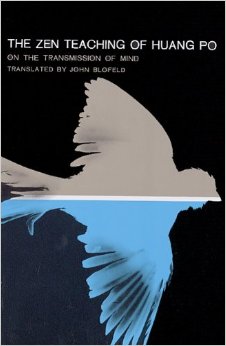
Taken from The Zen Teaching of Huang Po (Chun Chou record no. 32)

so many ways to talk about it
many ways are valid
all ultimately fall short
If you now set about using your minds to seek Mind, listening to the teaching of others, and hoping to reach the goal through mere learning, when will you ever succeed? Some of the ancients had sharp minds; they no sooner heard the Doctrine proclaimed than they hastened to discard all learning. So they were called, ‘Sages who, abandoning learning, have come to rest in spontaneity’.
In these days people only seek to stuff themselves with knowledge and deductions, seeking everywhere for book-knowledge and calling this ‘Dharma-practice’ [true practice of The Way]. They do not know that so much knowledge and deduction have just the contrary effect of piling up obstacles. Merely acquiring a lot of knowledge makes you like a child who gives himself indigestion by gobbling too many curds.
Merely acquiring a lot of knowledge makes you like a child who gives himself indigestion by gobbling too many curds.
Those who study the Way according to the Three Vehicles [the 3 main Buddhist schools of Hinayana, Mahayana and Vajrayana Buddhism] are all like this. All you can call them is people who suffer from indigestion. When so-called knowledge and deductions are not digested, they become poisons, for they belong only to the plane of samsara [the plane of suffering, the unenlightened state]. In the Absolute, there is nothing at all of this kind.
So it is said: ‘In the armoury of my sovereign, there is no Sword of Thusness’. All the concepts you have formed in the past must be discarded and replaced by void…The canonical teachings of the Three Vehicles are just remedies for temporary needs. They were taught to meet such needs and so are of temporary value and differ one from another. If only this could be understood, there would be no more doubts about it.
Above all it is essential not to select some particular teaching suited to a certain occasion, and, being impressed by its forming part of the written canon, regard it as an immutable concept. Why so? Because in truth there is no unalterable Dharma [Teaching, Teaching method] which the Tathagata [The Buddha; a term the Buddha often referred to himself by] could have preached. People of our sect would never argue that there could be such a thing. We just know how to put all mental activity to rest and thus achieve tranquillity. We certainly do not begin by thinking things out and end up in perplexity.
Because in truth there is no unalterable Dharma…We certainly do not begin by thinking things out and end up in perplexity.
Taken from The Zen Teaching of Huang Po (Chun Chou record no. 30)
 Tom Das