Humility and realisation

humility flower.jpg

An important part of the teaching is to realise the limits of our ability to know or understand things. Often we think we know or understand things only to later find that we were deluding ourselves. The very ideas we think we know to be true are the same ones that keep us trapped and prevent realisation occurring.

The very ideas we think we know to be true are the same ones that keep us trapped and prevent realisation occurring.

Remember that realisation does not mean arriving at a new understanding: it is actually the realisation that the beliefs we held about ourself, specifically the ‘I am the doer’ belief, do not have the evidence required to support them. If we just follow the evidence, we will not make claims that are unjustified, and we preserve our humility and integrity. Any understanding we subsequently develop will have strong foundations.

Being humble just means not pretending to know something that you don’t. Similarly if you think you know something but are not completely sure, it means admitting that uncertainty. In that space of doubt, there is room for something true to emerge and be seen. In acknowledging the limitations and assumptions of our thought processes we are entering into what is actual and true.

In that space of doubt, there is room for something true to emerge and be seen.

To put it differently, humility is a form of honesty, and it is this being completely honest with ourselves that forms a firm foundation from which this teaching can take root, grow and thrive.


Ramana Maharshi: Laugh and cry!

ramana umbrella.jpg

The realized person weeps with the weeping,

laughs with the laughing,

plays with the playful,
sings with those who sing,
keeping time to the song.

What does he lose?

Tom’s comments:

Many truth seekers suppose that the ‘fully self-realised guru’ would act in a certain way:

speak, walk, dress in certain ways,
never angry, always kind,
never unhappy, ever-blissful
pure and faultless

What a prison!
Freedom does not care for that!

In Freedom our humanity naturally shines

Also see All exist in me

Zen Master Huang Po: how to remove our illusions

Q: Illusion can hide from us our own mind, but up to now you have not taught us how to get rid of illusion.

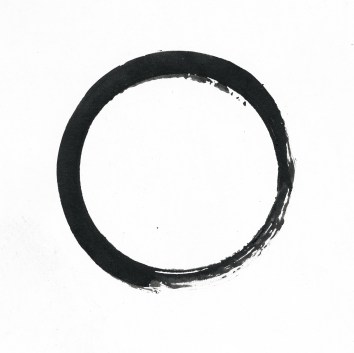
zen circle

A: The arising and the elimination of illusion are both illusory. Illusion is not something rooted in Reality; it exists because of your dualistic thinking.

If you will only cease to indulge in opposed concepts such as ‘ordinary’ and ‘Enlightened’, illusion will cease of itself. And then if you still want to destroy it wherever it may be, you will find that there is not a hairsbreadth left of anything on which to lay hold.

This is the meaning of: ‘I will let go with both hands, for then I shall certainly discover the Buddha in my mind’.

The arising and the elimination of illusion are both illusory…If you will only cease to indulge in opposed concepts such as “ordinary” and “Enlightened,” illusion will cease of itself.

Q: If there is nothing on which to lay hold, how is the Dharma [The Teaching, Enlightenment] to be transmitted?

A: It is a transmission of Mind with Mind [Tom – note that the Chinese word for ‘mind’ can also be translated as ‘heart’, so this could be ‘heart to heart’ transmission].

Huang Po Zen Teachings

Q: If Mind is used for transmission, why do you say that Mind too does not exist?

A: Obtaining no Dharma whatever is called Mind transmission. The understanding of this implies no Mind and no Dharma.

Q: If there is no Mind and no Dharma, what is meant by transmission?

A: You hear people speak of Mind transmission and then you talk of something to be received. So Bodhidharma [the first Zen patriarch, the ‘founder of zen’] said:

The nature of the Mind when understood,
No human speech can compass or disclose.
Enlightenment is naught to be attained,
And he that gains it does not say he knows.

If I were to make this clear to you, I doubt if you could stand up to it.

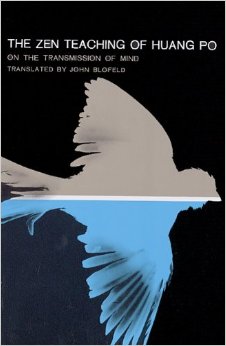
Taken from The Zen Teaching of Huang Po (Chun Chou record no. 32)

Spiritual Materialism

diamond.png

So many spiritual seekers start off on the wrong footing, so many spiritual teachings pander to the ego. If your main aim on the spiritual path is to gain super-powers, be permanently in a state of heightened bliss or to be the next great spiritual teacher, then you are primarily interested in accumulation and possession and perhaps not as deeply interested in truth as you may think. You should know this is the ego’s desire and the spiritual path you walk is not a genuine one.

So, first ask yourself honestly – do you want truth or pleasure? You may want both, but which one do you want more? If your perception is distorted by ego and desire, then the spiritual path you are attracted to will be similarly distorted. We get the spiritual teachings we deserve.

We get the spiritual teachings we deserve.

There is nothing wrong with seeking happiness of course. It is through suffering and seeking an end to suffering that most of us become spiritually inclined in the first place. But if we are clouded by our desires and insecurities then we become susceptible to false beliefs, magical thinking, exploitation and corrupt spiritual teachings. This ‘spirituality’ is in fact another form of materialism or hedonism in a different guise: the ego is still at play.

If you can see all of this, then you already know that you are apart from it. What is it that sees? Who are you at your innermost core? All that you have accumulated will pass away: pleasure, pain, psychic powers, fame, charisma and transcendental experiences. All are finite and transient. None of them are the Eternal.

The Eternal already is. Nothing is not It.


Don’t believe the false sense of limitation

hills and pool.jpg

In spiritual matters, if the first step is in the wrong direction, the whole path follows in being wrong. The very suffering it aims to quench is perpetuated by this initial mistake. Once this tiny mistake is corrected, the path becomes straight and clear and Spirit pours through. What mistake is it that I am talking of? The mistake is to think of yourself as being a limited entity.

The mistake is to think of yourself as being a limited entity.

It is like travelling on a wagon with a stone lodged on one of the wheels: the ride is bumpy and uncomfortable. And the faster you drive, the more effort you put into it, the bumpier the ride – there are no points for effort here.

Effort alone is not enough. Effort has to be skilfully directed for it to be effective. We must attack the problem directly at its root. If you take the time to stop and examine the wagon, then remove the stone from the wheel, the journey becomes smooth. Furthermore, much less effort is required to drive once the root problem is solved. Similarly we must also stop and look at our very basic assumptions about life, challenge them, see how they are erroneous and cause needless suffering and ensure they do not operate in daily life.

Effort alone is not enough. Effort has to be skilfully directed for it to be effective.

And what are these assumptions? They are primarily about our identity, our idea of ‘self’ or ‘me’ or ‘I’, also known as the ego. As long as you assume you are a limited separate entity you will consider yourself to be vulnerable to injury and death, so suffering will continue. You will seek security and pleasure, and fear uncertainty and pain.

As long as you assume you are a limited separate entity you will consider yourself to be vulnerable to injury and death, so suffering will continue.

This in turn gives rise to the notion of doership – the notion that the individual is master and controller of their thoughts and actions. There are many other concepts that we hold, often unconsciously, but all are tied to this notion of a separate ‘I’ (the illusion of separation). If that is rooted out, then all the other branches that grow from it wither and die. If the ‘I’ is left intact, then new falsehoods grow back and suffering continues.

So instead of simply ploughing forwards on a spiritual path, first try to stop and look. Find out who you really are. In terms of spiritual understanding realise that this does not mean that you accumulate more knowledge of ‘who you are’. It means that you dispel falsehoods. Find out your concepts of what you are and critique them. When all false assumptions are seen to be mistaken, then they are naturally discarded and what remains is what you are: Ultimate Truth.

So instead of simply ploughing forwards on a spiritual path, first try to stop and look. Find out who you really are…When all false assumptions are seen to be mistaken, then they are naturally discarded and what remains is what you are

This cannot be described, and need not be described. Every description is misleading, including calling it ‘Ultimate Truth’. It can only be ‘lived’ or ‘experienced’. Self-knowledge is non-conceptual; for how can the Self, what you are, be encapsulated in words? It cannot!

All descriptions of Truth have value as they may be useful pointers on the way but they should be known to be ultimately false. Hold onto helpful teachings while they are useful, then throw them away! (They fall away naturally if you let them)

Annamalai Swami: maya, the body and self-enquiry

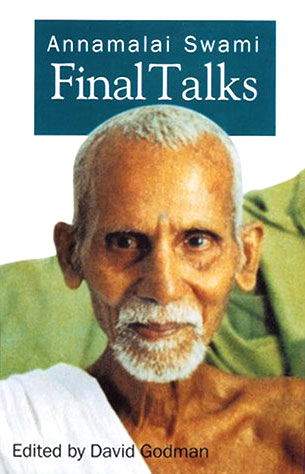
annamalai swami final talks

(The following is an excerpt from the above book and comprises most of Chapter 3):

A devotee who came to Annamalai Swami had so much pain in one of his legs, he found it very difficult to sit comfortably  on the floor. Observing his difficulties, Annamalai Swami (AS) made the following remarks:

AS: Though the body is needed for Sadhana, one should not identify with it. We should make good use of it and look after it well,but we should not pay too much attention to it.

There are so many thoughts in the mind. Thought after thought after thought. They never stop.  But there is one thought that is continuous, though it is mostly subconscious.  ‘I am the body’ – this is one string on which all other thoughts are threaded. Once we identify  ourselves with the body by thinking this thought, Maya follows. It also follows that if we cease to identify ourselves with the body, Maya will not affect us anymore.

‘I am the body’ – this is one string on which all other thoughts are threaded.  Once we identify  ourselves with the body by thinking this thought, Maya follows.

Maya is fundamentally non existent. Bhagavan said that Maya literally means ‘that which is not.’ It is unreal because everything that Maya produces is an outgrowth of a wrong idea. It is a consequence of taking something to be true that is not really true. How can something that is not real produce something that is real? If a barren woman says that she has beaten by her son, or that she has been injured by the horns of a hare, we would rightly take her to be deluded. Something that does not exist cannot be the cause of suffering or of anything else.

Maya is fundamentally non existent.

How to get rid of this ‘I am the body’ feeling and of the Maya that is produced by it?  It goes when there is ‘saman bhava’  the equanimity  or equality of outlook that leaves one unaffected by the extreme opposites such has happiness and unhappiness, pleasure and pain. When ‘saman bhava’ is attained, the idea ‘I am the body’ is no longer present and Maya is transcended.

Question:  Is the body to be regarded as unreal, as ‘not me’? What attitude should I have towards this body and all the sensory information it provides me with?

AS:  By itself, this body is jada, inert and lifeless. Without the mind, the body cannot function. And how does the mind  function? Through the five senses that the body provides.

Mind and body are like the tongue and teeth in the mouth. They have to work in harmony with each other. The teeth do not fight with tongue and bite it. Mind and body should combine in the same harmonious way.

However, if we want to go beyond the body, beyond the mind, we have to understand and fully accept that all the information the senses provide is not real. Like the mirage that produces an illusory oasis in the desert, the senses create information that there is a real world in front of us that is being perceived by the mind. The apparent reality of the world is an illusion. It is merely a misperception. When the mind perceives a snake where in reality there is only a rope, this is clearly a case of the senses projecting an imaginary image onto a real substratum. This, on a large scale, is how the unreal appearance of the world is projected by the mind and the senses onto the underlying reality of the Self….

…Self Inquiry is the  process by which attention is put on the substratum instead of on names and forms that are habitually imposed on it. Self is the substratum out of which all things appear to manifest, and the Jnani is the one who is continually aware of the real substratum. He is never deluded into believing that the names and forms that are perceived by the senses have any  real existence.

Self Inquiry is the  process by which attention is put on the substratum instead of on names and forms that are habitually imposed on it.

Whatever we see in this room, for example, that picture of Bhagavan over there, is unreal. It has no more reality than objects we perceive in our dreams. We think we live in a real, materially substantial world, and that our minds and bodies are real entities that move around in it. When the Self is seen and known, all these ideas fade away and one is left with the knowledge: Self alone exists.

Question: If I regard all the people that I see and meet as unreal projections, what do I base my moral sense on? I can go around killing then or robbing them without feeling guilty because i would know that they are just characters in my dream.

AS: Everything that we perceive is maya, an unreal dream,  but one should not then think, “Since everything is unreal, I can do what I like”. There are dream consequences for the bad acts committed in the dream, and while you still take the dream to be the reality, you will suffer the consequences of your bad behaviour. Do no evil and have no hate. Have equanimity towards everything.


Non-duality: talk is cheap

barn owl.jpg

Words are empty,
Talk is cheap.
Consciousness. Awareness. God. Brahman.
-who gives a fuck?

While you chase Supreme Unexcelled Enlightenment,
Life is already passing you by.

Where is it?
Why, it is here, of course,
And you are right in the thick of it*.

*’you’ = ‘the thick of it’

Ramana Maharshi: Non-duality and how to be Self-Realised (Atma-Jnana)

Ramana Maharshi sitting.jpg

In the following excerpts, Ramana Maharshi is telling us that we are already free, totally and completely. Can you accept this? Can you allow these words to move you? Can you intuit the truth to which they point?


If we talk of knowing the Self, there must be two selves, one a knowing self, another the self which is known, and the process of knowing. The state we call realization is simply being oneself, not knowing anything or becoming anything. If one has realized, one is that which alone is and which alone has always been. One cannot describe that state. One can only be that.


Questioner: How long does it take to reach mukti (liberation)?
Maharshi: Mukti is not to be gained in the future. It is there for ever, here and now.
Q: I agree, but I do not experience it.
M: The experience is here and now. One cannot deny one’s own Self.


Questioner: How shall I reach the Self?
Maharshi: There is no reaching the Self. If Self were to be reached, it would mean that the Self is not here and now and that it is yet to be obtained. What is got afresh will also be lost. So it will be impermanent. What is not permanent is not worth striving for. So I say the Self is not reached. You are the Self, you are already that. The fact is, you are ignorant of your blissful state. Ignorance supervenes and draws a veil over the pure Self which is bliss. Attempts are directed only to remove this veil of ignorance which is merely wrong knowledge. The wrong knowledge is the false identification of the Self with the body and the mind. This false identification must go, and then the Self alone remains. Therefore realization is for everyone; realization makes no difference between the aspirants. This very doubt, whether you can realize, and the notion `I-have-not-realized’ are themselves the obstacles. Be free from these obstacles also.


Q: There must be something that I can do to reach this state.
M: The conception that there is a goal and a path to it is wrong. We are the goal or peace always. To get rid of the notion that we are not peace is all that is required.
Q: All books say that the guidance of a Guru is necessary.
A: The Guru will say only what I am saying now. He will not give you anything you have not already got. It is impossible for anyone to get what he has not got already. Even if he gets any such thing, it will go as it came. What comes will also go. What always is will alone remain. The Guru cannot give you anything new, which you don’t have already. Removal of the notion that we have not realized the Self is all that is required. We are always the Self only we don’t realize it.


Q: When a man realizes the Self, what will he see?
M: There is no seeing. Seeing is only being. The state of Self-realization, as we call it, is not attaining something new or reaching some goal which is far away, but simply being that which you always are and which you always have been. All that is needed is that you give up your realization of the not-true as true…At one stage you will laugh at yourself for trying to discover the Self which is so self-evident.


Q: But how to do this and attain liberation?
M: Liberation is our very nature. We are that. The very fact that we wish for liberation shows that freedom from all bondage is our real nature. It is not to be freshly acquired. All that is necessary is to get rid of the false notion that we are bound. When we achieve that, there will be no desire or thought of any sort. So long as one desires liberation, so long, you may take it, one is in bondage.


Q: Is not the realization of one’s absolute being, that is, Brahma-jnana, something quite unattainable for a layman like me?
M: Brahma-jnana is not a knowledge to be acquired, so that acquiring it one may obtain happiness. It is one’s ignorant outlook that one should give up. The Self you seek to know is truly yourself.


Q: How to realize the Heart?
M: There is no one who even for a moment fails to experience the Self. For no one admits that he ever stands apart from the Self. He is the Self. The Self is the Heart.


Q: How can I attain Self- realization?
M: Realization is nothing to be gained afresh; it is already there. All that is necessary is to get rid of the thought `I have not realized’. Stillness or peace is realization. There is no moment when the Self is not. So long as there is doubt or the feeling of non-realization, the attempt should be made to rid oneself of these thoughts. They are due to the identification of the Self with the not-Self. When the not-Self disappears, the Self alone remains. To make room, it is enough that objects be removed. Room is not brought in from elsewhere.


Q: However often Bhagavan teaches us, we are not able to understand.
M: People say that they are not able to know the Self that is all pervading. What can I do ? Even the smallest child says, `I exist; I do; this is mine.’ So, everyone understands that the thing `I’ is always existent. It is only when that `I’ is there that there is the feeling that you are the body, he is Venkanna, this is Ramanna and so on. To know that the one that is always visible is one’s own Self, is it necessary to search with a candle ? To say that we do not know the atma swarupa (the real nature of the Self) which is not different but which is in one’s own Self is like saying, `I do not know myself.`


Q: But how is one to reach this state?
M: There is no goal to be reached. There is nothing to be attained. You are the Self. You exist always. Nothing more can be predicated of the Self than that it exists. Seeing God or the Self is only being the Self or yourself. Seeing is being. You, being the Self, want to know how to attain the Self. It is something like a man being at Ramanasramam asking how many ways there are to reach Ramanasramam and which is the best way for him. All that is required of you is to give up the thought that you are this body and to give up all thoughts of the external things or the not-Self.


Q: It is cruel of God’s leela (play) to make the knowledge of the Self so hard.
M: Knowing the Self is being the Self, and being means existence, one’s own existence. No one denies one’s existence any more than one denies one’s eyes, although one cannot see them. The trouble lies with your desire to objectify the Self, in the same way as you objectify your eyes when you place a mirror before them. You have been so accustomed to objectivity that you have lost the knowledge of yourself, simply because the Self cannot be objectified. Who is to know the Self ? Can the insentient body know it? All the time you speak and think of your `I’, yet when questioned you deny knowledge of it. You are the Self, yet you ask how to know the Self. Where then is God’s leela and where is its cruelty ? Because of this denial of the Self by people the sastras speak of maya, leela, etc.


Q: Yes, I still understand only theoretically. Yet the answers are simple, beautiful and convincing.
M: Even the thought `I do not realize’ is a hindrance. In fact, the Self alone is. Our real nature is mukti. But we are imagining we are bound and are making various, strenuous attempts to become free, while we are all the while free. This will be understood only when we reach that stage. We will be surprised that we were frantically trying to attain something which we have always been and are.


Q: Is mukti the same as realization?
M: Mukti or liberation is our nature. It is another name for us. Our wanting mukti is a very funny thing. It is like a man who is in the shade, voluntarily leaving the shade, going into the sun, feeling the severity of the heat there, making great efforts to get back into the shade and then rejoicing, `How sweet is the shade! I have reached the shade at last!’ We are all doing exactly the same. We are not different from the reality. We imagine we are different, that is we create the bheda bhava [the feeling of difference] and then undergo great sadhana (spiritual practices) to get rid of the bheda bhava and realize the oneness. Why imagine or create bheda bhava and then destroy it?


Q: Since realization is not possible without vasana-kshaya (destruction of mental tendencies/habits), how am I to realize that state in which the tendencies are effectively destroyed?
M: You are in that state now.
Q: Does it mean that by holding on to the Self, the vasanas (mental tendencies) should be destroyed as and when they emerge?
M: They will themselves be destroyed if you remain as you are.


Q: Is one nearer to pure consciousness in deep sleep than in the waking state?
M: The sleep, dream and waking states are mere phenomena appearing on the Self which is itself stationary. It is also a state of simple awareness. Can anyone remain away from the Self at any moment ? This question can arise only if that were possible.
Q: Is it not often said that one is nearer pure consciousness in deep sleep than in the waking state?
M: The question may as well be `Am I nearer to myself in my sleep than in my waking state?’ The Self is pure consciousness. No one can ever be away from the Self. The question is possible only if there is duality. But there is no duality in the state of pure consciousness.