Manana
Does Sravana alone lead to liberation? Or are Manana and Nididhyasana also required for Self-Realisation or Jnana? Advaita Vedanta | Swami Satchitanandendra Saraswati (SSS) | Shankara Advaita
Sravana means hearing the teachings. Manana means contemplating upon the teachings. Nididhyasana means meditating upon the Self or placing one’s attention onto the Self in order to discover its true nature. Together these three traditionally sum up the method or process of self-realisation according to Vedanta teachings.
However…
1) There are some that say that Sravana alone leads to self-realisation, and that Manana and Nididhyasana are ancilary practices to just remove the blocks and purify/ripen the mind and ready it for Sravana, and that Sravana is the liberating factor.
2) There are some that say Sravana is just an initial teaching to allow Nididhyasana to finally occur and it is Nididhyasana that is the primary sadhana (spiritual practice) that allows liberation to arise.
This is further confounded as there are scriptural verses in support of both of the above visions of the teachings.
eg.
‘Thus only is It realised-when these means, viz. hearing, reflection and meditation, have been gone through. When these three are combined, then only true realisation of the unity of Brahman is accomplished, not otherwise – by hearing alone.’
~ Shankara’s commentary on Brihadaranyaka Upanishad 2.4.5
and seemingly contradicting this is the following:
‘for highly qualified aspirants, [self-] knowledge can arise even from mere listening to the teachings.’
~ Shankara’s commentary of Brahma Sutra 4.1.2
Swami Satchitanandendra Saraswati’s (SSS’s) view on this
Swami Satchitanandendra Saraswati (SSS) in his many books on the teachings of Vedanta and on Shankara’s commentaries makes the following observation, namely that either Sravana, Manana or Nididhyasana can be the direct causes of liberation (ie. direct cause of removing ignorance), depending on the level of maturity of the (apparent) mind of the seeker. For those interested, Sri Ramana Maharshi says the same here, and also goes further to explain how this can be the case and also how both of the above scriptural passages do not actually contradict each other.
Here is SSS writing in the Appendix of his book ‘The Salient Features of Sankara’s Vedanta‘ on page 82:
6. Sravana (study of sacred revelation), Manana (reflective thinking) and Nididhyasana (concentrated contemplation), are all means for realizing Atman. Highly developed souls, however, who can immediately grasp the true meaning of the Vedic teaching, do not stand in need of any additional effort.
Not taking this principle into account is responsible for the divergence of opinion among commentators of Sankara Bhashya [Tom: Shankara’s commentaries] about the relation of Sravana and Nididhyasana. Of these, some aver that Sravana is the principal means and the other two are only ancillary to it; while others insist that nididhyasana is the one means to direct realization and without it mere Sravana would be of no avail.
7. Sravana and the other means [Tom: ie. manana and nididhyasana] are enjoined only in so far as they turn the seeker inwards and direct him to stay his mind on Atman, but the resultant knowledge is no object of any injunction. [Tom: ie. Sravana, manana and nididhyasana all have their intended effect of self-realisation by turning the seeker’s attention towards the Self, but that the Self that is subsequently realised as truth cannot itself be caused or created by any spitirual practice or effort or action, ie. the Self is uncaused and uncreated]
Those who cannot distinguish between the’ effort required for Sravana, etc, and the resultant knowledge in each case, have made it a matter for controversy whether or not ‘srotavyah’ [Tom: lit ‘that which is (to be) heard’, ie. scripture] and similar texts constitute true injunctions. Some of them maintain that these are all injunctions while others insist that they are seemingly injunctions in form but are really statements of fact. Some even think that they are merely eulogistic statements. [Tom: ie. because Shankara says actions or karma cannot lead to liberation or Jnana, there is argument about the ontological status of whether or not the 3 sadhanas of sravana, manana and nididyasana are karmas or not. In truth we should know that the Self is not a product of any action, but that the sadhana is an action that occurs in the phenomenal world of maya, and so if we discern properly between these 2 there is no real conflict.]
8. Manana refers to the type of reasoning suggested by the Sruti itself conducive to experience. Hence the term ‘experience’ here should be understood to mean the supersensuous intuition [Tom: ie. Self knowledge] which results from our enquiry which takes in one sweep the whole field possible of whatever is knowable.
From this the reader has to understand that use might be made of ordinary reasoning also in so far as it is conformable to the reasoning suggested by the Sruti. Advaitins do try to disclose the hollowness of other systems according to the course of reasoning accepted by themselves. But Advaita itself cannot be established by means of pure logical ratiocination. People who are not aware of this fact, often try to apply speculation or inferences based upon partial experiences to Vedanta also. Others condemn all reasoning and affirm that reasoning is of no use in matters taught by the Sruti. So they interpret Sruti according to their own predilection and place their own convictions before seekers as the final Vedantic truth.
9. Nididhyasana is that kind of spiritual discipline by means of which one concentrates one’s mind on the subtle principle, Atman. At the end of this discipline, one becomes conscious of the fact that the mind itself is a superimposition on Atman. Then the mind becomes no mind, that is to say, it is realized essentially as Atman himself.
When should I stop reading books and just do the practice? | Self-Enquiry | Sravana and Manana
How Vedanta teachings work | Swami Satchitanandendra Saraswati (SSS) on the method of Shankara’s Advaita Vedanta to attain liberation (Moksha)

At the end of his book ‘The Salient Features of Sankara’s Vedanta’ (see link to download PDF below), Swami Satchitanandendra Saraswati (SSS) lists the key features of Shankara’s Advaita Vedanta.
Among them is the notion that liberation can result from either hearing the teachings (Sravana), reflecting upon the teachings (Manana) or meditating upon the teachings (Nididhyasana), depending on the maturity and fitness of the aspirant (we can see Sri Ramana Maharshi give the same teachings here). Not realising this, SSS notes that various commentators either say that sravana alone is the only way or that nididhyasana alone is the only way.
SSS then goes on to state that the way that these methods lead to liberation is by turning the mind inwards towards the Subject-Self (Atman).
Let us see what SSS writes on page 82:
6. Sravana (study of sacred revelation), Manana (reflective thinking) and Nididhyasana (concentrated contemplation), are all means for realizing Atman. Highly developed souls, however, who can immediately grasp the true meaning of the Vedic teaching, do not stand in need of any additional effort.
Not taking this principle into account is responsible for the divergence of opinion among commentators of Sankara Bhashya about the relation of Sravana and Nididhyasana. Of these, some assert that Sravana is the principal means and the other two are only ancillary to it; while others insist that nididhyasana is the one means to direct realization and without it mere Sravana would be of no avail.
7. Sravana and the other means are enjoined only so far as they turn the seeker inwards and direct him to stay his mind on Atman, but the resultant knowledge is no object of any injunction.
Tom: We can see that the purpose of Sravana, Manana and Nididhyasana are to turn the mind inwards, towards the Subject-Self (Atman), and that the resultant ‘Knowledge’ is not a result of any action or practice, but a synonym for the One Eternal Infinite Blissful Self that is ever-attained, ie. Liberation.
Please see here for Sri Ramana’s teachings on this same topic.
Also see:
What is Vedantic Meditation? How Swami Satchitanandendra Saraswati (SSS) defines Nididhyasana
Shankara teaches two methods to ‘attain liberation’ | Swami Satchidanandendra Saraswati (SSS)
Sravana alone can result in Self-Realisation! Sri Ramana Maharshi on Sravana, Manana and Nididhyasana

Tom: Traditionally Sravana refers to hearing the teaching. Manana refers to reflecting upon and thinking about the teaching which has been heard. Nididhyasana refers to prolonged meditation upon the Self, which culminates in Samadhi, which then leads to Moksha (Liberation).
The knot of the ignorance in the heart is broken completely only when one sees his Self as secondless through Nirvikalpa Samadhi
~Adhyatama Upanishad 1.17
Here is a quote from Sri Ramana Maharshi taken from Talks with Sri Ramana Maharshi, Talk no. 249 – all writing below in black type is from Sri Ramana, with my comments being in red:
The effects of sravana may be immediate and the disciple realises the truth all at once. This can happen only for the well-advanced disciple.
[Tom: later Sri Ramana explains that this means that the advanced/ripe seeker immediately goes into Samadhi, which is the same as abiding as the Self, as soon as the teaching is heard]
Otherwise, the disciple feels that he is unable to realise the truth, even after repeatedly hearing it. What is it due to? Impurities in his mind: ignorance, doubt and wrong identity are the obstacles to be removed.
(a) To remove ignorance completely, he has to hear the truth repeatedly, until his knowledge of the subject-matter becomes perfect
(b) to remove doubts, he must reflect on what he has heard; ultimately his knowledge will be free from doubts of any kind;
(c) to remove the wrong identity of the Self with the non-self (such as the body, the senses, the mind or the intellect) his mind must become one-pointed. All these things accomplished, the obstacles are at an end and samadhi results, that is, Peace reigns.
Some say that one should never cease to engage in hearing, reflection and one-pointedness. These are not fulfilled by reading books, but only by continued practice to keep the mind withdrawn.
The aspirant may be kritopasaka or akritopasaka. The former is fit to realise the Self, even with the slightest stimulus: only some little doubt stands in his way, it is easily removed if he hears the truth once from the Master. Immediately he gains the samadhi state. [Tom: Sri Ramana is stating that by listening alone, or by some other minimal stimulus, the ripe seeker spontaneously goes into samadhi without the need for the intermediary steps of reflecting upon the teachings or meditating upon them.] It is presumed that he had already completed sravana, reflection, etc. in previous births, they are no more necessary for him.
For the other all these aids are necessary; for him doubts crop up even after repeated hearing; therefore he must not give up aids until he gains the samadhi state. Sravana removes the illusion of the Self being one with the body, etc. Reflection makes it clear that Knowledge is Self. One-pointedness reveals the Self as being Infinite and Blissful.
The importance of Manana (contemplating the teachings)

This is a very important verse from Shankara. Most people concentrate on the point being made about samadhi when reading this verse, but note how it states that manana is ‘one hundred times’ superior to sravana.
Yesterday in Satsang, we were talking about manana and how we can do this more effectively, and how this naturally will lead to nididhyasana and then samadhi and then full realisation. You will start to find that the motivation to do practice will increase.
Thinking about the teachings, seeing the tricks the ego keeps on playing on you to perpetuate itself, seeing the very nature of the ego for yourself, writing this all down and reflecting upon it means the ego has less room to manoevure. Write down all your thoughts, write down all your insights, get it all on paper.
At this point in the teaching it is helpful to do this as the mind, being very fickle and forgetful will quickly forget the insights you have previously made, thus perpetuating itself.
As you engage with this aspect of the teaching, you will see how just powerful it indeed is, how the ego has less and less room to move in, how the ego weakens naturally, and how peace and love more and more come into you, merging with your very Being.
Namaste 
Ramana Maharshi: Peace is your true nature
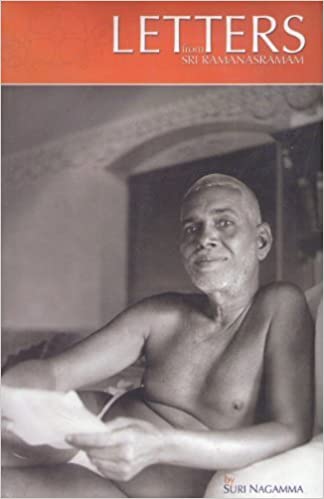
Yesterday, two pandits came from Kumbakonam. This morning at 9 o’clock, they approached Bhagavan and said, “Swami, we take leave of you. We pray that you may be pleased to bless us that our mind may merge or dissolve itself in shanti [peace]”
Bhagavan nodded his head as usual. After they had left, he said, looking at Ramachandra Iyer,
“Shanti is the original state. If what comes from outside is rejected what remains is peace. What then is there to dissolve or merge? Only that which comes from outside has to be thrown out.
“If people whose minds are mature are simply told that the swarupa itself is shanti, they get jnana. It is only for immature minds that sravana (listening to the teachings) and manana (reflecting upon the teachings) are prescribed, but for mature minds there is no need of them. If people at a distance enquire how to go to Ramana Maharshi, we have to tell them to get into such and such a train or take such and such a path, but if they come to Tiruvannamalai, reach Ramanasramam and step into the hall, it is enough if only they are told, here is that person. There is no need for them to move any farther.”
“Sravana and manana mean only those described in Vedanta, don’t they?” asked some one. “Yes,” Bhagavan replied, “but one thing, not only are there outward sravana and manana but there are also inward sravana [listening] and manana [thinking]. They must occur to a person as a result of the maturity of his mind. Those that are able to do that antara sravana (hearing inwardly) do not have any doubts.”
Whenever any one asked what those antara sravanas are, he used to say, “Antara sravana means the knowledge of that Atma which is in the cave of the heart always illuminated with the feeling ‘aham, aham’ (‘I, I’), and to get that feeling to be in one’s heart is manana, and to remain in one’s self is nididhyasa [meditation].”
In this connection, it is worth while remembering the sloka [verse] written by Bhagavan bearing on this subject. In that sloka mention is made not only to Atma sphurana [the vibration of the Self] but also how to secure it. Securing means only remaining in one’s own self:
Brahman is glowing lustrously in the middle of the cave of the Heart in the shape of the Self, always proclaiming ‘I am, I am’. Become an Atmanishta, a Self-realised person, either by making the mind absorbed in the search of the Self or by making the mind drown itself through control of the breath.
19th July 1947, Letters from Sri Ramanasramam
 Tom Das