How yoga leads to Enlightenment

yoga.jpg
An illustration dated from the early 20th century, drawn to accompany Yoga Yajnavalkya, an imporant foundational text on yoga from the 12th century CE.

In my previous two posts (here and here) I’ve described the aims of the of yoga as being twofold:

  1. Knowledge: to see/know/realise that the notion of being a separate doer-entity is an illusion
  2. Peace: to become peaceful (sattvic) and remove compulsive desires

Each of these two aims of yoga are there to solve a basic problem. First, as long as you take yourself to be a doer, you suffer. This is corrected with Knowledge as defined above. Note that this Knowledge is not knowledge of something new (additive or positive knowledge) but it is realising something is false (negative knowledge).

And second, as long as you are a slave to compulsive desires, right action (ethical and intelligent action in accordance with natural law or dharma) will not fully manifest, and the flow of the innate natural intelligence will be impeded and distorted by these addictive and compulsive tendencies (vasanas). This is corrected by becoming sattvic (peaceful).

There are many forms of yoga and some can be very technical and detailed. However in general, some yogas work upon the body, others on the breath/voice, and some focus more on the mind. However the main purpose of yoga is to affect the mind, as this is where the core problems described above lie.  Those yogas that work primarily upon the body, voice or breath do so in order to directly or indirectly effect the mind to which they are connected.

Each type of yoga strives to achieve the two points mentioned above in a slightly different way. Often there is a conceptual framework within which the yoga operates. When the aim of the yoga has been achieved (ie. by achieving the two points above), then the conceptual framework within which the yoga operated can be dismantled and left behind.
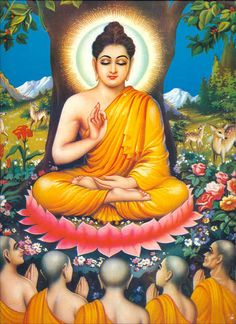
buddha.jpg
(1) Knowledge and (2) Peace, personified here by a visual and stylised  image of the Buddha

Improving your posture

Let’s give a simple example of how concepts, even when false, can aid us. If you want to improve your posture an expert may recommend you imagine a length of string attached to the crown of your head, pulling the top of your head upwards towards the sky/ceiling. When you imagine this, you naturally straighten your posture in line with the visualised imaginary piece of string.

After practicing this for sometime, your posture improved and now you no longer have to imagine a piece of string. At no point did you actually thinks there was a piece of string actually there, but you can see how this concept was useful to correct your posture.

Concepts in Yoga

Lets take a look at some of the main traditional forms of yoga to see how this works. In the sections below there are many aspects of the yoga I have not gone into, as the purpose of this text is to demonstrate how yoga can use concepts to achieve the two goals mentioned above, and then the concepts can be thrown away, to be picked up again only when this needs to be taught to someone else.

Jnana Yoga

Jnana means knowledge in Sanskrit, and Jnana Yoga is the Yoga of Knowledge.

In this yoga the concept of Brahman is introduced and is initially equated as being being-consciousness-bliss (sat-chit-ananda). Brahman is initially defined as being our basic sense of presence-awareness and the teachings show this to be (apparently) Unchanging, Ever-Present/Permanent, Eternal, Infinite and Indestructible. This is stark contrast to the subtle and gross objects that appear within it which are ever-changing, temporary, transient, limited and subject to creation and destruction.

The Jnana yogi is taught to identify him/herself as that Unchanging Absolute Brahman and not to identify as the ephemeral objects. Through this process of de-identification with the body-mind and identification with that which does not change, insight into experience occurs.

We start to realise that the body-mind entity that we formerly took ourself to be actually is not us at all. We thought that we we responsible for our thoughts and action, whereas from the point of view of Brahman or Absolute Consciousness, it is seen that there is no doer and the body-mind-entity functions by itself. At this point the doer-entity is seen to be non-existant, and Knowledge as defined above in objective (1) arises.

At this point the essential job of jnana yoga has been completed, and the concepts of Brahman as being an unchanging essence can then be dropped and life goes on, living itself. There is no attachment to concepts such as the relative and absolute or concepts of the infinite, all of which are ultimately unverifiable in our experience.

Incidentally, once the doer has seen to be non-existent, sattva tends to arise over time as the processes that fuel compulsive desires are slowly wiped away, and so objective (2) is also indirectly achieved.

We can see that in Jnana yoga the concept of an Absolute Brahman has been useful to us to serve a purpose. However ultimately we cannot know for sure from our experience alone that there is such as thing as the Absolute Unchanging Brahman. Because Knowledge, ie. seeing through the doer, has occurred, Freedom is innately realised, and concepts are not clung to, and no beliefs are required.

Karma Yoga

Karma means action in Sanskrit, and Karma Yoga is the Yoga of Action.

There are a few ways karma yoga can be performed according to the traditional scriptures, but one of them is to set up the concept of a personal God, an all-powerful entity that is responsible for everything and every action in the universe. The Karma yogi is taught to realise that it is this God that ultimately has control and not the limited body-mind that it thinks itself to be.

The karma yogi therefore practices gladly accepting everything that comes his or her way as a gift from God, working to the best of their ability, but not being attached to the results of their actions.

As the Karma yogi starts to learn to be happy regardless of what is happening, this has the direct result of eroding away compulsive desires, converting them into non-compulsive desires, and so eventually objective (2) is achieved.

Thereafter, over time, the sense of identification with the body-mind entity loosens and is seen through. It can become apparent to the Karma yogi that actions happen by themselves: thoughts happen by themselves, but there is no thinker, just a spontaneous thought occurring, one by one, in quick succession. Similarly actions happen by themselves: limbs move, lips speak in the same way that dogs bark, leaves rustle and clouds float by – all happens spontaneously, and there is no doer. Here Knowledge arises.

Now the yoga has completed its aims: Freedom has been realised and we are seen to be free from suffering – we are seen to have always been free from suffering and the world. Now we no longer have to worry about concept of an infinite all-powerful personal God that is ultimately unknowable and unverifiable.

Again, the concept of the infinite God, as with the concept of the Unchanging Indestructible Brahman for Jnana yoga, can be seen to have been a useful tool, aiding the seeker to attain Liberation, but now no longer needs to be believed in.


So here are just two examples of how concepts are utilised in yoga to achieve a greater end than perhaps could have been achieved without them.

Remember, don’t cling to concepts, beliefs and ideas. Use them by all means, but when you no longer need them, let them go. Ultimately, stay with what you know, stay with what’s true, question your beliefs, be unafraid to admit if you’re wrong, and don’t pretend to know something you don’t. Keeping to these guidelines will safeguard you from dogma, and the suffering that results from it.

Also see:
How spiritual teachings work
The essence of yoga
The paradox of yoga
Can you know something is infinite?

The essence of yoga

2000px-om_symbol-svg

The other aim of yoga, in addition to seeing through the false concept of being a separate doer-entity described in my previous post, is to remove compulsive desires. When these have been removed, the result is peace of mind which in turn leads to the ending of suffering and moksha (freedom, liberation).

We could classify desires into two types, compulsive and non-compulsive. Compulsive desires are ones that you feel compelled to enact. Your happiness depends upon fulfilling these desires. Non-compulsive desires are ones which you could take or leave. While you may enjoy the consequences of acting out and fulfilling a non-compulsive desire, your sense of happiness and wellbeing does not depend on it. You could call non-compulsive desires preferences.

When a compulsive desire is not fulfilled, suffering is the result. When a non-compulsive desire is not fulfilled, it’s ok. You may have wanted it to pan out a certain way, but it’s fine that it didn’t happen the way you wanted it to.

When compulsive desires have been rooted out, our happiness no longer depends on objects, and the mind becomes peaceful (sattvic).

In the Bhagavad Gita, Krishna repeatedly advises Arjuna to practice yoga. By this Krishna means to practice not minding what happens regardless of the outcome of a situation. In his first lesson to Arjuna on the subject of yoga, Krishna defines yoga as follows, a definition that is often repeated in various ways throughout the text:


yogasthaḥ kuru karmāṇi saṅgaṃ tyaktvā dhanañjaya

siddhyasiddhyoḥ samo bhūtvā samatvaṃ yoga ucyate
Perform actions, Dhananjaya [Arjuna], giving up attachment, be steadfast in yoga, be equal in success and failure. This evenness of mind is called yoga.
Bhagavad Gita 2.48

So in summary, what is the essence of yoga? Well according to the Bhagavad Gita, yoga essentially means ‘evenness of mind’, or as I put it, not minding what happens. Practice of this leads to having a peaceful (sattvic) mind. All forms of yoga have this sattva and peace as their aim, with the exact methods and mechanisms varying depending on the type of yoga.

Also see:
How yoga works
The paradox of yoga
Ramana Maharshi: The 4 paths to freedom (the 4 yogas)

Turiya – the fourth state, or is it?

om star.png

In my recent interview on Buddha at the Gas Pump, Rick asked me about Turiya, the 4th state of consciousness.

According to Vedanta, Turiya is that state of consciousness which lies beyond the 3 states of consciousness that we all ordinarily experience, namely the waking state, the dream state and the deep sleep state. In experiencing Turiya directly there is the possibility of liberation.

You can listen to our exchange on the video below. After the interview I decided to see what Ramana Maharshi had said about Turiya and was relieved to find that he agreed with me 🙂 😛 (at least on this occasion – he probably agrees with Rick on other occasions!)

Here is what Ramana had to say about Turiya:

From Talks with Sri Ramana Maharshi, Talk 353:

Questioner: What is turiya?

Ramana Maharshi: There are three states only, the waking, dream and sleep. Turiya is not a fourth one; it is what underlies these three. But people do not readily understand it. Therefore it is said that this is the fourth state and the only Reality. In fact it is not apart from anything, for it forms the substratum of all happenings; it is the only Truth; it is your very Being. The three states appear as fleeting phenomena on it and then sink into it alone. Therefore they are unreal.

This view is also the traditional view of Turiya in vendanta as expounded by Gaupada in his Mandukya Karika.

So does this mean that Rick’s view is wrong? I don’t think so. His view is also a useful view, but in a slightly different way. Thinking of Turiya as a 4th state distinct from the others can also be a beneficial teaching when used in the teachings of a skilled teacher with a genuine realisation. Rick’s notion of entering a (nirvikalpa) samadhi and this having a purifying effect on the waking state is also a valid way of approaching this realisation/freedom.

It’s important to note that these teachings are ways of describing our experience. They are concepts, and form conceptual ways of carving up our experience with the intended effect of leading the seeker to liberation. They are not intended to be based in physiology or  ‘science’ in my view.

The point of these specific teachings/concepts is to point out the awareness-consciousness that does not come and go, regardless of what is happening. Whether or not they are successful in achieving that end is the test of how good the teaching is, not how well it is based in human physiology or scientific observations. It is therefore impossible to say one teaching is better than the other – the teaching that works is the ‘best’ teaching for that situation (this is the notion of expedient means in Buddhism)

Eventually, when you realise that consciousness is the essence of you, and remain as that, unidentified as body or mind, the illusory sense of doership is eventually destroyed. With it, the dualistic notion of a consciousness that is in some way distinct, underlying and permanent is also destroyed. What you are left with is what is already here: this, nameless, beyond words (and inclusive of words).

For a more detailed discussion of Turiya please see here:

http://www.advaita.org.uk/discourses/teachers/turiya_peter.htm

Shri Ranjit Maharaj: the cause and end of Ignorance

Ranjit Maharaj

“Listen to the Master…
by hearing, Ignorance has come up,
and by hearing it goes off.”
Shri Ranjit Maharaj

Tom’s comments:
The master speaks:  because, as a child, we ‘listened’ to those around us, through absorbing their words we came to believe that we are a separate individual, a doer, a separate entity responsible for everything that this body-mind does. This is the basic ignorance.

Now, we can listen to the Master dispense his words. While his words, like ignorance, are also conceptual these concepts are there to remove ignorance.

The master’s words are like anti-matter: just as when anti-matter and matter collide they both disappear in a flash of energy leaving nothing behind, the master’s teachings nullify the suffering caused by our wrong notions of doership. Then the master’s teachings are also seen to be false.

We are left with no concepts at all, neither our original ignorant concepts, nor the concepts of the teaching. Only reality remains. It was always here.

4 things you (may) need before you can be enlightened

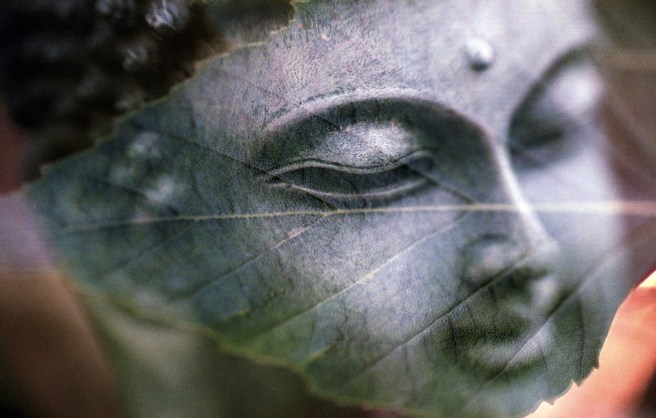
buddha leaf.jpg

Over the centuries, the lives of countless enlightened and self-realised sages have been studied and investigated, contrasting how they were prior to and after enlightenment, searching for clues as to what may aid other seekers in reaching total and complete liberation. Through this investigation several common qualities have been found which, if developed, aid the spiritual seeker to reach their goal.

In Vedanta, traditionally, there are four qualities (sadhana catustaya in Sanskrit) that a person should cultivate prior to engaging with the higher teachings of vedanta. These qualities, or qualifications,  are deemed necessary to have, at least in some degree, before enlightenment can subsequently be achieved.

A similar notion that a certain level of attainment or qualification is required before higher teachings are taught are found throughout spiritual traditions, including many ‘no-path’ schools such as Dzogchen, Mahamudra and Zen (all types of Buddhism).

The idea is that without these qualities being present the seeker may have many insights and epiphanies, but the results will be unstable, with insights often coming and going, the results being a continued sense of lack and frustration. In a more mature seeker this may result in so-called ‘flip-flopping’, when the seeker has repeated experiences of being enlightened only to find, much to their dismay, that these experiences also end and suffering resumes.

The idea is that without these qualities being present the seeker may have many insights and epiphanies, but the results will be unstable, with insights often coming and going, the results being a continued sense of lack and frustration.

Conversely, when a seeker has developed these qualities, when exposed to the higher teachings of vedanta they make quick progress and quickly attain moksha (Freedom), which does not come and go.

Below Shankara, that great proponent of advaita vedanta (non-duality), tells us that these qualities are more important than other factors in attaining moksha. This quote is taken a text attributed to Shankara called vivekachudamani, one of his most famous texts and one of my favourites when I was a seeker:

Ultimate success in spiritual endeavours depends chiefly upon the qualifications of the seeker. Auxiliary conveniences such as time and place all have a place indeed, but they are essentially secondary.
Vivekachudamani by Adi Shankara, verse 14

The 4 Qualities (sadhana catustaya)

Here are the 4 qualities, sometimes known as the ‘4 Ds’, (with the Sankrit word in brackets):

  1. Discrimination (viveka): being able to tell the difference between what is permanent and what is transient
  2. Dispassion (vairagya): not desiring what is transient/impermanent; turing away from the impermanent towards what is permanent
  3. Discipline (samadisatkasampatti): dropping trivial activities and turning towards the teaching and what is permanent.(Samadisatkasampatti  more literally refers to the six treasures, each of which will be discussed in later posts).
  4. Desire for freedom (mumuksutvam): this helps overcomes the ups and downs that life may bring and enables the seeker to overcome obstacles along the way.

There are several texts that outline these 4 qualities, perhaps the most succinct being Shankara’s Vivekachudamani which I have already mentioned above:

17. He alone is considered qualified to inquire after the supreme Reality (Brahman), who has discrimination, detachment, qualities of calmness etc., and a burning desire for liberation.
18. Great sages have spoken of four qualifications for attainment which, when present, succeed in the realization of Brahman and in the absence of which the goal is not attained.
Vivekachudamani by Adi Shankara, verses 17 & 18

Risk Factors vs qualifications

Before we look at each of the qualities in turn (in forthcoming articles), I would like to give my view. I don’t think these qualities are definite prerequisites for Freedom or self-realisation, important as they are. I think of them more as risk factors – ie. there may be an increased risk of enlightenment if these qualities are cultivated. Having the qualities does not guarantee enlightenment, and not having them does not bar one from Freedom.

It should be obvious really, but just because a particular tradition states something is necessary, doesn’t mean it is so – that’s my take on things at least. For me this Freedom is so simple, beyond simple actually, as it already is, that the whole notion of qualifications seems a bit arbitrary.

That being said, I do think they are of importance, and understanding and practising them will benefit many seekers, both in terms of increasing their day-to-day happiness, and in  terms of realising Freedom.

It has been said that this knowledge of the four qualities required for enlightement has come about by looking at and studying the lives of hundreds of spiritual seekers and knowers-of-Freedom (Jnanis) and seeing if they had anything in common. When we go through each of the four qualities I hope that you will be able to see, in a commonsense way, how these qualities work together and the principles that underlie them, and how they can indeed aid the attainment of moksha (the realisation of Freedom).

At the same time I feel it is important that we bear in mind that there are also inherent problems with the notion of qualifications which must also be understood if one is to engage with them effectively, namely that the very idea of a progressive path to Freedom (implied by the need for qualifications) can itself be an obstacle to realising that-which-already-is.

I will explore each of the above 4D’s in turn in forthcoming articles.

Ramana Maharshi: Non-duality and how to be Self-Realised (Atma-Jnana)

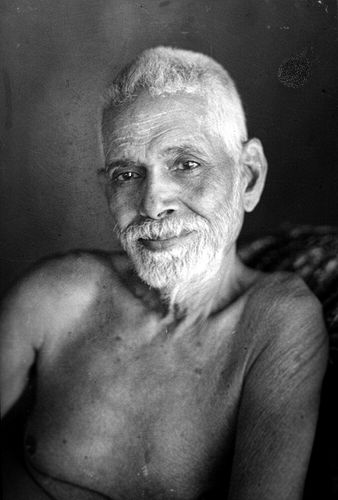
Ramana Maharshi sitting.jpg

In the following excerpts, Ramana Maharshi is telling us that we are already free, totally and completely. Can you accept this? Can you allow these words to move you? Can you intuit the truth to which they point?


If we talk of knowing the Self, there must be two selves, one a knowing self, another the self which is known, and the process of knowing. The state we call realization is simply being oneself, not knowing anything or becoming anything. If one has realized, one is that which alone is and which alone has always been. One cannot describe that state. One can only be that.


Questioner: How long does it take to reach mukti (liberation)?
Maharshi: Mukti is not to be gained in the future. It is there for ever, here and now.
Q: I agree, but I do not experience it.
M: The experience is here and now. One cannot deny one’s own Self.


Questioner: How shall I reach the Self?
Maharshi: There is no reaching the Self. If Self were to be reached, it would mean that the Self is not here and now and that it is yet to be obtained. What is got afresh will also be lost. So it will be impermanent. What is not permanent is not worth striving for. So I say the Self is not reached. You are the Self, you are already that. The fact is, you are ignorant of your blissful state. Ignorance supervenes and draws a veil over the pure Self which is bliss. Attempts are directed only to remove this veil of ignorance which is merely wrong knowledge. The wrong knowledge is the false identification of the Self with the body and the mind. This false identification must go, and then the Self alone remains. Therefore realization is for everyone; realization makes no difference between the aspirants. This very doubt, whether you can realize, and the notion `I-have-not-realized’ are themselves the obstacles. Be free from these obstacles also.


Q: There must be something that I can do to reach this state.
M: The conception that there is a goal and a path to it is wrong. We are the goal or peace always. To get rid of the notion that we are not peace is all that is required.
Q: All books say that the guidance of a Guru is necessary.
A: The Guru will say only what I am saying now. He will not give you anything you have not already got. It is impossible for anyone to get what he has not got already. Even if he gets any such thing, it will go as it came. What comes will also go. What always is will alone remain. The Guru cannot give you anything new, which you don’t have already. Removal of the notion that we have not realized the Self is all that is required. We are always the Self only we don’t realize it.


Q: When a man realizes the Self, what will he see?
M: There is no seeing. Seeing is only being. The state of Self-realization, as we call it, is not attaining something new or reaching some goal which is far away, but simply being that which you always are and which you always have been. All that is needed is that you give up your realization of the not-true as true…At one stage you will laugh at yourself for trying to discover the Self which is so self-evident.


Q: But how to do this and attain liberation?
M: Liberation is our very nature. We are that. The very fact that we wish for liberation shows that freedom from all bondage is our real nature. It is not to be freshly acquired. All that is necessary is to get rid of the false notion that we are bound. When we achieve that, there will be no desire or thought of any sort. So long as one desires liberation, so long, you may take it, one is in bondage.


Q: Is not the realization of one’s absolute being, that is, Brahma-jnana, something quite unattainable for a layman like me?
M: Brahma-jnana is not a knowledge to be acquired, so that acquiring it one may obtain happiness. It is one’s ignorant outlook that one should give up. The Self you seek to know is truly yourself.


Q: How to realize the Heart?
M: There is no one who even for a moment fails to experience the Self. For no one admits that he ever stands apart from the Self. He is the Self. The Self is the Heart.


Q: How can I attain Self- realization?
M: Realization is nothing to be gained afresh; it is already there. All that is necessary is to get rid of the thought `I have not realized’. Stillness or peace is realization. There is no moment when the Self is not. So long as there is doubt or the feeling of non-realization, the attempt should be made to rid oneself of these thoughts. They are due to the identification of the Self with the not-Self. When the not-Self disappears, the Self alone remains. To make room, it is enough that objects be removed. Room is not brought in from elsewhere.


Q: However often Bhagavan teaches us, we are not able to understand.
M: People say that they are not able to know the Self that is all pervading. What can I do ? Even the smallest child says, `I exist; I do; this is mine.’ So, everyone understands that the thing `I’ is always existent. It is only when that `I’ is there that there is the feeling that you are the body, he is Venkanna, this is Ramanna and so on. To know that the one that is always visible is one’s own Self, is it necessary to search with a candle ? To say that we do not know the atma swarupa (the real nature of the Self) which is not different but which is in one’s own Self is like saying, `I do not know myself.`


Q: But how is one to reach this state?
M: There is no goal to be reached. There is nothing to be attained. You are the Self. You exist always. Nothing more can be predicated of the Self than that it exists. Seeing God or the Self is only being the Self or yourself. Seeing is being. You, being the Self, want to know how to attain the Self. It is something like a man being at Ramanasramam asking how many ways there are to reach Ramanasramam and which is the best way for him. All that is required of you is to give up the thought that you are this body and to give up all thoughts of the external things or the not-Self.


Q: It is cruel of God’s leela (play) to make the knowledge of the Self so hard.
M: Knowing the Self is being the Self, and being means existence, one’s own existence. No one denies one’s existence any more than one denies one’s eyes, although one cannot see them. The trouble lies with your desire to objectify the Self, in the same way as you objectify your eyes when you place a mirror before them. You have been so accustomed to objectivity that you have lost the knowledge of yourself, simply because the Self cannot be objectified. Who is to know the Self ? Can the insentient body know it? All the time you speak and think of your `I’, yet when questioned you deny knowledge of it. You are the Self, yet you ask how to know the Self. Where then is God’s leela and where is its cruelty ? Because of this denial of the Self by people the sastras speak of maya, leela, etc.


Q: Yes, I still understand only theoretically. Yet the answers are simple, beautiful and convincing.
M: Even the thought `I do not realize’ is a hindrance. In fact, the Self alone is. Our real nature is mukti. But we are imagining we are bound and are making various, strenuous attempts to become free, while we are all the while free. This will be understood only when we reach that stage. We will be surprised that we were frantically trying to attain something which we have always been and are.


Q: Is mukti the same as realization?
M: Mukti or liberation is our nature. It is another name for us. Our wanting mukti is a very funny thing. It is like a man who is in the shade, voluntarily leaving the shade, going into the sun, feeling the severity of the heat there, making great efforts to get back into the shade and then rejoicing, `How sweet is the shade! I have reached the shade at last!’ We are all doing exactly the same. We are not different from the reality. We imagine we are different, that is we create the bheda bhava [the feeling of difference] and then undergo great sadhana (spiritual practices) to get rid of the bheda bhava and realize the oneness. Why imagine or create bheda bhava and then destroy it?


Q: Since realization is not possible without vasana-kshaya (destruction of mental tendencies/habits), how am I to realize that state in which the tendencies are effectively destroyed?
M: You are in that state now.
Q: Does it mean that by holding on to the Self, the vasanas (mental tendencies) should be destroyed as and when they emerge?
M: They will themselves be destroyed if you remain as you are.


Q: Is one nearer to pure consciousness in deep sleep than in the waking state?
M: The sleep, dream and waking states are mere phenomena appearing on the Self which is itself stationary. It is also a state of simple awareness. Can anyone remain away from the Self at any moment ? This question can arise only if that were possible.
Q: Is it not often said that one is nearer pure consciousness in deep sleep than in the waking state?
M: The question may as well be `Am I nearer to myself in my sleep than in my waking state?’ The Self is pure consciousness. No one can ever be away from the Self. The question is possible only if there is duality. But there is no duality in the state of pure consciousness.

New Online (Skype) Meetings: Non-Duality & Spirituality Meetings, London, UK

Since starting to hold regular non-duality and spirituality meetings in London, it has been truly wonderful to meet many of you in person and share this message with you. I’d like to take this opportunity to express my thanks and gratitude for your presence and support.

It’s also been fascinating for me to see how this simple yet dynamic teaching has the potential to alleviate suffering and liberate those who come in to contact with it, and often in a relatively short space of time.

I’ve also been amazed at how many people are thirsting for this message and are really serious about finding true answers, true resolution, not just on the level of concepts and mere explanations, but on a much deeper ‘experiential’ level.

However there are some people who find it difficult to attend the twice monthly meetings in person at the Druids Head, London, so I have now scheduled online meetings via Skype. These will be in addition to the regular meetings in person in Kingston, London. Details of how to join us can be found here or here. Dates of forthcoming meetings can be found here.

I hope this allows more people to be able to hear these wonderful teachings.

For further information on other ways you can meet with me click here.

So perhaps I will see you soon, in person or via Skype.

Wishing you peace, happiness and wisdom

Tom

Still just me

sun-19814_1920.jpg

I remember:

My life being lit up,
Without the sun shining any brighter.

Things appeared clearer,
But the same spectacles perched on my nose.

My body became just a wisp,
But I weighed the same.

Wholeness was there,
But I was still just me.