nididhyasana
Q. I already know I am not the body-mind but I still have difficulty with the teaching and with aspects of daily life
This is one of a series of introductory articles – please see the homepage of tomdas.com for more introductory articles.
Q. I ALREADY KNOW I AM NOT THE BODY MIND BUT I STILL HAVE DIFFICULTY WITH THE TEACHING AND WITH ASPECTS OF DAILY LIFE
Also see: Look – there’s no one here! (And other false teachings)
This post was originally posted on Facebook here.
Tom: Many people say ‘I know that I am not the body-mind’, not realising that:
1) if that were truly known, genuinely known, then that is full liberation, and there would be no more questions (or answers) possible, and that is the end of the spiritual journey/search, that is unending bliss and the end of all suffering forever*, transcendence of time and space and the sense of individuality.
2) when someone says ‘I know I am not the body-mind BUT…’ (and then goes on to ask a question/express some kind of doubt or dissatisfaction), this means the entity that (thinks it) knows it is not the body-mind is in fact the mind. ie. it is the mind that is stating ‘I know I am not the body-mind’. This is essentially conceptual knowledge for the mind, even if it is based in some deeper intuitive knowing. This means the basic reference point for knowledge is still the mind, ie. we are still looking to our mind/thoughts for knowledge, and this indicates ongoing identification with the (body-)mind.
3) it is not truly or actually possible for the mind to understand ‘I am not the body-mind’. It is not something the mind can ever understand or know. The mind can repeat the phrase ‘I know I am not the body-mind’ and convince itself it knows something but this is not the true understanding at all.
TRUE UNDERSTANDING
The true understanding is not of the mind at all. It is beyond the mind. The true understanding is not of the mind at all. The true understanding is simply being the Self, also known as Silence.
HOW TO KNOW TRUTH?
How to know or be the Self? And are we not already always the self?
Yes, we are already the self. We are always the self. This self-knowledge we are looking for is always and already here. We already know, in our hearts, not in our minds, all we need for the spiritual journey. Self-knowledge is always and already here with us. There is never a need to discover anything new. Never.
THE PROBLEM
So what is the problem, and why does it appear that ‘I am not liberated’?
The issue is we ignore our self knowledge, and instead we pay attention to our thoughts, our mind, and we believe the contents of our thoughts. All we have to do is come back to our own inner self knowing.
Again, the issue is that we pay attention to our thoughts and we believe the contents of our thoughts.
**READ THIS PART CAREFULLY**
Now here is an important point that many people miss: it is not possible to pay attention to thoughts and not eventually start to believe the contents of the thoughts. I repeat, it is not possible to pay attention to thoughts and not eventually get involved in the contents of the thoughts.
This is an important point which many people miss. Try this for yourself and see.
You may feel you can dispassionately observe or witness your thoughts for a short time, but they will always draw you back in again. For placing attention to thoughts is ALREADY believing their content at the root level. Placing attention to thoughts means the root thought, ‘I am the body-mind’ is ALREADY there.
For it is not possible to dispassionately pay attention to thoughts and not believe already in the concept ‘I am the body mind’.
AS SOON AS YOU PAY ATTENTION TO THOUGHTS, THE ROOT THOUGHT, THE ROOT IGNORANCE ‘I AM THE BODY-MIND’ IS ALREADY THERE.
Yes, the root thought is the thought ‘I am the body mind’. It is this root concept or thought that gives rise to all other thoughts. This root thought, also known as ignorance, also gives rise to all perception of all objects, but more on this another time perhaps.**
As soon as we pay attention to thought, this root thought ‘I am’ or ‘I am the body mind’ is already fully there.
Also see: Look – there’s no one here! (And other false teachings)
**HERE IS ANOTHER POINT PEOPLE OFTEN MISS**
The same goes for gross and subtle objects. As soon as we are aware of objects, even gross objects such as cars and trees or the body, the root thought ‘I am the body mind’ is ALREADY fully there. Ignorance is ALREADY fully there.
If you are not sure about this, you can try it for yourself. You can try to remain aware of objects without the idea that you are a person and see how that goes!
AS SOON AS YOU PAY ATTENTION TO THOUGHTS, OR ANY OBJECT, INCLUDING GROSS OBJECTS SUCH AS A CAR OR A TREE, THE ROOT THOUGHT, THE ROOT IGNORANCE ‘I AM THE BODY-MIND’ IS ALREADY THERE.
If this is not understood, then the solution to this ignorance, which is outlined below, may not be accepted by the mind, and liberation may not ensue.
Also see: Self-Enquiry is not a doing but a BEING
HOW TO REMOVE THIS IGNORANCE
To remove ignorance we must turn away from all gross and subtle objects, meaning all names and forms and external objects, as well as all internal objects such as thoughts and feelings.
The only way to do this is to attend to the subject, your very own self, your own inner self knowing, that which always is, and that which is always known. The clear way to do this becomes clear through the practice, which I explain more about below.
See Sri Ramana’s teaching in Guru Vachaka Kovai verse 291. Note he says that this is the ‘essential’ advice. Notice also the use of the word ‘alone’:
291. ‘If one wants to be saved, one is given the following true and essential advice: just as the tortoise draws all its five limbs within its shell, so one should draw the five senses within and turn one’s mind Selfward. This alone is happiness.’
Compare with Bhagavad Gita 2.58:
2.58 ‘One who is able to fully withdraw the senses from their objects, just as a tortoise withdraws its limbs into its shell, is established in Divine Knowledge’.
Many people try to distort the meaning of these verses, but the imagery of the tortoise is used to make the meaning clear. There are many more verses like this I could cite, and with these other verses, again the true meaning of these verses is very clear (see here for many more of these verses, and follow the links within that post for even more).
Please note THIS IS NOT A PATH OF SUPPRESSION OR REPRESSION OR AVOIDANCE. THIS IS NOT A PATH OF SPIRITUAL BYPASSING. It is actually a path of love, a flowering of love and self-knowledge. I touch upon this further below, and have written on this topic on tomdas.com (use the search bar). there are also many videos on this on my YouTube channel, explaining how this can be the case.
This is why all genuine spiritual traditions and teachings (ie. teachings that genuinely lead to liberation) tend towards introversion, meditation and silence in some way shape or form.
This is why, historically, many traditions across geography and time all end up in some form of silent contemplation or meditation.
It is also why, if we look inwards to our own hearts, we already intuitively know that the Truth (of ourselves) arises only in Silence, deep within our very own selves, and NOT through words, concepts or the mind.
This self-attention is also known as devotion or bhakti, for the true form of your self is God absolute, it is pure holiness, pure divinity, pure oneness devoid of ignorance and duality.
A PRACTICAL WAY FORWARD
How to practically put these teachings into practice? My suggestion, as this is what worked for me (you will need to find out what works for you!), is to listen to the teachings of Sri Ramana Maharshi. Personally I have not found another teacher or teaching that comes close, even though some other teachers and teachings sound very similar, as you go deeper you will start to see the differences more and more.**** At least this is my experience.
If you are lucky, you will feel some love and devotion and connection with Him. If this love, devotion and connection occurs, it is very wonderful and in my opinion this is something you should nurture and treasure. This connection and love and devotion is a very important part of the teaching in my experience. Unfortunately this aspect of the teaching cannot be taught and spontaneously arises when the time is right.
For most of my ‘seeking career’, not only did I NOT feel love and devotion for Ramana, but this is something I was not actively looking for, and something I actively looked down upon in fact. I never wanted a guru, I never wanted to follow another human being, I wanted to figure out for myself, like the Buddha or like J Krishnamurti. I share this as if you do not feel love or devotion in your hearts, please do not be deterred or discouraged, as this is how it was for me for many years.
But as the fates would have it, this was not to be my path, and the teachings I share are coloured by my own personal experience, so this is what I will share with you:
1) Allow the love and connection with Bhagavan Sri Ramana to develop and grow. Think about him, perhaps learn a little about his life, pray to him, praise him, adore him, prostrate yourself to him, bow to him, etc etc, as you please, find your way in this regard to connect with him and love him and, very importantly, surrender to him. This surrender is very important and often missed by some devotees. This is my view at least. At the same time know in your heart that He is You, meaning your true self. You are He, You are That, connect with that inner knowing that is your Self and that is also He.
2) regularly listen to his teachings (sravana, listening/being exposed to the teachings), regularly read his teachings, become familiar with his deeper teachings, not just the teachings he gave to the masses, many of whom were not truly interested in liberation***. See my recommended reading list for my suggestions of what to expose your mind to in terms of truly liberating teachings, and also read the introductory articles on the homepage of this site, which give a broad but thorough introduction to all aspects of the teaching. Everything you need for step two is available free of charge on tomdas.com and my YouTube channel. You will find the answer to almost any question you have somewhere on this website! There is enough content for about 20+ books on tomdas.com, all of it freely available, so use the search bar and explore the introductory articles too. Similarly my YouTube channel has hundreds of videos on it covering all aspects of the journey. Most of these videos were put together by volunteers, so hopefully the videos are particularly relevant to seekers as they have been selected and created by seekers. Do let me know if there are any areas that are not covered.
3) you will find that the more you do (1) and (2) above, the more your mind will be pulled inwards towards the self (nididhyasana, going towards or abiding as the self). When this happens, allow yourself to naturally go back to yourself. If you are unclear what this means, the more you do (1) and (2) above, the clearer it will become to you. Do not force this, allow it to happen naturally through exposure to Bhagavan Ramana’s Presence and His Teachings. (ie. nididhyasana naturally follows from sravana and manana) If you force this, it is just ego perpetuating itself. Everything should be allowed to happen naturally. THIS IS NOT A PATH OF SUPPRESSION OR REPRESSION (NO ‘SPIRITUAL BYPASSING‘ HERE PLEASE), but a natural outcome, a flowering of self-knowledge and love and bliss. 🙏❤️
4) consider attending a group, such as the satsang group I hold twice a week online, which supports both devotion (bhakti) to Sri Ramana and a knowledge and exploration of his deeper teachings (sravana and manana, manana means thinking about and reflecting upon the teachings), as well as allows time for meditation, silence and deep self attention (nididhyasana), ie. a group that supports (1), (2) and (3) above. Contact with a teacher can be very helpful, both for motivation, regular reminders and for clarification of the true way. This can supercharge and cut years off your spiritual path, as a teacher can often point something out in a few seconds that may have taken you years to realise yourself. If you don’t have access to a teacher, please don’t worry, as Devotion/Surrender and Connection will bring to you/attract to you all you need. See here for what Sri Ramana Maharshi said about satsang.
The above can be summarised as Intuitive Connection/Surrender/Bhakti, Satsang, Sravana, Manana and Nididhyasana, to use some of the traditional Sanskrit words. The term Self-Enquiry can be used to mean just Nididhyasana or alternatively it can mean the trio of sravana, manana and nididhyasana, depending on context. So we can summarise the above further as Bhakti, Satsang and Self-Enquiry being the essence of the path. Going further we will actually find that the true Satsang is to be with the Guru in our Heart, namely be with our Self as our Self, and that this is also the highest form of Bhakti, so all of these are actually One.
These are just my suggestions, and of course it is for you to decide if this is for you. My suggestion here is that if you resonate even slightly with this, then you should go with it, at least for a bit, give it a go. Of course if you do not resonate, there is likely a different way for you, at least for now… We all have our own path, at least superficially this is the way it seems. Eventually we have to come back to our self.
I hope this has been of help
Namaste and best wishes
Tom
❤️🙏 Om Namo Bhagavate Sri Arunachala Ramanaya Om 🙏❤️
❤️🙏❤️
*Forever is used figuratively as it is beyond time, not infinite time
**Bhagavan Sri Ramana explains this clearly in the first few paragraphs of his short text, ‘Who am I?’ Which explains all the teachings you need to know for liberation. The book I recommend to understand this is a book called The Path of Sri Ramana (click here to download for free) which fully explains the teachings found in the small booklet, ‘Who am I?’. This book also has a very good translation of ‘Who am I?’ in the appendix of the book, as many other translations of ‘Who am I?’ contain distortions added by the translator that are not present in the original Tamil.
***When somebody asks a question, and that seeker is not truly interested in liberation, the sage, who is like a mirror, merely reflects a superficial teaching back at them. This is spontaneous response, and not a deliberate attempt to give a superficial teaching. The teaching is given spontaneously by the true teacher according to the earnestness and sincerity and degree of desire for liberation in the seeker who is asking the question. Therefore the deeper teaching is usually only given when a seeker who has a deep and genuine desire for liberation asks a question or approaches the teacher.
****Some people think I am being partial towards my own guru (and maybe I am, despite my best efforts to be objective) but this is my personal experience, so this is what I share. If there were other teachers whose writings and teachings were as clear, I would happily say so! See my recommended reading list for the teachers that I think are equally as clear. Note I am not saying that Sri Ramana Maharshi is the only truly liberated sage, but I am merely commenting here on the quality and fidelity of the teachings that have come down to us. There may be other realised teachers, but the verbal/written teachings that have come to us may be less clear. Because we are relatively close in time to Sri Ramana, because we have his written works in his own handwriting, and because of the clarity and simplicity in which he explained the teachings, this is a huge advantage for those who are interested in these written/verbal formulations of his teaching. Of course, if you have another Guru, then by all means stick with your Guru. Ultimately, all is One and there is only truly One Guru anyway.
🙏❤️
Does Sravana alone lead to liberation? Or are Manana and Nididhyasana also required for Self-Realisation or Jnana? Advaita Vedanta | Swami Satchitanandendra Saraswati (SSS) | Shankara Advaita
Sravana means hearing the teachings. Manana means contemplating upon the teachings. Nididhyasana means meditating upon the Self or placing one’s attention onto the Self in order to discover its true nature. Together these three traditionally sum up the method or process of self-realisation according to Vedanta teachings.
However…
1) There are some that say that Sravana alone leads to self-realisation, and that Manana and Nididhyasana are ancilary practices to just remove the blocks and purify/ripen the mind and ready it for Sravana, and that Sravana is the liberating factor.
2) There are some that say Sravana is just an initial teaching to allow Nididhyasana to finally occur and it is Nididhyasana that is the primary sadhana (spiritual practice) that allows liberation to arise.
This is further confounded as there are scriptural verses in support of both of the above visions of the teachings.
eg.
‘Thus only is It realised-when these means, viz. hearing, reflection and meditation, have been gone through. When these three are combined, then only true realisation of the unity of Brahman is accomplished, not otherwise – by hearing alone.’
~ Shankara’s commentary on Brihadaranyaka Upanishad 2.4.5
and seemingly contradicting this is the following:
‘for highly qualified aspirants, [self-] knowledge can arise even from mere listening to the teachings.’
~ Shankara’s commentary of Brahma Sutra 4.1.2
Swami Satchitanandendra Saraswati’s (SSS’s) view on this
Swami Satchitanandendra Saraswati (SSS) in his many books on the teachings of Vedanta and on Shankara’s commentaries makes the following observation, namely that either Sravana, Manana or Nididhyasana can be the direct causes of liberation (ie. direct cause of removing ignorance), depending on the level of maturity of the (apparent) mind of the seeker. For those interested, Sri Ramana Maharshi says the same here, and also goes further to explain how this can be the case and also how both of the above scriptural passages do not actually contradict each other.
Here is SSS writing in the Appendix of his book ‘The Salient Features of Sankara’s Vedanta‘ on page 82:
6. Sravana (study of sacred revelation), Manana (reflective thinking) and Nididhyasana (concentrated contemplation), are all means for realizing Atman. Highly developed souls, however, who can immediately grasp the true meaning of the Vedic teaching, do not stand in need of any additional effort.
Not taking this principle into account is responsible for the divergence of opinion among commentators of Sankara Bhashya [Tom: Shankara’s commentaries] about the relation of Sravana and Nididhyasana. Of these, some aver that Sravana is the principal means and the other two are only ancillary to it; while others insist that nididhyasana is the one means to direct realization and without it mere Sravana would be of no avail.
7. Sravana and the other means [Tom: ie. manana and nididhyasana] are enjoined only in so far as they turn the seeker inwards and direct him to stay his mind on Atman, but the resultant knowledge is no object of any injunction. [Tom: ie. Sravana, manana and nididhyasana all have their intended effect of self-realisation by turning the seeker’s attention towards the Self, but that the Self that is subsequently realised as truth cannot itself be caused or created by any spitirual practice or effort or action, ie. the Self is uncaused and uncreated]
Those who cannot distinguish between the’ effort required for Sravana, etc, and the resultant knowledge in each case, have made it a matter for controversy whether or not ‘srotavyah’ [Tom: lit ‘that which is (to be) heard’, ie. scripture] and similar texts constitute true injunctions. Some of them maintain that these are all injunctions while others insist that they are seemingly injunctions in form but are really statements of fact. Some even think that they are merely eulogistic statements. [Tom: ie. because Shankara says actions or karma cannot lead to liberation or Jnana, there is argument about the ontological status of whether or not the 3 sadhanas of sravana, manana and nididyasana are karmas or not. In truth we should know that the Self is not a product of any action, but that the sadhana is an action that occurs in the phenomenal world of maya, and so if we discern properly between these 2 there is no real conflict.]
8. Manana refers to the type of reasoning suggested by the Sruti itself conducive to experience. Hence the term ‘experience’ here should be understood to mean the supersensuous intuition [Tom: ie. Self knowledge] which results from our enquiry which takes in one sweep the whole field possible of whatever is knowable.
From this the reader has to understand that use might be made of ordinary reasoning also in so far as it is conformable to the reasoning suggested by the Sruti. Advaitins do try to disclose the hollowness of other systems according to the course of reasoning accepted by themselves. But Advaita itself cannot be established by means of pure logical ratiocination. People who are not aware of this fact, often try to apply speculation or inferences based upon partial experiences to Vedanta also. Others condemn all reasoning and affirm that reasoning is of no use in matters taught by the Sruti. So they interpret Sruti according to their own predilection and place their own convictions before seekers as the final Vedantic truth.
9. Nididhyasana is that kind of spiritual discipline by means of which one concentrates one’s mind on the subtle principle, Atman. At the end of this discipline, one becomes conscious of the fact that the mind itself is a superimposition on Atman. Then the mind becomes no mind, that is to say, it is realized essentially as Atman himself.
When should I stop reading books and just do the practice? | Self-Enquiry | Sravana and Manana
How Vedanta teachings work | Swami Satchitanandendra Saraswati (SSS) on the method of Shankara’s Advaita Vedanta to attain liberation (Moksha)

At the end of his book ‘The Salient Features of Sankara’s Vedanta’ (see link to download PDF below), Swami Satchitanandendra Saraswati (SSS) lists the key features of Shankara’s Advaita Vedanta.
Among them is the notion that liberation can result from either hearing the teachings (Sravana), reflecting upon the teachings (Manana) or meditating upon the teachings (Nididhyasana), depending on the maturity and fitness of the aspirant (we can see Sri Ramana Maharshi give the same teachings here). Not realising this, SSS notes that various commentators either say that sravana alone is the only way or that nididhyasana alone is the only way.
SSS then goes on to state that the way that these methods lead to liberation is by turning the mind inwards towards the Subject-Self (Atman).
Let us see what SSS writes on page 82:
6. Sravana (study of sacred revelation), Manana (reflective thinking) and Nididhyasana (concentrated contemplation), are all means for realizing Atman. Highly developed souls, however, who can immediately grasp the true meaning of the Vedic teaching, do not stand in need of any additional effort.
Not taking this principle into account is responsible for the divergence of opinion among commentators of Sankara Bhashya about the relation of Sravana and Nididhyasana. Of these, some assert that Sravana is the principal means and the other two are only ancillary to it; while others insist that nididhyasana is the one means to direct realization and without it mere Sravana would be of no avail.
7. Sravana and the other means are enjoined only so far as they turn the seeker inwards and direct him to stay his mind on Atman, but the resultant knowledge is no object of any injunction.
Tom: We can see that the purpose of Sravana, Manana and Nididhyasana are to turn the mind inwards, towards the Subject-Self (Atman), and that the resultant ‘Knowledge’ is not a result of any action or practice, but a synonym for the One Eternal Infinite Blissful Self that is ever-attained, ie. Liberation.
Please see here for Sri Ramana’s teachings on this same topic.
Also see:
What is Vedantic Meditation? How Swami Satchitanandendra Saraswati (SSS) defines Nididhyasana
Shankara teaches two methods to ‘attain liberation’ | Swami Satchidanandendra Saraswati (SSS)
Sravana alone can result in Self-Realisation! Sri Ramana Maharshi on Sravana, Manana and Nididhyasana

Tom: Traditionally Sravana refers to hearing the teaching. Manana refers to reflecting upon and thinking about the teaching which has been heard. Nididhyasana refers to prolonged meditation upon the Self, which culminates in Samadhi, which then leads to Moksha (Liberation).
The knot of the ignorance in the heart is broken completely only when one sees his Self as secondless through Nirvikalpa Samadhi
~Adhyatama Upanishad 1.17
Here is a quote from Sri Ramana Maharshi taken from Talks with Sri Ramana Maharshi, Talk no. 249 – all writing below in black type is from Sri Ramana, with my comments being in red:
The effects of sravana may be immediate and the disciple realises the truth all at once. This can happen only for the well-advanced disciple.
[Tom: later Sri Ramana explains that this means that the advanced/ripe seeker immediately goes into Samadhi, which is the same as abiding as the Self, as soon as the teaching is heard]
Otherwise, the disciple feels that he is unable to realise the truth, even after repeatedly hearing it. What is it due to? Impurities in his mind: ignorance, doubt and wrong identity are the obstacles to be removed.
(a) To remove ignorance completely, he has to hear the truth repeatedly, until his knowledge of the subject-matter becomes perfect
(b) to remove doubts, he must reflect on what he has heard; ultimately his knowledge will be free from doubts of any kind;
(c) to remove the wrong identity of the Self with the non-self (such as the body, the senses, the mind or the intellect) his mind must become one-pointed. All these things accomplished, the obstacles are at an end and samadhi results, that is, Peace reigns.
Some say that one should never cease to engage in hearing, reflection and one-pointedness. These are not fulfilled by reading books, but only by continued practice to keep the mind withdrawn.
The aspirant may be kritopasaka or akritopasaka. The former is fit to realise the Self, even with the slightest stimulus: only some little doubt stands in his way, it is easily removed if he hears the truth once from the Master. Immediately he gains the samadhi state. [Tom: Sri Ramana is stating that by listening alone, or by some other minimal stimulus, the ripe seeker spontaneously goes into samadhi without the need for the intermediary steps of reflecting upon the teachings or meditating upon them.] It is presumed that he had already completed sravana, reflection, etc. in previous births, they are no more necessary for him.
For the other all these aids are necessary; for him doubts crop up even after repeated hearing; therefore he must not give up aids until he gains the samadhi state. Sravana removes the illusion of the Self being one with the body, etc. Reflection makes it clear that Knowledge is Self. One-pointedness reveals the Self as being Infinite and Blissful.
What is Vedantic Meditation? How Swami Satchitanandendra Saraswati (SSS) defines Nididhyasana (Vedantic Meditation)

Sri Satchidanandendra Saraswati Swamiji (SSS, 1880-1975), was a vedic scholar who devoted much of his life to studying the works of Shankara (c. 7th century BCE), the great reformer of Advaita Vedanta. SSS came to the conclusion that many of the texts that are ordinarily attributed to Shankara are not genuine works of Shankara, and that the truly genuine works of Shankara are essentially the commentaries he wrote on the Bhagavad Gita, the Upanishads, the Brahma sutras and a non-commentarial text called Upadesa Sahasri. Whilst this view remains a controversial minority view, and personally I am not convined by the evidence brought forth, many are increasingly subscribing to it.
However, of those who do follow SSS’s teachings, I have noticed some have not actually read his teachings thoroughly, especially on what he says about Nididhyasana, or Vedantic Meditation.
So in this post we will look at how SSS defines Nididhyasana. I have read many of SSS’s books, and if we look at what SSS actually writes, we will see that the method he proposes is essentially the same as the method of Self-Enquiry as proposed by Sri Ramana Maharshi. Let us see:
- The first thing to notice is that SSS states that Nididhyasana is the same as Dhyana Yoga as described in Chapter 6 of the Bhagavad Gita, and Mano-nigraha Yoga as described in Gaudapada’s Karika, and is also called Adhyatma Yoga:
Adhyatma Yoga by SSS p. 9:
‘This Adhyatma Yoga is called as ‘Nidhidhyasana’ and in the sixth chapter of the Gita this Nidhidhyasana is described as ‘Dhyana Yoga’. The complete sixth chapter of the Bhagavad Gita reveals the process of this Dhyana Yoga with its accessories. In this very Bhagavad Gita in the following contexts also this Dhyana Yoga or Adhyatma Yoga is prescribed: 13-24, 18-52. The same Adhyatma Yoga is also called as ‘Manoni-graha Yoga’ by Gaudapada in his Mandukya Karikas from 3.41 to 3.48. So in all these places the practice of Adhyatma Yoga, its accessories, the obstacles during the practice and the removal of the obstacles are described.’
- The second thing to notice is that according to SSS this Nididhyasana (or Adhyatma Yoga) is a means to Self-Realisation.
The Theory of Vedanta by SSS, p. 153:
‘In addition to Karma and Upasana, there is a kind of concentrated contemplation called the Adhyatma-Yoga which leads to immediate intuition [of Brahman, ie. Self Realisation].’
This is further clarified in the introduction to the text Adhyatma Yoga. In this context the term ‘Vastu Tantra’ means Nididhysana is a means to Self-Realisation or Truth-Realisation. (‘Vastu Tantra’ means ‘a path to the truth’, which is independent of the person who is looking, so to speak, much like science – eg. the same independent scientific truth such as the speed of light or the gravitational constant can be discovered by various people from different places – this truth is independent of the person looking. Vastu Tantra means that this is the method that leads to the supreme truth, ie. liberation or Knowlege of Brahman/Atman. This is opposed to ‘Kartru Tantra’, also known as ‘Purusha Tantra’, which refers to ‘the path of an individual’ – eg. lifting weights to build up your muscles or meditating to gain specific special powers – it is a path that leads to specific results for an individual – eg. bigger muscles or specific powers – but it does not lead to discovery of an ‘objective’ non-personal universal truth). The following is from the introduction to the text Adhyatma yoga:
‘The subject dealt with here viz. Adhyatma Yoga, also known as Dhyana Yoga, Mano-nigraha Yoga, Samadhi Yoga and Nidhidhyasana, is treated these days as a Kartru Tantra Sadana. But in the Shankara Bhashya throughout, this Adhyatma Yogi or Dhyana Yoga is treated as a Vastu Tantra Sadhana.’
- The third thing to notice is that the technique of Nididhyasana is to turn one’s attention away from objective phenomena and turn towards the Self until one ‘intuits’ the Self directly.
Here is a quote from The Method of Vedanta by SSS, p. 147, that summarises much of the above and also describes in brief the method of nididhyasana. Upasana is defined here as meditation upon objects, and nididhyasana is to turn away from objects (note that in some scriptures the word ‘upasana’ is used synonymously with ‘nididhyasana’ but here SSS is using the words in this particular way):
‘The aim of the one practising sustained meditation (nididhyasana) is different [to Upasana, defined here as meditation on forms/objects]. He tries to attain direct vision of reality (here in this very world) by turning his mind away from all else [ie. all objects]. And there is the difference — as against upasana — that after the rise of knowledge nothing further remains to be done. It is this sustained meditation that is referred to at Kathha Upanishad I.ii.12 by the name ‘Adhyatma Yoga’. In the Gita it is sometimes called ’Dhyana Yoga’ (e.g. XVI11.52). In the Mandukya Karikas it is called ’restraint of the mind’ (G.K.III.41, etc.). Its nature is described there in that latter work. Everywhere its result is described in the same way as right metaphysical knowledge, and from this comes immediate liberation (sadyo-mukti).’
SSS then quotes from the Katha Upanishad and Shankara’s commentary on it to make is point clear:
‘The wise man comes to know God through mastering Adhyatma Yoga, and gives up joy and sorrow. (Kathha I.ii.12)
[Tom: ie. through Adhyatma Yoga the Self is realised; SSS then goes on to quote Shankara’s commentary – the following is as quoted by SSS:]
Sankara’s Commentary: Mastering Adhyatma Yoga: Adhyatma Yoga means withdrawing the mind from objects and concentrating it on the Self. Having meditated on the deity, the Self, through attainment of Adhyatma Yoga, the wise man gives up joy and sorrow because there are no gradations of value in the Self.’
On p.149 of The Method of Vedanta by SSS, SSS quotes from Chapter 6 of the Bhagavad Gita to explain in more detail the method of Nididhyasana – the following is quoted by SSS as a description of Nididhyasana:
‘That yoga should certainly be practised with resolute mind. Giving up without exception all desires that come from individual, will, restraining the sense-organs on every side through the mind, one should gradually withdraw from all activity, with will and intellect firmly controlled; keeping the mind fixed on the Self, one should not think of anything. Wherever the fickle mind wanders, one should bring it back and fix it on the Self alone, under firm control. Supreme joy comes to such a yogi, whose mind is at perfect peace, whose lusts have subsided, who is sinless and who has become the Absolute.’
I hope the above is useful and helpful to you
Namaste
Tom
Here are some other articles that speak on this topic:
Remove Nama-Rupa (Name & Form) to reveal Sat-Chit-Ananda (the Self)
Advaita Vedanta: Is samadhi required for Self-Realisation according to Shankara and the Upanishads?
What exactly is Jnana (knowledge) according to Shankara and Gaudapada and the scriptures?
Neti-Neti is not Self-Enquiry | Ramana Maharshi – The 5 Sheaths (Pancha-Koshas)
I have also tried to explain how the teaching works here in this video which is well worth taking the time to watch:
Why do we find so many troubles in the world? The five types of Maya and how to remove them| Ramana Maharshi
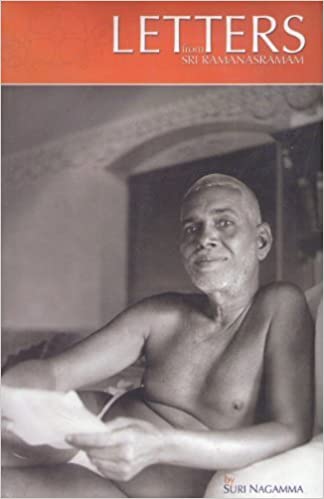
Tom: the following text is from Letters from Sri Ramanasramam, 21st May 1947. In the first part Ramana will tell us the basic theory. In the second part he will tell us how to realise this truth for ourselves:
Yesterday morning at 8 o’clock, Dr. Syed who is a worker for Arya Vignana Sangha and one of the disciples of Bhagavan, came here for Bhagavan’s darshan and asked “Bhagavan says the whole world is the swarupa of Atma. If so, why do we find so many troubles in this world?”
Tom: Swarupa, literally meaning form of the self (Swa = self; rupa = form), usually is translated as ‘essential nature’ or ‘true nature’. Atma or Atman means Self. The questioner above is therefore asking about the true nature of the Self – “if all is Atma Swarupa, then why all this trouble in the world?”
With a face indicating pleasure, Bhagavan replied “That is called Maya. In Vedanta Chintamani, that Maya has been described in five ways. One by name Nijaguna Yogi wrote that book in Canarese. Vedanta has been so well dealt with in it, it can be said to be an authority on the Vedanta language.
There is a Tamil translation. The five names of Maya are, Tamas, Maya, Moham, Avidya and Anitya.
Tamas is that which hides the knowledge of life.
Maya is that which is responsible for making one who is the form of the world appear different from it.
Moha is that which makes a different one look real: sukti rajata bhranthi — creating an illusion that mother-of-pearl is made of silver.
Avidya is that which spoils Vidya (learning).
Anitya is transient, that which is different from what is permanent and real.
On account of these five Mayas troubles appear in the Atma like the cinema pictures on the screen. Only to remove this Maya it is said that the whole world is mithya (unreal).
Atman is like the screen. Just as you come to know that the pictures that are shown are dependent on the screen and do not exist otherwise, so also, until one is able to know by Self-enquiry that the world that is visible is not different from Atma, it has to be said that this is all mithya.
But once the reality is known, the whole universe will appear as Atma only. Hence the very people who said the world is unreal, have subsequently said that it is only Atma swarupa. After all, it is the outlook that is important. If the outlook changes, the troubles of the world will not worry us. Are the waves different from the ocean?
Why do the waves occur at all? If asked, what reply can we give? The troubles in the world also are like that. Waves come and go. If it is found out that they are not different from Atma this worry will not exist.”
Tom: How many times have we heard the above metaphor about the movie and the screen? But do we truly understand? Are we truly free? The questioner therefore asks the following:
That devotee said in a plaintive tone, “However often Bhagavan teaches us, we are not able to understand.”
“People say that they are not able to know the Atma that is all-pervading. What can I do? Even the smallest child says, ‘I exist. I do; and this is mine’. So, everyone understands that the thing ‘I’ is always existent. It is only when that ‘I’ is there, the feeling is there that you are the body, he is Venkanna, this is Ramanna and the like. To know that the one that is always visible is one’s own self, is it necessary to search with a candle? To say that we do not know the Atma swarupa which is not different but which is in one’s own self is like saying ‘I do not know myself ’,” said Bhagavan.
Tom: Ramana above is stating that the Self is always realised – it is the knowledge ‘I am’. Everyone knows they exist! This is self-knowledge or self-realisation! However the problem is when you identify as being the body the trouble starts. Now the questioner has figured out the path laid out before him, and Ramana confirms the way forwards in order to secure removal of this wrong identification with the body. There is no need to gain self-knowledge, just to remove wrong identification (ignorance):
“That means that those who by sravana (hearing) and manana (repeating within oneself) become enlightened and look upon the whole visible world as full of Maya, will ultimately find the real swarupa by nididhyasana [meditation],” said the devotee.
“Yes, that is it. Nidi means swarupa; nididhyasana is the act of intensely concentrating on the swarupa with the help of sravana and manana of the words of the Guru. That means to meditate on that with undeflected zeal. After meditating for a long time, he merges in it. Then it shines as itself. That is always there. There will be no troubles of this sort if one can see the thing as it is. Why so many questions to see one’s own self that is always there?” said Bhagavan.
Ramana Maharshi: Peace is your true nature
Yesterday, two pandits came from Kumbakonam. This morning at 9 o’clock, they approached Bhagavan and said, “Swami, we take leave of you. We pray that you may be pleased to bless us that our mind may merge or dissolve itself in shanti [peace]”
Bhagavan nodded his head as usual. After they had left, he said, looking at Ramachandra Iyer,
“Shanti is the original state. If what comes from outside is rejected what remains is peace. What then is there to dissolve or merge? Only that which comes from outside has to be thrown out.
“If people whose minds are mature are simply told that the swarupa itself is shanti, they get jnana. It is only for immature minds that sravana (listening to the teachings) and manana (reflecting upon the teachings) are prescribed, but for mature minds there is no need of them. If people at a distance enquire how to go to Ramana Maharshi, we have to tell them to get into such and such a train or take such and such a path, but if they come to Tiruvannamalai, reach Ramanasramam and step into the hall, it is enough if only they are told, here is that person. There is no need for them to move any farther.”
“Sravana and manana mean only those described in Vedanta, don’t they?” asked some one. “Yes,” Bhagavan replied, “but one thing, not only are there outward sravana and manana but there are also inward sravana [listening] and manana [thinking]. They must occur to a person as a result of the maturity of his mind. Those that are able to do that antara sravana (hearing inwardly) do not have any doubts.”
Whenever any one asked what those antara sravanas are, he used to say, “Antara sravana means the knowledge of that Atma which is in the cave of the heart always illuminated with the feeling ‘aham, aham’ (‘I, I’), and to get that feeling to be in one’s heart is manana, and to remain in one’s self is nididhyasa [meditation].”
In this connection, it is worth while remembering the sloka [verse] written by Bhagavan bearing on this subject. In that sloka mention is made not only to Atma sphurana [the vibration of the Self] but also how to secure it. Securing means only remaining in one’s own self:
Brahman is glowing lustrously in the middle of the cave of the Heart in the shape of the Self, always proclaiming ‘I am, I am’. Become an Atmanishta, a Self-realised person, either by making the mind absorbed in the search of the Self or by making the mind drown itself through control of the breath.
19th July 1947, Letters from Sri Ramanasramam
You are innate divine power
You are innate divine power. You are naturally free. You are self-fulfilled: You need nothing to complete You.
Nothing can harm You. You, the essence, ever remain the same, unacting, unmoving, whole, unscathed and untouched.
You, pure consciousness, are one with everything and all-pervading, yet no individual object is You, the divine essence.
Discerning self from non-self, knowing this, realise your true nature as You. Then rest here, as the unacting, all-pervading, untouchable, self-fulfilled Self.
When this knowledge is firm, letting go of all thoughts, even thoughts of ‘I am That’, etc, simply be still and abide as the Self (ie. that which is denoted by ‘You’ above).
In the above lines, the first 3 paragraphs are when the teaching is verbally explained and listened to by the seeker (Sravana, which means listening in Sanskrit). This is the first step of the teachings in which the concepts of the teachings are delivered and explained by a teacher and thereafter retained by the seeker.
In the 4th paragraph the verbal teachings are contemplated (Manana in Sanskrit) by the seeker. This is the second step of the teaching and this eventually culminates in an experiential realisation or understanding of what the teachings are pointing towards. The conceptual understanding that occurs through Sravana of ‘Tat Tvam Asi’ (You are That) has now been transformed into a direct experiential understanding through examining ones direct experience in light of the conceptual teachings.
In the last paragraph the verbal teachings themselves are transcended once the ‘I am the body-mind’ concept is no longer present, and the instruction is simply to remain as That (Nididhyasana or meditation in Sanskrit).
It is this last stage that leads to lasting fulfilment and the end of suffering through (1) destruction of the habitual tendency (Vasana in Sanskrit) to identify as a limited entity (ie. ignorance or avidya in Sanskrit) ie.the body-mind) and (2) destruction of the egoic tendencies to seek pleasure and fulfilment through objects (Vishaya Vasanas in Sanskrit), including subtle objects such as experiences and knowledge /understanding /insights /intuitions, all of which are transient and so never lead to lasting satisfaction or lasting peace.
When suffering is no more, this is also known as ‘understanding’ or ‘knowledge’ or wisdom (Jnana), and it is also the culmination of devotional love (Bhakti) and the culmination of the path of meditation or yoga. It is also known as Self-realisation or liberation (Moksha).
 Tom Das