non-duality
Figuring it all out: enlightenment, nirvana, self-realisation
If you get this teaching,
You haven’t got it.
Ramana Maharshi: Self-inquiry (atma vichara) and doership
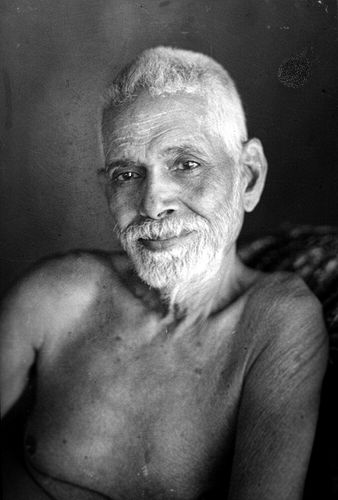
“The differences are the result of the sense of doership.
The fruits will be destroyed if the root is destroyed.
So relinquish the sense of doership.
The differences will vanish and the essential reality will reveal itself.
In order to give up the sense of doership one must seek to find out who the doer is.
Inquire within. The sense of doership will vanish.
Vichara (inquiry) is the method.”
Taken from Talks with Sri Ramana Maharshi, talk no. 429
Tom’s comments:
The root of suffering is the sense of doership, the sense that there is a doer-entity, the sense that you are a doer. The root is the notion ‘I am a doer’, the fruit is suffering and duality.
Let go of this sense of doership, either by simply relaxing and letting go, or, as suggested above, look and find out what the doer is. Look at your own direct experience: can you see the doer? Can you feel the doer? What does the doer look and feel like exactly? Where does the doer begin and end? How big is the doer? Where is the doer located?
When you look, as you keep on noticing, you may start to realise/see that there is no actual experience of a doer at all. All there are are sensations, feelings and thoughts. Specifically there may be the thought ‘I am the doer’ or ‘this is the doer’, but no actual doer is seen/experienced apart from the thought. The doer is seen to be an imagined entity. The doer (ie. ego) is revealed to be a fiction.
Ramana uses the word ‘reality’ above. What is reality? It’s just what’s left over when the sense of doership is seen through. It’s just what’s left over when false illusions are seen for what they are: false.
Non-duality: talk is cheap
–
Words are empty,
Talk is cheap.
Consciousness. Awareness. God. Brahman.
-who gives a fuck?
While you chase Supreme Unexcelled Enlightenment,
Life is already passing you by.
Where is it?
Why, it is here, of course,
And you are right in the thick of it*.
*’you’ = ‘the thick of it’
Shunryu Suzuki: How to achieve perfect calm

The following is an excerpt from the book Zen Mind, Beginner’s Mind by Shunryu Suzuki:
If you want to obtain perfect calmness in your zazen, you should not be bothered by the various images you find in your mind. Let them come, and let them go. Then they will be under control. But this policy is not so easy. It sounds easy, but it requires some special effort. How to make this kind of effort is the secret of practice.
Suppose you are sitting under some extraordinary circumstances. If you try to calm your mind you will be unable to sit, and if you try not to be disturbed, your effort will not be the right effort. The only effort that will help you is to count your breathing, or to concentrate on your inhaling and exhaling. We say concentration, but to concentrate your mind on something is not the true purpose of Zen. The true purpose is to see things as they are, to observe things as they are, and to let everything go as it goes. This is to put everything under control in its widest sense.
The true purpose is to see things as they are, to observe things as they are, and to let everything go as it goes.
Zen practice is to open up our small mind. So concentrating is just an aid to help you realise ‘big mind’, or the mind that is everything.
If you want to discover the true meaning of Zen in your everyday life, you have to understand the meaning of keeping your mind on your breathing and your body in the right posture in zazen.
You should follow the rules of practice and your study should become more subtle and careful. Only in this way can you experience the vital freedom of Zen.
Who cares about Freedom/Enlightenment/Nirvana?
Who cares about Freedom/Enlightenment/Nirvana?
Who is it that cares? What is it that cares? Why do you want it?
Notice that this very teaching is pointing out that the entity that wants these things is itself a fiction. It is the false ego that cares. And the false ego does not exist. (Note that I use the word ‘ego’ as a synonym for ‘the doer’)
What do you imagine Freedom/Enlightenment/Nirvana to be?
How do you imagine it will benefit you? Any benefit you imagine enlightenment will give you is only temporary at best. What comes can also go. Freedom means that you are free from the need for any improvements to what is.
Will enlightenment make you happy?
Happiness can come, and it will also eventually go. Happiness and all states of mind are necessarily transient. Enlightenment is already present, and is not dependent on happiness or on your state of mind. Enlightenment doesn’t need to be happy.
Maybe you think enlightenment will give you the unshakable knowledge that you are immortal?
The problem here is that all knowledge is uncertain and can be doubted. Yes, all knowledge. If you think that you are Pure Consciousness, if you think it’s all about no-mind or no-ego, if you think it’s all about Jesus or Krishna, all of these are within the field of knowledge.
You may have cleverly deduced and convinced yourself that you are immortal using some kind of conceptual construct loosely based on your experience, but the truth is that you don’t actually know.
So, what happens when you die?
How can you know what happens when you die? No matter how you justify it, no matter how many psychic intuitions or spiritual experiences you have, the truth is that you don’t know for sure what happens after death. This question may perhaps be answered by science in the future, but we are not there yet.
Think of a time when you were utterly convinced something was true, but now you look back and realise how wrong you were. Knowledge also comes and goes. Perspectives change as we grow and mature and experience different things.
Enlightenment is beyond knowledge. Enlightenment does not depend on knowledge or the mind. Unlike knowledge and states of mind, Enlightenment cannot be attained – it is already here.
OK, then what’s left?
If enlightenment is not about attaining a particular state of mind or gaining some kind of knowledge, then what’s left? What’s left is simply what’s happening. That’s all. Enlightenment/freedom/nirvana is not about attaining anything at all. All we ‘know’ is whatever is happening is whatever is happening. Or, to be more accurate, whatever we perceive (to be happening) is what we perceive.
Pointing out mistakes
We can go a little further too: we can also point out mistakes in our thinking. If we think Father Christmas is real, we can notice and point out there is no conclusive evidence to support that, despite appearances to the contrary (eg. presents appearing beneath the tree on Christmas Day). Any happiness or pleasure we derive from believing in Father Christmas is similarly based on our wrong notions/illusion.
Similarly, if someone takes themselves to be a doer, an entity that is free to choose and take credit and blame for its actions, then we can point out that there is no evidence to support this position, despite appearance to the contrary. All suffering that results from belief in doership is similarly based on illusion.
Be honest and humble
So, we can ‘know’ (ie. perceive) whatever’s happening right now, and we can know what we don’t know.
Basically, let’s be honest and humble and not pretend we know things that we don’t. Let’s not pretend we are this or that, let’s not strive towards spiritual ideals which are just mental projections – it’s all fear based, ego-based.
No need to strive
Instead of striving towards projected notions of Enlightenment, why not look at where we are. Why not stay with what is?
The movement away from what is is based on aversion and fear. Can you see that? This movement away is the fear. This movement away is the suffering. It is all based on the notion ‘I am the doer’ or ‘I am the ego’.
When we stop striving, we become available to see things as they are, we become free to understand. When we see there is no ego/doer, there is no striving/desire. Even if there is desire, there is no identification with it, so there is no suffering.
Natural relaxation, emotions and intelligence
When we see that there is nothing to attain, we naturally relax. It happens by itself. As we relax, positivity and well-being flow into our system. We are free to be ourselves, which means we are free to let whatever happens happen – we have no choice in this anyway as there is no doer!
Emotions come and go: they are free to be felt and experienced.
The body-mind starts to balance itself, regulate itself and develop its natural sensitivity and intelligence.
Insights and understanding pours through, illusion falls away as it is seen through. Love starts to blossom.
Or maybe it doesn’t. It’s for you to find out for yourself, in freedom, if what I am saying is true.
The ‘miracle’ of life
Relax, notice and discover.
What are we left with? Just what’s happening. So simple, and beyond words. Just life, living, simply, spontaneously. The fact that it or anything is here at all is the ‘miracle’.
Ramana Maharshi on non-doership and self-realisation
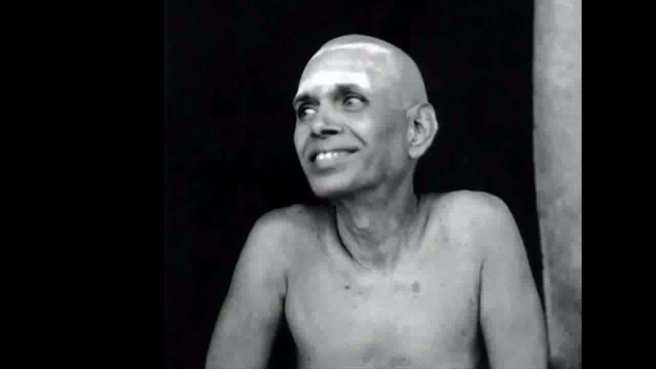
The following are verses from Guru Vachaka Kovai, one of the most authoritative texts of Ramana Maharshi’s teachings. The text was written by his disciple Muruganar and thereafter thoroughly checked and amended by Ramana. Here are some verses on the root cause of suffering, our notion of being a doer, with some commentary from Sri Sadhu Om, another devotee of Ramana:
466 The pure Bliss of peace will shine within only for those who have lost the sense of doership. For, this foolish sense of doership alone is the poisonous seed that brings forth all evil fruits.
467 Instead of going on, driven by the restless thoughts, performing actions such as ‘I should do this, I should give up that’ as if they were worthy to be done, acting according to how the Grace of God, the Lord of our soul, leads us, is the right form of truly worshipping Him
476 Whether or not one is performing actions, if the delusion of individuality – the ego, ‘I am the doer of actions’ – is completely annihilated, that is the attainment of actionlessness.
Sri Sadhu Om’s Comments: People generally think that the attainment of actionlessness is a state in which one should remain still, giving up all activities. But this is wrong. Sri Bhagavan Ramana proclaims that the loss of doership alone is the right kind of actionlessness, and this alone is nishkamya karma – action done without any desire for result.
470 The Lord who has fed you today will ever do so well. Therefore, live carefree, placing all your burden at His feet and having no thought of tomorrow or the future.
471 Know well that even performing tapas (spiritual practice) and yoga with the intention ‘I should become an instrument in the hands of the Lord Siva’ is a blemish to complete self-surrender, which is the highest form of being in His service.
Sri Sadhu Om’s Comments: Since even the thought ‘I am an instrument in the Lord’s hand’ is a means by which the ego retains its individuality, it is directly opposed to the spirit of complete self-surrender, the ‘I’-lessness. Are there not many good-natured people who engage themselves in prayers, worship, yoga and such virtuous acts with the aim of achieving power form God and doing good to the world as one divinely commissioned? It is exposed here that even such endeavours are egotistical and hence contrary to self-surrender.
Where is the room for you?
Life lives itself,
all-encompassing,
all-consuming:
-where is the room for you?
Being, moving, bright and aware
 Being,
moving,
bright and aware:
a description of you
as you already are.
Freedom is you and everything around you.
Reading Sri Ramakrishna in Calcutta: All Religions point in the same direction
I used to read the works of Sri Ramakrishna as a young teenager. I first came across his books in Calcutta whilst on holiday there visiting family. I think it was in the gargantuan Howrah railway station that I spied a pile of his books. His books, I learnt in later travels to India, can be found in railway stations all over India, often in makeshift stalls that line the train platforms. I remember having to pester my dad to give me the money (was it 5 Rupees?) to buy the small paperback that I still have to this day.
Ramakrishna could barely read and write and his teachings were written down by his friends and devotees. It fills me with a fond nostalgia to read this today (as it popped up on my Facebook timeline!)…
‘Jal’ and ‘Pani’ are 2 words for water in the Bengali language, Jal typically used by Hindus and Pani by Muslims.

