An open approach to Meditation and Self Inquiry (a natural & easy way)

When the seeker is ready to open his/her Heart, spiritual practice can become less rigidly structured and the exploration can naturally go on in a more open, kinder, loving way. Here what Tom has to say about this natural and easy way.

Please subscribe to receive future videos and support this channel!

You should not go into Laya (trance)! Annamalai Swami | Ramana Maharshi

Here are some very important teachings from Annamalai Swami regarding some dangers of meditation and entering into laya, a trance-like state:

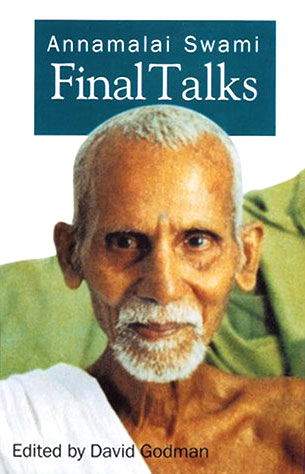
annamalai swami final talks

A foreign woman came to see Annamalai Swami. While she was prostrating to him she seemed to become unconscious of her surroundings and she remained lying on the floor at his feet for about ten minutes. This was not the first time that she had fallen into this state while in Annamalai Swami’s presence. After watching her for some time, he shouted at her:

Annamalai Swami: You should not go into laya [a trance-like state] like this! It is becoming a habit with you. It may give you some kind of temporary happiness, but it is not a happiness that helps you spiritually. It is the same as sleep. Even worldly activities are better than this laya. Get out of this habit!

[Addressing the other people present]

People occasionally went into states like this in front of Bhagavan [Sri Ramana Maharshi]. He never encouraged them, even the ones who appeared to be in deep meditation. I remember one occasion when Bhagavan noticed a man who had been sitting motionless in the hall for at least an hour, apparently in a deep meditation. Bhagavan was not fooled. He called to Kunju Swami and others who were present, ‘Shout at him, shake him, and when he wakes up, take him on giri pradakshina This is no better than sleep. This state is not good for him. He is just wasting his time sitting like this.’

Bhagavan warned us about this state, and he often cited stories of sadhus who had been stuck in this state for years. One of the most frequently told was a story about a sadhu who asked his disciple for a glass of water. While he was waiting for the man to return, he went into a deep laya state that persisted for many, many years. He was in this state so long, his disciple died, the river changed its course, and different rulers came and went. When he opened his eyes, his first comment was, ‘Where is my glass of water?’ Before he went into laya, this thought was uppermost in his mind, and decades later, this thought was still there.

Bhagavan’s comment on this story was, ‘These states are not helpful. They are not samadhi.’

[The woman who had been in laya then asked the next question:]

Question: Whenever I start meditating, soon after I start, I fall into these states. How can I prevent these laya states from coming and taking me over?

Annamalai Swami: Keep practising self-enquiry. This is the way to avoid laya. The mind usually has two habits; either it is occupied with many thoughts and engaged in activities, or it goes back to sleep. But for some people, there is this third option, falling into this laya state. You should not indulge in it because once it becomes a habit, it becomes addictive.

[Tom – note the habitual nature of going into laya which becomes familiar to the mind and so becomes a familiar state of consciousness:]

It is a pleasant state be in, but if you fall very deeply into it, it becomes very hard to get out of it. You know what this state is like because you have been in it many times. As soon as you feel the first symptoms of an approaching trance, get up and walk around. Don’t remain sitting or lying. Walk around or do some work, and above all, keep up the practice of self-enquiry.

If you practise self-enquiry constantly, you will never find yourself falling into laya. You can conquer this habit. You just need to be attentive and to do self-enquiry. 

[Tom – we see the same teachings in traditional Advaita texts too, eg. in Gaudapada’s commentary on the Mundakya Upanishad – see verse 3.44.]


Here Annamalai Swami gives a similar teaching, this time from the book Living by the Words of Bhagavan, page 345:

Questioner: It is clear that vasanas are not destroyed during sleep. Are they destroyed by nirvikalpa samadhi, or does this state have no effect on them?

Annamalai Swami: Bhagavan taught that we should aim for sahaja samadhi, not nirvikalpa samadhi. He said that it was not necessary to experience nirvikalpa samadhi prior to enjoying sahaja samadhi.

One form of nirvikalpa samadhi is like laya, like deep sleep. There is peace while the samadhi persists, but when the experience is over the mind rises and the vasanas become just as active as before.

Laya [temporary suspension of all mental faculties in a trance-like state] is virtually the same as sleep. Experiencing this state is not helpful to your sadhana. Laya is not meditation, it is unconsciousness; it is tamo-guna in a very strong form. Meditation needs an awake mind, not an unconscious one.

Sleep and laya increase the identification with the mind. You may feel a little peace during laya, but when you wake up from this state the mind becomes very active again and the peace is all lost.

Ulladu Narpadu (Reality in Forty Verses) by Sri Ramana Maharshi and the supplement

Also see: Recommended Reading: Books for Enlightenment, Liberation and Self-Realisation

Some say this is the most important original text that Sri Ramana Maharshi wrote, so I wanted to present you a standalone version of the text here without commentary. Below are links to a PDF version and also  PDF versions with commentary. Bhagavan reportedly said that K. Lakshmana Sarma’s commentary was the best of the commentaries that was available at that time.

Sri Bhagavan [Sri Ramana Maharshi] once remarked that of all the commentaries on Ulladu Narpadu which then existed, Lakshmana Sarma’s Tamil commentary was the best.

T. N.  Venkataraman (former president of Sri Ramana Ashram)

I have also included the Supplement to the Forty Verses on Reality (Ulladu Narpadu Anubandham). For me, these texts, together with Who Am I? and Upadesa Saram (both of which were also directly written by Sri Ramana Maharshi), contain all you need to know in order to attain liberation. Ramana has, in concise form, laid it all out for us.

I also highly recommend reading The Path of Sri Ramana which explains in detail the entire path to liberation.

So read and study these works to find the true teaching, the true practice and the genuine result!

All praise to Ramana!

Download PDF Version – Ulladu Narpadu with Supplement

PDF Version with commentary by K. Lakshmana Sarma

PDF Version with synopsis and commentary from SS Cohen

Ramana_3_sw

Introduction

Once Bhagavan composed twenty Tamil stanzas containing his important teachings. They were not written in any particular order to form a poem. Sri Muruganar therefore suggested that Bhagavan should write twenty stanzas more to make it the conventional forty. Accordingly, Bhagavan composed twenty more stanzas. Out of these forty, Kavyakanta Ganapati Muni selected two as the invocatory stanzas. Then Bhagavan wrote two more to complete the forty. Some of the stanzas were translations from Sanskrit, but as devotees wanted all the forty verses to be original they were eliminated and new stanzas composed in their place. The verses were all arranged in a continuous order to form a poem. Later, a supplement consisting of a second forty verses was added. So indifferent to authorship was Bhagavan that he did not write all those supplementary verses himself. When he came upon a suitable one he used it – mostly translations from Sanskrit – and when not, he made one. The verses eliminated from the original forty verses were included in the supplement.

These eighty verses are the most comprehensive exposition of the Maharshi’s teaching. A number of translations have been made and commentaries written on them. They have been published as separate books by the ashram under the titles Ulladu Narpadu, Sad Vidya and Truth Revealed. Bhagavan translated these verses into Telugu prose under the name of Unnadi Nalubadi and into Malayalam verse under the name of Saddarsanam.

Ulladu Narpadu

(Forty Verses on Reality)

Invocation

1. Unless Reality exists, can thought of it arise? Since, devoid of thought, Reality exists within as Heart, how to know the Reality we term the Heart? To know That is merely to be That in the Heart.

2. When those who are in dread of death seek refuge at the feet of the deathless, birthless Lord Supreme, their ego and attachments die; and they, now deathless, think no more of death.

The Text

1. Since we know the world, we must concede for both a common Source, single but with the power of seeming many. The picture of names and forms, the onlooker, the screen, the light that illumines – all these are verily He.

2. On three entities – the individual, God and the world – every creed is based. That ‘the One becomes the three’ and that ‘always the three are three’, are said only while the ego lasts. To lose the ‘I’ and in the Self to stay is the State Supreme.

3. ‘The World is true’; ‘No, it is a false appearance’; ‘The World is Mind’; ‘No, it is not’; ‘The World is pleasant’; ‘No, it is not’ – What avails such talk? To leave the world alone and know the Self, to go beyond all thought of ‘One’ and ‘Two’, this egoless condition is the common goal of all.

4. If Self has form, the world and God likewise have form. If Self is without form, by whom and how can form (of world and God) be seen? Without the eye, can there be sight or spectacle? The Self, the real Eye, is infinite.

5. The body is made up of the five sheaths; in the term body all the five are included. Without the body the world is not. Has one without the body ever seen the world?

6. The world is made up of the five kinds of sense perceptions and nothing else. And those perceptions are felt as objects by the five senses. Since through the senses the mind alone perceives the world, is the world other than the mind?

7. Though the world and mind rise and fade together, the world shines by the light of the mind. The ground whence the world and mind arise, and wherein they set, that Perfection rises not nor sets but ever shines. That is Reality.

8. Under whatever name or form we worship It, It leads us on to knowledge of the nameless, formless Absolute. Yet, to see one’s true Self in the Absolute, to subside into It and be one with It, this is the true Knowledge of the Truth.

9. ‘Twos’ and ‘threes’ depend upon one thing, the ego. If one asks in one’s Heart, ‘What is this ego?’ and finds it, they slip away. Only those who have found this know the Truth, and they will never be perplexed.

10. There is no knowledge without ignorance; and without knowledge ignorance cannot be. To ask, ‘Whose is this knowledge? Whose this ignorance?’ and thus to know the primal Self, this alone is Knowledge.

11. Without knowing the Self that knows, to know all objects is not knowledge; it is only ignorance. Self, the ground of knowledge and the non-Self, being known, both knowledge and ignorance fall away.

12. True Knowledge is being devoid of knowledge as well as ignorance of objects. Knowledge of objects is not true knowledge. Since the Self shines self-luminous, with nothing else for It to know, with nothing else to know It, the Self is Knowledge. Nescience It is not.

13. The Self that is Awareness, that alone is true. The knowledge which is various is ignorance. And even ignorance, which is false, cannot exist apart from the Self. False are the many jewels, for apart from gold, which alone is true, they cannot exist.

14. ‘You’ and ‘he’ – these appear only when ‘I’ does. But when the nature of the ‘I’ is sought and the ego is destroyed, ‘you’ and ‘he’ are at an end. What shines then as the One alone is the true Self.

15. Past and future are dependent on the present. The past was present in its time and the future will be present too. Ever-present is the present. To seek to know the future and the past, without knowing the truth of time today, is to try to count without the number ‘One’.

16. Without us there is no time nor space. If we are only bodies, we are caught up in time and space. But are we bodies? Now, then and always – here, now and everywhere – we are the same. We exist, timeless and spaceless we.

17. To those who do not know the Self and to those who do, the body is the ‘I’. But to those who do not know the Self the ‘I’ is bounded by the body; while to those who within the body know the Self the ‘I’ shines boundless. Such is the difference between them.

18. To those who do not know and to those who do, the world is real. But to those who do not know, Reality is bounded by the world; while to those who know, Reality shines formless as the ground of the world. Such is the difference between them.

19. The debate, ‘Does free will prevail or fate?’ is only for those who do not know the root of both. Those who have known the Self, the common source of freewill and of fate, have passed beyond them both and will not return to them.

20. To see God and not the Self that sees is only to see a projection of the mind. It is said that God is seen by him alone who sees the Self; but one who has lost the ego and seen the Self is none other than God.

21. When scriptures speak of ‘seeing the Self’ and ‘seeing God’, what is the truth they mean? How to see the Self? As the Self is one without a second, it is impossible to see it. How to see God? To see Him is to be consumed by Him.

22. Without turning inwards and merging in the Lord – it is His light that shines within the mind and lends it all its light – how can we know the Light of lights with the borrowed light of the mind?

23. The body says not it is ‘I’. And no one says, “In sleep there is no ‘I’.” When ‘I’ arises all (other) things arise. Whence this ‘I’ arises, search with a keen mind.

24. The body which is matter says not ‘I’. Eternal Awareness rises not nor sets. Betwixt the two, bound by the body, rises the thought of ‘I’. This is the knot of matter and Awareness. This is bondage, jiva, subtle body, ego. This is samsara, this is the mind.

25. Holding a form it rises; holding a form it stays; holding and feeding on a form it thrives. Leaving one form, it takes hold of another. When sought, it takes to flight. Such is the ego-ghost with no form of its own.

26. When the ego rises all things rise with it. When the ego is not, there is nothing else. Since the ego thus is everything, to question ‘What is this thing?’ is the extinction of all things.

27. ‘That’ we are, when ‘I’ has not arisen. Without searching whence the ‘I’ arises, how to attain the self-extinction where no ‘I’ arises? Without attaining self-extinction, how to stay in one’s true state where the Self is ‘That’?

28. Controlling speech and breath, and diving deep within oneself – like one who, to find a thing that has fallen into water, dives deep down – one must seek out the source whence the aspiring ego springs.

29. Cease all talk of ‘I’ and search with inward diving mind whence the thought of ‘I’ springs up. This is the way of wisdom. To think, instead, ‘I am not this, but That I am,’ is helpful in the search, but it is not the search itself.

30. When the mind turns inward seeking ‘Who am I?’ and merges in the Heart, then the ‘I’ hangs down his head in shame and the One ‘I’ appears as Itself. Though it appears as ‘I-I’, it is not the ego. It is Reality, Perfection, the Substance of the Self.

31. For him who is the Bliss of Self arising from extinction of the ego, what is there to do? He knows nothing other than this Self. How to conceive the nature of his state?

32. When the Vedas have declared, ‘Thou art That’ – not to seek and find the nature of the Self and abide in It, but to think ‘I am That, not This’ is want of strength. Because, That abides forever as the Self.

33. To say ‘I do not know myself’ or ‘I have known myself’ is cause for laughter. What? Are there two selves, one to be known by the other? There is but One, the Truth of the experience of all.

34. The natural and true Reality forever resides in the Heart of all. Not to realise It there and stay in It but to quarrel ‘It is’, ‘It is not’, ‘It has form’, ‘It has not form’, ‘It is one’, ‘It is two’, ‘It is neither’, this is the mischief of maya.

35. To discern and abide in the ever-present Reality is true attainment. All other attainments are like powers enjoyed in a dream. When the sleeper wakes, are they real? Those who stay in the state of Truth, having cast off the unreal – will they ever be deluded?

36. If we think we are the body, then to tell ourselves, ‘No, I am That’, is helpful to abide as That. Yet – since ever we abide as That – why should we always think, ‘I am That?’ Does one ever think, ‘I am a man’?

37. ‘During the search, duality; on attainment, unity’ – This doctrine too is false. When eagerly he sought himself and later when he found himself, the tenth man in the story was the tenth man and none else (ten men crossed a stream and wanted to make sure they were all safe. In counting, each one left himself out and found only nine. A passer-by gave each a blow and made them count the ten blows).

38. If we are the doers of deeds, we should reap the fruits they yield. But when we question, ‘Who am I, the doer of this deed?’ and realise the Self, the sense of agency is lost and the three karmas slip away. Eternal is this Liberation.

39. Thoughts of bondage and of freedom last only as long as one feels, ‘I am bound’. When one inquires of oneself, ‘Who am I, the bound one?’ the Self, Eternal, ever free, remains. The thought of bondage goes; and with it goes the thought of freedom too.

40. If asked, ‘Which of these three is final liberation: With form, without form, or with-and-without-form?’ I say, Liberation is the extinction of the ego which enquires ‘With form, without form, or with-and-without-form?’

Translated by Professor K. Swaminathan

Ulladu Narpadu Anubandham

Reality in Forty Verses: Supplement

Italicised verses are the verses written by Sri Ramana Maharshi, the others are verses he incorporated into the text from other texts.

Invocation

That which is the Support, the Soul, the Source, the Purpose and the Power of all this world, the Reality behind all this Appearance, That indeed exists. Let That, the Truth, abide in our Heart. (Yoga Vasishta, 8, v.12)

The Text

1. In the company of sages, attachment vanishes; and with attachment, illusion. Freed from illusion, one attains stability, and thence liberation while yet alive. Seek therefore the company of sages. (from Bhajagovindam, the “Mohamudagaram Hymn,” by Shankaracharya)

2. Not by listening to preachers, nor by study of books, not by meritorious deeds nor by any other means can one attain that Supreme State, which is attainable only through association with the sages and the clear quest of the Self. (a verse from the Yoga Vasishta, 5 – 12 – v.17)

3. When one has learned to love the company of sages, wherefore all these rules of discipline? When a pleasant, cool southern breeze is blowing, what need is there for a fan? (a verse from the Yoga Vasishta)

4. Fever is overcome by the cool light of the moon; want, by the good wish-yielding tree; and sin by the Holy Ganges. Those three – fever and want and sin – all flee at the august sight of the peerless sage. (Subhashita Ratna Bhandargara, chapt. 3, v. 6)

5. Holy rivers, which are only water, and idols, which are made of stone and clay, are not as mighty as the sages. For while they make one pure in course of countless days, the sage’s eyes by a mere glance purify at once. (from Srimad Bhagavatam, chapt. 48, v. 31, tenth canto)

6. Disciple: Who is God?

Master:Hewho knows the mind.

D:MySelf, the Spirit, knows my mind.

M: Therefore you are God; and also the sruti declares that there is only one God, the Knower.

M: By what light do you see?

D: The sun by day, the lamp by night.

M: By what light do you see these lights?

D: The eye.

M: By what light do you see the eye?

D: The mind.

M: By what light do you know the mind?

D: My Self.

M: You then are the Light of Lights.

D: Yes, That I am.(from Ekasloki, by Shankaracharya)

8. In the centre of the Heart-Cave there shines alone the one Brahman as the `I, I’, the Atman. Reach the Heart by diving deep in quest of the Self, or by controlling the mind with the breath, and stay established in the Atman.

9. In the lotus of the Heart is pure and changeless Consciousness in the form of the Self. When the ego is removed, this Consciousness of Self bestows liberation of soul. (Devikalottaram, v. 46)

10. The body is like an earthen pot, inert. Because it has no consciousness of `I’, and because daily in bodiless sleep we touch our real nature, the body is not `I’. Then who is this `I’? Where is this `I’? In the Heart-cave of those that question thus, there shineth forth as `I’, Himself, the Lord Siva of Arunachala.

11. Who is born? It is only he who asks `Whence am I born?’ that is truly born in Brahman, the Prime Source. He indeed is born eternally; He is the Lord of saints; He is the ever-new. (On celebrating Sri Bhagavan’s jayanti))

12. Cast off the notion, `This vile flesh am I,’ and seek the ceaseless bliss of Self. To seek the Self while cherishing this perishing flesh is like trying to cross a stream by clinging to a crocodile.

13. The way of charity, penance, sacrifice, dharma, yoga and Bhakti; and the Goal of Heaven, Reality, Peace, Truth, Grace, Silence, Stability, Deathless Death, Knowledge, Renunciation, Liberation, Bliss – all this is only ceasing to think that the body is the Self.

14. What is action, or devotion, or union, or knowledge? It is to inquire, `Whose is this action, or indifference, or separateness, or ignorance?’ Inquiring thus, the ego vanishes. To abide as the Self, wherein these eight have never been, this is True existence.

15. Not realizing that they themselves are moved by an energy not their own, some fools are busy seeking miraculous powers. Their antics are like the boasting of a cripple who says to his friends: `If you raise me to my feet, these enemies are nothing before me.’

16. Since the stilling of the mind is true liberation and miraculous powers are unattainable without an act of the mind, how can they whose mind is set on such powers enter the bliss of liberation which is the ending of all activity of the mind?

17. While God sustains the burden of the world, the spurious ego assumes its burden, grimacing like an image on a tower, seeming to support it. If the traveller in a carriage, which can carry any weight, does not lay his luggage down but carries it painfully on his head, whose is the fault?

18. Between the two paps, below the chest, above the stomach, there are six organs of various colours. Of these, one, looking like a lily bud, is the Heart, at two digits’ distance to the right of the centre. (from Ashtanga Hridayam, Malayalam)

19. Its mouth is closed. Within its cavity is seated a heavy darkness, filled with all desires; all the great nerves are centred there; the home it is of breath, mind, light of knowledge. (from Ashtanga Hridayam, Malayalam)

20. The Lord whose home is the interior of the Heart-Lotus is extolled as Lord of the Cave. If by force of practice the feeling `I am He, I am the Lord of the Cave’ becomes firmly established, as firmly as your present notion that you are the ego is established in the body, and thus you stand forth as that Lord of the Cave, the illusion that you are the perishable body will vanish like darkness before the rising sun. (composed by Bhagavan, employing the ideas of two verses found in the Prabhulinga Leela, v. 45, 46, Kannada)

21. When Rama asked, `Which is the great mirror in which we see these images of things? What is it that is called the Heart of all the beings in the world?’ Vasishta answered, `When we reflect we see that all the beings in the world have two different hearts.’ (Yoga Vasishta, 5 – 78 – v. 32, 33)

22. One of these is worth acceptance, the other worth rejection. Listen how they differ. The organ called the heart placed somewhere in the chest of the physical body is worth rejection. The Heart which is of the form of Pure Awareness is worth acceptance; it is both within and without — it has no inside or out. (Yoga Vasishta, 5 – 78 – v. 34, 35)

23. That indeed is the essential Heart and in it all this world abides. It is the mirror in which all things are seen.It is the source of all wealth. Hence Awareness may be termed the Heart of all beings. The Heart is not a part of the perishable body inert like a stone. (Yoga Vasishta, 5 – 78 – 36, 37)

24. Therefore by the practice of merging the ego in the pure Heart which is all-Awareness, the tendencies of the mind as well as the breath will be subdued. (Yoga Vasishta, 5 – 78 – v. 38)

25. By constantly meditating in the Heart, `That pure unconditioned Awareness that is Siva, That am I,’ remove all attachment of the ego. (Devikalottara, v. 47)

26. Having investigated the various states of being, and seizing firmly by the mind that State of Supreme Reality, play your part, O hero, ever in the world. You have known the Truth which is at the Heart of all kinds of appearances. Without ever turning away from that Reality, play in the world, O hero, as if in love with it. (Yoga Vasishta, 5 – 18 – v. 20 to 23)

27. Seeming to have enthusiasm and delight, seeming to have excitement and aversion, seeming to exercise initiative and perseverance, and yet without attachment, play, O hero, in the world. Released from all bonds of attachment and with equanimity of mind, acting outwardly in all situations in accordance with the part you have assumed, play as you please, O hero, in the world. (Yoga Vasishta, 5 – 18 – v. 24 to 26)

28. He who by Knowledge of the Atman is established in the Truth, he who has vanquished the five senses — call him the fire of knowledge, the wielder of the thunderbolt of Knowledge, the Conqueror of Time and the Hero who has slain death. (a verse from the Yoga Vasishta)

29. Just as on the earth with the coming of spring the tree shines in fresh beauty of foliage, even so he who has seen the Truth will shine with growing lustre, intelligence and power. (Yoga Vasishta, 5 – 76 – v. 20)

30. Like one to whom a tale is told while his thoughts are wandering far away, the mind which is free from attachment is inactive while it acts. But the mind immersed in attachments is active, though it does not act, like the sleeper lying motionless here, who in his dream climbs a hill and tumbles down. (Yoga Vasishta, 5 – 56 – v. 13, 14)

31. As the movement of the cart, its standing still and its being unyoked are to the passenger asleep in the cart, even so are action, contemplation and sleep to the Sage asleep in the cart of his body.

32. For one who seeks waking, dreaming or sleep there is a state beyond these three, a wakeful sleep, a fourth state called the turiya. But because this turiya state alone is real and the three apparent states are illusory, the `fourth’ state is indeed the transcendental state.

33. The statement that the jnani retains prarabdha while free from sanchita and agami is only a formal answer to the questions of the ignorant. Of several wives none escapes widowhood when the husband dies; even so, when the doer goes, all three karmas vanish.

34. For unlearned folk there is only one family consisting of wife, children and dependants. But in the mind of those with much learning there are many families of books, theories and opinions as obstacles to yoga(Subhashita Ratna Bhandagara, Prakarana VI, Shanta Rasa Nirdesha, v. 13)

35. What is the use of letters to those lettered folk who do not seek to wipe out the letters of fate by inquiring, `Whence are we born?’ What else are they but gramaphones, O Lord of Arunachala? They learn and repeat words without realizing their meaning.

36. The unlettered are easier saved than those who are learned but unsubdued. The unlettered are free from the clutches of the demon Pride, they are free from the malady of many whirling thoughts and words; they are free from the mad pursuit of wealth; they are free from many, many ills.

37. Though a man looks on the world as a wisp of straw and holds all sacred lore in his hand, it is hard for him to escape from thralldom if he has yielded to vile Flattery, the harlot. (from Sadhaka Avasta, by Sri Sadasiva Brahmendra)

38. Without thinking of oneself as apart from others,without swerving from one’s true state, if one abides always in one’s Self, who is there alien to one? What matters it what people say of one? What matters it if one praises or blames oneself?

39. Keep advaita within the Heart. Do not ever carry it into action. Even if you apply it to all the three worlds, O Son, it is not to be applied to the Guru. (Tattvopadesa, v. 87, by Shankaracharya)

40. I shall declare truly the essence of the final doctrine of the Vedanta: when the ego dies and becomes That, the Self of Pure Awareness, That alone abides.

Translated by Prof. K. Swaminathan
Sri Ramana Gita PDF Download | Ramana Maharshi: Bhakti Yoga as a complete path to Final Liberation

This is one of a series of introductory articles – please see the homepage of tomdas.com for more introductory articles. Also see: Recommended Reading: Books for Enlightenment, Liberation and Self-Realisation

Here, in the Sri Ramana Gita, Bhagavan Sri Ramana Maharshi speaks of Bhakti (devotion towards God or Guru or Self) as a complete path to the Divine and a complete path to Spiritual Liberation.

May we praise Sri Ramana for his words!

May we have gratitude to Sri Ramana for his teachings!

May we love Sri Ramana for His Presence in Our Hearts!

All praise to Ramana!

All praise to Him who is God!

All praise to Him in our Hearts!

42-reclining-on-the-sofa-h-563x400

SRI RAMANA GITA

CHAPTER 16: ON BHAKTI

1. Then, questioned regarding Bhakti, the best of men, the highly auspicious Bhagavan Ramana Maharshi, spoke thus:

2. The Self is dear to all. Nothing else is as dear. Love, unbroken like a stream of oil, is termed Bhakti.

3. Through Love the Sage knows that God is none other than his own Self. Though the devotee, on the other hand, regards Him as different from himself, yet he too merges and abides in the Self alone.

4. The Love which flows (unbroken) like a stream of oil, towards the Supreme Lord, leads the mind infallibly into pure Being, even without one’s desiring it.

5 & 6. When the devotee, regarding himself as a separate, limited individual of poor understanding, and desirous of deliverance from suffering, takes the omnipresent Supreme Reality to be some deity and worships it, even then he attains in the end That (alone).

7. Oh best of men, one who attributes names and forms to the deity, through those very names and forms, transcends all name and form.

8. When Bhakti has grown perfect, then hearing once (about Reality) is enough, for it confers perfect Knowledge.

9. Bhakti not continuous like a stream is called intermittent Bhakti. Even this is bound to result in supreme Bhakti.

10. One who practises Bhakti for a desired end finds no fulfillment on attaining it and then again worships God for the sake of eternal happiness.

11. Bhakti, even when accompanied by desire, does not cease with the achievement of the desire. Faith in the Supreme Person develops and goes on increasing.

12. Growing thus, Bhakti in course of time becomes perfect.

By means of this perfect and supreme Bhakti, even as by jnana, one crosses (the ocean of) Becoming.

This is the sixteenth chapter entitled ‘ON BHAKTI’ in Sri Ramana Gita, the Science of Brahman, and the Scripture of Yoga composed by Ramana’s disciple Vasishta Ganapati.


Tom:

May we praise Sri Ramana for his words!

May we have gratitude to Sri Ramana for his teachings!

May we love Sri Ramana for His Presence in Our Hearts!

All praise to Ramana!

All praise to Him who is God!

All praise to Him in our Hearts!

Ramana Maharshi: The world should be considered like a dream

ramana umbrella


The following are explained in this post:

  1. The world should be considered like a dream
  2. The external guru that appears as an external form is a dream-guru
  3. The world is simply thought; the universe is made up of thought
  4. The guru does not need to teach others or ‘spread the word’
  5. The false ideas ‘I do not want liberation’ and ‘Let all others be liberated before me first’ are discussed
  6. Other people do not need to be saved, ie. the focus should be on your own realisation
  7. There is only one jiva (seperate ego-self) – ie. eka jiva vada

The Dream

Here is an essential instruction from Ramana Maharshi:

‘The world should be considered like a dream’
Who Am I?


The following are supportive quotes:

Waking is long and a dream short; other than this there is no difference
Who Am I?

The present waking state is no more than a dream
Talks 244

The so-called waking state is itself an illusion
Talks 199


The Dream Guru

In the following two quotes we see that Ramana is describing the Guru or Teacher or Teaching as a mere dream-guru or dream-teaching, a part of the illusion. There is no real teaching, no real teacher, no real seeker, no real liberation. These are all illusion. The example given is that we dream the guru up, rather like dreaming of a tiger that then causes us to awake from the dream:

A man dreams of a tiger, takes fright and wakes up
Talks 473

It is said that awaking from ignorance is like awaking from a fearful dream of a beast
Talks 627

In the following dialogue this is also made clear:

A Swami asked: I feel toothache. Is it only a thought?
Ramana Maharshi: Yes.
Questioner: Why can I not think that there is no toothache and thus cure myself?
Ramana Maharshi: When engrossed in other thoughts one does not feel the toothache. When one sleeps toothache is not felt.
Questioner: But toothache remains all the same.
Ramana Maharshi: Such is the firm conviction of the reality of the world that it is not easily shaken off. The world does not become, for that reason, any more real than the individual himself.
Questioner: Now there is the Sino-Japanese war. If it is only in imagination, can or will Sri Bhagavan imagine the contrary and put an end to the war?
Ramana Maharshi: The Bhagavan of the questioner [ie. Sri Ramana Maharshi] is as much a thought as the Sino Japanese war. (Laughter.)

Talks 451


The Guru does not need to teach others

In the following excerpt Ramana points some flawed reasoning. Firstly why does a liberated sage not need to go out and preach to the world?

People often say that a mukta purusha [ie. liberated person; mukta = liberated, purusha = person] should go out and preach his message to the people. They argue, how can anyone be a mukta so long as there is misery by his side?

True. But who is a mukta? Does he see misery beside him? They want to determine the state of a mukta without themselves realising the state.

From the standpoint of the mukta their contention amounts to this: a man dreams a dream in which he finds several persons. On waking up, he asks, ‘Have the dream individuals also wakened?’ It is ridiculous.

Talks 498


Two false teachings

Secondly, the flawed thinking in those who say to themselves:

a) ‘I don’t mind if I don’t get mukti’ or

b) ‘Let me be the last person to be liberated and instead help all others become liberated first’. (ie. what in Mahayana Buddhism is known as the Bodhisattva ideal)

Again, a good man says, “It does not matter even if I do not get mukti. Or let me be the last man to get it so that I shall help all others to be muktas before I am one.” It is all very good. Imagine a dreamer saying, “May all these wake up before I do”. The dreamer is no more absurd than the amiable philosopher aforesaid.

Talks 498


Others do not need to be saved

Does a man who sees many individuals in his dream persist in believing them to be real and enquire after them when he wakes up?
Talks 571


There are not many jivas/egos/people

Here a questioner asks are there not many jivas? Ramana informs the questioner there is only one jiva:

A question was asked why it was wrong to say that there is a multiplicity of jivas. Jivas are certainly many. For a jiva is only the ego and forms the reflected light of the Self. Multiplicity of selves may be wrong but not of jivas.

M.: Jiva is called so because he sees the world. A dreamer sees many jivas in a dream but all of them are not real. The dreamer alone exists and he sees all. So it is with the individual and the world.

There is the creed of only one Self which is also called the creed of only one jiva*. It says that the jiva is only one who sees the whole world and the jivas therein.

Talks 571

*This is called the doctrine of eka jiva vada (the view there is only a single jiva/ego/person). Our own body-mind, and the body-mind of apparent others are all projections of the Self. Like a dream, it appears we are many, but actually this entire dream world is an illusion, and there is only the Dreamer, the Self, the Consciousness from which all is projected. Tat Tvam Asi, You are That.


Ramana Maharshi:

The world should be considered like a dream’

Waking is long and a dream short; other than this there is no difference.
Who Am I?

The present waking state is no more than a dream.
Talks 244

The so-called waking state is itself an illusion
Talks 199

Yoga Vasishta clearly defines Liberation as the abandonment of the false and remaining as Being.
Talks 442

A man dreams of a tiger [the guru], takes fright and wakes up
Talks 473

It is said that awaking from ignorance is like awaking from a fearful dream of a beast.
Talks 627

A Swami asked: I feel toothache. Is it only a thought?
Ramana Maharshi: Yes.
Talks 451

The Bhagavan of the questioner [ie. Sri Ramana Maharshi] is as much a thought as the Sino Japanese war.
Talks 451

Does a man who sees many individuals in his dream persist in believing them to be real and enquire after them when he wakes up?
Talks 571

Jiva is called so because he sees the world. A dreamer sees many jivas in a dream but all of them are not real. The dreamer alone exists and he sees all. So it is with the individual and the world.
Talks 571

There is the creed of only one Self which is also called the creed of only one jiva. It says that the jiva is only one who sees the whole world and the jivas therein.
Talks 571


Also see:

Sri Ramana Maharshi: Solipsism and the shock of hearing the Ajata teachings

My mind is sometimes restless, sometimes peaceful, what should I do? (Ramana Maharshi)

ramana-maharshi face
Sri Ramana Maharshi

A man from Cocanada [Kakinada] asked:

‘My mind remains clear for two or three days and turns dull for the next two or three days; and so it alternates. What is it due to?’

Sri Ramana Maharshi:

It is quite natural; it is the play of brightness (sattva), activity (rajas) and darkness (tamas) alternating. Do not regret the tamas; but when sattva [peace] comes into play, hold on to it fast and make the best of it.

Taken from Talks with Sri Ramana Maharshi, Talk number 52

Tom: here the advice is clear; when you are peaceful, take advantage of this peace and make the most of it – abide in this peace and know yourself to be beyond all.

The four types of Liberated Sage (Jnani) | Advaita Vedanta |Kaivalya Navaneeta

Kaivalya Navaneeta front cover ramana

In the text Kaivalya Navaneeta (The Cream of Liberation; a 16th century traditional advaita text that was often recommended by Sri Ramana Maharshi), four types of liberated sages are described starting at verse 94.

Understanding these descriptions can help explain and reconcile the different views of liberation one may come across, such as whether or not the body and world appear after liberation, what type of lifestyle a liberated sage would exhibit and whether or not they would experience any kind of afflictive or suffering-causing emotions at all. My comments are in italicised red:


94. The wise, remaining like ether and liberated even here, are of four classes, namely Brahmavid (i.e. a knower of Brahman), vara, varya, and varishta, in order of merit.

Tom: The four types of liberated sage are called Brahmavid, Vara, Varya and Varishta. First we will discuss the Brahmavid or or ‘knower or Brahman’ (Vidya is Sanskrit for knowledge). The phrase ‘remaining like ether’ refers to the previous verse 93 and means the wise sage abides as consciousness, fully liberated.

95. The Brahmavids who by steadfast practice have gained clear realization of Brahman, continue to perform even the hard duties of their caste and stage in life, exactly as prescribed by the shastras for the benefit of others, without themselves swerving from their supreme state.

96. Should passions rise up they disappear instantly and cannot taint the mind of the Brahmavids who live in society detached like water on a lotus leaf. They look ignorant, not showing forth their knowledge, and remain mute owing to intensity of inward Bliss.

Tom: the first type of liberated sage is called the Brahmavid. They continue to be fully engaged in society and the world whilst simultaneously being liberated. Occasionally afflictive emotions and passions arise but they are short lived and do not affect the Brahmavid. They may seem like an ordinary person with nothing particularly special about them, but they are often outwardly quiet.

97. Prarabdha, i.e., karma which is now bearing fruit, differs according to the actions in past incarnations. Therefore the present pursuits also differ among jnanis, who are all, however, liberated even here. They may perform holy tapas; or engage in trade and commerce; or rule a kingdom; or wander about as mendicants.

Tom: Prarabdha essentially refers to the destiny of the particular body-mind based on its previous actions, ie. its karma . This verse states that the actions of the (body of the) jnani  or sage (jnani literally means ‘knower’, ie. ‘knower of truth’ or ‘knower of Self’) varies depending on what the activities the body did prior to realisation. So the sage may, for example, perform holy penance, or engage in the world, or be a ruler, or a wandering monk. Basically there is no fixed description of what a sage would do in daily life in terms of their ‘occupation’.

98. They would not think of the past or future; would partake of what comes unsolicited; would not wonder, even if the sun turned into the moon, or at any other marvel, whether the sky were to spread its shoots down like a banyan tree or a corpse were to be revived; nor would they distinguish good and bad, for they always remain as the unchanging Witness of all.

Tom: the last point on the Brahmavid is that they are unaffected by whatever appears to happen, no matter how marvelous, calamitous or ridiculous. Why? Because they are liberated, ‘fixed’ as the Self, remaining as the ever-unchanging ‘Witness of all’.

Now let us look at the other three classes of Jnani or Liberated Sage:

99. Among the other three classes, the vara and the varya remain settled in samadhi. The vara feels concern for the maintenance of the body; the varya is reminded of it by others; the varishta never becomes aware of the body, either by himself or through others.

Tom: Here the vara and varya are both aware of the body at times whilst the fourth type of Jnani, the varishta, is not even ever aware of the body at all, even though others may perceive him or her as a body. The vara has a desire to maintain the body, whilst the varya occasionally becomes aware of their body if someone else prompts them.

So which of these types of liberation is best? Let us see…

100. Although there are distinguishing characteristics in the lives of the different Sages, who are themselves very rare in the world, yet there is absolutely no difference in the experience of Liberation. What can be the use of the hard-won samadhi? The Brahmavid, who is outwardly active, seems sometimes to feel the misery of calamities, whereas the others remain in unbroken Bliss.

Tom: Here it is made clear: all of these four types of sage are rare, and all are the same in that they are all fully liberated. They all in themselves have the same essential experience of Liberation, the differences being only superficial and present from the point of view of other non-liberated people, ie. from the point of view of ignorance.

However a point is raised that is dealt with in the next verse. The Brahmavid may appear to suffer and stress like the unliberated, whereas the other three categories of liberated sage are lost in eternal Peace and Bliss. How can this be? How can the Brahmavid be said to be truly liberated?

101. Now if the Brahmavids live like the ignorant, how are they free from the cycle of births, and how is their ignorance gone? The all-pervading ether remains untainted by anything; the other four elements are tainted by contact with objects. So it is with the Brahmavid and the ignorant.

Tom: The answer given is that, as Consciousness, the Brahmavid remains unaffected and untouched by whatever seems to happen in the world of objects that we ordinarily call life.


Tom’s summary: So we can see there are various types of liberated sage that are all fully and totally liberated, but appear different to each other only from the point of view of ignorance or the ‘unliberated’. Some jnanis are active in the world and appear to stress and suffer, some are immersed in constant experiential bliss, some are totally unaware of their body or only aware of it to some degree, and others seem to have a need to look after their body. Some appear to be holy sages, other just ordinary mundane people int he world.  However, all of this does not matter from the point of view of Liberation – Liberation is only One. Know Thy Self!

Ramana Maharshi on the two types of liberation: (1) liberation in this life (Jivanmukti) and (2) liberation after death (Videhamukti)


ramana all that we need do is to keep quiet

The following dialogue is taken from Talks with Sri Ramana Maharshi, Talk number 265, my additions are in red:

Questioner: There are said to be sadeha mukta (liberated in body) and videha mukta (liberated without body).

Sri Ramana Maharshi: There is no liberation, and where are muktas [the liberated ones]?

Questioner: Do not Hindu sastras [scriptures] speak of mukti [liberation]?

Sri Ramana Maharshi: Mukti is synonymous with the Self. Jivan mukti (liberation while alive) and videha mukti (liberation after the body falls) are all for the ignorant. The Jnani  [liberated one] is not conscious of mukti or bandha (bondage).

Bondage, liberation and orders of mukti are all said for an ajnani [ignorant or unliberated one] in order that ignorance might be shaken off.

There is only mukti and nothing else.


The following is the taken from Vichara Shangraham, a text attributed to Sri Ramana Maharshi. Vichara Sangraham is often translated simply as ‘Self Enquiry’ and literally means ‘A compendium of (Self) Enquiry’. This excerpt is very the last section of the text:

Question: What are the characteristics of the jivan-mukta (the liberated in life) and the videha-mukta (the liberated at death)?

Sri Ramana Maharshi: ‘I am not the body; I am Brahman which is manifest as the Self. In me who am the plenary [absolute] Reality, the world consisting of bodies etc, are mere appearance, like the blue of the sky’. He who has realized the truth thus is a jivan-mukta.

Yet so long as his mind has not been resolved, there may arise some misery for him because of relation to objects on account of prarabdha (karma which has begun to fructify and whose result is the present body) [ie. due to destiny], and as the movement of mind has not ceased there will not be also the experience of bliss.

The experience of Self is possible only for the mind that has become subtle and unmoving as a result of prolonged meditation. He who is thus endowed with a mind that has become subtle, and who has the experience of the Self is called a jivan-mukta. It is the state of jivan-mukti that is referred to as the attributeless Brahman and as the Turiya.

When even the subtle mind gets resolved, and experience of self ceases, and when one is immersed in the ocean of bliss and has become one with it without any differentiated existence, one is called a videha-mukta. It is the state of videha-mukti that is referred to as the transcendent attributeless Brahman and as the transcendent Turiya. This is the final goal.

Because of the grades in misery and happiness, the released ones, the jivan-muktas and videha- muktas, may be spoken of as belonging to four categories — Brahmavid, vara, variyan and varishtha. But these distinctions are from the standpoint of the others who look at them; in reality, however, there are no distinctions in release [liberation] gained through jnana [self-knowledge].

Ramana Maharshi on those who claim to have surpassed the traditional notion of enlightenment

Last month I wrote a post titled Q. Some teachers (eg. Bentinho Massaro, Anadi, Adi Da Samraj) claim to have surpassed the traditional notion of enlightenment and say co-creation is the next evolutionary step…any thoughts?.

There have always been spiritual teachers who claim to have gone beyond the traditional notions of enlightenment and who claim that they have had a special enlightenment that is somehow unique to them. Often their teachings, in my view, leave much to be desired and wreak of egotism, and those seekers who know what to look for sense this fairly quickly. Their teachings often rehash a mixture of traditional and non-traditional methods, which is fine in itself as far as I am concerned, but then they mix in a good helping of old fashioned ego and narcissism: ‘I am the best, follow me’. The teachings are often presented in a more glamorous way which is ultimately less effective at best and very damaging at worst.

It may interest you to know that Ramana Maharshi was also asked about these types of teachers who claim something more that ‘traditional realisation’ and something special for themselves, and in this post I will give you an example of what Ramana said in response to this.

The following excerpt is from Talks with Sri Ramana Maharshi, Talk 201, and Ramana is initially asked about Sri Aurobindo who apparently stated that Self-Realisation was only the beginning of the journey and not the end:


They further asked for Maharshi’s opinion of Sri Aurobindo’s Yoga, and his claim to have probed beyond the experiences of the Vedic rishis and the Mother’s opinion of the fitness of her disciples to begin with the realisation of the Upanishadic rishis.

Tom’s comment: ‘The Mother’ or Mirra Alfassa was a westerner from Paris who taught alongside Sri Aurobindo and set up Sri Aurobindo’s Ashram

M.: Aurobindo advises complete surrender. Let us do that first and await results, and discuss further, if need be afterwards and not now. There is no use discussing transcendental experiences by those whose limitations are not divested. Learn what surrender is. It is to merge in the source of the ego. The ego is surrendered to the Self. Everything is dear to us because of love of the Self.

Tom’s comments: you can see how Ramana Maharshi’s first response is not to criticise another teacher or teaching but to find some common ground and focus upon this. This would presumably be of most benefit for the seeker, which is Ramana’s primary concern, rather than engaging in some intellectual debate or trying to prove his teaching style to be superior

The Self is that to which we surrender our ego and let the Supreme Power, i.e., the Self, do what it pleases. The ego is already the Self’s. We have no rights over the ego, even as it is. However, supposing we had, we must surrender them.

D.: What about bringing down divine consciousness from above?

Tom’s comments: this presumably was another of Sri Aurobindo’s teachings, namely that divine consciousness should descend onto us from above. Here Ramana responds by quoting various scriptures:

M.: As if the same is not already in the Heart? “O Arjuna, I am in the expanse of the Heart,” says Sri Krishna “He who is in the sun, is also in this man”, says a mantra in the Upanishads. “The Kingdom of God is within”, says the Bible. All are thus agreed that God is within. What is to be brought down? From where? Who is to bring what, and why?

Realisation is only the removal of obstacles to the recognition of the eternal, immanent Reality. Reality is. It need not be taken from place to place.

D.: What about Aurobindo’s claim to start from Self-Realisation and develop further?

M.: Let us first realise and then see.

Tom’s comments: Again, Ramana’s instinct is to sidestep any intellectual argument and instead encourage the seeking in practical terms. Ramana now considers other theories on enlightenment and liberation, and again gives a practical response:

Then Maharshi began to speak of similar theories: The Visishtadvaitins say that the Self is first realised and the realised individual soul is surrendered to the universal soul. Only then is it complete. The part is given up to the whole. That is liberation and sayujya union. Simple Self-Realisation stops at isolating the pure Self, says Visishtadvaita.

The siddhas say that the one who leaves his body behind as a corpse cannot attain mukti [liberation]. They are reborn. Only those whose bodies dissolve in space, in light or away from sight, attain liberation. The Advaitins of Sankara’s school stop short at Self-Realisation and this is not the end, the siddhas say.

There are also others who extol their own pet theories as the best, e.g., late Venkaswami Rao of Kumbakonam, Brahmananda Yogi of Cuddappah, etc.

The fact is: There is Reality. It is not affected by any discussions. Let us abide as Reality and not engage in futile discussions as to its nature, etc.

The fact is: There is Reality.

It is not affected by any discussions.

Let us abide as Reality and not engage in futile discussions as to its nature, etc.

ramana umbrella


Shankara & Ramana Maharshi: First Know Thyself, then Be Still

Shankara bondage is a mirage

In the traditional path of Knowledge or Jnana, first we are to know our True Self (Atman) and know this to be the same as the Absolute (Brahman). Then we are to be still and renounce all desires.

This spiritual knowledge (Jnana) of ‘I am Brahman’ (Aham Brahmasmi) allows the mind to become still and desireless. Note this does not mean that the body becomes totally inert – no – rather it continues to function naturally according to its destiny (Prarabdha Karma) until the body dies.

Shankara states this multiple times, eg, in Vivekachudamani, and also in his many commentaries, eg. in his commentary upon the Kena Upanishad – in his introduction to the Kena Upanishad Shankara writes:

And [the Self] being eternal, it is not to be secured by any means other than the cessation of ignorance. Hence the only duty is to renounce all desires after the realisation of the unity of the indwelling Self and Brahman.

This is akin to Self-Surrender, as spoken by Sri Ramana Maharshi:

There is no destiny. Surrender, and all will be well. Throw all the responsibility on God. Do not bear the burden yourself. What can destiny do to you then?”
(Talks 244)

and again here:

Question: Surrender is said to be Bhakti [the path of devotional love]. But Sri Bhagavan [Ramana Maharshi] is known to favour enquiry [ie. the path of Knowledge or Jnana] for the Self. There is thus confusion in the hearer.
Ramana Maharshi: Surrender can take effect only when done with full knowledge. Such knowledge comes after enquiry. It ends in surrender.
(Talks 462)
This above post was an excerpt from The ‘ultimate means’ to liberation