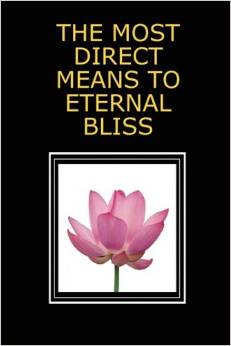
Here is another chapter from the book ‘The Most Direct Means to Eternal Bliss’. For my initial (and brief) opinion on this controversial but useful book click here. This chapter focuses on thought and how thought gets in the way of direct communion with that which lies beyond thought. Continue reading
ramana maharshi
Ramana Maharshi: Be still
All the texts say that in order to gain release one should render the mind quiescent; therefore their conclusive teaching is that the mind should be rendered quiescent; once this has been understood there is no need for endless reading.
Ramana Maharshi (from Who Am I)
One of the problems of Ramana’s teachings is that they are so simple. Most people do not want to be still and keep the mind quiet. They want to avoid themselves by discussing and understanding the concepts.
Now conceptual discussion has its place, but once one has understood the import of the teachings, namely silence, then it is time to sit down and shut up. Muruganar, who is regarded as Ramana’s closest and most influential devotee, says the same about Ramana’s teachings in his masterpiece Guru Vachaka Kovai:
What our Master clearly teaches by way of great, good, powerful tapas (spiritual effort) is only this and nothing more
BE STILL
Apart from this the mind has no task to do or thought to think
Guru Vachaka Kovai
(verse 773)
And in case you still haven’t got the message, here’s another quote from Who Am I, which is the publication that Ramana had issued at his Ashram as an introduction to his teachings. Note that the Sanskrit word ‘Jnana’ below literally means ‘knowledge’ and in a spiritual context refers to Self-Knowledge/Realisation or Liberation itself:
Questioner: What is wisdom-insight (jnana-drsti)?
Ramana Maharshi: Remaining quiet is what is called wisdom-insight.
Ramana Maharshi (from Who Am I)
Shut up and Get Out!
The heart of the teachings are just this. Here is the most excellent of sadhanas (spiritual practices). Gotta love Swami Chinmayananda for keeping it real. I especially like the way he says “I am not insulting you”:
Ramana Maharshi: Self-realisation is non-verbal
‘I did not yet know that there was an essence or impersonal Real underlying everything, and that Ishwara (God) and I were both identical with It.
Later at Tiruvannamalai, as I listened to the Ribhu Gita and other sacred books, I learned all this and found that the books were analysing and naming what I had felt intuitively without analysis or name.’
Ramana Maharshi and the Path of Self-knowledge, p. 16
Ramana Maharshi, that great 20th century sage, explains in the above quote that his experience of Self-realisation was non-verbal. Though already self-realised at the time, he did not describe his experience in terms of that which changes (the transient) and that which never changes (the eternal), as is often traditionally done. It was only later, when listening to others read the scriptures, did he realise that his state had also been experienced and analysed by others before him, and that their traditional exposition described his own experience. Continue reading
Muruganar: The Pre-eminent form of worship
Through the grace of my Lord’s glorious revelation I learned that the pre-eminent form of worship – which alone is worthy of him – who shines within the heart as the Self – is just to be. Thus did I learn to worship him without worshipping through the simple act of being.
Sri Guru Ramana Prasadam, verse 389
Sri Guru Ramana Prasadam was written by Muruganar (1890-1973), one of the most eminent of Sri Ramana Maharshi’s devotees. Muruganar was liberated shorty after meeting Ramana and thereafter continued to spend several decades alongside him. It is because of Muruganar’s questioning and urging that Ramana composed works such as ‘Self-Knowledge’, ‘The Essence of Instruction’ and ‘Forty Verses on Reality’. These succinct works contain the essence of Ramana’s (written) teachings. We are indeed indebted to Muruganar! Continue reading
Ramana Maharshi: The 4 paths to freedom (the 4 yogas)
In this passage below Ramana Maharshi talks about the four traditional Hindu paths to ending suffering or moksha (liberation/freedom). The four paths are traditionally called the paths of knowledge (jnana), love or devotion (bhakti), meditation (raja yoga), and doing good works (karma).
Almost every spiritual tradition around the world will fit into one of more of these four paths Continue reading
Ramen with Ramana

Wandering through Soho (London), I decided to treat myself to something a bit different for lunch. I soon stumbled across Bone Daddies. Not being au fait with these things I had no idea what this place actually was (restaurant? clothes shop?), but it looked pretty cool. My ears quickly picked up on a few guitar riffs emanating from inside and peeking through the windows I could see a plethora of men with beards, women clad in skin-tight pre-distressed jeans and thick rimmed black spectacles to boot. Oh, and they were eating – it seems that Bone Daddies is a restaurant after all. Continue reading
Sufism: Infinite ways to an infinite god (even if you don’t believe in God)
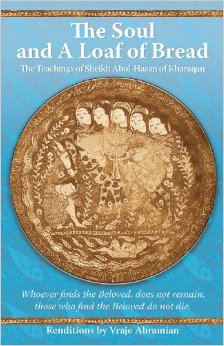
There are infinite ways to an infinite God; there are as many ways to God as there are people or beings: I have often thought this to myself, so whilst leafing through a newly purchased book (pictured above), I was pleasantly surprised to read a quote by Sheikh Abol-Hasan, a Sunni Muslim and Sufi from 10th century Persia, saying just this:
There are as many paths to the Lord as there are grains of sand and drops of rain…whomever seeks, eventually finds his way There
Sheikh Abol-Hasan, saying 141 from ‘The Soul and A Loaf of Bread’
These infinite ways are just variations of the One Way. And this One Way, for the purposes of exposition, can broadly be subdivided into two: one path for those who believe in God and one path for those who do not. Continue reading
Every effort takes you further away
I have often become repeatedly frustrated with spiritual seeking, wondering which spiritual teaching is best, which practice to do, and what is the absolute truth. There are so many flavours of spirituality and non-duality on offer that I have often found myself confused. And at the end of so many years of seeking, what do I really know? Despite having read some of the most profound texts from many of the great ancient traditions and contemporary teachers, I often feel that I still have no clue. And in many ways I don’t really have a clue. But what I keep on remembering is that there is no-self. And with that remembering of that phrase can come a clear seeing that there is no person here. Continue reading
Don’t take spiritual concepts too seriously

“The Tao that can be spoken is not the eternal Tao” Tao te ching, verse 1
We don’t need to take spiritual concepts too seriously. They are there to guide us, to point us in the right direction only. The reality they point to cannot be described. When we start to take teachings too seriously we miss this point and start to become dogmatic.
“Any interpretations that are set up and established as truth become meaningless phrases” Bankei
I’ve met people who follow Advaita Vedanta who say that consciousness is what we really are, and others who say what we are is beyond consciousness. Both of these are useful teachings, but don’t take them too seriously, either one of them. Both are useful and untrue. If you take a single position as being true, then that is a belief. Your attachment to a conceptual truth indicates the belief in ego/individuality that underlies it. Continue reading