Self-enquiry is diving into the Self, Self-surrender is letting go of body, mind and world. Both these ways lead to Self-abidance and Liberation/ Self-Realisation.
This video was recorded live during an online meeting and put together by volunteers;
‘The mind is by nature restless. Begin liberating it from its restlessness; give it peace; make it free from distractions; train it to look inward; make this a habit. This is done by ignoring the external world and removing the obstacles to peace of mind’
~Sri Ramana Maharshi, Talks with Sri Ramana Maharshi, talk no. 26
Objection: I have a slightly different view then Ramana perhaps did on ignoring the external world. It seems to me that the external world is the reflection of the inner. Becoming conscious of the beauty in nature resonates with the inner. This is perhaps a more indigenous view and is much older then even Vedanta and goes back even to the time when humans were Neanderthals as well as Homo sapiens when everything in nature was animating in presence.
Tom: Yes, being with nature is one of many things that can bring us in tune with the Self and bring us genuine peace and genuine insight, but ultimately for realisation to occur (and thus for suffering to end) one must turn within and all thoughts must cease. Otherwise the illusion of time and space are not seen through and suffering (and duality) continue, even if in a subtle way.
This is why Sri Ramana Maharshi writes in Who Am I?:
Q. When will the realization of the Self be gained? Sri Ramana: When the world which is what-is-seen [ie. objects] has been removed, there will be realization of the Self which is the seer. Q. Will there not be realization of the Self even while the world is there? Sri Ramana: There will not be.
~ Sri Ramana Maharshi, Who Am I?
Tom: What we call the world (ie. space and time and people) is actually a projection of mind/thought. Put simply, the world, space and time are simply thoughts. Again, this cannot be known unless we turn within, away from the world, towards the Self, and thoughts competely cease. From Sri Ramana Maharshi:
‘When the mind, which is the cause of all cognition’s and of all actions, becomes quiescent, the world will disappear…All the texts say that in order to gain release one should render the mind quiescent; therefore teaching is that the mind should be rendered quiescent.’
~ Sri Ramana Maharshi, Who Am I?
Tom: When thoughts completely cease, time and space disappear. If time and space are still appearing, it is because thought (namely the ‘I-thought’, which is the notion or thought or belief that ‘I am a body-mind’) still persists.
Therefore, when the world appears, the Self does not appear; and when the Self appears the world does not appear.
~ Sri Ramana Maharshi, Who Am I?
When the mind comes out of the Self, the world appears.
What you are is what you are. It can never be known by the mind. The thinking mind can never discover what you are. This is knowledge, supreme knowledge, supreme realisation as opposed to mundane or worldly knowledge. This knowledge is your Being. It is known by being what you are. So when this question is asked, ‘Who am I? What am I?’ The answer is not the words ‘I am’, the answer is what those words signify.
This video was recorded live during a Satsang meeting with Tom Das and put together by volunteers.
Now it is true that Sri Ramana often said that we should ‘be still’ [in Tamil – ‘Summa Irru’ which means ‘be still’ or ‘just be’] and that this is the practice, but what did he mean by ‘be still’? If we read and examine Sri Ramana’s written work ‘Who Am I?’, we will see what Sri Ramana means when he says ‘be still’ or ‘keep quiet’. Note that we can trust the teachings in ‘Who Am I?’ as an authentic rendition of Sri Ramana’s teachings as they were written by Sri Ramana himself.
Let us see: the first time we come across the notion of quieting the mind in ‘Who Am I?’ is as follows:
‘When the mind, which is the cause of all cognition’s and of all actions, becomes quiescent, the world will disappear.’
Now on the face of it this is quite a strange statement for Sri Ramana to make: that the world will disappear when the mind is still. Clearly, when Sri Ramana states that the mind is to be quiet, he is perhaps using these words in a different way to how they are normally used. How can it be that when the mind becomes quiet the world disappears?
Well earlier in ‘Who Am I?’ Sri Ramana explains that it is the mind is a power that creates or projects the entire body, mind and world*, so to ‘be quiet’ means not just to still the ordinary thinking mind, but to still this world-projecting power, ie. to remove all of Maya. Ramana repeats this, see here, also from ‘Who Am I?’:
Question: When will the realization of the Self be gained?
Sri Ramana Maharshi: When the world which is what-is-seen has been removed, there will be realization of the Self which is the seer
Question: Will there not be realization of the Self even while the world is there?
Sri Ramana Maharshi: There will not be.
I have a video here which explains the importance of this teaching. It fundamentally explains why some teachings are liberating and others are not:
Whilst some teachings may encourage us to still the mind, Sri Ramana is emphasising removing the entire body-mind-world from our consciousness. We can see that Sri Ramana’s teaching is far more extreme than many others – it is this extreme teaching that is needed to remove ignorance and realise the Self.
Sri Ramana emphasises Self-Enquiry as the only sadhana that will lead us to Liberation. Again, Sri Ramana’s teaching is more narrow and prescriptive in this way, as he maintains that Self-Enquiry is the only way. Let us see what else Sri Ramana writes in ‘Who Am I?’:
Question: Are there no other means for making the mind quiescent?
Sri Ramana Maharshi: Other than inquiry [Vichara; Self-Enquiry], there are no adequate means.
We can see that Sri Ramana is stating that sadhana or self-enquiry is essential to make the mind quiet, so that when Sri Ramana is asking us to ‘be still’ or ‘keep quiet’, he is actually asking us to do Self-Enquiry.
*What is called mind (manam) is a wondrous power existing in Self (atma-swarupam). It projects all thoughts…Other than thoughts, there is no such thing as the world….Just as the spider spins out the thread from within itself and again withdraws it into itself, so the mind projects the world from within itself and again absorbs it into itself. ~ from Who Am I? by Sri Ramana Maharshi
Q. Why do we suffer? Tom: Because we seek (something different to ‘what is’)
Q. Why do we both suffer and seek? Tom: Because we take ourself to be a separate vulnerable body-mind entity. So long as we do so we are compelled to both suffer and seek.
Q. Why do we take ourself to be a separate body-mind entity? Tom: Because we believe our thoughts that tell us so (ie. it is a belief that we are a body-mind entity – note that I call this belief ‘the ego’)
Q. What is the solution? Tom: The solution is to stop this type of thinking.
Q. How can we do that? A. We find, perhaps after much trial and error, there is only one essential method that consistently works, and that is to take one’s attention away from objective phenomena and place it upon the first person, the ‘I AM’, the Subject-Self. This practice is called Self-Enquiry. This process is explained in detail in the book The Path of Sri Ramana – Part 1
Q. My mind is too busy for this method Tom: Then try another preliminary practice such as mantra recitation, devotion, chanting, watching the breath, hatha yoga, etc, as suits you – try another calming practice first – preferably a practice you are drawn to, and then when the mind is calm go straight back to Self-Enquiry.
Q. What about other teachings or methods? Tom: You will find that other teachings methods (methods other than Self-Enquiry) at most only lead to a temporary effect that comes and goes. Don’t take my word for this, you can find out for yourself.
Q. Why do other methods not work? Tom: Other methods, which involve attending to objects (gross or subtle objects such as thoughts, feelings, the breath, or other objects) invariably give rise to egoic ‘body-based’ thinking as the ego only survives when it can think of objective phenomena. And when we attend to objective phenomena you will see that the ego always finds a way to rise and ‘take control’ or ‘take the reins’ and posit itself as the true ‘I’.
Q. Isn’t this quite an extreme practice? Tom: Yes, it is this extreme practice that is required, for most people, for the ego to end.
Q. Doesn’t this practice just perpetuate the separate ego-I? Tom: No, that too is just another belief, that all practice necessarily perpetuates the ego-I. Try it – with consistent daily application results are quickly seen.
Q. Ok thanks! Tom: You’re most welcome. Let me know how it goes!
318. By thinking of my Lord, thought waves came to a complete rest. I was freed from attachment to action I performed. I separated from potential associations that approached me. I merged everywhere with mauna, the virtuous conduct of abiding as being.
319. Because thinking of my Lord yielded bliss for me, I realised that my Lord is the very form of bliss. By experiencing my lord through the mauna-consciousness in my heart, I too became, with delight, that [bliss]
320. Because the thought of our Lord destroys completely all other thoughts, devotees will come to experience the grace that is supreme tranquillity thought that thought of our Lord. The potency of the supreme power of our Lord’s mauna will destroy the ego of true devotees, bestowing on them the experience of our Lord’s very own real nature, the Self, jnana.
313. Why seek a tapas other than true love, the melting of the mind that comes from meditating on my Lord?
314. No other tapas is required for those whose minds have dissolved by meditating on the Lord.
315. Melting within by repeatedly thinking of him in a loving way became the cord with which the Lord tied me to himself. His ultimate real nature, existing as the unique pure being, surged forth as pure consciousness, absolutely blemishless grace.
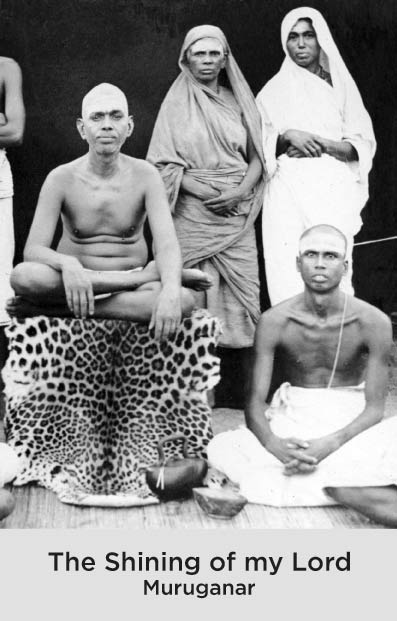
The above verses are from The Shining of my Lord by Sri Muruganar
Guru Vachaka Kovai, Verse 659:
659. Those people who lack consciousness of being, the natural light [I am], and who consequently come, through ignorance, under the spell of karma and suffer, will have their delusion ended and reach the Self, the supreme reality, through meditation on a divine form that is dear to them.
I suspect you mean that the ego, which is of the nature of ‘doing’ cannot ‘do resting’ as the I Am.
The resolution of this conundrum is that when the ego turns towards the I Am or the Self, it disappears.
A common objection is that anything the ego does, such as ‘trying to rest as the I AM’ just perpetuates the ego.
However, this is just a logical supposition, ie. it is a belief, based on logic, and is not actually the way it is.
In practice, when the ego-I turns inwards, it disappears. Ego is only of the nature of movement, or doing, and when it turns inwards, towards the I Am, which is of the nature of being (ie. no movement, not doing), the ego-I becomes still and disappears.
Being an illusion, it, the ego-I, never really was.