Ramana Maharshi: How to rid oneself of the ‘I am the body’ idea? | Manonasa | Aham Sphurana

The following is taken from the text Aham Sphurana, 19th September 1936:

Questioner: In ‘Ulysses’ we find Mr. Joyce to have deployed the words, “And we stuffing food in one hole and out behind: food, chyle, blood, dung, earth, food: have to feed it like stoking an engine.” I am frequently beginning to think on such lines now-a-days. We feed and clothe the body; we find for it a warm shelter to live under. In return, what is our gain? The body keeps getting new diseases and fills us with agony and misery by putting us in pain. This is a traitorous body which returns evil for good. I don’t want it anymore. Is the body a gift from God? Is it a sin to refuse to remain in acceptance of it anymore?

Bhagavan Sri Ramana Maharshi: It is not so easy to get rid of the body. Physical annihilation of the body might remove it from this earthly realm, but again your mind will find another body for you. The body was manufactured only by the mind. There is only one way to kill the body: that is to kill the mind. Mind dead, not only does the body die, but also the whole of the cosmos. Our effort must therefore be directed toward killing the mind, not the body.

[Tom: Bhagavan is stating that it is the mind, also known as ego or ignorance, that ‘manufactures’ or creates/projects the body as well as the world and entire cosmos. If we merely kill the body, the mind will project a new body to inhabit, so samsara does not end. However, if we kill the mind, that is realise the self and thereby destroy ego/ignorance, then all that will remain is the worldless formless Self]

The body is not a gift from God inasmuch as God never asked you to take the form of the body – i.e., to imagine that you are one and identical with the body. You ask what is gained by holding on to the body. Who is it who says he is holding on to what he refers to as being his body? Discover the identity of that villain. Then you Realise that you never did have any body. The body has nothing to do with you.

You are bodiless always. Realise It. How? The same Mr. Joyce mentioned by you also writes, “…remember, my dear boys, that we have been sent into this world for one thing and for one thing alone: to do God’s holy will and to save our immortal souls. All else is worthless. One thing alone is needful, the salvation of one’s soul. What doth it profit a man to gain the whole world if he suffer the loss of his immortal soul? Ah, my dear boys, believe me there is nothing in this wretched world that can make up for such a loss.” If the soul is immortal how can it be lost? So, what is attempted to be communicated? The Immortal and Imperishable Soul is seemingly lost because of avarana [Tom: the veiling power of tamas]. That is the meaning. To tear asunder this veil of iniquity is the one and only relevant goal of one’s life.

Q.: And it can be accomplished by asking oneself, ‘Who am I?’?

B.: People who come here say, I practise the investigation ‘Who am I?’ for an hour each day, or for a few hours each day. What can we say to them? It is not a practice that is to be pursued a few hours each day. It is a fundamental change or shift in the direction in which one’s extroverted mind happens to incumbently be oriented. Relentlessly pursue the investigation day-in and dayout till the Self is Realised.

Q.: How can the investigation, which seeks to curb thought, be at all combined with activities that necessarily entail thinking?

B.: With persistent practise of the practice, activities – that you now think are being done by you – will automatically go on effortlessly. Your intervention will then be unnecessary – in fact, impedimentous. We are under the impression that we do things. What is the fact? It is the Higher Power that does everything. Is it the chiselled figures found at and forming part of the base of the Rajagopuram that bear the weight of the same? Is it not the earth that bears the entire load? Yet those sculpted figures have facial features that are wildly contorted with the evident strain of carrying the huge structure. It is a clever, artistic sham. Likewise here. The ego never does anything, but simply appropriates to itself credit for the body’s actions, which happen exclusively and spontaneously in accordance with Ishwara’s pre-destined script for it.

In other words, thoughts do not cause action to take place. Actions always go on only of their own accord: only we assign to them a spurious sense of personal doership or individual agency, and suffer thinking that free-will is real.

Q.: But actions follow thoughts. First I think and decide; then I act accordingly.

B.: That is just what is NOT true.

Q.: How so?

B.: The apparent causal-synchronicity between thought and action is a sham. That alone transpires which is destined to transpire. The preceding thought motivating the [body’s] action is not the result of free-will. Why? Because there is no such thing as free-will. How then is there cohesion between thought, which occurs first, and action, which occurs in subsequent concatenation? It is because the extroverted mind is also subject to destiny, just as the body’s actions are subject to destiny.

Q.: How cheerless to think that free-will is a myth…

B.: It cannot be denied that from the standpoint of the individual person free-will is indispensable. But where is the need to be an individual person when you can BE THAT?
Non-duality, Self-Realisation and the appearance of the world | Sri Sadhu Om

The following is taken from the wonderful text Sadhanai Saram written by Sri Sadhu Om. My comments are in italiscised red:

Duality only appears due to a lack of self-enquiry:

  1. Know that the world, soul and God have all seemingly come into existence only because of our pramada or slackness in Self-attention.

It is the unreal and illusory ego that sees the (illusory and unreal) world:

  1. The entire universe composed of the five elements, earth, water, fire, air and space, appears only due to our error of mistaking as ‘I’ the ego that rises from Self like a spark rising from fire, and which appears as different from Self whose nature is Being, and as identical with the mind, whose nature is rising.

Self-enquiry ends the ego illusion and duality:

  1. The entire appearance of this world that is seen, including we (the individual or jiva) who see it, is a mere false appearance like a dream. If we keenly scrutinize the source (the real ‘I am’) from which the seeing ego rises, and thereby enter the heart and firmly abide there, the reality will shine forth (and the appearance of the triad – the seer, seeing and object seen – will disappear).

There is no desire or fear in the Self (or in Self-realisation), both of these being due to ignorance/ego or illusion:

  1. If we attain the otherness-free knowledge (ananya jnana), that this world is nothing but our own Self, seen wrongly in our self by our self through our power of imagination, then the delusion of desire for or fear of the world (the objects we see in front of us), will never rise again; and we will merge in and become one with Self. This alone is our natural state.

The formless Self alone exists:

  1. Self alone exists. Except oneself, nothing exists. But if one takes this pure consciousness, which exists and shines as ‘I’ to be the body, every thing will assume a form and appear to exist. If one inquires, “Is this ‘I’ only the body, or is it something else?” and thereby sees the true nature of “I,” every thing will cease to exist. See thus.

A summary and reiteration of what has been stated above:

  1. If you ask, “For what reason is it said, that if one inquires and knows oneself, this entire world would disappear?” The reason is that the result at tained by the inquiry “Who am I?” is the destruction of the unreal individual (jiva), the ego, who is immersed in activity due to his taking the body to be himself. (That is, since the entire world-appearance depends for its seeming existence upon the ego who sees it, and since the ego itself has no real existence of its own, when the real ‘I’ is known, the ego will be found to be truly non-existent; where upon, the world-appearance will vanish, having no one to see it and thereby to give it a seeming exis tence).

The false ‘I’ is the ego, also known as maya. Enquire into the ‘I’, that is, do self-enquiry, and this illusion will vanish, along with the body, the mind and the world. Compare to Revelation Verse 31.

  1. The ‘I’ which cannot shine without being joined with a body-form, is alone the ghost-like ego ‘I’, the great illusion (maya). If one courageously and without fear inquires, “Who is this I?” it will become non-existent, and along with it everything else will cease to exist.

  1. If this ‘I’ the self-rising ego-appearance, is destroyed by the inquiry “Who am I?”, then everything else, which till then appeared only in him (in the mind) but which was seen as if existing outside of him, will cease to exist. The ever-existing Whole or purna, which then shines forth as ‘I-I’ the blissful existence which neither appears nor disappears, is the real Self, the true import of the word ‘I’.

The true Self does not come and go, unlike the body and mind and world:

  1. The ‘I’ which is the Whole, which is the true import of ‘I’, which shines by its own light without appearing due to the functioning of the five sense-knowledges (and disappearing when they cease to function); which is the exalted and ever unleaving experience of Self, and which is the true nature of everyone, alone is the one non-dual reality; it alone is true knowledge.

The true nature of Jnana (knowledge) is simply the Self. The Self is itself the nature of Knowledge.

  1. This true knowledge is not anything other than oneself; it is our own existence-consciousness ‘I am’. Why should we suffer by imagining and seeing the soul [Jiva or ego], world and God in this knowledge? Abiding firmly as mere Being, experience this knowledge correctly; then what thing other than oneself will appear there?

True destruction of maya/duality occurs with destruction of the ego:

  1. The destruction of the entire universe together with the space and other elements that constitute it is not the state of absolute destruction (pralaya). The state in which the wicked ego, which rises in the form of the feeling “This body of flesh is I” (abhimana), drowns in Self and is destroyed entirely, is alone the glorious state of absolute destruction (maha-pralaya).

  1. After being destroyed in the ordinary destruction at the end of an eon (yuga-pralaya), the heaven and earth will appear again at the proper time. The state in which the Fire of Knowledge (Jnanagni), which blazes forth on being ignited as the churning process of investigation “Who am I?” pervades and shines everywhere, having destroyed the feeling, “I am this body” (dehatma-buddhi), is alone the absolute destruction (maha-pralaya); be cause the ego, which is thus destroyed by the Fire of Knowledge (Jnana) will never appear again.

  1. The “I,” which continues to live even after the mind has died (as a result of the above said inquiry “Who am I?”) is indeed the Supreme Reality (Brahman), which alone exists after the universal destruction (pralaya). The mind expanding as everything, having risen from the heart (that is, the mind slipping down from the true state of Brahman due to inadvertence or lack of Self-attention (pramada), and thereby becoming the cause for the creation and sustenance of the false appearance of this en tire universe), is not the state of true power; the mind merging and abiding firmly in Self is alone the true state of supreme power.

Note by Sri Sadhu Om: The supreme and truly divine power is not the power of the mind (maya), which creates and sustains the false appearance of the universe, but is only the power of Self-abidance, which reveals the truth that illusion (maya) is ever non-existent.

The cause of duality and of liberation:

  1. Your appearance as an ego, an individual soul who rises in the form “I am this body,” alone is the root-cause for the appearance of this unreal world. If this root-appearance, the rising of yourself as an individual soul, does not rise even in the least, that state will be the state of liberation, which is completely devoid of the imaginary appearances of the world and God.

  1. If one has the ability to deny oneself and thereby to destroy the rising of the ego in its very source, what other tapas need one perform? The real Self, the source in which the ego thus subsides and dies, alone is the state which is worth to purchase and attain by selling (or renouncing) all the three worlds.

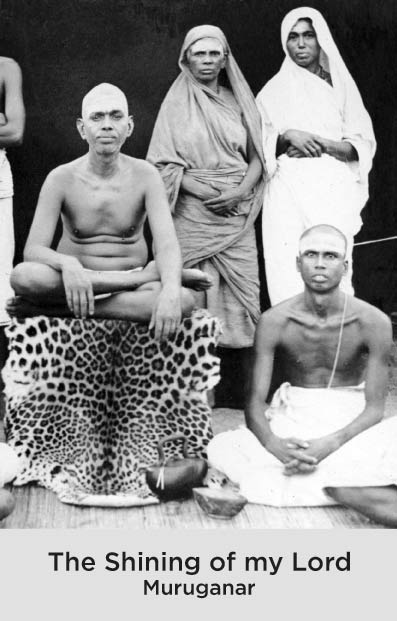
The true nature of the world or universe | Sri Muruganar | Sri Guru Ramana Prasadam

Sri Muruganar was one of the most important of Sri Ramana Maharshi’s devotees: he spent over 20 years being lovinginly devoted to his Guru, Sri Ramana, and he was, to my knowledge, the only living person who Sri Ramana said had realised the Self.

In the wonderful text Sri Guru Ramana Prasadam, Sri Muruganar writes verse after verse after verse explaining how through his Guru’s Grace and Teachings he too came to fully realise the Self.

On page 137 he writes about the true nature of the world or universe, as follows:

The viewpoint [that there is] a phenomenal world is given as a provisional hypothesis principally for those of low and middling attainment, who are the vast majority, and who do not have both an intense longing to realise the truth and a total absense of desire for sense enjoyments, resulting from perceiving the inherent defects [of those sense enjoyments].

In the scriptures themselves, enlightened Jnanis proclaim that the world appears to the ego-mind – formed by the know joining consciousness with the insentient (cit-jada granthi) – and that the Self remains in total union with that world.

However, in truth, nothing exists apart from the one Self. Hence, from the ultimate viewpoint, it remains unattached, there being nothing other than itself – like the underlying screen in a cinama show.

Ashtavakra Gita – all is illusion, I am the Self

Janaka ashtavakra

The following verses are read on this video here (a couple of the verses are in a slightly different order):

Sage Ashtavakra, the young boy with contorted limbs, teaches King Janaka, and the result is the Song of Ashtavakra, or Ashtavakra Gita. Here are some selected verses, enjoy:

2.1. Oh, I am spotless, tranquil, Pure Consciousness, and beyond Nature. All this time I have been mocked by illusion.

Tom – Now the triad of knower/knowing/known are said not to exist. Note that this triad essentially encompasses all arising or objective phenomena:

2.15. Knowledge, knower and the known – these three do not exist in reality. I am that stainless Self in which this triad appears through ignorance.

Tom – here the remedy is prescribed:

2.16. Oh, the root of misery is duality. There is no other remedy for it except the realisation of the unreality of all objects of experience and that I am One, Pure Consciousness, and Bliss.

2.18. I am neither bound nor free. My illusion has ended. The world, though appearing to exist in me, has in reality no existence.

2.19. My conviction is that the Universe and the body have no reality. The Self is Consciousness alone. How can the world be imagined in it?

2.20. I am the Self, and my nature is pure Consciousness. The body, heaven, hell, bondage, freedom, and fear are merely imagined, and I have no relationship with them.

3.13. Knowing the object of perception to be naught by nature, that steady-minded one neither accepts this nor rejects that.

5.3. Though the Universe is perceptible by the senses, it has no factual existence, like the snake in the rope. Therefore, enter into Laya, the state of dissolution.

Tom – Again the essential teaching is dispensed:

11.8. He who is convinced that this manifold and wonderful Universe has no real existence, becomes free from desire, is pure Consiousness, and finds peace in the Knowledge that nothing is real.

15.16. The world is the result of ignorance of your own nature. In reality, you alone exist. There is neither jiva (the individual person) nor Ishvara (God), nothing other than thyself.

15.17. He who has fully realised that the Universe is a pure illusion, becomes desireless and Consciousness Itself – such a one abides in peace.

16.11. Even though Shiva, Vishnu, or Brahma instruct you, unless you regard the world as unreal, and dismiss all sense of egotism, you will not become established in your own nature (the Self).

17.19. Devoid of the feeling of ‘This is mine’ and ‘This I am’ and knowing for certain that nothing objective exists in reality, the knower of Truth is at peace within himself, his desires have subsided. Though appearing to act, in fact he does not engage in action.

18.14. Where is delusion, where is the universe, where is renunciation, moreover where is liberation for the great-souled one who rests beyond the world of desires?

Tom – the implication in verse 18.14 above is that all the items listed – namely ignorance, the universe, renunciation and liberation – all of these are illusion.

18.28. That man of peace, beyond distraction and contemplation, is neither an aspirant for liberation, nor is he bound. Knowing the Universe to be an illusion, though perceiving it, he remains in the absolute state.

18.70. The pure one knows for certain that this universe is nothing but the product of illusion and that nothing exists. The Imperceptible Self is revealed to him, and he naturally enjoys peace.


Tom – As if the above verses were not enough, here, in the last chapter, chapter 20, the point is driven home again. Everything in the phenomenal world is negated as being mere dream-like illusion, a product of imagination, from the scriptures, to the seeker, from the teacher to the teaching. Even notions of liberation, bondage, knowledge, ignorance, time and space and lastly even duality and non-duality – all these are said to be mere illusion.

20.1. In my Perfect Self (Atman), neither the elements, nor the body, nor the sense-organs, nor the mind, nor the void, nor despair, exist.

20.2. Where are the scriptures, where is Self-Knowledge, where is the mind not attached to sense-objects, where is contentment, and where is desirelessness for me who am ever devoid of the sense of duality?

Tom – ie. scriptures, self-knowledge, the unattached mind, happiness and desirelessness are all illusory

20.3. Where is knowledge and where is ignorance; where is ‘I’, where is ‘this’, and where is ‘mine’; where is bondage and where is liberation? Where is an attribute to the nature of my self?

Tom – ie. knowledge, ignorance, bondage, liberation, subject and object are all illusory. And so the verses continue in the same fashion:

20.6. Where is the world and where is the seeker of liberation; where is the Yogi and where is the Jnani; where is bondage and where is liberation for me who am non-dual by nature?

20.7. Where are creation and destruction; where is the end and where the means; where is the seeker and success for me abiding in my non-dual nature?

20.8. Where is the knower, the means to knowledge, the object of knowledge or knowledge itself; where is anything, and where is nothing for me who am ever pure?

20.9. Where is distraction, where is concentration; where is knowledge, where is delusion; where is joy and where is sorrow for me who am ever actionless?

20.13. Where are instruction and scriptural injunction, where is the disciple and where is the guru; where, indeed, is the object of life for me who am absolute good and free from limitation?

20.14. Where is existence, where is non-existence; where is unity, where is duality? What need is there to say more? Nothing emanates from me.

The belief in separation 

river meander advaita

It is the belief in separation
That allows for the belief in doership.
Otherwise all there is is One-Movement.

There is not even one movement:
If we go by the evidence presented to us by experience,
There is only movement happening.

No evidence for a doer-entity,
No evidence for an entity with ultimate responsibility.
Instead there is just life happening,

From the point of view of a person,
A body operating and functioning,
Seemingly by itself,
With all the workings and humanity of the organism manifesting,
However it manifests.

As truth is seen,
Layers of deception and wrong thinking fall away,
And the Freedom that always was and is,
Is revealed.

Like the sun when the clouds parts,
Nothing needs to be attained,
Only the obscuring clouds of wrong notions,
Need to be seen through.


Everything is impersonal

moon in space

A person is an expression of the universe:
what we call ‘the personal’ is actually a specific/particular way in which ‘the impersonal’ is functioning.

So,

the personal is actually impersonal.

Or,

there is nothing personal.

Which means:
everything is impersonal.

Or,

There is no person.

What is this?

Alan Watts: You and the universe are one

centaurus A

“It’s not true that you came into this world. You came out of it, in the same way a flower comes out of a plant or a fruit comes out of a tree. An apple tree apples, the solar system peoples…You are a function of this total galaxy”
Alan Watts

Continue reading