Also see: Recommended Reading: Books for Enlightenment, Liberation and Self-Realisation
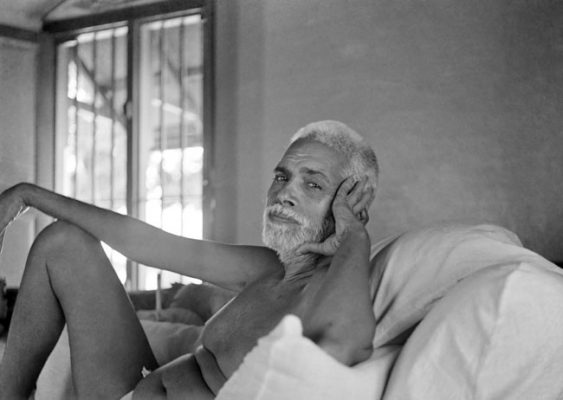
Some say this is the most important original text that Sri Ramana Maharshi wrote, so I wanted to present you a standalone version of the text here without commentary. Below are links to a PDF version and also PDF versions with commentary. Bhagavan reportedly said that K. Lakshmana Sarma’s commentary was the best of the commentaries that was available at that time.
‘Sri Bhagavan [Sri Ramana Maharshi] once remarked that of all the commentaries on Ulladu Narpadu which then existed, Lakshmana Sarma’s Tamil commentary was the best.’
T. N. Venkataraman (former president of Sri Ramana Ashram)
I have also included the Supplement to the Forty Verses on Reality (Ulladu Narpadu Anubandham). For me, these texts, together with Who Am I? and Upadesa Saram (both of which were also directly written by Sri Ramana Maharshi), contain all you need to know in order to attain liberation. Ramana has, in concise form, laid it all out for us.
I also highly recommend reading The Path of Sri Ramana which explains in detail the entire path to liberation.
So read and study these works to find the true teaching, the true practice and the genuine result!
All praise to Ramana!
Download PDF Version – Ulladu Narpadu with Supplement
PDF Version with commentary by K. Lakshmana Sarma
PDF Version with synopsis and commentary from SS Cohen

Introduction
Once Bhagavan composed twenty Tamil stanzas containing his important teachings. They were not written in any particular order to form a poem. Sri Muruganar therefore suggested that Bhagavan should write twenty stanzas more to make it the conventional forty. Accordingly, Bhagavan composed twenty more stanzas. Out of these forty, Kavyakanta Ganapati Muni selected two as the invocatory stanzas. Then Bhagavan wrote two more to complete the forty. Some of the stanzas were translations from Sanskrit, but as devotees wanted all the forty verses to be original they were eliminated and new stanzas composed in their place. The verses were all arranged in a continuous order to form a poem. Later, a supplement consisting of a second forty verses was added. So indifferent to authorship was Bhagavan that he did not write all those supplementary verses himself. When he came upon a suitable one he used it – mostly translations from Sanskrit – and when not, he made one. The verses eliminated from the original forty verses were included in the supplement.
These eighty verses are the most comprehensive exposition of the Maharshi’s teaching. A number of translations have been made and commentaries written on them. They have been published as separate books by the ashram under the titles Ulladu Narpadu, Sad Vidya and Truth Revealed. Bhagavan translated these verses into Telugu prose under the name of Unnadi Nalubadi and into Malayalam verse under the name of Saddarsanam.
Ulladu Narpadu
(Forty Verses on Reality)
Invocation
1. Unless Reality exists, can thought of it arise? Since, devoid of thought, Reality exists within as Heart, how to know the Reality we term the Heart? To know That is merely to be That in the Heart.
2. When those who are in dread of death seek refuge at the feet of the deathless, birthless Lord Supreme, their ego and attachments die; and they, now deathless, think no more of death.
The Text
1. Since we know the world, we must concede for both a common Source, single but with the power of seeming many. The picture of names and forms, the onlooker, the screen, the light that illumines – all these are verily He.
2. On three entities – the individual, God and the world – every creed is based. That ‘the One becomes the three’ and that ‘always the three are three’, are said only while the ego lasts. To lose the ‘I’ and in the Self to stay is the State Supreme.
3. ‘The World is true’; ‘No, it is a false appearance’; ‘The World is Mind’; ‘No, it is not’; ‘The World is pleasant’; ‘No, it is not’ – What avails such talk? To leave the world alone and know the Self, to go beyond all thought of ‘One’ and ‘Two’, this egoless condition is the common goal of all.
4. If Self has form, the world and God likewise have form. If Self is without form, by whom and how can form (of world and God) be seen? Without the eye, can there be sight or spectacle? The Self, the real Eye, is infinite.
5. The body is made up of the five sheaths; in the term body all the five are included. Without the body the world is not. Has one without the body ever seen the world?
6. The world is made up of the five kinds of sense perceptions and nothing else. And those perceptions are felt as objects by the five senses. Since through the senses the mind alone perceives the world, is the world other than the mind?
7. Though the world and mind rise and fade together, the world shines by the light of the mind. The ground whence the world and mind arise, and wherein they set, that Perfection rises not nor sets but ever shines. That is Reality.
8. Under whatever name or form we worship It, It leads us on to knowledge of the nameless, formless Absolute. Yet, to see one’s true Self in the Absolute, to subside into It and be one with It, this is the true Knowledge of the Truth.
9. ‘Twos’ and ‘threes’ depend upon one thing, the ego. If one asks in one’s Heart, ‘What is this ego?’ and finds it, they slip away. Only those who have found this know the Truth, and they will never be perplexed.
10. There is no knowledge without ignorance; and without knowledge ignorance cannot be. To ask, ‘Whose is this knowledge? Whose this ignorance?’ and thus to know the primal Self, this alone is Knowledge.
11. Without knowing the Self that knows, to know all objects is not knowledge; it is only ignorance. Self, the ground of knowledge and the non-Self, being known, both knowledge and ignorance fall away.
12. True Knowledge is being devoid of knowledge as well as ignorance of objects. Knowledge of objects is not true knowledge. Since the Self shines self-luminous, with nothing else for It to know, with nothing else to know It, the Self is Knowledge. Nescience It is not.
13. The Self that is Awareness, that alone is true. The knowledge which is various is ignorance. And even ignorance, which is false, cannot exist apart from the Self. False are the many jewels, for apart from gold, which alone is true, they cannot exist.
14. ‘You’ and ‘he’ – these appear only when ‘I’ does. But when the nature of the ‘I’ is sought and the ego is destroyed, ‘you’ and ‘he’ are at an end. What shines then as the One alone is the true Self.
15. Past and future are dependent on the present. The past was present in its time and the future will be present too. Ever-present is the present. To seek to know the future and the past, without knowing the truth of time today, is to try to count without the number ‘One’.
16. Without us there is no time nor space. If we are only bodies, we are caught up in time and space. But are we bodies? Now, then and always – here, now and everywhere – we are the same. We exist, timeless and spaceless we.
17. To those who do not know the Self and to those who do, the body is the ‘I’. But to those who do not know the Self the ‘I’ is bounded by the body; while to those who within the body know the Self the ‘I’ shines boundless. Such is the difference between them.
18. To those who do not know and to those who do, the world is real. But to those who do not know, Reality is bounded by the world; while to those who know, Reality shines formless as the ground of the world. Such is the difference between them.
19. The debate, ‘Does free will prevail or fate?’ is only for those who do not know the root of both. Those who have known the Self, the common source of freewill and of fate, have passed beyond them both and will not return to them.
20. To see God and not the Self that sees is only to see a projection of the mind. It is said that God is seen by him alone who sees the Self; but one who has lost the ego and seen the Self is none other than God.
21. When scriptures speak of ‘seeing the Self’ and ‘seeing God’, what is the truth they mean? How to see the Self? As the Self is one without a second, it is impossible to see it. How to see God? To see Him is to be consumed by Him.
22. Without turning inwards and merging in the Lord – it is His light that shines within the mind and lends it all its light – how can we know the Light of lights with the borrowed light of the mind?
23. The body says not it is ‘I’. And no one says, “In sleep there is no ‘I’.” When ‘I’ arises all (other) things arise. Whence this ‘I’ arises, search with a keen mind.
24. The body which is matter says not ‘I’. Eternal Awareness rises not nor sets. Betwixt the two, bound by the body, rises the thought of ‘I’. This is the knot of matter and Awareness. This is bondage, jiva, subtle body, ego. This is samsara, this is the mind.
25. Holding a form it rises; holding a form it stays; holding and feeding on a form it thrives. Leaving one form, it takes hold of another. When sought, it takes to flight. Such is the ego-ghost with no form of its own.
26. When the ego rises all things rise with it. When the ego is not, there is nothing else. Since the ego thus is everything, to question ‘What is this thing?’ is the extinction of all things.
27. ‘That’ we are, when ‘I’ has not arisen. Without searching whence the ‘I’ arises, how to attain the self-extinction where no ‘I’ arises? Without attaining self-extinction, how to stay in one’s true state where the Self is ‘That’?
28. Controlling speech and breath, and diving deep within oneself – like one who, to find a thing that has fallen into water, dives deep down – one must seek out the source whence the aspiring ego springs.
29. Cease all talk of ‘I’ and search with inward diving mind whence the thought of ‘I’ springs up. This is the way of wisdom. To think, instead, ‘I am not this, but That I am,’ is helpful in the search, but it is not the search itself.
30. When the mind turns inward seeking ‘Who am I?’ and merges in the Heart, then the ‘I’ hangs down his head in shame and the One ‘I’ appears as Itself. Though it appears as ‘I-I’, it is not the ego. It is Reality, Perfection, the Substance of the Self.
31. For him who is the Bliss of Self arising from extinction of the ego, what is there to do? He knows nothing other than this Self. How to conceive the nature of his state?
32. When the Vedas have declared, ‘Thou art That’ – not to seek and find the nature of the Self and abide in It, but to think ‘I am That, not This’ is want of strength. Because, That abides forever as the Self.
33. To say ‘I do not know myself’ or ‘I have known myself’ is cause for laughter. What? Are there two selves, one to be known by the other? There is but One, the Truth of the experience of all.
34. The natural and true Reality forever resides in the Heart of all. Not to realise It there and stay in It but to quarrel ‘It is’, ‘It is not’, ‘It has form’, ‘It has not form’, ‘It is one’, ‘It is two’, ‘It is neither’, this is the mischief of maya.
35. To discern and abide in the ever-present Reality is true attainment. All other attainments are like powers enjoyed in a dream. When the sleeper wakes, are they real? Those who stay in the state of Truth, having cast off the unreal – will they ever be deluded?
36. If we think we are the body, then to tell ourselves, ‘No, I am That’, is helpful to abide as That. Yet – since ever we abide as That – why should we always think, ‘I am That?’ Does one ever think, ‘I am a man’?
37. ‘During the search, duality; on attainment, unity’ – This doctrine too is false. When eagerly he sought himself and later when he found himself, the tenth man in the story was the tenth man and none else (ten men crossed a stream and wanted to make sure they were all safe. In counting, each one left himself out and found only nine. A passer-by gave each a blow and made them count the ten blows).
38. If we are the doers of deeds, we should reap the fruits they yield. But when we question, ‘Who am I, the doer of this deed?’ and realise the Self, the sense of agency is lost and the three karmas slip away. Eternal is this Liberation.
39. Thoughts of bondage and of freedom last only as long as one feels, ‘I am bound’. When one inquires of oneself, ‘Who am I, the bound one?’ the Self, Eternal, ever free, remains. The thought of bondage goes; and with it goes the thought of freedom too.
40. If asked, ‘Which of these three is final liberation: With form, without form, or with-and-without-form?’ I say, Liberation is the extinction of the ego which enquires ‘With form, without form, or with-and-without-form?’
Translated by Professor K. Swaminathan
Ulladu Narpadu Anubandham
Reality in Forty Verses: Supplement
Italicised verses are the verses written by Sri Ramana Maharshi, the others are verses he incorporated into the text from other texts.
Invocation
That which is the Support, the Soul, the Source, the Purpose and the Power of all this world, the Reality behind all this Appearance, That indeed exists. Let That, the Truth, abide in our Heart. (Yoga Vasishta, 8, v.12)
The Text
1. In the company of sages, attachment vanishes; and with attachment, illusion. Freed from illusion, one attains stability, and thence liberation while yet alive. Seek therefore the company of sages. (from Bhajagovindam, the “Mohamudagaram Hymn,” by Shankaracharya)
2. Not by listening to preachers, nor by study of books, not by meritorious deeds nor by any other means can one attain that Supreme State, which is attainable only through association with the sages and the clear quest of the Self. (a verse from the Yoga Vasishta, 5 – 12 – v.17)
3. When one has learned to love the company of sages, wherefore all these rules of discipline? When a pleasant, cool southern breeze is blowing, what need is there for a fan? (a verse from the Yoga Vasishta)
4. Fever is overcome by the cool light of the moon; want, by the good wish-yielding tree; and sin by the Holy Ganges. Those three – fever and want and sin – all flee at the august sight of the peerless sage. (Subhashita Ratna Bhandargara, chapt. 3, v. 6)
5. Holy rivers, which are only water, and idols, which are made of stone and clay, are not as mighty as the sages. For while they make one pure in course of countless days, the sage’s eyes by a mere glance purify at once. (from Srimad Bhagavatam, chapt. 48, v. 31, tenth canto)
6. Disciple: Who is God?
Master:Hewho knows the mind.
D:MySelf, the Spirit, knows my mind.
M: Therefore you are God; and also the sruti declares that there is only one God, the Knower.
M: By what light do you see?
D: The sun by day, the lamp by night.
M: By what light do you see these lights?
D: The eye.
M: By what light do you see the eye?
D: The mind.
M: By what light do you know the mind?
D: My Self.
M: You then are the Light of Lights.
D: Yes, That I am.(from Ekasloki, by Shankaracharya)
8. In the centre of the Heart-Cave there shines alone the one Brahman as the `I, I’, the Atman. Reach the Heart by diving deep in quest of the Self, or by controlling the mind with the breath, and stay established in the Atman.
9. In the lotus of the Heart is pure and changeless Consciousness in the form of the Self. When the ego is removed, this Consciousness of Self bestows liberation of soul. (Devikalottaram, v. 46)
10. The body is like an earthen pot, inert. Because it has no consciousness of `I’, and because daily in bodiless sleep we touch our real nature, the body is not `I’. Then who is this `I’? Where is this `I’? In the Heart-cave of those that question thus, there shineth forth as `I’, Himself, the Lord Siva of Arunachala.
11. Who is born? It is only he who asks `Whence am I born?’ that is truly born in Brahman, the Prime Source. He indeed is born eternally; He is the Lord of saints; He is the ever-new. (On celebrating Sri Bhagavan’s jayanti))
12. Cast off the notion, `This vile flesh am I,’ and seek the ceaseless bliss of Self. To seek the Self while cherishing this perishing flesh is like trying to cross a stream by clinging to a crocodile.
13. The way of charity, penance, sacrifice, dharma, yoga and Bhakti; and the Goal of Heaven, Reality, Peace, Truth, Grace, Silence, Stability, Deathless Death, Knowledge, Renunciation, Liberation, Bliss – all this is only ceasing to think that the body is the Self.
14. What is action, or devotion, or union, or knowledge? It is to inquire, `Whose is this action, or indifference, or separateness, or ignorance?’ Inquiring thus, the ego vanishes. To abide as the Self, wherein these eight have never been, this is True existence.
15. Not realizing that they themselves are moved by an energy not their own, some fools are busy seeking miraculous powers. Their antics are like the boasting of a cripple who says to his friends: `If you raise me to my feet, these enemies are nothing before me.’
16. Since the stilling of the mind is true liberation and miraculous powers are unattainable without an act of the mind, how can they whose mind is set on such powers enter the bliss of liberation which is the ending of all activity of the mind?
17. While God sustains the burden of the world, the spurious ego assumes its burden, grimacing like an image on a tower, seeming to support it. If the traveller in a carriage, which can carry any weight, does not lay his luggage down but carries it painfully on his head, whose is the fault?
18. Between the two paps, below the chest, above the stomach, there are six organs of various colours. Of these, one, looking like a lily bud, is the Heart, at two digits’ distance to the right of the centre. (from Ashtanga Hridayam, Malayalam)
19. Its mouth is closed. Within its cavity is seated a heavy darkness, filled with all desires; all the great nerves are centred there; the home it is of breath, mind, light of knowledge. (from Ashtanga Hridayam, Malayalam)
20. The Lord whose home is the interior of the Heart-Lotus is extolled as Lord of the Cave. If by force of practice the feeling `I am He, I am the Lord of the Cave’ becomes firmly established, as firmly as your present notion that you are the ego is established in the body, and thus you stand forth as that Lord of the Cave, the illusion that you are the perishable body will vanish like darkness before the rising sun. (composed by Bhagavan, employing the ideas of two verses found in the Prabhulinga Leela, v. 45, 46, Kannada)
21. When Rama asked, `Which is the great mirror in which we see these images of things? What is it that is called the Heart of all the beings in the world?’ Vasishta answered, `When we reflect we see that all the beings in the world have two different hearts.’ (Yoga Vasishta, 5 – 78 – v. 32, 33)
22. One of these is worth acceptance, the other worth rejection. Listen how they differ. The organ called the heart placed somewhere in the chest of the physical body is worth rejection. The Heart which is of the form of Pure Awareness is worth acceptance; it is both within and without — it has no inside or out. (Yoga Vasishta, 5 – 78 – v. 34, 35)
23. That indeed is the essential Heart and in it all this world abides. It is the mirror in which all things are seen.It is the source of all wealth. Hence Awareness may be termed the Heart of all beings. The Heart is not a part of the perishable body inert like a stone. (Yoga Vasishta, 5 – 78 – 36, 37)
24. Therefore by the practice of merging the ego in the pure Heart which is all-Awareness, the tendencies of the mind as well as the breath will be subdued. (Yoga Vasishta, 5 – 78 – v. 38)
25. By constantly meditating in the Heart, `That pure unconditioned Awareness that is Siva, That am I,’ remove all attachment of the ego. (Devikalottara, v. 47)
26. Having investigated the various states of being, and seizing firmly by the mind that State of Supreme Reality, play your part, O hero, ever in the world. You have known the Truth which is at the Heart of all kinds of appearances. Without ever turning away from that Reality, play in the world, O hero, as if in love with it. (Yoga Vasishta, 5 – 18 – v. 20 to 23)
27. Seeming to have enthusiasm and delight, seeming to have excitement and aversion, seeming to exercise initiative and perseverance, and yet without attachment, play, O hero, in the world. Released from all bonds of attachment and with equanimity of mind, acting outwardly in all situations in accordance with the part you have assumed, play as you please, O hero, in the world. (Yoga Vasishta, 5 – 18 – v. 24 to 26)
28. He who by Knowledge of the Atman is established in the Truth, he who has vanquished the five senses — call him the fire of knowledge, the wielder of the thunderbolt of Knowledge, the Conqueror of Time and the Hero who has slain death. (a verse from the Yoga Vasishta)
29. Just as on the earth with the coming of spring the tree shines in fresh beauty of foliage, even so he who has seen the Truth will shine with growing lustre, intelligence and power. (Yoga Vasishta, 5 – 76 – v. 20)
30. Like one to whom a tale is told while his thoughts are wandering far away, the mind which is free from attachment is inactive while it acts. But the mind immersed in attachments is active, though it does not act, like the sleeper lying motionless here, who in his dream climbs a hill and tumbles down. (Yoga Vasishta, 5 – 56 – v. 13, 14)
31. As the movement of the cart, its standing still and its being unyoked are to the passenger asleep in the cart, even so are action, contemplation and sleep to the Sage asleep in the cart of his body.
32. For one who seeks waking, dreaming or sleep there is a state beyond these three, a wakeful sleep, a fourth state called the turiya. But because this turiya state alone is real and the three apparent states are illusory, the `fourth’ state is indeed the transcendental state.
33. The statement that the jnani retains prarabdha while free from sanchita and agami is only a formal answer to the questions of the ignorant. Of several wives none escapes widowhood when the husband dies; even so, when the doer goes, all three karmas vanish.
34. For unlearned folk there is only one family consisting of wife, children and dependants. But in the mind of those with much learning there are many families of books, theories and opinions as obstacles to yoga. (Subhashita Ratna Bhandagara, Prakarana VI, Shanta Rasa Nirdesha, v. 13)
35. What is the use of letters to those lettered folk who do not seek to wipe out the letters of fate by inquiring, `Whence are we born?’ What else are they but gramaphones, O Lord of Arunachala? They learn and repeat words without realizing their meaning.
36. The unlettered are easier saved than those who are learned but unsubdued. The unlettered are free from the clutches of the demon Pride, they are free from the malady of many whirling thoughts and words; they are free from the mad pursuit of wealth; they are free from many, many ills.
37. Though a man looks on the world as a wisp of straw and holds all sacred lore in his hand, it is hard for him to escape from thralldom if he has yielded to vile Flattery, the harlot. (from Sadhaka Avasta, by Sri Sadasiva Brahmendra)
38. Without thinking of oneself as apart from others,without swerving from one’s true state, if one abides always in one’s Self, who is there alien to one? What matters it what people say of one? What matters it if one praises or blames oneself?
39. Keep advaita within the Heart. Do not ever carry it into action. Even if you apply it to all the three worlds, O Son, it is not to be applied to the Guru. (Tattvopadesa, v. 87, by Shankaracharya)
40. I shall declare truly the essence of the final doctrine of the Vedanta: when the ego dies and becomes That, the Self of Pure Awareness, That alone abides.
Translated by Prof. K. Swaminathan


 Tom Das