Q: Illusion can hide from us our own mind, but up to now you have not taught us how to get rid of illusion.
A: The arising and the elimination of illusion are both illusory. Illusion is not something rooted in Reality; it exists because of your dualistic thinking.
If you will only cease to indulge in opposed concepts such as ‘ordinary’ and ‘Enlightened’, illusion will cease of itself. And then if you still want to destroy it wherever it may be, you will find that there is not a hairsbreadth left of anything on which to lay hold.
This is the meaning of: ‘I will let go with both hands, for then I shall certainly discover the Buddha in my mind’.
The arising and the elimination of illusion are both illusory…If you will only cease to indulge in opposed concepts such as “ordinary” and “Enlightened,” illusion will cease of itself.
Q: If there is nothing on which to lay hold, how is the Dharma [The Teaching, Enlightenment] to be transmitted?
A: It is a transmission of Mind with Mind [Tom – note that the Chinese word for ‘mind’ can also be translated as ‘heart’, so this could be ‘heart to heart’ transmission].
Q: If Mind is used for transmission, why do you say that Mind too does not exist?
A: Obtaining no Dharma whatever is called Mind transmission. The understanding of this implies no Mind and no Dharma.
Q: If there is no Mind and no Dharma, what is meant by transmission?
A: You hear people speak of Mind transmission and then you talk of something to be received. So Bodhidharma [the first Zen patriarch, the ‘founder of zen’] said:
The nature of the Mind when understood, No human speech can compass or disclose. Enlightenment is naught to be attained, And he that gains it does not say he knows.
If I were to make this clear to you, I doubt if you could stand up to it.
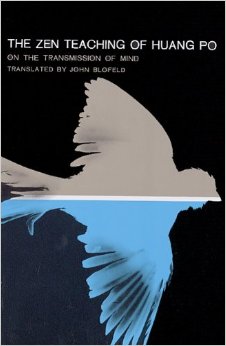
Taken from The Zen Teaching of Huang Po (Chun Chou record no. 32)
One way of talking about spirituality is that it is that which is concerned with the ultimate truth or absolute truth. The concept is that absolute truth is universal, never changes and can be directly perceived/experienced at all times and places. It cannot be learnt or accumulated as it is always already present and known. I use various capitalised words synonymously to describe it, eg. God, Truth, Love, Wholeness, Love, the Universe. The teaching is that its perception does not require special equipment (such as a microscope or telescope) and it does not depend even on the body, mind or senses. It cannot be described and defies and transcends all concepts. Absolute truth cannot even be divided into the absolute and relative, the division being merely a conceptual one.
It cannot be learnt or accumulated as it is always already present and known.
In contrast to this, worldly knowledge can be called relative knowledge or relative truth. This includes scientific knowledge, knowledge of skills such as a sports game or knowing facts such as how tall Mount Everest is. This knowledge is relative because it does not stand alone and is only true in relation to something else. For example the height of Mount Everest depends on various factors such as defining the point from which height is measured and the unit of measurement. The height will also change over time as the mountain topography changes. In fact one of the cardinal features of relative knowledge is that it changes over time depending on specifics relating to time and place. Relative knowledge can also be accumulated and developed over time. Lastly it requires the body-mind-senses to reveal/discover it.
So to summarise we have two concepts, the relative and the absolute. The relative is concerned with those things which change. We can lump all things that change together and call it the world. This world includes the world outside us, as well as our inner world of thoughts, feelings, emotions and psychic perceptions. The absolute is that which, in theory at least, remains the same no matter what. You could call this Spirit. It is always and already known by everyone whether they know it or not.
So to summarise we have two concepts, the relative and the absolute. The relative is concerned with those things which change…The absolute is that which, in theory at least, remains the same no matter what…It is always and already known by everyone whether they know it or not.
Strictly speaking, this division into relative and absolute itself is arbitrary, but because we take ourself to be a doer, this division is provisionally made so our mistake can be corrected. Once corrected, concepts of relative and absolute disappear (we see they are also false concepts), and all that remains is this, the unnameable. But until that point, the concepts are useful teaching aids pointing one in the right direction like the proverbial finger that points at the moon: don’t worship the finger otherwise you will miss the moon in all its heavenly glory. The flip side is that once you have seen the moon, you don’t need the finger any more. Teachings are always conceptual and are to be thrown away eventually.
Strictly speaking, this division in relative and absolute itself is arbitrary, but because we take ourself to be a doer, this division is provisionally made so our mistake can be corrected.
This means, according to my definitions above, talking about and working with emotions, feelings and thought processes is still in the domain of the relative world and so is not spiritual. I would even go as far as to say as that someone who is only interested in these things remains a materialist caught in the clutches of the ego. In this teaching we place our attention beyond the body, senses and mind (including any psychic powers and mystical experiences) and discover what appears to transcend and permeate everything.
Teachings are always conceptual and are to be thrown away eventually.
Now, before I get accused of being a nihilist let me make it clear that I am not saying that we shouldn’t do worldly things. Politics, medicine, health, social work, psychotherapy, psychic work, art, music, etc, all have their place and worth. But there is something more. I sometimes call this Spirit, but you can use any word that resonates with you. Or you can use no word at all.
Through discovering that which already (apparently) transcends the world (which is the same as discovering your ‘true nature’, that which you already are) you can ‘realise’ your Natural State. It’s just noticing something that is already here, but that noticing is powerfully transformative and enables us to realise that we are already, and have always been, free.
Once [the root mistake has been] corrected, concepts of relative and absolute disappear (we see they are also false), and all that remains is this, the unnameable.
So many spiritual seekers start off on the wrong footing, so many spiritual teachings pander to the ego. If your main aim on the spiritual path is to gain super-powers, be permanently in a state of heightened bliss or to be the next great spiritual teacher, then you are primarily interested in accumulation and possession and perhaps not as deeply interested in truth as you may think. You should know this is the ego’s desire and the spiritual path you walk is not a genuine one.
So, first ask yourself honestly – do you want truth or pleasure? You may want both, but which one do you want more? If your perception is distorted by ego and desire, then the spiritual path you are attracted to will be similarly distorted. We get the spiritual teachings we deserve.
We get the spiritual teachings we deserve.
There is nothing wrong with seeking happiness of course. It is through suffering and seeking an end to suffering that most of us become spiritually inclined in the first place. But if we are clouded by our desires and insecurities then we become susceptible to false beliefs, magical thinking, exploitation and corrupt spiritual teachings. This ‘spirituality’ is in fact another form of materialism or hedonism in a different guise: the ego is still at play.
If you can see all of this, then you already know that you are apart from it. What is it that sees? Who are you at your innermost core? All that you have accumulated will pass away: pleasure, pain, psychic powers, fame, charisma and transcendental experiences. All are finite and transient. None of them are the Eternal.
In spiritual matters, if the first step is in the wrong direction, the whole path follows in being wrong. The very suffering it aims to quench is perpetuated by this initial mistake. Once this tiny mistake is corrected, the path becomes straight and clear and Spirit pours through. What mistake is it that I am talking of? The mistake is to think of yourself as being a limited entity.
The mistake is to think of yourself as being a limited entity.
It is like travelling on a wagon with a stone lodged on one of the wheels: the ride is bumpy and uncomfortable. And the faster you drive, the more effort you put into it, the bumpier the ride – there are no points for effort here.
Effort alone is not enough. Effort has to be skilfully directed for it to be effective. We must attack the problem directly at its root. If you take the time to stop and examine the wagon, then remove the stone from the wheel, the journey becomes smooth. Furthermore, much less effort is required to drive once the root problem is solved. Similarly we must also stop and look at our very basic assumptions about life, challenge them, see how they are erroneous and cause needless suffering and ensure they do not operate in daily life.
Effort alone is not enough. Effort has to be skilfully directed for it to be effective.
And what are these assumptions? They are primarily about our identity, our idea of ‘self’ or ‘me’ or ‘I’, also known as the ego. As long as you assume you are a limited separate entity you will consider yourself to be vulnerable to injury and death, so suffering will continue. You will seek security and pleasure, and fear uncertainty and pain.
As long as you assume you are a limited separate entity you will consider yourself to be vulnerable to injury and death, so suffering will continue.
This in turn gives rise to the notion of doership – the notion that the individual is master and controller of their thoughts and actions. There are many other concepts that we hold, often unconsciously, but all are tied to this notion of a separate ‘I’ (the illusion of separation). If that is rooted out, then all the other branches that grow from it wither and die. If the ‘I’ is left intact, then new falsehoods grow back and suffering continues.
So instead of simply ploughing forwards on a spiritual path, first try to stop and look. Find out who you really are. In terms of spiritual understanding realise that this does not mean that you accumulate more knowledge of ‘who you are’. It means that you dispel falsehoods. Find out your concepts of what you are and critique them. When all false assumptions are seen to be mistaken, then they are naturally discarded and what remains is what you are: Ultimate Truth.
So instead of simply ploughing forwards on a spiritual path, first try to stop and look. Find out who you really are…When all false assumptions are seen to be mistaken, then they are naturally discarded and what remains is what you are
This cannot be described, and need not be described. Every description is misleading, including calling it ‘Ultimate Truth’. It can only be ‘lived’ or ‘experienced’. Self-knowledge is non-conceptual; for how can the Self, what you are, be encapsulated in words? It cannot!
All descriptions of Truth have value as they may be useful pointers on the way but they should be known to be ultimately false. Hold onto helpful teachings while they are useful, then throw them away! (They fall away naturally if you let them)
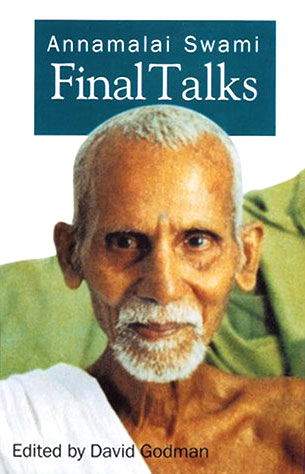
The following excerpt is from Chapter 7 of the above book:
Annamalai Swami: Enquire ‘Who am I?’ or ‘What is my real nature?’ The nature of the Self is nothing but peace. If you are not aware of that peace, it means that you are identifying with something that is not the Self. As long as you hear, taste and smell things, you identify with the body. When the perceptions and the perceiver of them vanish, you become aware of the peace that is there all the time.
If you are not aware of that peace, it means that you are identifying with something that is not the Self.
Q: I hear the sound. Then I ask myself who is hearing the sound, and the answer is ‘I’. What happens next depends on where I am. If I am in Swami’s presence or in the meditation hall at Sri Ramanasramam, I feel the presence of the Self and the bliss of peace, but when I am away from Swami, it is not easy.
AS: You need not hold on to That because you are That all the time. That is enough. You are That. How can you hold on to That, or feel separate from it, or try to get it back, or lose it? If That is your real nature, how can you pretend that you are nearer to it in two places and separate from it when you are somewhere else?
How can you hold on to That, or feel separate from it, or try to get it back, or lose it?
Q: I have the experience of That with Swami, but I don’t have the same experience when I am away from him. This is definitely my experience, so I don’t really understand what you are telling me.
AS: Your understanding or your lack of it does not affect the truth of what I am saying. You are That. See who you are and there will be nothing obstructing the experience of this fact.
Q: I still say I see who I am when I am near Swami. When I am away from him, I can remember it as a fact, but it is not my direct experience.
AS: This is because you identify with your body and your mind. Your mind is making you believe that a certain experience can only happen when you are in a particular place. Give up this identification and you will find that the Self is everywhere. You will see it, know it and be it wherever you go. Everything is Swami including you yourself.
Question: How do I give up identification with the body, particularly when I am not in front of Swami? I keep practicing, but I don’t have that experience.
AS: Meditate ‘I am the Self’. If you do this, the idea that you are the body will go. ‘I am the Self’ is still an idea, and as such, it belongs in maya, along with all other ideas. But you can begin to conquer maya by giving up utterly wrong ideas that bind you and cause you trouble. How to do this? Replace them with ideas that are a better reflection of the truth, and which are helpful in leading you towards that truth. If you want to cut iron, you use another piece of iron.
But you can begin to conquer maya by giving up utterly wrong ideas that bind you and cause you trouble. How to do this? Replace them with ideas that are a better reflection of the truth…
In battle, if someone shoots an arrow at you, you shoot one back. In maya, if the arrow of a bad idea comes speeding towards you, dodge it. Don’t let it stick to you of you will end up in pain. Then, in retaliation, fire back the arrow of ‘I am the Self’ at the place where the wrong idea came from.
Sadhana is a battlefield. You have to be vigilant. Don’t take delivery of wrong beliefs and don’t identify with the incoming thoughts that will give you pain and suffering. But if these things start happening to you, fight back by affirming, ‘I am the Self; I am the Self; I am the Self’. These affirmations will lessen the power of the ‘I am the body’ arrows and eventually they will armour-plate you so successfully, the ‘I am the body’ thoughts that come your way will no longer have the power to touch you, affect you or make you suffer.
Don’t take delivery of wrong beliefs and don’t identify with the incoming thoughts that will give you pain and suffering…fight back by affirming, ‘I am the Self; I am the Self; I am the Self’.
This fight all takes place within maya because in reality you are peace and peace alone. But while you are suffering in maya you can use these thoughts as a means of ultimately conquering it.
“Listen to the Master…
by hearing, Ignorance has come up,
and by hearing it goes off.” Shri Ranjit Maharaj
Tom’s comments:
The master speaks: because, as a child, we ‘listened’ to those around us, through absorbing their words we came to believe that we are a separate individual, a doer, a separate entity responsible for everything that this body-mind does. This is the basic ignorance.
Now, we can listen to the Master dispense his words. While his words, like ignorance, are also conceptual these concepts are there to remove ignorance.
The master’s words are like anti-matter: just as when anti-matter and matter collide they both disappear in a flash of energy leaving nothing behind, the master’s teachings nullify the suffering caused by our wrong notions of doership. Then the master’s teachings are also seen to be false.
We are left with no concepts at all, neither our original ignorant concepts, nor the concepts of the teaching. Only reality remains. It was always here.
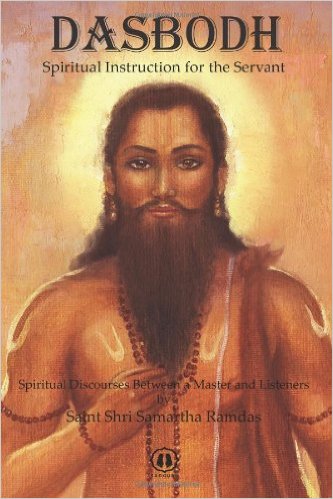
Dasbodh, written by Sri Samartha Ramdas in 1654, has been long used as a source text for seekers of enlightenment within the Advaita Vedanta tradition. Nisargadatta Maharaj’s lineage, the Inchegarei Sampradaya, were hugely inspired by this text and Nisargadatta used to regularly read from it.
Here Samartha Ramdas is pointing us to something very profound, yet very simple once realised. For more, compare this verse with that of Zen master Han-Shan here.




 Tom Das