Krishnamurti: Meditation is natural

evening sky

I recall walking in the gardens of a local convent in Autumn last year. After meandering around for a while I found my self standing by a tree. I looked up to see a dark angular leaf-less branch silhouetted against a luminous evening blue sky. There was complete stillness and a sense of vastness. The universe was functioning, but “I” was not there. Everything was happening by itself, seemingly magical and uncaused. The silence was deafening, as they say. The universe was, as ever, mysterious, strange and peaceful. It was both familiar and unfamiliar at the same time. Continue reading

Jesus and Krishnamurti: The importance of being alone

I was reading a passage from J. Krishnamurti’s slim book called meditations which reminded me of a passage from The Gospel According to Matthew. The language they use is strikingly similar. I’ll start with the biblical passage as it’s shorter:

But when you pray, go into your room, close the door and pray to your Father, who is unseen. Then your Father, who sees what is done in secret, will reward you.
Matthew 6:6

Continue reading

Maturing in our spiritual search: from experience to knowledge

abstract blue

Most of the great spiritual traditions claim that there is something eternal and supremely infinite, something that is all-knowing, all-powerful and present everywhere (omniscient, omnipotent and omnipresent).

If that is the case, then this Infinite must already be here, right now. If it isn’t already present right now, then it is not omnipresent. This is a vital point to grasp – if there is such a thing as the Infinite, then it must already be fully here, right now, otherwise it is limited and therefore not infinite.

It is not that certain mystical or transcendental experiences are experiences of the Infinite but our normal everyday experiences are not. No, all our experiences must be of Him. We must always be experiencing the Infinite.

This has several ramifications for the spiritual seeker. This means that the problem we face is not that we are apart from God and need to find Him or experience Him. No, the issue is that we are already always experiencing God but do not know it.

The issue is not one of acquiring a special experience or state of mind. It is that we do not correctly understand our current experience as it is right now. Even traditions that do not admit a God such Buddhism acknowledge that understanding, or insight, is what is key:

“If you do not have insight into the way you yourself and all things actually are, you cannot recognize and get rid of the obstacles to liberation from cyclic existence, and, even more important, the obstructions to helping others.”
Dalai Lama (from How to See Yourself as You Really Are)

Armed with this knowledge, we can mature in our spiritual seeking. So-called materialistic or worldly life is characterised by chasing experiences such as pleasure, power, fearlessness, pride and security. Many spiritual seekers just transfer this same pattern of yearning for worldly experiences into their quest for spiritual experiences. However as we mature in our spiritual search we can stop chasing states of mind and experiences – all of which are temporary – and instead start to try and understand our direct experience as it is right now.

This understanding or insight, whilst based upon our direct experience, is not a search for a particular experience, but an understanding of experience itself.

“That is why the insight that can liberate you from these afflictions is the key to happiness…Insight brings love, and love is not possible without insight, understanding. If you do not understand, you cannot love. This insight is direct understanding, and not just a few notions and ideas.”
Thich Nhat Hanh

Zen story: the 3 sutras

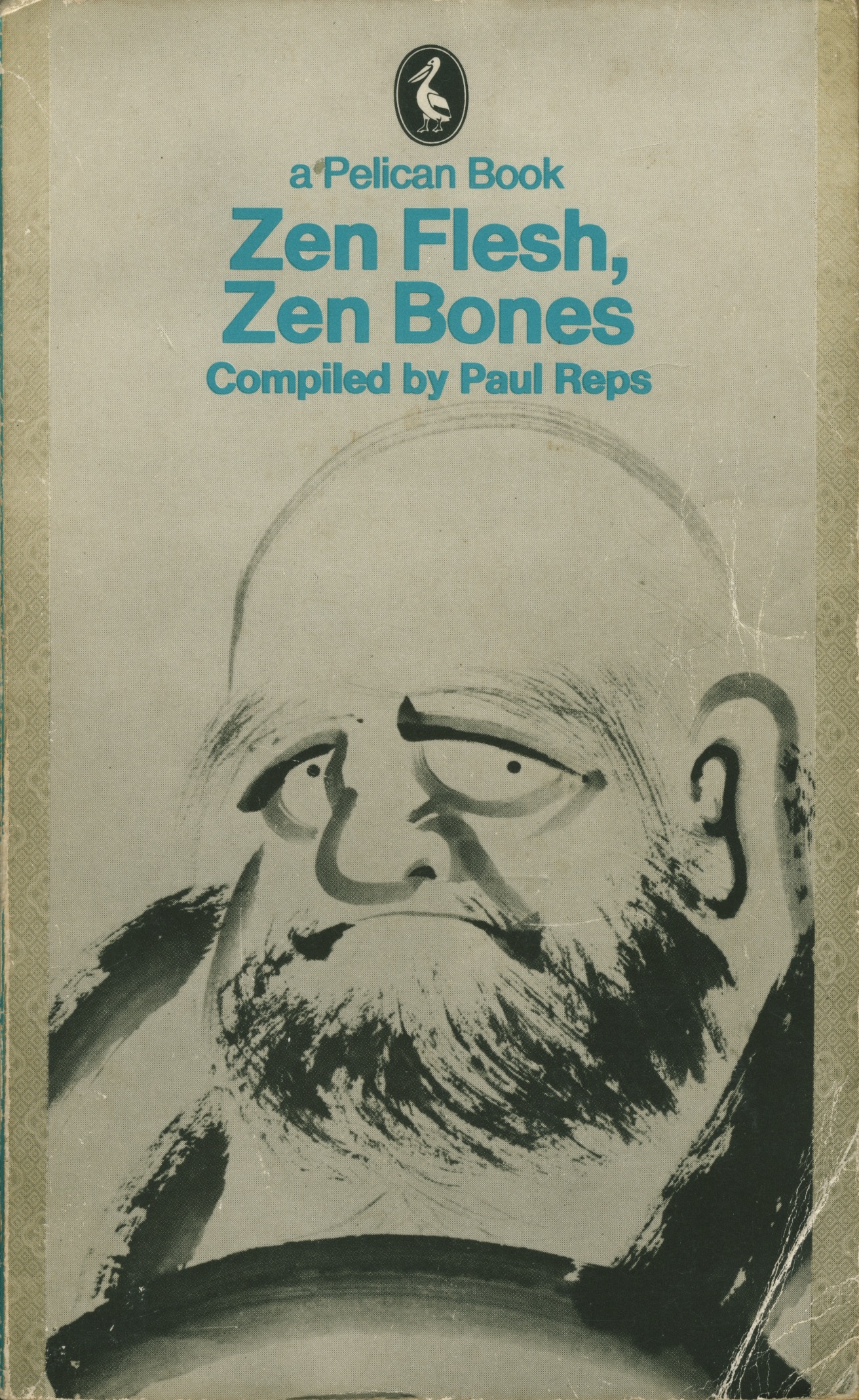
zen flesh zen bones

Tetsugen, a devotee of Zen in Japan, decided to publish the sutras (Buddhist texts), which at that time were available only in Chinese. The books were to be printed with wood block in an edition of seven thousand copies, a tremendous undertaking.

Tetsugen began by travelling and collecting donations for this purpose. Continue reading

Early Buddhist Writings

A few years ago I read some of the earliest Buddhist texts that we currently know of and was shocked at how different they are to what is generally taught as being Buddhism today. Even Theravada Buddhism, which has the claim of being the oldest surviving school of Buddhism, often presents its teachings in very different ways. These early teachings were direct, forceful and devoid of complexities and lengthy philosophising. They reminded me much more of the pithy statements of Zen and Dzogchen Buddhism, which is surprising as these Buddhist schools are chronologically much later developments that occurred roughly 1000 years after the Buddha’s time. Continue reading

Zen Story: Everything is Best

zen flesh zen bones

Another wonderful Zen story, also one of my favourites, taken from the book ‘Zen Flesh, Zen Bones’:

When Banzan was walking through a market he overheard a conversation between a butcher and his customer.

“Give me the best piece of meat you have,” said the customer.
“Everything in my shop is the best,” replied the butcher. “You cannot find here any piece of meat that is not the best.”

At these words Banzan became enlightened.

How can everything be the best? It makes no sense, yet all is the best, everything is divine, sparkling with effervescent magic.

Zen Story: The Moon Cannot be Stolen

zen flesh zen bones

This is one of my favourite Zen stories, taken from the amazing book ‘Zen Flesh, Zen Bones‘. It oozes with love and wonderment

Ryokan, a Zen master, lived the simplest kind of life in a little hut at the foot of a mountain. One evening a thief visited the hut only to discover there was nothing to steal.

Ryokan returned and caught him. “You have come a long way to visit me,” he told the prowler, “and you should not return empty-handed. Please take my clothes as a gift.”

The thief was bewildered. He took the clothes and slunk away.

Ryoken sat naked, watching the moon. “Poor fellow,” he mused, “I wish I could have given him this beautiful moon.”

Overflowing love, the moon is here for everyone, it cannot be stolen, it can never be possessed, and need not be possessed. Why bother with worldly items when the metaphorical Moon is here?