Jiddu Krishamurti: Silence, the Still Mind, Meditation

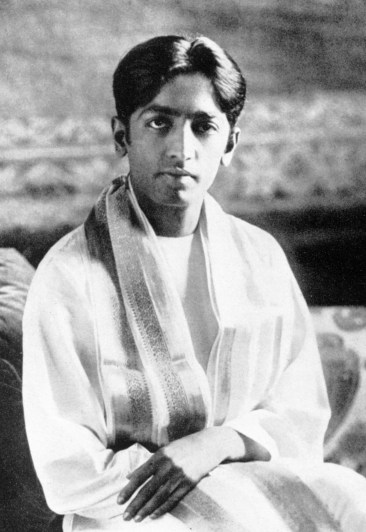
Krishnamurti young

I’ve compiled a few quotes by J. Krishnamurti on the subject of silence/stillness, and I’ve broadly arranged them so the initial quotes are more introductory and the latter quotes expand on the depth and subtleties of the teachings. Are we not blessed to have such teachings available to us? I hope you find these of use to you, with love and best wishes:

What lies beyond can be found only if the mind is still. There may be something or there may be nothing at all. So the only thing that is important is for the mind to be still.

What lies beyond can be found only if the mind is still…the only thing that is important is for the mind to be still.

Again, if you are concerned with what lies beyond, then you are not looking at what the state of actual stillness is. If stillness to you is only a door to that which lies beyond, then you are not concerned with that door, whereas what is important is the very door itself, the very stillness itself.

Therefore you cannot ask what lies beyond. The only thing that is important is for the mind to be still. Then what takes place? That is all we are concerned with, not with what lies beyond silence.

Eight Conversations


When you realize that there is no method, no system, no mantra, no teacher, nothing in the world that is going to help you to be quiet, when you realize the truth that it is only the quiet mind that sees, then the mind becomes extraordinarily quiet.

…it is only the quiet mind that sees…

It is like seeing danger and avoiding it. In the same way, seeing that the mind must be completely quiet, it is quiet.

Now, the quality of silence matters. A very small mind can be very quiet, it has its little space in which to be quiet; that little space, with its little quietness, is the deadest thing – you know what it is.

In that silence there is no observer at all.

But a mind that has limitless space and that quietness, that stillness, has no center as the ‘me’, the observer, is quite different. In that silence there is no observer at all. That quality of silence has vast space, it is without border and intensely active; the activity of that silence is entirely different from the activity which is self-centered.

If the mind has gone that far (and really it is not that far, it is always there if you know how to look), then perhaps that which man has sought throughout the centuries – God, truth, the immeasurable, the nameless, the timeless – is there.

…it is always there if you know how to look…

Without your invitation, it is there.

The Flight of the Eagle


There is no other fact but silence which has not been invited, induced, sought after, but which is the natural outcome of observation and of understanding oneself and the world about one. In this there has been no motive which has brought silence. If there is any shadow or suspicion of a motive, then that silence is directed and deliberate, so it is not silence at all.

If there is any shadow or suspicion of a motive, then that silence is directed and deliberate, so it is not silence at all.

If you can honestly say that that silence is free, then what actually takes place in that silence is our only concern. What is the quality and the texture of that silence? Is it superficial, passing, measurable? Are you aware of it after it is over, or during the silence? If you are aware that you have been silent, then it is only a memory, and therefore dead. If you are aware of the silence while it is happening, then is it silence?

Eight Conversations


If you have followed this inquiry into what is meditation, and have understood the whole process of thinking, you will find that the mind is completely still. In that total stillness of the mind, there is no watcher, no observer, and therefore no experiencer at all; there is no entity who is gathering experience, which is the activity of a self-centred mind.

In that total stillness of the mind, there is no watcher, no observer, and therefore no experiencer at all; there is no entity who is gathering experience, which is the activity of a self-centred mind.

Don’t say, “That is samadhi”, which is all nonsense, because you have only read of it in some book and have not discovered it for yourself. There is a vast difference between the word and the thing. The word is not the thing; the word door is not the door.

So, to meditate is to purge the mind of its self-centered activity. And if you have come this far in meditation, you will find there is silence, a total emptiness.

The mind is uncontaminated by society; it is no longer subject to any influence, to the pressure of any desire. It is completely alone, and being alone, untouched, it is innocent.

So, to meditate is to purge the mind of its self-centered activity…you will find there is silence, a total emptiness…The mind is uncontaminated by society;

Therefore there is a possibility for that which is timeless, eternal, to come into being. This whole process is meditation.

J. Krishnamurti, The Book of Life


Disciplines, renunciations, detachments, rituals, the practice of virtue, all these, however noble, are the process of thought, and thought can only work toward an end, toward an achievement, which is ever the known.

Achievement is security, the self-protective certainty of the known. To seek security in that which is nameless is to deny it. The security that may be found is only in the projection of the past, of the known.

For this reason, the mind must be entirely and deeply silent; but this silence cannot be purchased through sacrifice, sublimation, or suppression. This silence comes when the mind is no longer seeking, no longer caught in the process of becoming. This silence is not cumulative, it may not be built up through practice.

This silence comes when the mind is no longer seeking, no longer caught in the process of becoming. This silence is not cumulative, it may not be built up through practice.

This silence must be as unknown to the mind as the timeless, for if the mind experiences the silence, then there is the experiencer who is the result of past experiences, who is cognizant of a past silence, and what is experienced by the experiencer is merely a self-projected repetition. The mind can never experience the new, and so the mind must be utterly still.

The mind can never experience the new, and so the mind must be utterly still.

The mind can be still only when it is not experiencing, that is, when it is not terming or naming, recording or storing up in memory. This naming and recording is a constant process of the different layers of consciousness, not merely of the upper mind. But, when the superficial mind is quiet, the deeper mind can offer up its intimations. When the whole consciousness is silent and tranquil, free from all becoming – which is spontaneity – then only does the immeasurable come into being.

Commentaries on Living, Series I


That silence which is not the silence of the ending of noise is only a small beginning. It is like going through a small hole to an enormous, wide, expansive ocean, to an immeasurable, timeless state. But this you cannot understand verbally unless you have understood the whole structure of consciousness and the meaning of pleasure, sorrow and despair, and the brain cells themselves have become quiet. Then perhaps you may come upon that mystery which nobody can reveal to you and nothing can destroy.

…the brain cells themselves have become quiet. Then perhaps you may come upon that mystery which nobody can reveal to you and nothing can destroy.

Freedom from the Known


Is silence to be cultivated, carefully nurtured and strengthened? And who is the cultivator? Is he different from the totality of your being? Is there silence, a still mind, when one desire dominates all others, or when it sets up resistance against them? Is there silence when the mind is disciplined, shaped, controlled? Does not all this imply a censor, a so-called higher self who controls judges, chooses?

Is there silence when the mind is disciplined, shaped, controlled? Does not all this imply a censor, a so-called higher self who controls judges, chooses?

And is there such an entity? If there is, is he not the product of thought? Thought dividing itself as the high and the low, the permanent and the impermanent, is still the outcome of the past, of tradition, of time. In this division lies its own security.

Thought or desire now seeks safety in silence, and so it asks for a method or a system which offers what it wants. In place of worldly things it now craves the pleasure of silence, so it breeds conflict between what is and what should be. There is no silence where there is conflict, repression, resistance.

Q: Should one not seek silence?

K: There can be no silence as long as there is a seeker. There is the silence of a still mind only when there is no seeker, when there is no desire.

Q: Should one not seek silence?

K: There can be no silence as long as there is a seeker. There is the silence of a still mind only when there is no seeker, when there is no desire. Without replying, put this question to yourself: Can the whole of your being be silent? Can the totality of the mind, the conscious as well as the unconscious, be still?

Commentaries On Living Series II Chapter 50 


The mind is silent only with the abundance of energy, when there is that attention in which all contradiction, the pulling of desire in different directions, has ceased. The struggle of desire to be silent does not make for silence. Silence is not to be bought through any form of compulsion; it is not the reward of suppression or even sublimation.

The struggle of desire to be silent does not make for silence. Silence is not to be bought through any form of compulsion; it is not the reward of suppression or even sublimation.

But the mind that is not silent is never free; and it is only to the silent mind that the heavens are opened. The bliss which the mind seeks is not found through its seeking, nor does it lie in faith. Only the silent mind can receive that blessing which is not of church or belief.

But the mind that is not silent is never free; and it is only to the silent mind that the heavens are opened. The bliss which the mind seeks is not found through its seeking, nor does it lie in faith. Only the silent mind can receive that blessing which is not of church or belief.

For the mind to be silent, all its contradictory corners must come together and be fused in the flame of understanding. The silent mind is not a reflective mind. To reflect, there must be the watcher and the watched, the experiencer heavy with the past.

The silent mind is not a reflective mind. To reflect, there must be the watcher and the watched, the experiencer heavy with the past.

In the silent mind there is no centre from which to become, to be, or to think. All desire is contradiction, for every centre of desire is opposed to another centre. The silence of the total mind is meditation.

Commentaries On Living, Series III, Chapter 51

The silence of the total mind is meditation.


When you watch attentively, with diligence, there is nothing to learn; there is only that vast space, silence and emptiness, which is all-consuming energy.

Krishnamurti to Himself

How does Namaskaram lead to moksha (liberation)?

In response to this post here about how Namaskaram can lead to moksha (liberation), I received the following question:

Q. How does namaskaram cleanse the energy? How will it lead to moksha?

Tom: regular practice of Namaskaram with heartfelt devotion and feeling purifies the mind, transforming rajas (passionate energy) and tamas (dull or negative energy) to sattva (peaceful energy).

Then it sacrifices the ego in the depth of silence so that all that remains is the pristine pure reality.

Om Tat Sat

Q: I never get it when you say ‘be still’

Question: Tom, I never get it when you say ‘be still’. In my experience there is a contradiction between ‘Allow things to be as they are: No need to suppress or control.’ and ‘disengaging from thoughts’ because when I cease controlling, my mind just wonders so much. I definitely won’t detach from my thoughts by relaxing or even by any other means.

Tom: Yes, good point. When you set aside time to practice this you will naturally stumble upon that balance between not controlling/allowing and yet not engaging in thoughts. The secret is to practice again and again.

Q: So the technique is to be aware of thoughts but not get engaged? Then when you get caught up in thoughts, just return to watching them?

Tom: Yes. But no need to watch the thoughts… See here for more: How to meditate for spiritual enlightenment

CONSUMED BY LOVE 


Relax,
And be still.

No need to force it,
Just let it come naturally.

Be still.

Allow yourself to disengage from thoughts
and simply rest in being.

Allow things to be as they are:
No need to suppress or control.

Be still.

Allow yourself to naturally detach from thoughts,
So they don’t stick to you.
Your breathing becomes easy:
This is the natural state.

Allow happiness-love to arise,
Sometimes gently,
Sometimes with force.

Be still. Allow love.

This happiness-love is what you truly are.
This loving-aware-presence is you.

In stillness, be this, be love.

It is not that you are feeling love-happiness:
You are love-happiness,
That is you,
And all arises in you,
as you.

All arises in Love,
as Love.

Be love, be love.

Allow the false identity to slip away:
It is just a bundle of thought-energy,
An energetic wisp.

Seen for what it is,
the little ‘me’ is subsumed into Love,
Consumed by Love

Consumed by Love,
Where is the room for ‘you’ and ‘me’?
Where is the room for ‘here’ and ‘there’?

And as you dissolve in Love,
Love, in its own way and time, takes you beyond itself,
And yet all there is is Love.


The Natural Path to the Natural State

Lake calm new zealand meditation nonduality

Through the mind being increasingly more still, all is revealed, naturally and directly, non-verbally and non-conceptually, beyond any set of words or stock-phrases.

We don’t need to wrestle with ideas and questions such as:
– Is there a separate self?
– Is the world an illusion?
– Is everything really me?
– Do I survive after death?
– Am I really not the body?
– Is there free will?
– Are all these teachings actually just ramblings of self-deluded people? (It’s not impossible!)

All of the above is just ego-play, the mind perpetuating itself.

Through being still, as the thoughts lessen and lessen, the distorting veil of the ego lessens and its illusions are naturally seen through. Insight pours in all by itself, insight simply being the recognition of illusion for what it is, and the falling away of illusion.

All practices eventually take us to this stillness, so do what you need to do to be still. Often uplifting, blissfull, loving, positive and invigotating practices and techniques are needed first to root out negative tendencies (tamasic vasanas), and soothing calming practices are needed to calm passionate activated energies (rajasic vasanas) prior to allowing yourself to be still. Do what you need to do to allow stillness into your life.

Any teachings that have given you lasting benefit just bring you to this stillness, even if just momentarily. Through repeated prolongued immersion in stillness, the tendency to identify with the body-mind reduces then, after much time, eventually disappears, and with that the belief in the solidity of the world and other people also disappears, as does the notion of subject-object and time. This just happens by itself.

No need to take my word for it. Just be still and find out for yourself. Let go of belief in the ‘me’, the body, the world, the future, the past, etc, allow all thoughts to gently settle down and let go of all thinking. No need to push anything away or supress anything, just allow yourself (the ego-mind) to die…all will naturally work itself out.

Of course you will not find discover anything new or realise anything: the ego-illusion, the centre that is seeking – that will simply end. This is not about gaining new special knowledge or a new insight into reality, so if you are not getting special experiences/understanding or don’t appear to be ‘making progress’ through being still, don’t worry, that’s perfect. This is about the end of the ‘me’ that is seeking all of that.

Also, don’t underestimate the tenaciousness, endurance and pervasiveness of the ego. Even when thoughts do not appear to be consciously present, the ego is still fully there, dormant and in seed form, ready to sprout, just like in deep sleep. Therefore the stillness, even when thoughts appear not to be present, still needs to be be further deepened and the sadhana (spiritual practice) still needs to be continued until there is no individuality-duality left. A superficial absense of thoughts will not do. If this seems too difficult or daunting, don’t worry – just start, just start! What at first appears difficult or even impossible becomes easy with repeated attempts and practice. Take the example of a child learning to walk, ride a bike, swim or speak a language.

What remains when the ego/’me’ is gone can’t be put into words, and cannot be understood by the ego/mind. Thinking that this can be put into words such as ‘all is one’, or ‘Atman is Brahman’ or ‘there’s nobody here’ or any other set of words is seen to be false and just more toys for the ego. At the same time, it can be seen what these words may be trying (and failing) to point to.

So, no need to figure any of this out – that is more ego – instead be still. No need to cling to insights or words or knowledge or experiences – that too is more ego – instead be still.

Do not try to be still – that is just more activity, more ego. Seeing this, just allow everything to be as it is, not in order to get something, as that too is more ego.

Seeing the ego is always trying to gain, and intuitively non-verbally seeing this is just an unnecessary waste of energy, the ego can spontaneouly be let go of, for no reason, and not supressed, but just allowed, and in that the egoic drive has been removed, and this is being still. You need to try it and experiment to find this out for yourself.

Just like unplugging an electric fan, the blades of the ego-fan may appear to turn for a while, a good while, but no need to try to stop the blades rotating – that is more ego-effort and causes more issues – just be still and the ego-thoughts will naturally slow down when it is ready, just like the electric fan blades eventually stop by themselves when the power is taken away.

The other thing is don’t get stuck in a trance, a static feel-good state of mind. That is also another play of the mind looking for escape and pleasure. Stillness is not a trance, it’s much gentler than that – it’s the natural state. Try, experiment and practice and you will find the way, not by sitting on the sidelines thinking about it, but by actually doing it.

In summary: be still, all will be revealed.

Which means nothing will really be revealed, just the illusion/illusory seeker will die. The illusion-free state, the egoless state, the non-dual state, which of course is not a state, is the natural state.

If this is confusing, don’t worry. The words are never it. Instead just be still. Actually do it. Again and again forget everything, let go of your thoughts and thinking, bring yourself back to stillness, become nothing, let go of it all, be still.

This is the natural path to the natural state.

Wishing you peace.

Give up everything

Robert Adams Advaita

The following is by Robert Adams:

What happens is this. As you keep giving up all the reactions to life. As you begin to surrender everything to the one Self. The one Self which is the absolute reality, the pure awareness takes over.

And will do whatever you have to do, even better than you can do it yourself. This power that knows the way will take you over completely. And it will speak for you. Do everything for you that you have to do and yet you will feel that you are not the doer.

Yet everything will be done perfectly.

Many people are afraid to give up their senses. For they believe that they will turn into a vegetable. But this is not true. You will always function. You will always do what you came to this earth to do. And you will even do it better than you ever can imagine.

So do not concern yourself about these things. Simply go within, surrender everything to the Self.

Give up everything.

Q. What is the best posture to meditate in?

frog meditate

Of course the best position varies from person to person – you can meditate standing, walking, sitting, lying…perhaps some other postures too!

Generally, for sitting meditation, any position that is comfortable for you that allows you to adopt a straight back is good. Generally means having your knees being below the level of your hips, so either sitting with your knees low or sitting on a cushion of some kind to raise the hips

Happy sitting!

🙏

Zen: an especially excellent teaching and a most essential shortcut

Branch light

The following is a letter written by the Chinese Master Yuanwu (1063-1135), It can be found in the excellent collection ‘Zen Letters’ translated by Thomas Cleary where it is entitled ‘Bringing Out the Family Treasure’.

I hope you don’t mind that I have interspersed my comments in red italics:

If you want to attain Intimacy, the first thing is, don’t seek it. If you attain through seeking, you have already fallen into interpretive understanding.

Yuanwu gets straight into it here, directly pointing out that the desire for Intimacy, or Enlightenment, itself is a barrier to it. Seeking will only yield a conceptual understanding. It is implied here that conceptual understanding is clearly not what is being aimed at.

This is especially true because this great treasury extends through all times, clearly evident, empty and bright.  Since time without beginning it has been your own basic root: you depend on its power entirely in all your actions.

What you are looking for has always been here (‘extends through all times’), is already shining (‘bright’), and is of no enduring substance (’empty’). It is the essence of you and is the power that manifests both you and your life.

You will only pass through to freedom when you cease and desist to the point that not even a single thought is born.  Then you penetrate through without falling into sense and matter and without dwelling in conceptualizations and mental images.

Yuanwu is stating we should be still. Not as something to do, but as something to stop doing (‘cease and desist’) until thoughts no longer occur. Using this method we do not fall into the traps of attachment to form, belief and dogma. What will this method eventually yield? Let us find out:

When you absolutely transcend these, then the whole world does not hide it.  Everywhere everything becomes its Great Function, and every single thing flows forth from your own breast.  The ancients called this bringing out the family treasure. Once this is attained, it is attained forever.  How could it ever be used up?

Here the fundamental insight has been recognised. Through being still, the bottom of the bucket has fallen out, and the Fundamental Essence has been recognised as being one with everything everywhere, and non-different to yourself.

Just be wary that your investigation does not rest on a firm footing, and that you will not be able to penetrate through to realization.  You must bravely cut off all entanglements, so there is not the slightest dependence or reliance. Relinquish your body and give up your life and directly accept the suchness that faces you; there is no other.

This is a warning to ensure that there is not the slightest trace of dogma, belief or attachment to conceptual views. Even after the fundamental insight has been attained, all entanglements or addictive desires are to be relinquished. We are to surrender totally, giving up our life’s dreams and ego-based desires in the process.

Then even if a thousand sages came forth it wouldn’t change you at all. Leaving it to the flow at all times, eating food and wearing clothes, you nurture the embryo of sagehood to maturity, not keeping to intellectual understanding.

Let go, let things be, let things come as they come, let things go as they go. Importantly Yuanwu hints that with the fundamental realisation already attained, it is merely the ’embryo’ of wisdom that has been obtained. It then takes time for this realisation to ripen to ‘maturity’, as the habitual tendencies to identify with the body and thoughts are gradually uprooted. This is explained in further detail in Yuanwu’s other letters, see here for example.

Isn’t this an especially excellent teaching and a most essential shortcut?

Isn’t it just!

Namaskaram/ Namaste – a complete path to enlightenment


namaskaram namaste prayer buddha

Namaskaram (placing your hands together in front of your chest and bowing) is a complete teaching in itself.

Do not underestimate its power:

Just this one simple practice has the power to destroy all ignorance and illusion and lead to Moksha, total and complete liberation in this life.
So practice it daily, practice it multiple times a day:
Make your life into one succession of Namaskaram after Namaskaram after Namaskaram.

The coming together of the hands denotes stillness, wholeness, power, presence and Being.
The bowing of the head denotes humility, effacement, love, respect, servitude and ahimsa (do no harm).

Namaskaram indicates our respect, reverence, love and gratitude to those people we greet around us.
Namaskaram is our overwhelming gratitude to the whole of life for the gifts it brings us each moment, in both apparently good and in bad circumstances.

Namaskaram is total and complete humility.
Namaskaram is timelessness.
Namaskaram is ever-flowing Love:
Nothing else is needed here;
All is divine, complete and perfect in itself, as it is, already and for ever-more;
This is Namaskaram.

Namaskaram is Bhakti,
Love and devotion to God, and giving everything that we are to Him/Her/It/That.
Namaskaram is the surrender of ourselves to that one higher power which is non-separate from ourself.
Namaskaram opens the heart to ever-flowing loving-grace, healing us emotionally, making us whole.

Namaskaram purifies the mind, removing egoic defilements and allowing the vision of wholeness to rise up.
Namaskaram energetically cleanses the body, flooding it with white loving light and healing energy.
Namaskaram karmically bestows merit upon us, protecting us from evil and wrongdoing, keeping our path straight.
Namaskaram is good for the soul.

Namaskaram is pure Jnana itself.
It is no different to total effacement of the ego and total knowledge of the Absolute.
Namaskaram culminates in stillness, in Mauna (Silence).

Namaskaram is also high praise to Maya-shakti, and her wonderful Lila, the play of life with all its enchantment and suffering.

Namaskaram is love, light, power and presence.
Namaskaram is all.
I bow to you, Namaskaram! I bow to you!

We greet each day in Namaskaram,
The whole universe reciprocates in Namaskaram back to us.
Love reciprocates Love.

In Namaskaram, boundaries become blurred:
“Where am I? and where are You my friend, my Lord?”
Everything is just sweet surrender:
“Your Divine Love-Grace is no different to my Deep Longing for You.”

Life becomes Namaskaram after Namaskaram after Namaskaram:
Love pouring into love,
Light pouring into light,
Gratitude pouring into gratitude,

God greets Herself,
Ever-flowing,
In Namaskaram.

So practice Namaskaram.
Do not underestimate its power to humble you and strike you down,
To comfort and replenish you when required,
To quieten and calm you,
To destroy you,
In Love.

Namaskar to you, my friends,
Namaskar to you all.

🙏🙏🙏

Daily Nonduality Quote for Contemplation 10

Here below is the last of the series of quotes for contemplation. Be still and contemplate. And be still. Best wishes to you ❤

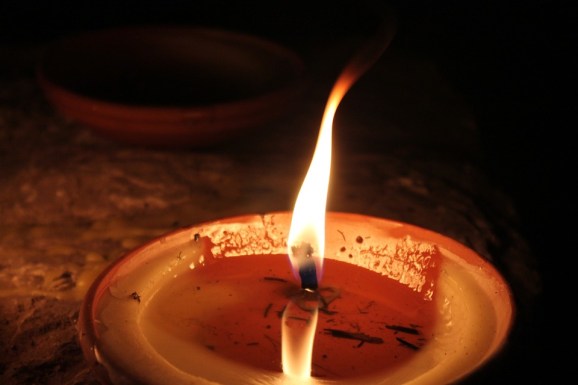
candle still.jpg

Because you think there is substance to life, you suffer. Don’t be scared of this teaching, don’t make it into a philosophy or belief. Be still and all will be revealed, and the revelation is beyond these pathetic words.