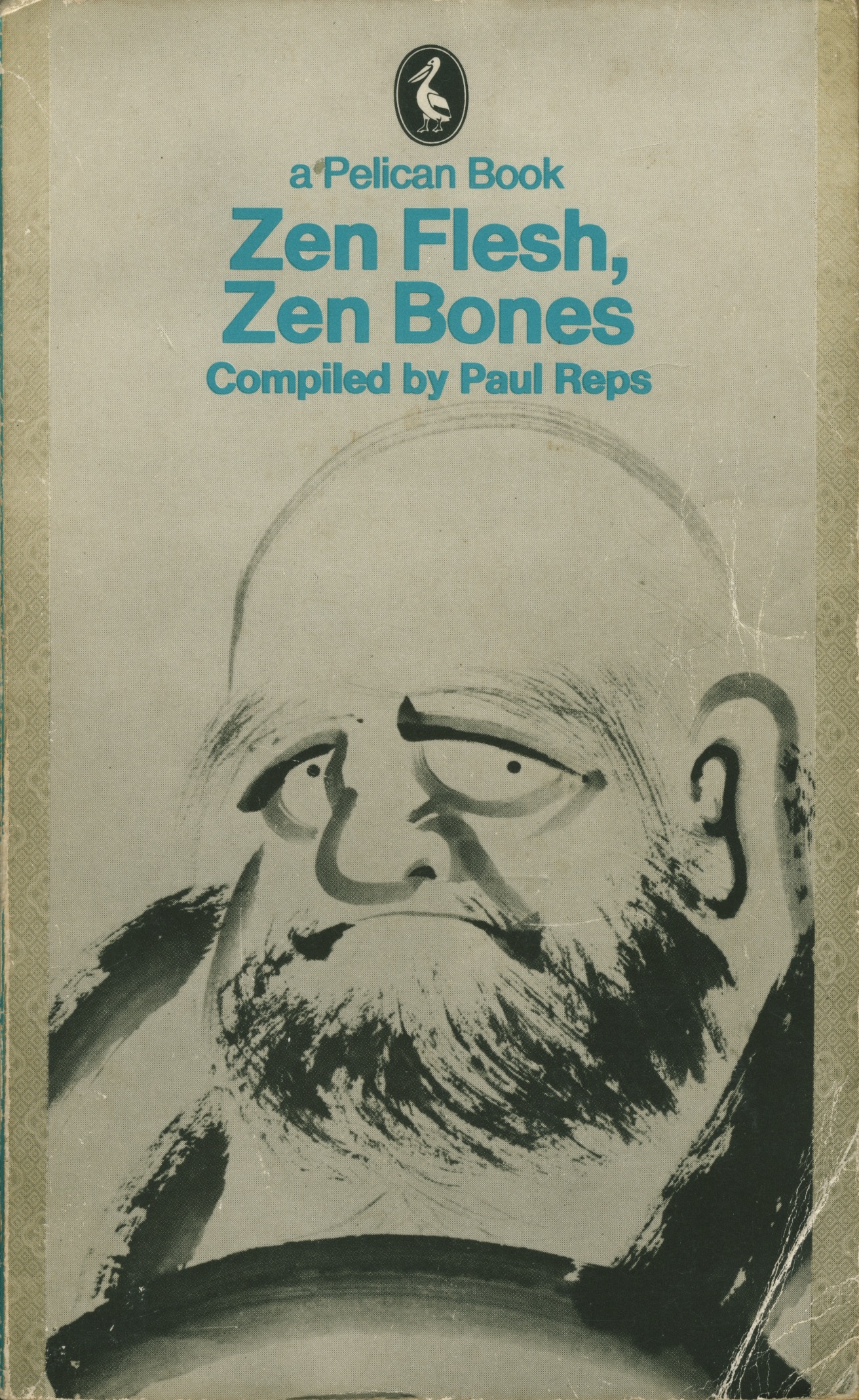
Tetsugen, a devotee of Zen in Japan, decided to publish the sutras (Buddhist texts), which at that time were available only in Chinese. The books were to be printed with wood block in an edition of seven thousand copies, a tremendous undertaking.
Tetsugen began by travelling and collecting donations for this purpose. Continue reading →
Questioner: As a child fairly often I experienced states of complete happiness, verging on ecstasy: later, they ceased, but since I came to India they reappeared, particularly after I met you. Yet these states, however wonderful, are not lasting. They come and go and there is no knowing when they will come back.
Nisargadatta Maharaj: How can anything be steady in a mind which itself is not steady?
Q: How can I make my mind steady?
M: How can an unsteady mind make itself steady? Of course it cannot. It is the nature of the mind to roam about. All you can do is to shift the focus of consciousness beyond the mind.
Q: How is it done?
M: Refuse all thoughts except one: the thought ‘I am’. The mind will rebel in the beginning, but with patience and perseverance it will yield and keep quiet. Once you are quiet, things will begin to happen spontaneously and quite naturally without any interference on your part.
Q: Can I avoid this protracted battle with my mind?
M: Yes, you can. Just live your life as it comes, but alertly, watchfully, allowing everything to happen as it happens, doing the natural things the natural way, suffering, rejoicing — as life brings. This also is a way.
Q: Well, then I can as well marry, have children, run a business… be happy.
M: Sure. You may or may not be happy, take it in your stride.
Q: Yet I want happiness.
M: True happiness cannot be found in things that change and pass away. Pleasure and pain alternate inexorably. Happiness comes from the self and can be found in the self only. Find your real self (swarupa) and all else will come with it.
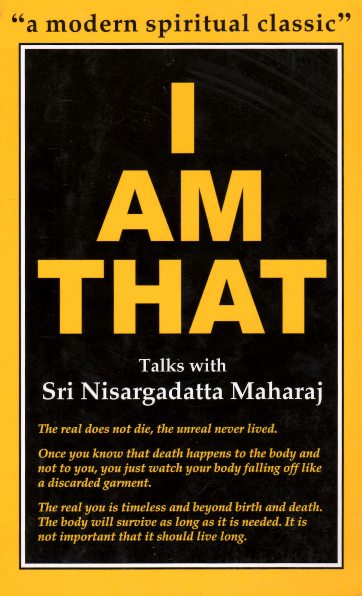
The above excerpt is from I Am That by Nisargadatta Maharaj
Tom’s comments:
There are so many gems in just this short passage! First Maharaj points out the mind need not be directly controlled and that the very nature of the mind is to roam, ruminate and be unsteady. Instead focus on something else: the sense ‘I AM’. Then the goal of a quiet mind will naturally arise.
Maharaj then gives us more: if we are not drawn to this sadhana (spiritual practice), then we can try an alternative. Instead we can surrender to whatever happens, keeping a watchfulness about ourselves whilst we do so. This, rather like the ‘I AM’ sadhana, also has the effect of quietening the mind and prevents the ego having room to manoevure. The ‘I’ which is always trying to meddle in things is cut off, restricted. There is much more to how these methods work and how they can be practised – I have written an article hereexplaining more on this.
Lastly Maharaj gives us a final nugget: ‘True happiness cannot be found in things that change and pass away.’
Experience, knowledge, insight and consciousness all come and go – so where does this leave us? Where can we seek if we do not seek in this world of impermanent things? Here we pass from the domain of the mind to that which is beyond words. Call it ‘true self’ (swarupa) or ‘no-self’, words do not apply.
‘I did not yet know that there was an essence or impersonal Real underlying everything, and that Ishwara (God) and I were both identical with It.
Later at Tiruvannamalai, as I listened to the Ribhu Gita and other sacred books, I learned all this and found that the books were analysing and naming what I had felt intuitively without analysis or name.’
Ramana Maharshi and the Path of Self-knowledge, p. 16
Ramana Maharshi, that great 20th century sage, explains in the above quote that his experience of Self-realisation was non-verbal. Though already self-realised at the time, he did not describe his experience in terms of that which changes (the transient) and that which never changes (the eternal), as is often traditionally done. It was only later, when listening to others read the scriptures, did he realise that his state had also been experienced and analysed by others before him, and that their traditional exposition described his own experience. Continue reading →
What most people take themselves to be, the body-mind entity, is in fact a series of perceptions, images and sensations within consciousness, bound together by the (false) concept “I”.
The world too, as we experience it, is nothing but a play of consciousness, images and sensations rising and falling, creating the impression of a world. Continue reading →
Through the grace of my Lord’s glorious revelation I learned that the pre-eminent form of worship – which alone is worthy of him – who shines within the heart as the Self – is just to be. Thus did I learn to worship him without worshipping through the simple act of being.
Sri Guru Ramana Prasadam, verse 389
Sri Guru Ramana Prasadam was written by Muruganar (1890-1973), one of the most eminent of Sri Ramana Maharshi’s devotees. Muruganar was liberated shorty after meeting Ramana and thereafter continued to spend several decades alongside him. It is because of Muruganar’s questioning and urging that Ramana composed works such as ‘Self-Knowledge’, ‘The Essence of Instruction’ and ‘Forty Verses on Reality’. These succinct works contain the essence of Ramana’s (written) teachings. We are indeed indebted to Muruganar! Continue reading →
The following is an excerpt from a book rather modestly titled ‘The Most Direct Means To Eternal Bliss’.
Despite some tendency towards grandiosity, this book is actually pretty amazing in my opinion. I think it was written as a labour of love and has been uploaded to the internet for free viewing by the author here. You can also buy a hard copy here which contains a single extra chapter (which was written later).
Be warned, this book and its tone may not be for everyone. It is radical, focused, in some ways quite narrow, and not at all modest. However the advice dispensed is actually very good in the context in which it was written and the teachings are made extremely clear. The initial chapters alone are worth the purchase price in my opinion (plus it’s free online anyway)
In this passage below Ramana Maharshi talks about the four traditional Hindu paths to ending suffering or moksha (liberation/freedom). The four paths are traditionally called the paths of knowledge (jnana), love or devotion (bhakti), meditation (raja yoga), and doing good works (karma).
Almost every spiritual tradition around the world will fit into one of more of these four paths Continue reading →
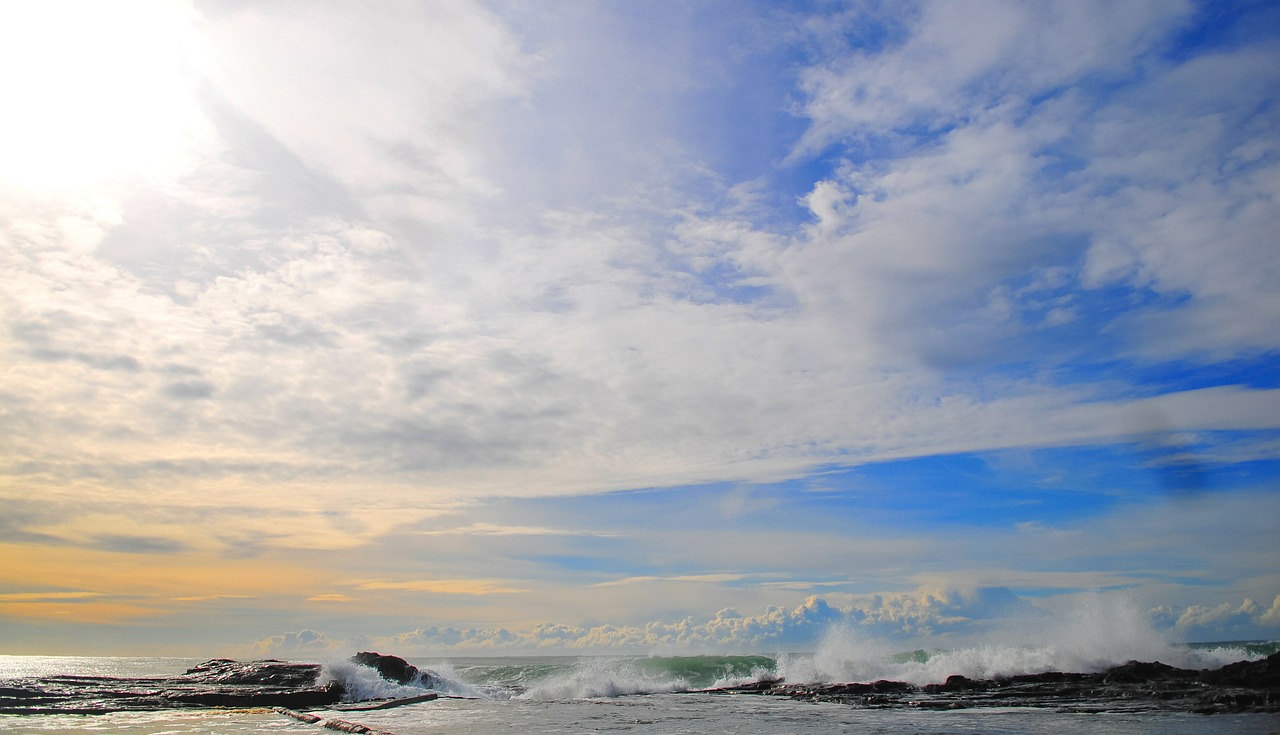
“As you walked on the beach the waves were enormous and they were breaking with magnificent curve and force. You walked against the wind, and suddenly you felt there was nothing between you and the sky, and this openness was heaven.
To be so completely open, vulnerable – to the hills, to the sea, and to man – is the very essence of meditation. To have no resistance, to have no barriers inwardly towards anything, to be really free, completely, from all the minor urges, compulsions, and demands, with all their little conflicts and hypocrisies, is to walk in life with open arms.
And that evening, walking there on that wet sand, with the sea gulls around you, you felt the extraordinary sense of open freedom and the great beauty of love which was not in you or outside you – but everywhere.”
A few years ago I read some of the earliest Buddhist texts that we currently know of and was shocked at how different they are to what is generally taught as being Buddhism today. Even Theravada Buddhism, which has the claim of being the oldest surviving school of Buddhism, often presents its teachings in very different ways. These early teachings were direct, forceful and devoid of complexities and lengthy philosophising. They reminded me much more of the pithy statements of Zen and Dzogchen Buddhism, which is surprising as these Buddhist schools are chronologically much later developments that occurred roughly 1000 years after the Buddha’s time. Continue reading →