The following is taken from Aham Sphurana 27th September 1936:
Questioner: If the Self will reveal Itself only to those whom It chooses, what then is the use of our effort?
[Tom: The phrase ‘The self can be gained by He whom the Self chooses’ is one translation of verses found in both the Mundaka Upanishad (Verse 3.2.3) and the Katha Upanishad (Verse 1.2.23)]
Bhagavan Ramana Maharshi: The Self will draw unto Itself an aspirant only when he becomes totally introverted. So long as he is extroverted in the slightest, Realisation would remain altogether impossible.
Q.: So to make myself eligible for Realisation, I have to introvert the mind?
B.: Yes; total introversion is needed so as to bring about Realisation; the same can be achieved only gradually.
Q.: Please mention any 5 unique characteristics, features or attributes of the Self.
B.: [no response]
Q.: So silence is Its only quality?
B.: Yes. The silence of the Self is not inertness; it alone is Life.
Q.: ‘Giving to others is giving to oneself.’ What is the meaning of this statement?
B.: There is no multiplicity of selves. There is no myself, yourself and himself. All there is, is only One Impersonal Absolute Self.
Q.: How to become aware of this Absolute Self?
B.: There are no two selves, so that they may take it in turns to be aware of each other. What IS, is only that One. There can be no reaching Him. All attempts to reach Him will end only in futility. The thing to do is to surrender to Him without reserve.
Q.: If there be no multiplicity in truth, why do we observe that in actual practice there are many persons in the world?
B.: They appear to be there only when you appear to be there to observe them.
Q.: So this vast cosmos is only my own mental creation or projection?
B.: Undoubtedly.
Q.: How then does the mindless Sri Bhagawan see the world?
B.: Why not Realise the Self and find out for yourself?
The following is taken from the text Aham Sphurana, 19th September 1936:
Questioner: In ‘Ulysses’ we find Mr. Joyce to have deployed the words, “And we stuffing food in one hole and out behind: food, chyle, blood, dung, earth, food: have to feed it like stoking an engine.” I am frequently beginning to think on such lines now-a-days. We feed and clothe the body; we find for it a warm shelter to live under. In return, what is our gain? The body keeps getting new diseases and fills us with agony and misery by putting us in pain. This is a traitorous body which returns evil for good. I don’t want it anymore. Is the body a gift from God? Is it a sin to refuse to remain in acceptance of it anymore?
Bhagavan Sri Ramana Maharshi: It is not so easy to get rid of the body. Physical annihilation of the body might remove it from this earthly realm, but again your mind will find another body for you. The body was manufactured only by the mind. There is only one way to kill the body: that is to kill the mind.Mind dead, not only does the body die, but also the whole of the cosmos. Our effort must therefore be directed toward killing the mind, not the body.
[Tom: Bhagavan is stating that it is the mind, also known as ego or ignorance, that ‘manufactures’ or creates/projects the body as well as the world and entire cosmos. If we merely kill the body, the mind will project a new body to inhabit, so samsara does not end. However, if we kill the mind, that is realise the self and thereby destroy ego/ignorance, then all that will remain is the worldless formless Self]
The body is not a gift from God inasmuch as God never asked you to take the form of the body – i.e., to imagine that you are one and identical with the body. You ask what is gained by holding on to the body. Who is it who says he is holding on to what he refers to as being his body? Discover the identity of that villain. Then you Realise that you never did have any body. The body has nothing to do with you.
You are bodiless always. Realise It. How? The same Mr. Joyce mentioned by you also writes, “…remember, my dear boys, that we have been sent into this world for one thing and for one thing alone: to do God’s holy will and to save our immortal souls. All else is worthless. One thing alone is needful, the salvation of one’s soul. What doth it profit a man to gain the whole world if he suffer the loss of his immortal soul? Ah, my dear boys, believe me there is nothing in this wretched world that can make up for such a loss.” If the soul is immortal how can it be lost? So, what is attempted to be communicated? The Immortal and Imperishable Soul is seemingly lost because of avarana [Tom: the veiling power of tamas]. That is the meaning. To tear asunder this veil of iniquity is the one and only relevant goal of one’s life.
Q.: And it can be accomplished by asking oneself, ‘Who am I?’?
B.: People who come here say, I practise the investigation ‘Who am I?’ for an hour each day, or for a few hours each day. What can we say to them? It is not a practice that is to be pursued a few hours each day. It is a fundamental change or shift in the direction in which one’s extroverted mind happens to incumbently be oriented. Relentlessly pursue the investigation day-in and dayout till the Self is Realised.
Q.: How can the investigation, which seeks to curb thought, be at all combined with activities that necessarily entail thinking?
B.: With persistent practise of the practice, activities – that you now think are being done by you – will automatically go on effortlessly. Your intervention will then be unnecessary – in fact, impedimentous. We are under the impression that we do things. What is the fact? It is the Higher Power that does everything. Is it the chiselled figures found at and forming part of the base of the Rajagopuram that bear the weight of the same? Is it not the earth that bears the entire load? Yet those sculpted figures have facial features that are wildly contorted with the evident strain of carrying the huge structure. It is a clever, artistic sham. Likewise here. The ego never does anything, but simply appropriates to itself credit for the body’s actions, which happen exclusively and spontaneously in accordance with Ishwara’s pre-destined script for it.
In other words, thoughts do not cause action to take place. Actions always go on only of their own accord: only we assign to them a spurious sense of personal doership or individual agency, and suffer thinking that free-will is real.
Q.: But actions follow thoughts. First I think and decide; then I act accordingly.
B.: That is just what is NOT true.
Q.: How so?
B.: The apparent causal-synchronicity between thought and action is a sham. That alone transpires which is destined to transpire. The preceding thought motivating the [body’s] action is not the result of free-will. Why? Because there is no such thing as free-will. How then is there cohesion between thought, which occurs first, and action, which occurs in subsequent concatenation? It is because the extroverted mind is also subject to destiny, just as the body’s actions are subject to destiny.
Q.: How cheerless to think that free-will is a myth…
B.: It cannot be denied that from the standpoint of the individual person free-will is indispensable. But where is the need to be an individual person when you can BE THAT?
The following is taken from the text Aham Sphurana, 7th July 1936. Please see here to find out more about this text:
Questioner: I am aware that Bhagavan is a solipsist. However, to dismiss all human problems as being imaginary requires a giant leap of faith towards the Idealism end of the spectrum.
Bhagavan Sri Ramana Maharshi: It merely needs disillusionment with materialism.
Q.: According to Sri Aurobindo’s claims, he has probed beyond the experience of the Vedic Rishis. What is Sri Bhagavan’s opinion? Is it authentic or not?
B.: Aurobindo’s talk of bringing down divine consciousness from above overlooks the same being already Self-effulgent in the Heart. Reality simply IS. Where arises the question of moving it from place to place, etc.? People keep asking me about Sri Aurobindo’s yoga system; and if I give my reply according to my capacity, they go away disgruntled saying, “These Jnanis are always contradicting each other.” What can I do?
Q.: What about Sri Aurobindo’s claim that one must commence from Self-Realisation and then proceed to bring down the Divine to the Earth?
B.: Let us first Realize and then discuss, if need be; not now.
[Tom’s comments: Sri Aurobindo’s view was that once the truth was realised, it should be ‘brought back down’ into the level of the world, in what he called Purna Yoga or Intergral Yoga. Sri Aurobindo rejected the notion of Shankara or Vedanta that the world was unreal or ‘maya’, stating that the world is a real expression of the divine, and that the purpose of spiritual teachings is not nirvana or escape from samsara, but instead to enrich and enliven the lives of people here in this world and help people live divine lives here on Earth. Sri Aurobindo felt that the Vedic rishi’s had discovered the Truth, but had not learnt to or were not able to or even inclined to bring it back down to Earth, and that the notion of the world being an illusion was a result of the failure to bring the Divine back down to the Earth.
Here is a link to a chapter on Integral Yoga by Sri Aurobindo for those interested on these points, where he defines Purna Yoga and explains his view on the above points I have made:https://sri-aurobindo.co.in/workings/sa/37_28/02_004_e.htm
Sri Ramana in response to the questioner is saying how can Truth be ‘moved’ anywhere, let alone ‘back down’ into the world? ‘Reality simply IS’. The implication is that the very notion of bringing truth back into the world is based on ignorance or non-realisation of the actual truth]
Q.: What is the ultimate purpose of a man’s life?
B.: To find an answer to the question of “Why am I, apparently, limited to, and therefore by, a body? Am I nothing more?”. This question finally resolves itself into the question of “Who am I, who am apparently bound by this limitation of being or carrying a body?”. This much is certain: one who foolishly takes his bodily existence for granted, who thinks that it is an inevitable finality that he is, in fact, born, will never succeed in the Quest no matter what austerities or penance he might perform.
Only the Unborn can know the Unborn. The Unborn knows itself only – that is, it knows no birth or death. The intellectual understanding that the bodily existence is futile, undesirable, useless and delusory is the very first step towards Realisation. If you accept the existence of limitations[Tom: eg. if you accept or start with the premise that you are a body-mind entity, or that the world is real], any Sadhana performed will have precisely only one result – it will make the Ego grow stronger and stronger and stronger. One who wants to transcend limitation should cease to imagine himself to be limited – that will do; yes, it indeed is as simple as that. Instead of simply giving up the unreal, people want to do Sadhana to eradicate it! Is it not funny?!
Q.: Is Sadhana not useful?
B.: Only if it is done without assuming the existence of limitations. The only useful Sadhana is the investigation “Who am I?”. Everything else is just “release-of-concept-gas” [movement of mental ideas or churning of vrittis within the mind], because existence of limitations is implicitly assumed and accepted. If non-existent limitations are accepted to exist, how can any Sadhana performed on the basis of that wrong acceptence have any use, and how can such spurious Sadhana help you transcend those very limitations?
Q.: The logic seems to suggest that the Self can be discovered by the mind.
B.: The dead mind becomes the Self or discovers itself to be the Self.
Q.: I understand Nietzsche talks about the concept of Eternal Reccurrance of the same in Also sprach Zarathustra. Does B. agree with it? Each time the universe is recreated after the cosmic dissolution, does it exactly repeat itself? If that were to be true, both free-will and Self-Realisation would be impossible. If everything is going to unfold now exactly as it did previously, my incumbent free will is obviously just a myth. If everything is going to unfold in exactly the same manner in the future as now, I am never going to escape from the cycle of births and deaths!
B.: All these are only mental concepts. Even now you are not born. Realize it.
Q.: The body was born.
B.: Are you it?
Q.: It is part of me – Bhagavan’s teachings tell me that I am Brahman and therefore immanent everywhere.
B.: Leave Brahman alone. Talk about yourself first. Who are you?
Q.: I really don’t know… I am Pure Consciousness, is it not?
B.: Is Pure Consciousness now conversing with me? Is it is saying, “I am Brahman.”, etc.?
Q.: Then what is the answer?
B.: The effortless thought-free state is the answer.
Q.: How to attain it?
B.: There is no question of attaining anything. BE – don’t ask how to be. It is your very nature.
Q.: I am unable to realize it.
B.: This is also only a thought. Get rid of it and all will be well.
Q. I have heard of the Jnana-vichara technique expounded by Sri Bhagavan. How could asking oneself the question ‘Who am I?’ lead to transcendence of mind, when asking the question itself is only an activity initiated and sustained on the level of the mind?
B.: The vichara begins with the mind and ends in the Self. Mind turned fully inward discovers itself to be the Self.
Chadwick was asked by Bhagavan to give the man Bhagavan’s ‘Who am I?’ to read. He read it and then asked –
Q.: I find it shocking to consider seriously Advaita’s proclamation that the Jagrat state [Tom: waking state] is nothing better than a dream. It amounts to saying that I am now dreaming whereas I believe to the contrary, that whatever I am experiencing through the senses exist independantly of my perception thereof… How is it that the numerous disciples of yours – or followers or devotees or worshippers or afficionados or whatever it is that one would be justified in calling them take gladly to the idea that the world – the same world they experience everyday – is a dream?
B.: You say it is the same world you saw yesterday that you are seeing today. How do you know that? Through memory. Memories are also illusory. They create a deceptive fabric of intellectual continuity where in fact none exists.
What actually exists is only Beingness or Self. Even in dreams you have memories, go to familiar places, etc. How is it? Jagrat or Swapna, the same mind draws the poisonous veil of objectification or differentiation over the pure Self, hiding it. This veil is called the screen of avidya maya. Don’t ask, who cast this veil? Instead, ask, who sees the veil? Then you will see there was never any veil. This is called Self-Realisation. The desire to do sadhana to attain it is itself meaningless because it presupposes the existence of someone apart from the Self who is doing Sadhana to reach the Self.
Q.: Is it the realisation you speak of as Sahaja Nirvikalpa Samadhi? Should I not do any Sadhana? Is Sadhana useless then?
B.: Yes, it is the same realisation. Sadhana is the means to gain the Self. Only the idea “I am doing Sadhana” renders the Sadhana totally pointless and useless. Sadhana becomes natural if attraction to worldly pleasures stands removed. Desire for worldly pleasures take to their heels when you realise the world is only a dream.
Q.: I still find it impossible to believe this solid world could only be a mere dream.
B.: [smiling] Two different categories of spiritual aspirants or sadhakas exist. One is the Spülauftrag [Kritopasaka] and the other is the Wischauftrag [Akritopasaka]. [Bhagavan sometimes used words in the questioner’s native tongue to drive the impact home, or where technical terms were involved.]
[Tom: Kritopasaka refers to those who have done sadhana previously, eg. in a previous life, and so who are mature seekers, akriopasaka is the opposite; Spulauftrag (‘rinsing task’) means that task which only needs to be washed or rinsed, whereas Wischauftrag (‘wiping task’) refers to a task in which some wiping or scrubbing is first required before rinsing/washing can take place]
The former is born with the intellectual conviction, born of aeons of serious and steadfast spiritual practice directed along the correct channel [that of making the mind turn Selfwards or Sourcewards], that the cosmos he sees around him is the merest of illusions, and that expending one’s mental faculties upon it would be the ruin of one’s inherent nature of abiding peace and unshakeable happiness; whereas the latter is shocked and unsettled when informed that there is no difference – for all practical purposes – between the Jagrat [Tom: waking] and swapna [Tom: dream] states.
The firm intellectual conviction that the perceived cosmos is seen, owing to delusion, as being constituted by multiple disparate entities while the truth is that it is vested in the same Substratum, Adhishtanum [Tom: substratum], or Sadhvasthu [Tom: Sad = true or real; vastu = thing or substance or reality] as the Seer, is born only as a result of arduous spiritual practice which is possible only if the Sadhguru’s abundant Grace is available as a catalyst, which Grace descends unto him alone who perpetually bathes his heart in the effulgent glow of unselfish and non-reciprocation-expecting love of God, Humanity or any other single-minded ideal of pure, ecstatic devotion or parabhakti, and this intellectual conviction [as to the world’s objective unreality] is the seed of Jnana that grows into the tree that chokes the poisonous weed of Egotism or Ahankara at its root, destroying it once and for all, such seed having been planted long ago in the fathomless, dark misty depths of the mind by way of the Supremely merciful glance of Grace of the infinitely compassionate Sadhguru.
Q.: So, the widely held perception that without a Guru, even Atmajigyasa [Tom: the desire for self-knowledge], leave alone Atmasakshatkara [Tom: Self-realisation], is totally impossible, is…?
[he left his words trailing in the air, for the Sage to rythimically conclude,]
The excerpt below is taken from the text Aham Sphurana (see here to find out more about this text and download a copy for free), 20th July 1936:
Questioner: It happens to some that they pray – in all good faith – to God, yet their prayers are unequivocally repudiated. What is the reason?
Bhagavan Sri Ramana Maharshi: Can you be trusted to know what is best for you?
Q.: I should hope so.
B.: That is your opinion.
Q.: What then is Sri Bhagawan’s opinion?
B.: ‘O Lord, thou hast searched me, and known me. Thou knowest my downsitting and mine uprising, thou understandest my thought afar off. Thou compassest my path and my lying down, and art acquainted with all my ways.’
Q.: The implication being?
B.: He knows what is best for you; you do not. Therefore unconditionally surrender yourself to him and leave your fate in his hands. That is the only thing to be done. Prayer is merely a lower form of surrender. It is highly prone to failure, because if what is asked does not aid Realisation, it may not be granted, even though you may be thinking that what you are asking is going to [serve as an] aid in Realisation. Or, your karma may not permit the request to be granted.
Q.: Spiritually-inclined people pray for strength to inrovert the mind. Or, they pray for Self-Realisation. How can that be not an aid in Realisation?
B.: Because it posits the dangerous notion that there exists an [individual] “I” who craves for himself the state called Realisation. Such prayers are unnecessary. Maam Aekam Sharanam Vraja. ‘Only surrender to Me.’
Q.: Why does God allow karma to meddle with even the efforts of sincere aspirants who are trying to Realise?
B.: The arrangement of karma – [for karma itself is] unavoidable – is actually adroitly done in such a way as to give the sadhaka the maximum possible chance of completely cleansing the mind of all vritts. So, if you are destined to Realise in this lifetime, rest assured that your karma has been ingeniously arranged in such a manner as to inevitably take you to the Goal.
Q.: And if I am destined otherwise?
B.: Perhaps you would not be here today.
Q.: The same astute God who manipulates karma so carefully – why was he not careful enough to safeguard the Self from slipping into the bondage of ignorance?
B.: Does the Self complain of having thus fallen?
Q.: No. But I do.
B.: Are you apart from the Self?
Q.: The mahavakyas state that I am supposed to be one with Brahman.
B.: And your Experience is in Corroboration?
Q.: Alas! No. All I feel is the miserable ego.
B.: Yes. Misery is one with the ego. Kill the ego.
Q.: It seems to be an impossible accomplishment even for those with decades of systematic training in the spiritual field.
B.: There is no accomplishment possible. What is intimate and inherent cannot be accquired. The only thing to do is destroy the useless accreations that cause all the nuisance. We are not trying to attain anything. On the other hand, we are trying to give up everything.
Q.: Should I not try to attain Realisation of the Self?
B.: No. Give up everything. Only the Self remains.
Q.: It sounds simple enough. Yet, only one in a million men manage to reach this supreme state, according to Sri Krishna. Does it mean that, at any given point of time in the world, the number of Jnanis living should be a precise 0.0001% of the total population?
B.: [laughing] Possibly!
Q.: In my view even this seems an outlandish estimate. Are there now circa 269 Jnanis living in India, then, regard having been had to the numbers available by the 1931 Census?
B.: [somewhat mordaciously but without deviating from his good cheer] Why not? Do you suppose all Jnanis are unfortunate enough to be put in a cage like this, and put up for ‘public examination’? [in English:] Ladies and gentlemen, presenting… THE FREAK SHOW! Exhibit No. 1 – Sharji, the Venus of the Hottentots! Exhibit No. 2 – Elephant-man Merrick! Exhibit No. 3 – The ‘Bhagawan’, Ramana! அ என்ன பாழாகப் ேபான பகவானே◌ா [Tom: What a waste, O Lord] . No. Only those whose prarabdha is destined to be exceedingly miserable suffer like this! Sri Gandhiji has written, ‘The woes of Mahatmas are known to Mahatmas alone.’ [laughs heartily]
Q.: Other Jnanis, who, according to Bhagavan, enjoy a better prarabdha – they would be meditating in solitary places such as inaccesible jungles and caves, well away from habitable zones of humanity, I presume…
B.: You may presume whatever you like, no doubt…
Q.: So I am wrong?
B.: It all varies according to prarabdha. The Jnani is unfazed by what happens to the body. He has nothing to do with it. He has no localised consciousness functioning from within it. Killing it cannot harm him. Torturing it cannot affect him. He is absorbed by the Beyond, and quite lost there – for good. He may have 4 wives and 32 children. He may be running a busy household with dozens of mouths to feed. He may be employed on both day and night shifts of duty. Or, again, he may be sitting in an inaccesible cave with sensory organs in an inactive state, body rotting. It may be either way, but all this can be only from the point of view of the onlooker, since action is altogether alien to the Jnani; he himself knows nothing, sees nothing, does nothing. He has quite perished. Only a Jnani can tell who is a Jnani.
A person might look like a simpleton, yet he might know himself as the immortal Self. Another may display an unending spout of vedantic learning, yet his mind may not in the least have subsided. In this topsy-turvy world, which must needs always judge by its usual yardstick of ‘doing’, it is the latter who is generally extolled as the genuine case. The result? Misery for all involved. People cheat themselves into believing that they are in the vicinity of a great Mahatma. The pretender eventually himself foolishly comes to believe that he must indeed be a great Jnani, since so many people praise him day and night. So his ego becomes bloated; as a consequence he lands himself in all sorts of unpleasant situations. So, display of vedantic learning may cause a great very many problems for all involved. It is best to keep quiet.
Q.: Bhagavan said a Jnani may have numerous wives. Polygamy is a sin as per Hindu dharma. Can a Jnani sin, then? As far as my knowledge goes, the Manusmriti allows taking the next wife only if the existing wife or wives are mentally ill, infecundous, or unable to participate in rituals for the departed ancestors.
B.: What the Jnani does is always right. This does not mean that a man is morally excused in pretending to be a Jnani and then conveniently committing all sorts of crimes.
Q.: But how to tell who is a genuine Jnani?
B.: Only by yourself becoming lost in Jnana. However, there is one exceedingly rare exception. If a particular Jnani is destined to be your Jnanaguru, when you meet him there is an inexplicable mutual outpouring of ecstatic Love. The Love mentioned here is not consummated by any physical act. It is consummated only by surrendering to the object of such Love. The Jnani himself never loves or hates; only, when he meets one who is destined to be placed in his ultimate care, he directs his attention toward that person. It is not volitionary, but rather Automatic Divine Activity. There is nothing in him left to choose. Unto one who has the pakkuvam [Tom: ripeness], the Grace or Love begins to flow of its own accord. The Jnana-guru might not look at the mature devotee or exchange words with him, yet, one who is Ready feels the irresistible onslaught of inevitable rapid mental introversion in the form of blissful divine Love. This way you can tell that the person in whose presence you have such experience, is your Jnana-guru. Again, this might not happen in the case of all aspirants.
Q.: I have so far not had any such novel experiences with Bhagavan. Can I still Realise in this lifetime?
B.: All will turn out Right in the end.
Q.: Sometimes Bhagavan does not look at visitors. He does not respond to their queries. Does he refuse them his impartial Grace?
B.: Have you seen how they seperate chaff from the Grain here? They pour the seeds on the றம◌் , and then trenchantly shake it in a speedious upand-down motion. Can you guess the scientific principle underlying the act?
Q.: What is worthless and light in weight is blown away by the wind. What is precious and heavy is not affected by the movement. Yes, it is clear now.
B.: நல்லத◌ ! [Tom: good]
Q.: One imagines things and enjoys them by virtue of his strength of imagination. It is said that gross manifestations of such mental creations are possible for Brahma the Creator. Should the same power not be available with His creation, man?
B.: That is your opinion.
B.: J.K. says that man should try to find out the ‘I’. Then ‘I’ dissolves away, being only a bundle of circumstances. There is nothing assertible behind the ‘I’. His teaching seems to be very much like the Buddha’s.
B.: Yes. The truth is well beyond possibility of conceptual expression or explanation. It is pure Experience only, for there is no experiencer. When you finally do reach the Self, you will be shocked to discover that you have been foolishly searching frantically for something that was always right in front of your nose – no, even closer, for the nose and the object in front of it must be seen with the eye to ascertain their apparent existence, whereas the Self requires no perception to support its actual existence. The Self is pratyakshasakshathswayamprakasha-swaroopam. Everything shines in and by its light, but it knows nothing but itself. It shines by its own light alone. The lusturous beauty of it never fades. It is truly immutable, indestructible and imperishable. One who loses himself in it has no more cares or worries. It is the one true goal of man’s life, yet it is here and now. That is the great mystery.
Q.: After conversing with several devotees here, I have arrived at a rough observation that Sri Bhagavan gives spiritual advice which pertains to every conceivable genre, depending upon the inclination, maturity or palate of the aspirant in question. What, if any, is his nativistic teaching?
B.: [no response]
Q.: Is it Silence?
B.: Yes.
Q.: For those unfit to understand it?
B.: They are advised to keep quiet. [Summa iru.]
Q.: For those even this?
B.: The inquiry ‘Who-am-I?’ is suggested.
Q.: For those like me who lack the determination to practise this inquiry?
B.: Unconditional surrender.
Q.: To whom shall I surrender? To Sri Bhagawan or to my Guru Sri Chandrasekara Barathi of the Sringeri Mutt?
B.: Does surrender need a recepient? Simply surrender or let go of everything.
Q.: If I let go of everything, is Mukti assured unto me?
B.: To let go of everything is to let go of this question also.
Q.: So, expecting a reward for surrender is not appropriate?
B.: How can one who has surrendered expect anything? To surrender is to give up the spurious ‘you’ once and for all. When you are not there at all, where is the question of expecting or anticipating anything? Who would be there to do the expecting or anticipating? If there is still anyone left to engage in expecting or anticipating, no surrender has really taken place.
Q.: If I give up everything, what will happen to my body? How then will it be able to find food for itself, leave alone earn a living or maintain a family?
B.: Were you asked to neglect the body? You were asked to not deliberately take care of the body – that is all. How is it that you translate the directive, ‘Let go of everything.’ into ‘Neglect the body and its duties.’? The problem in its totality lies in the fact that you are labouring under the delusive impression that it is you as the ego who are maintaining your body, attending to your vocation, taking care of the household and everything else that it has fallen upon the body’s prarabdha to execute in this lifetime. So, when asked to give up everything, that is to say give up the ego, you give yourself to understand that your regular routine will come to a standstill.
No. Whether you are aware of it or not, whether you like the fact or not, the truth is that it is the Higher Power that does everything. We imagine ourselves to be the doer. When asked to give up the personal self, we imagine that the body’s actions also should come to cessation, because according to us, it is the personal self that is the cause and source of all action. No. It is a mistake. The ego merely fraudulently assumes responsibility for the actions of the body. Doerless doing or actorless action is not for the Jnani only; it is true – as an actual fact – in the case of all. In the case of the ajnani, something called “I” rises up to falsely claim responsibility for the body’s actions. This fictitious accreation is absent in the case of the Jnani. That is the only difference between them.
If you give up the ego or ‘Body-am-I.’ idea completely, some power effortlessly takes over the body and makes it run through its ordained course of prarabdha without the need for the least mental involvement or participation on your part. This is a matter for experience. To surrender is to totally let go of everything. People attached to concepts of the intellect or things of the world cannot possibly let go; vairagyam is necessary to let go. How to cultivate vairagyam? Proximity to the Guru.
Worldly attachment and the Guru pull the mind in opposite directions. If Love for the Guru is unequivocal and unconditional, His pull eventually wins. Again, how to cultivate this Love? By nature the minds of most men are occupied with the problems of the personal self. What vocation shall I pursue? Shall I study further or shall I opt for employment? Shall I marry the girl I like, or shall I marry the other one, the rich, obese character that I was introduced to by my parents? What measures shall I take to safeguard myself from penury in old age? How shall I ideally invest my wealth so that it stands me in good stead when I am no longer in a position to actively work to earn a living? Will my children take care of me in old age or will they abandon me and go their seperate ways? And so on and so forth.
This is how lifetime after lifetime is wasted. If you would only keep quiet without thinking these thoughts, providence would admirably take care of you; but no, you must have your ‘knowledgeable say’.
It so happens that in rare cases a man ceases to take thought of his personal self and wholeheartedly gives himself to an ideal of beauty, be it sport, literature, art, patriotism or anything else. The quantum of importance attributed to the personal self becomes negligible when the loftier pursuit occupies the whole of his attention. Thus he begins, for the first time, to experience a Love in which the personal self has no space. Such is the sweetness of this passionate Love that he yearns to experience the pinnacle thereof. The desire for this feeling of Love is not motivated by the objective of personally experiencing it. The Love for the higher ideal eventually comes to dominate and possess the soul with such complete fervour that his desire for such Love is not on account of any motive to personally experience it, but simply for the sake of such Love itself.
He does not think, I must experience more of this Love. He thinks, this Love must shine forth with the utmost possible intensity! Then, the ideal towards which Love hitherto had been directed merges imperceptibly into Love itself. Thus, the man is left with Love and only Love in his hands: Love without rhyme or reason.
Feeling it but unable to attain it, he becomes crazed with longing. It is at this stage that God or Guru appears to him as the manifestation of his Love: the manifestation may or may not be an anthropomorphic form; it may be an abstract image or ideal altogether deviod of form or even name. Eager to consummate his Love, he surrenders totally to the Guru and Realisation devours him by operation of the Guru’s benevolent grace.
Swami Vivekananda has said, ‘Take up one idea. Make that one idea your life – think of it, dream of it, live on that idea. Let the brain, muscles, nerves, every part of your body, be full of that idea, and just leave every other idea alone. This is the way to success.’.
So, volitionless Love, which, allowed to wax indefinitely, surely leads to Kaivalyam, may as well come to an inveterate materialist or atheist: belief or faith in God is not of any considerable importance, for it stops at the level of the intellect – it is Love that matters, uncaused, blind, mad, unconditional Love. In the work The Pilgrim’s Progress by John Bunyan, when Christian is about to drown in the dreaded river of Death, he has a vision of the Christ who reminds him of the verse: ‘When thou passest through the waters, I will be with thee; and through the rivers, they shall not overflow thee…’. The next moment the Christian finds steady ground to stand upon, and he manages to ford the remaining strech of the river safely.
Likewise, when Vasudeva was travelling to the house of Nandagopa and Yashodha, carrying the infant Krishna in his arms, the Yamuna river was in full spate, ready to devour him should he behave so unwisely as to step into it. Vasudeva thought of God and was immediately assisted by the giant 10-headed celestial serpent, Vasuki; thus he managed to ford the flooded river without incident.
Again, when Sri Abbanacharyal heard the news that his Guru, Swami Raghavendra, was about to enter into his brindavanam, he forthwith rushed to Mantralayam, but did not know what to do when he was faced with the flooded Tungabhadra. He gathered courage, closed his eyes, thought of his Guru, and threw himself into the raging deluge. He was not swept away by the river, but landed safely on the other bank.
How did all this become possible? Is not genuine Love for the Lord on the part of the devotee the reason? Thus, develop a deep obsessive infatuation with any particular ideal, and of itself that will plunge you into unfathomable Love; such Love invariably leads to Kaivalyam.
Q.: I am too weak to surrender, in the total sense of the term that I find Bhagawan suggesting. Also, I do not feel attracted to any one particular ideal or idea. What am I to do?
B.: It is holding on or doing anything that requires strength. If you feel you are weak, letting go of everything should be very easy, for that alone is non-doing.
Nevertheless, if total surrender is found too hard, practise surrender as a sadhana. This is called partial surrender. In course of time it leads to complete surrender.
Q.: Various descriptions of God are given by scriptures belonging to the different religions. Which is the description that tallies with Bhagavan’s teachings?
B.: Words cannot convey the Real. Yet, the closest is, Ehyeh asher ehyeh.[Tom: Hebrew, from Exodus 3:14 meaning ‘I am that I am’]
Q.: What is the difference between attempting on one’s own to Realise the Self and taking the help of a Guru?
B.: Suppose you want to go to America. Which is the sensible method? Taking a spade in hand and digging into the Earth, saying, ‘I am confident that I shall eventually reach America, which must be located on the exact other side of this very spot.’ or booking a place for yourself on the next outbound steamer?
The above excerpt is taken from Aham Sphurana, 3rd August 1936, see here for more information on this text.
The excerpt below is taken from the text Aham Sphurana (see here to find out more about this text and download a copy for free), 8th September, 1936:
Questioner: How is it that without a mind, Bhagavan is able to conduct rational converations with us and engage in many other tasks and functions besides?
Bhagavan Sri Ramana Maharshi: Causality is unknown to the Jnani; the Emancipated-one’s actions therefore are always bereft of motive, purpose or volition. Bhagawan does not act at all. Action is alien to the Self; He is Life Itself, but yet absolutely motionless. He is simply AWARE. Other than fullness of Being-consciousness, which he abides as, he does not know anything.
The body may act in the world or remain idle; He cannot know. The faculties of sensory perception may remain inactive or function so as to take cognition of objects in the world; He cannot know. Being the Self, the Jnani is totally ignorant of anything and everything but the Self. He is referred to as the Witness-consciousness transcending space, time and causality; but that is exclusively from the point of view of objects with name, form and shape that take their origin in Him, subsist in Him, and dissolve back into Him, being merely appearances in Him, of Him and by reason of Him; He Himself has nothing to witness or see. The body might be working day and night like a steam-engine, but no karma can touch Him. His sensory-organs might be experiencing the greatest of pleasures, but He enjoys nothing. No matter what manner of work the body might be engaged in doing, He never does anything.
K.: Maharshi, please clarify this one thing for me: are you, or are you not, now talking to us?
B.: No. “I” am not talking to you.
K.: [reflectively] That’s right. Maharshi is not doing any talking. Maharshi simply IS.
Chadwick: I am sometimes given to wondering how a Jnani’s awareness of the Self could formerly have been obscured or obstructed by prior ignorance. Was there ever ignorance for a Jnani?
B.: No.
C.: Are Jnanis born Jnanis then?
B.: One’s idea that one took birth is merely mental information. When mind is annihilated, there is nothing to falsely inform the Jnani that he was born. Therefore, the Emancipated-one abides in perpetuity as the Unborn, to which time, space and any other transformation or possibility of measurement is wholly alien. We point to the body of the Emancipated-one and give it the name ‘Jnani’, thinking that such person must have awareness of the Self. But what is the fact? Is there anybody who can both stand apart from the Self and yet know the Self? The only way to know the Self is to BE It. So, the Jnani is verily Jnana and nothing but Jnana. There are no Jnanis. Jnana IS, Jnana alone IS, and Jnana alone could ever BE.
K.: [in an over-awed cadence of voice] Maharshi, you inspire me. I also want to become great like you; I want to attain your same greatness; I want to become as great as you. I consider it my life’s mission to emulate you. You are my idol, my super-hero. Please tell me what I should do to attain the same greatness that you have attained: you the incomparably great Bhagawan Ramana.
Chadwick: Impossible and inconceivable. How could anybody become our Bhagawan? He is God Absolute.
B.: [smiling] What is there in it? Only remain still [- i.e., summa iru].
K.: Maharshi, I would like to know how I shall get rid of all my sin.
B.: Original sin and original ignorance are all one and the same thing. To get rid of the one is to get rid of the other, and the other the one. Pursuing the investigation ‘Who am I?’ all the way to its successful culmination in Realisation, you will surely get rid of all your sin.
K.: Is the investigation ‘Who am I?’ easy or difficult?
B.: It is the easiest thing there can be. If attending to other things is readily possible for you, imagine how much more easier should be attending to yourself, and attending to yourself exclusively!
K.: Some say that it is exceedingly difficult.
B.: Pay no attention to their words. Do you trust Bhagawan or not?
K.: Implicitly and absolutely.
B.: Then never mind what others are saying. Regard only what is said here.
Bhagawan [tapping right cheek with palm multiple times rapidly and then pointing to own face] says vichara is easy. Will you practice it or not?
K.: [eyes swimming in barely suppressed tears, voice choked and face convulsed with emotion] Yes, Bhagawan.
The following is taken from the text Aham Sphurana, from the date 20th July 1936. See here to find out more about this text and also to download it for free:
Questioner: It is said that the legendary Sanjeevani herb is found somewhere in this Arunachala hill, by consuming which one attains to state of Immortality. Will Bhagavan please let me know where it is in the hill?
Bhagavan Sri Ramana Maharshi: The hill itself bestows immortality.
Q.: How?
B.: Constant rememberance of Arunachala’s formsteadily but surely introverts the mind. Then the mind accquires the strength to plunge inward, or rather loses the strength to move outwards, towards thoughts, intellectual concepts or physical objects. Eventually it becomes still entirely; then the Arunachala within pulls it into itself and destroys it once and for all. This is the Sanjeevani shakti [Tom: shakti means ‘power’] of Arunachala about which you are asking.
[Tom’s comments: here we have Bhagavan explaining how remembrance of Arunachala introverts the mind, pulling it inwards away from both gross and subtle objects, until it becomes entirely still. Arunachala then does the final step of destroying the mind, the result of which is explored below]
Q.: Is it not a herb?
B.: I have said what I know.
Q.: Is the ultimate aim of spiritual practice, only destruction of mind?
B.: Yes.
Q.: One whose mind is dead would perhaps have life in the body, but he would be in a state of comatose senselessness, like a stony, frigid vegetable, unable to understand anything. Is that the perverse fate toward which all spiritual aspirants are gravitating?
B.: Absence of mind is pure Bliss. It is possible to function in the world normally, without mind.
Q.: Oh! How so?
B.: Some power takes over his body and animates it without his knowledge.
Q.: Is it God?
B.: Give it any name you like- God, Providence, Fate, Karma, etc.; the nomenclature matters not.
[Tom’s comments: Bhagavan first confirms that manonasa, or destruction of mind, is indeed the ultimate aim of spiritual practice, thus equating manonasa with both self-knowledge or liberation. Then he goes onto explain that the body can continue to function without the mind under another higher power. This is done without the Jnani’s knowledge or awareness. Of course, Bhagavan is describing this form the relative standpoint, or the standpoint of ignorance/maya. Below we will see a higher teaching given later]
Q.: Are names unimportant in the scheme of things, then? How to call someone if he has no name?
B.: The fact is that in order to escape its own destruction the mind creates a world of name and form over the pure vastu [Tom: vastu means reality] that is the Atman. It abhors chaos and randomness and prefers order and systematisation. It creates cause-consequence relationships and gives itself to understand ideas about its environment, which is actually merely its own projection. It tries to study the nature of its body’s physical surroundings and formulates laws by means of which it then expects those surroundings to function; deviations from existing laws give rise to the birth of new laws! Never once does it wonder, ‘What is my self?’; thinking to conquer its surroundings, it foolishly occupies itself with sensory perceptions, thoughts, and intellectual hypotheses. Thus it is born again and again and needlessly undergoes all sorts of tribulations. Then it asks, ‘Alas! Why has God done this to me?’. Who is to blame for our mistake, if not ourselves?
[Tom’s comments: here Bhagavan explains that the mind creates the universe of name and form and superimposes this onto the formless objectless reality that is Atman, one’s true self. It then projects cause and effect, or karma, and starts to study the environment around it, which is actually nothing but its own projection, never asking or enquiring ‘who am I?’. Below Bhagavan will again confirm, as he has done many times in his own writings, the nature of Jnana:]
Q.: The state without mind is called Jnana?
B.: Yes.
Q.: Then what or who is a Jnani?
B.: One who has mastered the art of not knowing anything and not doing anything.
Q.: I am unable to divine the explication underlying Bhagavan’s sibylline [Tom: mysterious] words.
B.: The Jnani’s senses are unhinged from the world about him. He is sunk in the Self and quite irrevocably lost there.
[Tom’s comments: Bhagavan is explaining that the Jnani does not truly perceive the world, something he only intimated above, and he will expand on this below]
Q.: How is he different from the man on the Clapham omnibus (சாதாரண மனிதன) [Tom: the Tamil phrase given here means ‘the common man/person’ which the translator has translated as ‘the man on the Clapham omnibus’ a phrase popular in the 1930s which also means ‘the common everyday person’; this latter phrase was very common amongst lawyers, and the person who was said to have recorded these dialogues, Sri Gajapathi Aiyyer, was also said to have been a lawyer]
B.: The standard of reality employed by the man on the Clapham omnibus is the jagrat [Tom: waking] state in the jagrat state, and so on. For the Jnani the standard of reality is Reality itself.
Q.: What is this Reality?
B.: Man’s true Self.
Q.: How am I to realise this true Self?
B.: Whose Self is it?
Q.: Mine… but really who am I?
B.: Yes. All other questions lead up only to this supreme question.
[Tom’s comments: all paths eventually lead to self-enquiry]
Q.: What is the answer to the question?
B.: The discovery that the personal self, including the one making the discovery, never existed.
Q.: What remains thereafterward?
B.: Only the Truth; it is the state where the world of word, name and form perishes and silence alone prevails.
[Tom: here Bhagavan has clearly stated that for the jnani there is no world or name and form, only the Self or Silence remaining. Now Bhagavan will explain the method of Self-Enquiry:]
Q.: How to communicate thoughts to others without the assistance of words?
B.: That is only necessary so long as duality still persists in the mind.
Q.: How to get abiding shanti [Tom: peace]?
B.: Shanti is the natural state. The mind obstructs one’s inherent peace. Atma-vichara is only in the mind; it does not affect the Self. Investigate the mind; it will disappear. There is no entity by name mind. Because of emergence of thoughts, we surmise the existence of something from which they must originate; this we term mind. When we probe inwards to see what it is, there is nothing to be found except the real Self. After the false mind has vanished, Peace will be found to be Eternal.
Q.: Then what is buddhi?
B.: The thinking or discriminating faculty. These are only names. Call it the ego, the mind or the intellect; it is all the same. Whose mind? Whose intellect? The ego’s. Is the ego real? No. We confound ourselves with the ego and call it intellect or mind. This is because of the evil influence of avidyamaya [Tom: avidya means ignorance, maya means the power which projects the illusion of the body, mind and world. Here Sri Ramana is equating or compositing the two], which has superimposed this ephemeral, illusory, and worthless world of name and form over the ever-existing substratum, which is verily pure Reality and the supreme Peace itself. How to escape from the illusion? By searching for the mind and finding it, including that very finder, to be non-existent, to have been always non-existent, and in fact impossible of existence.
Q.: Emerson says, “Soul answers soul by itself – not by description or words.”
B.: Quite so. However much you learn, there can never be an end to objective knowledge. You ignore the doubter but try to solve the doubts. On the other hand, search for the doubter, and the doubter and his doubts will both disappear.
Q.: Therefore, the question resolves itself into one of knowing the Self.
B.: Quite so.
Q.: How to know the Self?
B.: Enquire into what the self is. What you are now imagining to be your Self, is really either the mind, the intellect or the ‘I-thought’. [Tom: Bhagavan has already said above that these three are the one same thing] Other thoughts are able to arise only after the ‘I-thought’ rises. So, hold on to the I-thought without pause. Soon, you will find that all thoughts vanish leaving the Self alone as the residue.
Q.: The difficulty lies in reaching the Self.
B.: There is no reaching it at all because it is eternal, here and now. If the Self were to be gained anew, it would not be permanent. What is impermanent is not worth striving for.
Q.: How to obtain equilibrium of mind? What is the best way?
[Tom’s comments: We will see Bhagavan subtly rebuking the questioner here – Bhagavan has advised self-enquiry in which the mind is no more, and instead the questioner is asking ‘how to obtain equilibrium of the mind?’]
B.: Just now you were asked to investigate the mind. It is eliminated and the Real you remain over. Let your standpoint become that of Jnana and then the world will be found to be not apart from the Self. Drishtin jnanamayim kritva pashyaet Brahmamayam jagat [Tom: ‘Having made your outlook one of Jnana, one will see the world full of Brahman’ ~Tejobindu Upanishad 1.29; this was a phrase often repeated by Sri Ramana, eg. also see Talks with Sri Ramana Maharshi, Talk 238, which is likely a record of the same conversation given here]. So, the question is one of outlook. The Atman pervades all. You have now lost hold of your Self and go on doubting about other things. Find your Real Self and all your problems and doubts will disappear.
Q.: But how to find this Real Self?
B.: Are there two ‘I’s in the same One? How do you know your own existence now? Do you see yourself with these eyes? Investigate into yourself. How does this question arise? Do I remain to ask it or not? Can I find my Self as in a mirror? Because your outlook has, owing to the poisonous delusion of ignorance, become outward-bent, it has lost sight of the actual Self and your vision is external. The Self is not to be found in external objects. Turn your gaze within and plunge within; you will be the Self.
Q.: It is said that the unknowable can be attained only by the grace of the unknowable.
B.: Yes. He helps you to Realise, if only you would forsake the external world of word, name and form. Such is His merciful Grace.
Q.: How to kill the mind, since the death of the mind is said to bring about Realisation easily?
B.: Will a thief betray himself? Will the mind find itself? The mind cannot kill the mind. You abandon what is real and are holding on to the mind which is unreal and also trying to find what this unreal mind is. Was there any mind in your sleep? No. It is now here. It is therefore impermanent. Can the mind be found by you? You are not the mind. You think you are the mind and therefore ask me how it is to be checked. If it is there it can be checked. But it does not exist at all. Understand this truth by search. Search for unreality is fruitless. Therefore seek the reality, i.e., the Self. That is the way to ruin the mind. There is only one thing Real, and that is Reality, which is the same as man’s true Self.
Q.: What is the nature of the true Self of man? Is it always happy?
B.: It alone is what IS: the ‘other elements’ are only appearances. Diversity is not the nature of the Real. We read the printed characters on the newspaper but ignore the paper which is the background. Similarly you are obsessed with the modifications of the mind and ignore the ever-present background of pure consciousness. Whose fault is it?
Q.: Is there a limit to the Real Self?
B.: What is the Real Self?
Q.: The Individual soul is the only self I know. According to Bhagavan it is unreal.
B.: What is the individual soul? What is the cosmic soul? Is there any difference between the two or are they identical? Any appearances are bound to disappear. Anything created will certainly be destroyed. The eternal is not born – consequently, nor can it die. We are now confounding appearances on Reality with Reality itself. Any appearance carries its own end in itself. Can there be anything that appears newly? If you cannot find the Self through the Jnana-vichara method, surrender to the substratum of appearances unreservedly; then, actual Reality will be left over as the residue.
Q.: What happens to a man after death?
B.: Engage yourself in the living present. The future will take care of itself. There is no need to worry about the future. The state before creation, the process of creation, etc., etc. are all dealt with in the scriptures in order that you may finally endeavour to know the present. Because you say you are born, therefore they say, yes, and add that God created you. But do you see God or anything else in your sleep? If God be real why does He not shine forth in your sleep also? You are always – now the same as you were in sleep.
You are not different from the one in sleep. Thus, why should there be any difference in the feelings or experiences governing the two states? Did you ask, while asleep, the question regarding your birth? Did you ask then, where do I go after death? Why think of all this now in the wakeful state? Let what is born think of its birth, the remedy, the cause and the ultimate results. What is birth? Is it of the ‘I-thought’ or of the body? Is ‘I’ separate from the body or identical with it? How did this ‘I-thought’ arise? Is the ‘I-thought’ your nature? If not, what is your Real nature?
Q.: To whom to ask these questions?
B.: Exactly – that is it. There is no end to it all.
Q.: Are we then to merely keep quiet?
B.: Doubts cease when your apparent ignorance is transcended.
Q.: How did this ignorance originally arise?
B.: Is ignorance asking you, ‘Why have I arisen?’. It is you who are asking the question. So, find out who you are. Then other things will take care of themselves.
Q.: The vichara again! Why should I engage in this Atma-vichara?
B.: Because if Atma-vichara is not pursued, loka-vichara creeps in [Tom: Loka means world, vichara means enquiry, Atma means self]. Engage in Self-investigation; thereby the non-self disappears. The true Self is left over. This is self-investigation of the Self. The one word ‘தான்’ [Tom: ‘Thaan’ or ‘Self’ or ‘oneself’] is equivalent to the mind, body, man, individual, the Supreme and all else.
This article is an excerpt from a much longer article which you can view here, that gives further quotes on this same topic from others including Sri Ramana Maharshi, Sri Shankara, Suresvara and Ribhu Gita. The original article also gives disclaimer which you should read (ie. these teachings are for earnest seekers only and can have detrimental effects for those not ready for them) and makes some suggestions as how to best appraoch these teachings.
The following verses are taken from the text Voga Vasistha Sara, which you can view and download here in its entirely. As with most Advaita texts, various teachings from different levels are given in this text. In Yoga Vasistha mainly Ajata Vada and Dristi Sristi Vada teachings are given, and below I will list some of the quotes pointing to Ajata Vada:
1.17 Even the slightest thought immerses a man in sorrow; when devoid of all thoughts he enjoys imperishable bliss.
1.23 Nothing whatever is born or dies anywhere at any time. It is Brahman alone appearing illusorily in the form of the world.
2.1 Just as the great ocean of milk became still when the Mandara Mountain (with which it was churned by the Devas and the Asuras) became still, even so the illusion of samsara comes to an end when the mind is stilled.
2.2 Samsara rises when the mind becomes active and ceases when it is still. Still the mind, therefore, by controlling the breath and the latent desires (vasanas).
2.3 This worthless (lit. burnt out) samsara is born of one’s imagination and vanishes in the absence of imagination. It is certain that it is absolutely unsubstantial.
2.5 This long-living ghost of a samsara which is the creation of the deluded mind of man [ie. ignorance] and the cause of his sufferings disappears when one ponders over it.
2.8 Whatever is seen does not truly exist. It is like the mythical city of Gandharvas (fata morgana) or a mirage.
2.11 This creation, which is a mere play of consciousness, rises up, like the delusion of a snake in a rope (when there is ignorance) and comes to an end when there is right knowledge.
2.19 The bliss of a man of discrimination, who has rejected samsara and discarded all mental concepts, constantly increases.
3.22 If, by perceiving that the objects of perception do not really exist, the mind is completely freed (from those objects) there ensues the supreme bliss of liberation.
3.23 Abandonment of all latent tendencies is said to be the best (i.e. real) liberation by the wise; that is also the faultless method (of attaining liberation).
3.24 Liberation is not on the other side of the sky, nor is it in the nether world, nor on the earth; the extinction of the mind resulting from the eradication of all desires is regarded as liberation.
3.25 O Rama, there is no intellect, no nescience, no mind and no individual soul (jiva). They are all imagined in Brahman.
3.26 To one who is established in what is infinite, pure consciousness, bliss and unqualified non-duality, where is the question of bondage or liberation, seeing that there is no second entity?
4.1 Consciousness which is undivided imagines to itself desirable objects and runs after them. It is then known as the mind.
4.9 The mind is the cause of (i.e. produces) the objects of perception. The three worlds depend upon it. When it is dissolved the world is also dissolved. It is to be cured (i.e. purified) with effort.
4.12 O Rama, he who, with in-turned mind, offers all the three worlds, like dried-grass, as an oblation in the fire of knowledge, becomes free from the illusions of the mind.
4.13 When one knows the real truth about acceptance and rejection and does not think of anything but abides in himself, abandoning everything, (his) mind does not come into existence.
4.14 The mind is terrible (ghoram) in the waking state, gentle (santam) in the dream state, dull (mudham) in deep sleep and dead when not in any of these three states [ie. when in the fourth state, Turiya, self-realisation].
4.16 The mind is samsara; the mind is also said to be bondage;
6.2 The mind, the intellect, the senses, etc. are all the play of Consciousness. They are unreal and seem to exist only due to lack of insight [ie. objects only appear due to lack or self-knowledge, which is also known as ignorance].
6.9 The world which has come into existence on account of my ignorance has dissolved likewise in me.
7.16 It is again strange that while the Supreme Brahman is forgotten by men, the idea ‘this is mine’ called avidya is firmly held by them (lit. strongly confronts them).
10.1 Supreme Bliss cannot be experienced through contact of the senses with their objects. The supreme state is that in which the mind is annihilated through one-pointed enquiry.
10.2 The bliss arising from the contact of the senses with their objects is inferior. Contact with the sense objects is bondage; freedom from it is liberation.
10.5 The belief in a knower and the known is called bondage. The knower is bound by the known; he is liberated when there is nothing to know.
10. 6 Abandoning the ideas of seer, seen and sight along with latent desires (vasanas) of the past, we meditate on that Self which is the primal light that is the basis of sight.
10.11 The rock-like state in which all thoughts are still and which is different from the waking and dream states, is one’s supreme state.
10.16 There is only the one waveless and profound ocean of pure nectar, sweet through and through (i.e. blissful) everywhere
I have decided to add the book Aham Sphurana to the recommended reading list. Please see the list here for more information about this decision, which may be controversial for some. For clarity, the version I am recommending is the original unabridged version and not the edited selections published by others which may contain distortions to the teachings. See here to download the text for free.
“The scriptures talk about prarabdha karma only for the purpose of easy understanding of the ignorant“. ~Sri Shankara, Aparokshanubhuti verse 97
“The statement that the jnani retains prarabdha while free from sanchita and agami is only a formal answer to the questions of the ignorant. Of several wives none escapes widowhood when the husband dies; even so, when the doer goes, all three karmas vanish.“ ~ Supplement to the 40 verses on reality, written by Sri Ramana Maharshi
462-3:… it is to convince those fools who entertain a doubt like this, that the Shrutis, from a relative standpoint, hypothesise Prarabdha karma [as existingfor the Jnani] ~Sri Shankara, Vivekachudamani
Traditionally it is said that when one attains liberation, all of that person’s karma is wiped out and so they will not be born again into a future rebirth, thus ending the cycle of samsara (the cycle of birth, experience, suffering, death and rebirth). Here the word karma, which literally means action or doing, refers to the momentum of cause and effect that causes things to happen in our life and in the future, including in future lives (for those who believe in reincarnation).
The question naturally arises, if there is no karma for the jnani (knower of truth or self, ie. one who has realised the Self and thereby attained liberation), how does their body continue to function? And surely there is some karma for the Jnani, for we see some Jnanis experience both good and bad fortunes. Why is this?
For a lower grade of seeker, the explanation is given that while all karmas* are destroyed for the jnani, prarabdha karma* remains. This prarabdha karma is the portion of karma needed to live out the current body’s life, and accounts for the good and bad things that the jnani experiences after self-realisation.
(*In Vedic traditions there are three karmas for the body: Sanchitakarma (the total storehouse of past actions; sanchita means ‘heaped together’ or ‘collected together’), Prarabdhakarma (the specific portion of Sanchita karma currently being experienced by this body in this life; prarabdha means ‘that which has begun’ or ‘that which has already commenced’, more commonly translated as ‘destiny’), and Agami karma (new actions being currently created now that shape your future; agami means ‘that which is coming’ or ‘that which is approaching’ or ‘future’)
The lower grade seeker is naturally satisfied with this answer and (perhaps because they are a lower grade seeker, or perhaps because they have faith in the teacher or teaching), they ask no further questions. They do not ask, how does this come about? How does some principle know to end sanchita and agami karma but continue prarabdha karma? And what is the mechanism by which this occurs? What principle governs this occurrence? Why does this prarabdha continue at all? Isn’t this dualistic, that some karmas are destroyed whilst others are not? And so on. The lower grade seeker simply accepts the teachings, as it gives their mind an explanation which makes sense to them, and the simple mind is often satisfied by mere explanations.
However, to earnest seekers who truly thirst for liberation, the great sages such as Sri Ramana Maharshi and Sri Shankara have said that this is just an explanation for the ignorant who consider the Jnani to be a body-mind entity, and that in truth, there is also no Prarabdha for the Jnani, for the Jnani has no body and sees no body.
We will look at some quotes from both Sri Ramana Maharshi and Sri Shankara that explain this, and also some commentary from Swami Chinmayananda that states the same, as well as teachings from Sri Nisargadatta Maharaj on this topic too.
We will see that the teaching there is no prarabdha karma for the Jnani and that there is no world for the jnani is in fact the traditional teaching of Advaita Vedanta that has been taught for centuries as per Shankara’s writings, and as per the writings of various others down the ages, and that it is only relatively recently, perhaps in the last 40-50 years or so, that a newer intellectualised form of Vedanta (that claims to be Traditional Advaita) has become more popular – Neo-Advaita it could be called.
Questioner: I have a question, if Ajnanam (ignorance) is removed* that means the whole source of Samsara is removed. In such a case why should the Jnani (realised sage) even have Prarabdha Karma*. That also should not be present right?
Tom: In Truth, there is not even any such thing as a Jnani (meaning a person or body-mind that is ‘realised’) – there is only That Objectless Subject-Self-Brahman. So there is no karma whatsoever for ‘a Jnani’ (a Jnani here meaning the Self). The self has no duality, and no karma. Karma is born of ignorance and is maya, unreal. They are one and the same – karma and ignorance – or one comes from the other. This is also what is taught in the Upanishads (eg. Adhyatma Upanishad) and by Shankara, both in his commentaries and in texts such as Vivekachudamani.
*Removal of ignorance is the same as Self-Realisation, so say the Upanishads, so says Shankara.
**Prarabdha Karma is the portion of karma that, according to the Vedas, gives rise to the body in the present birth and will play out and determine the specifics of the present life. A simple translation could be ‘destiny’ or ‘what is destined for this life’. The idea of this question is that, for example, if you have ‘been bad’ in the past and have accumulated negative karma as a result, even though you have realised the Self, this negative karma may continue and cause suffering for you even after Self-Realisation. The Upanishads are clear that all karmas and all suffering end upon Self-Realisation, so one need not even fear the negative results of one’s past actions if one realises the Self.
We can see that even the notion of a body-mind entity, such as a ‘great sage’, is itself a fiction, for there is only the bodiless self, in which no body, mind or world ever appeared or ever could appear. All appearances are only due to ignorance, also known as ego or mind. In self-realisation, ignorance was seen to never have actually ever occurred, and the subsequent projection of the body mind and world was similarly never seen to have occurred. This is the doctrine of ajata vada, or the doctrine of no-creation, meaning nothing ever happened, or appeared to happen.
For the mind, this teaching makes no sense, for there is no worldly analogy that can explain non-duality or the Self, but this is what the higher teachings in the scriptures try to convey.
Sri Ramana Maharshi
Sri Ramana himself writes, in the supplement to 40 verses on reality the following:
The statement that the jnani retains prarabdha while free from sanchita and agami is only a formal answer to the questions of the ignorant. Of several wives none escapes widowhood when the husband dies; even so, when the doer goes, all three karmas vanish.
~ Supplement to the 40 verses on reality, written by Sri Ramana Maharshi
We can clearly see that Sri Ramana is stating that all three karmas go for the jnani, and that the idea that prarabdha continues is a ‘formal answer to questions of the ignorant’, meaning it is a lower teaching for the masses who are either not genuinely seeking liberation, or in whom an intense conscious desire for liberation has not yet arisen.
But doesn’t the jnani see the world, but see it as illusion?
However some argue that the jnani still perceives the body, mind and world, but the prarabdha karma does not affect them, and this is what is meant by ‘there is no prarabdha for the sage’. Or they say that the body mind and world, together with its prarabdha, continue, but the Jnani sees them as being illusory. Sri Ramana writes the following to discount this view. Later we will also see that Sri Shankara makes the same point:
The Self-Realised Sage knows not whether the transient body comes and stays, or dies and leaves, even as a senseless drunkard knows not what happens to his clothes.
~ Guru Vachaka Kovai, Sri Bhagavan 24 (a verse written by Sri Ramana Maharshi)
We can see here that Sri Ramana is refuting the idea that the jnani even knows what is happening to the body.
Are we not just confusing levels here?
Some further argue that whilst on the absolute level (paramarthika or the level of the highest truth) the body mind and world do not exist, but relatively speaking (vyavaharika, or on the transactional relative level) they, together with prarabdha karma, continue.
This would mean there are 2 levels of the self and that the Self is non-dualistic. Sri Ramana clears up all of these in his teachings however, stating that for the jnani, there is only the one level – the truth ie. paramarthika – vyvaharika only being apparently existent for the ajnani.
The following verses are from Sri Ramana’s teachings in the text Guru Vachaka Kovai:
21. There is no mind, nor body, nor world, nor any one called a soul; the One pure Reality alone exists, without a second, unborn and unchanging, abiding in utter Peace.
313. As one that is profoundly alseep in a carriage in unaware of the varying states of the carriage – (its running, stoppages and unyoking of horses [Tom: – ie. the 3 states of waking, dream and deep sleep]) – so the one in the Transcendental State is unaware of the varying states of the body.
We see the same teachings of Sri Ramana recorded in the text Paravidyopanishad:
39. Unless and until the mind becomes utterly extinct, these three states will continue to prevail. When the mind becomes extinguished the supreme state is won, wherein this world once and for all ceases to appear.
The state of liberation is often called ‘sahaja samadhi’. Sahaja means natural or easy, so this refers to the effortless state of self-realisation. In Talks with Sri Ramana Maharshi, talk 82, Sri Ramana is recorded as saying the following:
Just as a passenger when asleep in a carriage is unaware of the motion, the halting or the unharnessing of the horses, so also a Jnani in sahaja samadhi is unaware of the happenings, waking, dream and deep sleep.
…In sahaja samadhi the activities, vital and mental, and the three states are destroyed, never to reappear. However, others notice the Jnani active e.g., eating, talking, moving etc. He is not himself aware of these activities, whereas others are aware of his activities. They pertain to his body and not to his Real Self, swarupa. For himself, he is like the sleeping passenger – or like a child interrupted from sound sleep and fed, being unaware of it
Sri Ramana himself also writes in ‘Who Am I?’:
Just as the knowledge of the rope, which is the base, will not be obtained unless the knowledge of the snake, the superimposition, goes, so the realization of Self, which is the base, will not be obtained unless the perception of the world which is a superimposition, ceases.
And also from Sri Ramana’s ‘Who Am I?’:
Therefore, when the world appears, Self will not appear; and when Self appears, the world will not appear
But doesn’t Sri Ramana Maharshi say that the jnani is in the state of Sahaja Samadhi, the natural state of liberation in which the sage is naturally and effortlessly unattached to the phenomenal world of objects (‘sahaja’ means ‘natural’ or ‘easy’)? Yes, he does, but this too is a lower teaching. See what he says in his higher teachings:
‘So also a Jnani in sahaja samadhi is unaware of the happenings, waking, dream and deep sleep…In sahaja samadhi the activities, vital and mental, and the three states are destroyed, never to reappear.
However, others notice the Jnani active e.g., eating, talking, moving etc. He is not himself aware of these activities, whereas others are aware of his activities. They pertain to his body and not to his Real Self, swarupa.For himself, he is like the sleeping passenger – or like a child interrupted from sound sleep and fed, being unaware of it. The child says the next day that he did not take milk at all and that he went to sleep without it. Even when reminded he cannot be convinced. So also in sahaja samadhi.’
~ Talks with Sri Ramana Maharshi, Talk 82
Nirvikalpa Samadhi
What is called Sahaja Samadhi, the natural state of the jnani, is also called Sahaja Nirvikalpa Samadhi or just Nirvikalpa Samadhi. These are synonyms for self-knowledge or self-realisation or liberation. Sri Ramana Maharshi wrote in his translation of the classical advaita text Drig Drishya Viveka:
‘being completely absorbed in the Bliss experienced by the realization of the Self is nirvikalpa samadhi‘
Sri Ramana Maharshi wrote a summary of Shankara’s teachings in an essay he wrote which you can find here, in which he wrote the following:
…the natural and changeless state of Nirvikalpa samadhi is produced by unswerving vigilant concentration on the Self, ceaseless like the unbroken flow of oil. This readily and spontaneously yields that direct, immediate, unobstructed, and Universal perception of Brahman, which is at once knowledge and experience and which transcends time and space.This perception is Self-realisation. Achieving It cuts the knot of the Heart. The false delusions of ignorance, the vicious and age-long tendencies of the mind which constitute this knot are destroyed. All doubts are dispelled and the bondage of karma is severed.
But don’t we see the Jnani/Sage eating, drinking, talking, walking, etc…?
Yes, the ignorant will see the sage as a body-mind entity (whereas the Sage is really just the objectless worldless Self, Pure consciousness), and this ‘sage’ or ‘jnani’ will continue to act in the world as before, participate in the world and ‘see’ the world, but this is the exerience of the ignorant, not the direct experience of the realised Jnani (who is not truly a body-mind entity at all, being just Pure Objectless Consciousness or Spirit, also known as Nirguna Brahman).
See here and here for more on this teaching. Also see the section from Nisargadatta Maharaj below as he explains this too.
Sri Shankara
Now let us see what Sri Shankara says about this – of course we will see that he says exactly the same. Let us first see what he says about prarabdha karma and the jnani. The following verses are taken from his text Aparokshanubhuti, which means ‘unmediated (or direct) experience’. This is an extremely popular and influential traditional Advaita Vedanta text, written by Sri Shankara, that has been used as a manual for teaching Vedanta for over 1400 years, and is a well established part of the Advaita Vedanta tradition:
90. Even when self-knowledge has arisen, prarabdha karma does not cease – so it is said in the scriptures – this [claim] is now being refuted
Shankara first acknowledges this teaching that prarabdha karma continues for the jnani is given in the scriptures. He will now, in the next few verses, refute this teaching, the implication being that it is a lower teaching for the ignorant one, something that is explicitly stated later on in verse 97.
91. Upon the arising of true self-knowledge, prarabdha karma does not exist at all, because the body and all associated things [ie. all other phenomena] do not exist, just as a dream upon waking [no longer appears or exists]
We can see that Shankara is explaining that as the body and all associated things do not exist in genuine self-realisation, how can prarabdha karma exist? Prarabdha needs a body, and if there is no body or any other phenomena, how can there be prarabdha? He then gives the similie of a dream disappearing upon waking, which means that just as a dream ends upon waking, the body-mind-world end upon waking up to Self-Realisation.
In verses 92 and 93 Shankara gives further reasons or arguments why there is no prarabdha karma for the jnani:
92. Karma performed in a previous birth is called prarabdha, but since there is no other birth for the [self-realised] person, that prarabdha does not exist at any time.
Shankara’s argument here is that prarabdha karma comes from previous births. However, for a self-realised person, there have never been any births, ie. ajata (which means no birth or no creation), so how can there be prarabdha karma at any time for a jnani? In fact, there is no time or space for the jnani at all, so how can there be any karma for karma depends on space and time?
93. Just as the dream-body is a superimposition [false projection or illusion], so indeed is this body [physical body in the waking state] too. For something that is superimposed [ie. Illusory or unreal], how can there be birth? And in the absence of birth, how can that [prarabdha karma] exist?
Shankara is here stating in verse 93 of Aparokshanubhuti that the body in the waking state is an illusory projection or superimposition (adhyasa). This implication is that the body is ultimately unreal, having never really been born, and so there can be no prarabdha karma for the unreal.
Now we should be careful here as others interpret this verse slightly differently. They say that this verse merely states that the body continues to appear like a dream for the jnani, but the jnani knows the body, which continues to appear, to be an unreal superimposition on the self. They go on to say that ‘no prarabdha karma’ simply means that the jnani is unaffected by the prarabdha karma which continues to appear but just doesn’t touch the jnani or self. This is clearly a wrong interpretation, for it discounts the previous verse which states the world disappear for the jnani ‘like a dream upon waking’, and the next few verses make it very clear what Shankara’s intended meaning is.
As always, it is important not to cherry pick selected verses but to read the verses in context to understand their true meaning. Let us see the next few verses that make the teaching and intended meaning very clear:
94. Vedanta declares ignorance to be the material cause of the phenomenal world, just as clay is [the material cause] of a pot. When that ignorance is destroyed, where can the world be?
Shankara here is definitively and clearly stating, in classical rhetorical language, that (1) ignorance is the material cause of the world and (2) therefore when ignorance goes, so does the world. In the next two verses Shankara will emphasise this very point so that the meaning cannot be misunderstood:
95. Just as one, by ignoring the rope, one sees a snake due to delusion [ignorance], so too, not knowing the truth, the deluded [ignorant] one perceives the world.
Here we have another definitive statement from Shankara that the world is seen due to delusion, which is a synonym for ignorance. Note that the rope is equated with the worldless self, and the rope is equated with the world, projected and perceived through ignorance.
Doesn’t the jnani still perceive the world, but they perceive the world as self?
Some say that this means that the ignorant one perceives the world as world, whereas the jnani perceives the world as self. However it should be clear that this is not the intended meaning of these verses. If it were, Shankara would clearly say so, but instead he makes it clear that the metaphor to be used here is that of the rope and the snake, and that just as the snake disappears on apprehension of the rope, the world disappears (or, more accurately, the world was seen to have never appeared in the first place); see here in the next verse, verse 96:
96. When the rope is correctly known as the rope, the delusion of the snake does not remain; likewise, when the substratum [ie. self] is known, the phenomenal world vanishes into nothingness
Here we have Shankara stating what he has already stated rhetorically in verse 94.
Now Shankara will explain that the teaching that prarabdha karma continues for the Jnani is merely a lower teaching for the ignorant mind to more easily understand the jnani:
97. Since the body itself belongs to the phenomenal world [which disappears upon self-knowledge], how can prarabdha persist [with self-realisation]? Sruti [the revealed scriptures, ie. Vedas and Upanishads] talks about prarabdha only for the purpose of easy understanding of the ignorant.
Shankara repeatedly states that the relative world only appears due to ignorance
All this world is unreal and proceeds from ignorance, because it is seen only by one afflicted by ignorance ~Sri Shankara, Upadesa Sahasri 17.20
Having thus effaced the triad consisting of dreamless sleep, dream and waking experience, one crosses over the great sea of ignorance. For he is then established in his own Self, void of all attributes of the empirical world, pure, enlightened, and by his very nature liberated. ~Sri Shankara, Upadesa Sahasri 17.58
Because I am without an eye, I have no sight*. As I have no ear either, how could I have hearing*? As I have no voice I can have no speech. As I have no mind, how could I have thought? There cannot be action on the part of that which does not have life force (prana). There cannot be knowership on the part of that which has no mind. Neither can there be knowledge or ignorance on the part of me who am the Light of Pure Consciousness ~Sri Shankara, Upadesa Sahasri 13.1, 13.2
*(Shankara is quoting from Brihadaranyaka Upanishad 3.8.8)
Just as a dream is [apparently] real and valid until one awakens from it, so are the experiences of the waking state, such as identity with the body and the authoritativeness of perception and the other means of knowledge, real and valid until knowledge of the Self ~Sri Shankara, Upadesa Sahasri 11.5
Of me who am ever-liberated, pure, rock-firm and changeless, not subject to modification, immortal, indestructible and so without a body, there is no hunger or thirst or grief or delusion or old age or death. For I am bodiless… ~Sri Shankara, Upadesa Sahasri 13.3-13.4
Shankara’s Vivekachudamani
We also see this same teaching in Shankara’s Vivekachudamani, another extremely important text in Traditional Advaita Vedanta. It is arguably the single most important text historically and traditionally speaking in terms of its influence on Advaita Vedanta tradition for the last 1400 years, and it has been used as a manual of Advaita by countless sages who have also commended its teachings. Sri Ramana translated the entire work (click on link to view the translation) and also wrote an introduction to it which summarises the Advaita Vedanta teachings of Shankara, which you can view here:
460. Prarabdha work can be maintained only so long as one lives identified with the body. But no one admits that the man of realisation ever identifies himself with the body. Hence Prarabdha work should be rejected in his case.
And again, Shankara in his text Vivekachudamani maintains that the notion that the notion of prarabda karma is only taught in the scriptures to ‘convince fools’ who, erroneously thinking the Jnani to be a body-mind entity, ask questions like ‘how does the body of the jnani live?’:
462-3. “If the effects of ignorance are destroyed with their root by knowledge, then how does the body live?” – it is to convince those fools who entertain a doubt like this, that the Shrutis, from a relative standpoint, hypothesise Prarabdha karma, but not for proving the reality of the body etc., of the man of realisation.
ie. Shankara is stating the notion of prarabdha karma is only to satisfy the minds of ‘fools’ and not to show that the jnani actually has a body or sees a world.
This verse is actually very telling, as Shankara’s first point is that ‘the effects of ignorance are destroyed with their root by knowledge’. The effects of ignorance refer to all arising phenomena, including the body and mind and world, also known as duality. The next logical question for a ‘fool’ is ‘how therefore does the body live if there is no perception of a body or a world?’. It is a question for a ‘fool’ as one with a sharper intellect will realise that the teaching is saying that the body and mind are mere projections of ignorance and were never real or existent in the first instance, so this is not something that needs to be worried about or explained.
The ‘fool’, however, attached to the notion that bodies and minds and the world are all real and existent, not realising the import of the teaching, asks the question ‘how does the body live?’.
Now, if Shankara meant by’ the effects of ignorance are destroyed’ that the perception of the world continues for the jnani but the jnani is no longer attached to these perceptions, then the question ‘how does the body live’ does not arise, for the body would just carry on living according to its prarabdha.
So here in this verse, if we analyse it properly, we can see, yet again, what Shankara’s intended teaching is and what it is not.
No duality in non-duality
After these above verses, the text Vivekachudamani by Sri Shankara then goes on to say that there is only the non-dual Brahman, in which there is no duality whatsoever. Repetition is used to drum this point home, ensuring the reader understands there is no change, no activity (karma), it is homogenous (with no variation), it has no parts or aspects to it, etc, etc:
464. There is only Brahman, the One without a second, infinite, without beginning or end, transcendent and changeless; there is no duality whatsoever in It.
465. There is only Brahman, the One without a second, the Essence of Existence, Knowledge and Eternal Bliss, and devoid of activity; there is no duality whatsoever in It.
466. There is only Brahman, the One without a second, which is within all, homogeneous, infinite, endless, and all-pervading; there is no duality whatsoever in It.
467. There is only Brahman, the One without a second, which is neither to be shunned nor taken up nor accepted, and which is without any support, there is no duality whatsoever in It.
468. There is only Brahman, the One without a second, beyond attributes, without parts, subtle, absolute and taintless; there is no duality whatsoever in It.
469. There is only Brahman, the One without a second, whose real nature is incomprehensible, and which is beyond the range of mind and speech; there is no duality whatsoever in It.
470. There is only Brahman, the One without a second, the Reality, the One without a second, the Reality, effulgent, self-existent, pure, intelligent, and unlike anything finite; there is no duality whatsoever in It.
The ego-mind projects the entire world
In Vivekachudamani, Shankara explains that the entire phenomenal world is a projection of the ego-mind or ignorance:
169. There is no Ignorance (Avidya) outside the mind. The mind alone is Avidya (ignorance), the cause of the bondage of transmigration. When that is destroyed, all else is destroyed, and when it is manifested, everything else is manifested.
170. In dreams, when there is no actual contact with the external world, the mind alone creates the whole universe consisting of the experiencer etc. Similarly in the waking state also; there is no difference. Therefore all this (phenomenal universe) is the projection of the mind.
180. Hence sages who have fathomed its secret have designated the mind as Avidya or ignorance, by which alone the universe is moved to and fro, like masses of clouds by the wind.
Some modern readers may think that Shankara is merely speaking of the conceptual world, our ideas or the labelling of concepts and objects, but if you read his writings it becomes clear Shankara is actually stating the the mind literally creates the world. It would take too long to go into this here, but instead you can see this this article herewhere this is explained in depth – more quotes are given and you will also see teachings from Sri Gaudapada and Sri Suresvara (Shankara’s student) and otheres on this same topic
Swami Chinmayananda
In his commentary on the verse 97 of Shankara’s Aparokshanubhuti, Swami Chinmayananada writes the following:
The BMI, PFT and the OET* together constitute the prapanca [Tom: prapanca, this is the world often used in the scriptures to denote ‘the world’], the ever changing perishable phenomenal world. So where the Reality of the Atman is apprehended, how can the body which is a part of the phenomenal world come to exist? I the dusk you mistook the rope to be the snake and the post for the ghost. When you switch on the torch and then realise the post will you still say that you are seeing the smile of the welcoming ghost in the post, even though you accept that the ghost has disappeared? With the disappearance of the ghost, everything connected with the ghost totally completely comes to an end.
Similarly, as long as I was identifying myself with my body, mind and intellect I recognised my prarabdha and submitted to it. When I realise the Truth, ignorance gets ended and with it the BMI [body-mind-intellect] cease to exist and so how can there be any prarabdha?If this be the case why did the sastra say that prarabdha exists even for a Realised Soul? It is only for the popular understanding of the ignorant who have not got the scientific understanding of Vedanta, at the earlier stage of understanding, that the sastras introduce this in this way. But when the understanding that Truth alone remains, dawns, he will himself come to understand that there can be no prarabdha, for prarabdha is only at the plane of plurality in a concept of time. When a student does not know what a chair is, the teacher draws the picture of a chair and then explains its use and nature. It is only in the initial stages that he draws the picture of the chair and then explains its use to the understanding of the lesser intellects. Later when he refers to the chair he need not draw the picture. So too to the lesser intellects when the sastras explain the nature of realisation with reference to the actions they say there is prarabdha for the Man of Realisation. But, when once the student evolves and gains subtlety of understanding, the teacher points out the Truth in which there is admixture of no otherness.
*Swami Chinmayananda often used these abbreviations: BMI = body-mind-intellect, ie. what I call the body-mind; PFT = perceiver, feeler, thinger, ie. what I call the mind or ego, or what the scriptures call the ego or subtle body; OET = objects, emotions and thoughts, ie. what broadly corresponds to the notion of the world of gross and subtle objects.
I won’t repeat here, but is clear that Swami Chinmayananda is interpreting the text in the same way as I have elucidated above, which in turn is in line with Shankara’s own writings and that of Sri Ramana’s quoted above too.
The next 2 verses of Aparokshanubhuti, verses 98 and 99, continue along the same lines, again arguing against the existence of prarabdha karma for the jnani.
We see the same teaching in Swami Chinmayananda’s commentary on Shankara’s masterpiece Vivekachudamani. Swami Chinmayananda writes in his commentary on Vivekachanudamani verse 462, writing of the Jnani:
‘… For he, in his absolute state of realisation, does not perceive or recognise the existence of the physical body…Summing up his arguments, Shankara, with biting ridicule asks, “How can there be prarabdha for the unreal, which naturally is unborn and, consequently, non-existing?”‘
Notice how Swami Chinmayananda in his above commentary equates ‘unreal’ with ‘non-existing’ and also equates these with ‘non-perception’ and being ‘unborn’. Of course, these terms are synonymous in Vedanta teachings, but later more modern commentators try to twist the words of the scriptures by stating such things as ‘In Vedanta, real means temporary and unreal means permanent’ or other false notions such as ‘Mithya doesn’t mean unreal, it means dependent reality‘. Of course, no such teaching is ever given in Vedanta scriptures or teachings, these being distortions for the mind in order for the mind to make sense of a teaching – more on this in this video and this link here: https://tomdas.com/2024/09/30/the-meaning-of-real-in-advaita-vedanta/
And in his commentary on verse 463 of Shankara’s Vivekachudamani, which we have discussed above already – first here is Swami Chinmayananda’s translation of the verse:
463. If the effects of ignorance are destroyed, root and all, by knowledge, how does the body continue to live? Sruti, from a relative standpoint hypothesises the work of prarabdha for those fools who entertain such doubts
Now let us see the commentary on this verse 463 from Swami Chinmayananda:
In this verse the Acharya tries to explain why even the Upanishads discuss this great concept of prarabdha working upon all bodies including that of the man of Perfection. This is done only from a relative stand-point, to quieten the foolish doubt of an ignorant student.The student sees the body of the Master continuously functioning in the world and naturally, therefore, he feels that the Master continues living because of his prarabdha. Little does he understand that from the lofty panoramic vision of the Master, there is no body, that he is but the pure Self…thus the Upanishads compromise and condescend to accept the concept of prarabdha for the man of realisation only to help the dull ones who are still living in the realms of plurality.
Sri Nisaragadatta Maharaj
Here are some quotes from Sri Nisargadatta Maharaj on Ajata Vada teachings taken from this post here (see this post for even more quotes like this)
The body and mind are only symptoms of ignorance, of misapprehension.
——-
He who knows the state in which there is neither the world nor the thought of it, he is the Supreme Teacher.
——-
What do you know of me, when even my talk with you is in your world only?
——-
NM: The body appears in your mind; in my mind nothing is. Q: Do you mean to say you are quite unconscious of having a body? NM: On the contrary, I am conscious of not having a body. Q: I see you smoking! NM: Exactly so. You see me smoking. Find out for yourself how did you come to see me smoking, and you will easily realize that it is your ‘I am the body’ state of mind that is responsible for this ‘I see you smoking’ idea.
——-
Nothing dies. The body is just imagined. There is no such thing.
——-
In my world nothing happens
——-
NM: My world is real, while yours is made of dreams Q: Yet we are talking. NM: The talk is in your world. In mine – there is eternal silence. My silence sings, my emptiness is full, I lack nothing. You cannot know my world until you are there.
——-
In reality, nothing ever happens.
——-
No doubt imagination is richly creative. Universe within universe are built on it. Yet they are all in space and time, past and future, which just do not exist.
——-
In pure consciousness nothing ever happens
——-
Do understand that what you think to be the world is your own mind
——-
I take my stand where no difference exists, where things are not, nor the minds that create them. There I am at home.
——-
All thinking is in duality. In identity [Tom: ie. self realisation] no thought surives
——-
Now go within, into a state in which you may compare to a state of waking sleep, in which you are aware of yourself, but not of the world. In that state you will know, without the least trace of doubt, that at the root of your being you are free and happy.
——-
To know yourself, turn your attention away from the world and turn it within.
——-
Tom:
There are many other quotes I could give, but hopefully the above gives a flavor of the higher teachings of some of the great sages of the past
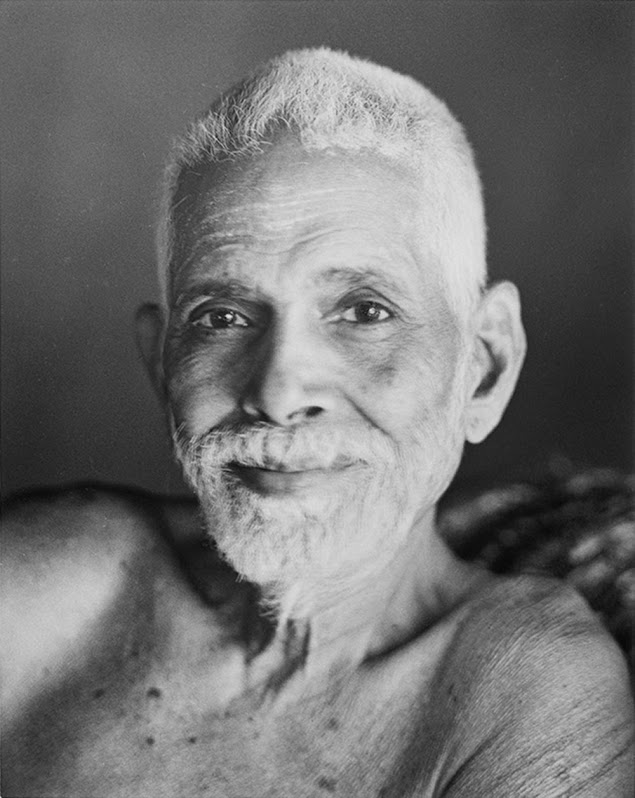
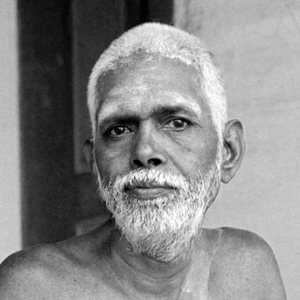

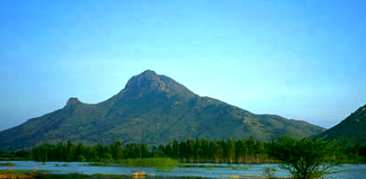

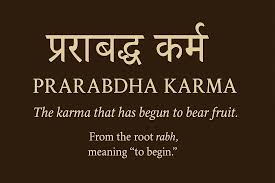
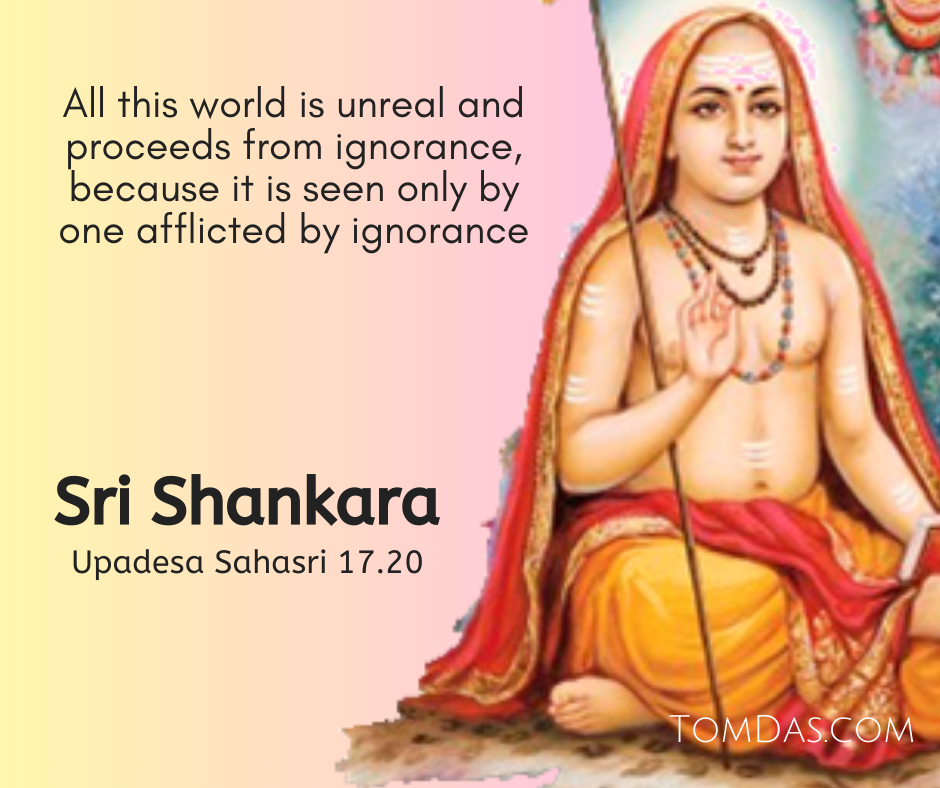
 Tom Das