Advaita Vedanta
The Genius of Sri Ramana Maharshi’s Teachings | The Dove and the Hunter | Occasional Verse
Sri Ramana Maharshi: perceiving and creation are one and the same
147. Creation is not other than seeing; seeing and creating are one and the same process. Annihilation is only the cessation of seeing and nothing else, for the world comes to an end by the right awareness of oneself.
330. There is no creation apart from seeing; seeing and creation are one and the same. And because that seeing is due to ignorance, to cease seeing is the truth of the dissolution (of the world).
~Sri Ramana Maharshi, verses taken from Sri Ramana Paravidyopanishad
To understand these verses more deeply see these posts here and here
The Purpose behind the Various and Diverse Theories of Creation in the Vedas | Advaita Vedanta | Sri Ramana Maharshi
Why do the different portions of the Vedas describe creation in different ways? Their sole intention is not to proclaim a correct theory of creation, but to make the aspirant enquire into the Truth which is the Source of creation.
~ Sri Ramana Maharshi, Guru Vachaka Kovai, Verse 102
Here, in one of the earliest texts Sri Ramana authored he wrote the following in response to the following question:
Question: If the entire universe is of the form of mind, then does it not follow that the universe is an illusion? If that be the case, why is the creation of the universe mentioned in the Veda?
Sri Ramana Maharshi: There is no doubt whatsoever that the universe is the merest illusion. The principal purport of the Veda is to make known the true Brahman, after showing the apparent universe to be false. It is for this purpose that the Vedas admit the creation of the world and not for any other reason.
Moreover, for the less qualified persons creation is taught, that is the phased evolution of prakriti (primal nature), mahat-tattva (the great intellect), tanmatras (the subtle essences), bhutas (the gross elements), the world, the body, etc., from Brahman: while for the more qualified simultaneous creation is taught, that is, that this world arose like a dream on account of one’s own thoughts induced by the defect of not knowing oneself as the Self. Thus, from the fact that the creation of the world has been described in different ways it is clear that the purport of the Vedas rests only in teaching the true nature of Brahman after showing somehow or other the illusory nature of the universe.
That the world is illusory, every one can directly know in the state of realization which is in the form of experience of one’s bliss-nature.
~ Sri Ramana Maharshi, Self Enquiry (Vichara Sangraham)
Sri Sadhu Om also wrote a commentary on the above verse of Guru Vachaka Kovai (verse 102), as follows:
‘If creation were true, the scriptures would describe it in only one manner, but their diverse theories make it clear that creation is not the truth. To enable ripe aspirants to discover the falsity of the notion of creation, the Vedas purposely teach contradictory theories. However, such contradictions are found only in the descriptions of creation, they never occur when the Vedas attempt to describe the nature of Self, the Supreme. Concerning Self, they all agree and speak in one voice, saying ‘Self is One, Perfect, Whole, Immortal, Unchanging, Self-shining etc., etc.’ From this we should understand that the deep intention behind such conflicting theories of creation is to indirectly show aspirants the necessity of enquiring into Self, which is the Source of all ideas of creation.’
THE SUPREME STATE (according to the Upanishads & Shankara) | Advaita Vedanta
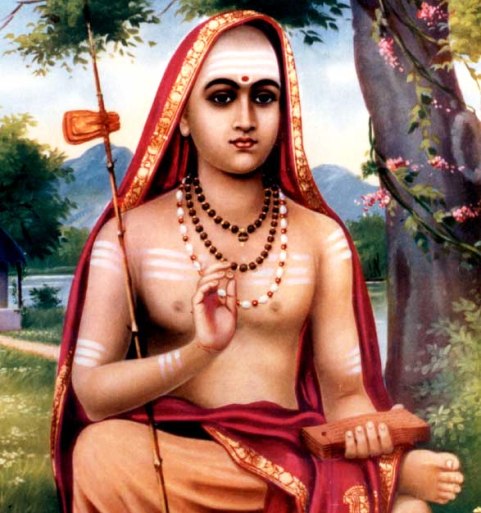
When the five organs of perception become still, together with the mind, and the intellect ceases to be active: that is called the Supreme State [Brahma-Vidya or Self Knowledge]
~Katha Upanishad 2.3.10
Shankara’s commentary on this above verse (Katha Upanishad, verse 2.3.10) states the following:
‘At the time when the five senses…, together with the mind…, which is now no longer functioning and thinking, are at rest in the Self alone, after turning away from objects, and with the intellect…no longer engaging with its functioning, that they call the highest state [Brahma-Vidya or Self-Knowledge].’
This is an excerpt from this post which contains more quotes like this

What is the magical ingredient needed for liberation? | Be with the teacher
What is Reality? Sri Ramana Maharshi

Again and again, we see Bhagavan Sri Ramana emphasising That which underlies phenomenal existence, and not the phenomena themselves.
Why is this?
Everyone has Self-Knowledge, the Self is ever-realised | Sri Ramana Maharshi
Everyone has self-knowledge. Self knowledge is the Self. They are one and the same. Sri Ramana Maharshi says in Talks, no 280:
‘There is no moment when the Self is not nor when the Self is not realised.’
and
‘Even now you are Self-realised.’
The problem is ignorance, meaning thinking you are the body-mind entity. Both thinking and the body-mind themselves are mere superimpositions.
When this ignorance/superimposition has been removed, then only the Self remains. That is called Self-knowledge or the Self. Sri Ramana says in Talks 462:
‘Being the Self one remains always realised, only be free from thoughts [Tom: ie. superimpositions].’
And in Talks 490:
‘The Self is always realised. But only you do not recognise the fact. The Realisation is now obscured by the present world-idea.[Tom: ie. superimposition of the body-mind-world]’
This Self-knowledge is not knowledge in the mind, which is something that comes and goes, and this Self-Knowledge is not for the body-mind at all.
It is described as being unborn and eternal by the great sages. It cannot be taught, only obstacles (ie. ignorance) is to be removed by turning within. Sri Ramana Maharshi says in Talks 282:
‘The Guru does not bring about Self-Realisation. He simply removes the obstacles to it. The Self is always realised.’
And in Talks 164:
‘Seek within. The Self is always realised.’
And talks 490 this same point above in made again, but the importance of the desire for liberation is also stated by Bhagavan:
‘The Self is always realised. The Realisation is now obscured. When the veil is removed the person feels happy at rediscovering the ever-realised Self. The ever-present Realisation appears to be a new Realisation. Now, what should one do to overcome the present ignorance. Be eager to have the true knowledge. As this eagerness grows the wrong knowledge diminishes in strength until it finally disappears.’
May we be desirous of Self-Realisation, that Realisation which ever-is.
May we be blessed by Sri Ramana’s Grace and Presence, that is our very Own Self.
May be receive the True Teaching that is created by our own Desire (for Liberation)
Om Shanti Shanti Shanti
Who can conceive of the state of the Jnani? Sri Sadhu Om | The true nature of the Jnani. The true nature of Jnana | Advaita Vedanta | Sri Ramana Maharshi

The following verse is taken from Guru Vachaka Kovai verse 1105 followed by commentary by Sri Sadhu Om, a direct devotee of Sri Ramana Maharshi’s who spent several years with him. Guru Vachaka Kovai is recognised as being the most authoritative exposition of Sri Ramana Maharshi’s verbal teachings, and can be downloaded in full here. For this particular verse, Sri Ramana Maharshi has also re-written the verse so we have 2 forms of the same verse:
1105. The Jnani, the unchanging one, who is sleeping naturally within the body, does not know His activities [vyavahara] in the world, His absorption [nishtha] and His sleep, just as one who is sleeping in the cart does not know the moving of the cart, its standing still and its lying [with the bullocks unyoked].
The above verse was rewritten by Bhagavan Sri Ramana Maharshi in the form of the following verse, which is also included in Ulladu Narpadu – Anubandham (Supplement to 40 verses on reality) as verse 31:
B21. To the knower of the reality [mey-jnani], who is asleep within the fleshy body, which is [like] a cart, His activities [in waking and in dream], His absorption [nishtha] and His sleep are similar to the moving of the cart, its standing still and the cart being unyoked, to one who is sleeping in the cart
Commentary by Sri Sadhu Om: The bodily life of a Jnani appears to be real only from the perspective of others. So ignorant people [ajnanis] think, “This Jnani is performing activities here in the waking state.”
But since the Jnani is verily bodiless, He does not know those activities; to Him the body and its activities are completely non-existent.
Just as the traveler who is sleeping in a bullock cart does not know the movement of the cart, and just as a sleeping child does not know that he is taking food, so also the Jnani does not know the state in which the body, the senses and the mind are active.
When the body, the senses and the mind of a Jnani remain without activities, people think, “This Jnani is in samadhi.” This is similar to the state where the oxen remain yoked to the cart but are motionless. Even this state of samadhi or nishtha is not known to the Jnani; for Him it is completely non-existent. When people think, “This Jnani is sleeping,” this state of apparent deep sleep in which his body, his senses and his mind seem to be unconscious, is similar to the cart that is with the unyoked oxen.
Just as the fact that the car is undone is not known to the traveler who sleeps in the car, so also the state of deep sleep is not known to the Jnani; for him this state it is completely non-existent.
Therefore, these three different states in the life of a Jnani seem to exist only under the erroneous perspective of the ajnanis, who see the bodiless Jnani as a body.
For the Jnani, the state of activity [wakefulness and sleep], the state of samadhi and the state of deep sleep do not really exist.
That is why Sri Bhagavan says in verse 31 of Ulladu Narpadu:
“Who can conceive and how what his [the Jnani’s] state is?”
~ above text is by Sri Sadhu Om in his commentary on Guru Vachaka Kovai verses 1105 and B21
For more on the same topic, please also see here:
For those attached to the world, the world is considered to be a divine manifestation. For the advanced seeker, the world is considered to be an illusion
What exactly is Jnana (self-knowledge) according to Shankara and Gaudapada and the scriptures?
How can the Jnani (sage) function with NO THOUGHTS? Sri Ramana Maharshi
Ramana Maharshi: how to abide as the Self, the world is not real, attend to yourself
Does the Sage (Jnani) see the world? Does the world appearance exist after liberation?
Multiplicity, plurality and polarity ARE duality | Non-duality | Sri Ramana Maharshi
The nature of liberation | Manonasa by Michael Langford | Ramana Maharshi | PDF download
Does the liberated Jnani or Sage see the body, the mind, the world or the 3 states of deep sleep, waking and dream according to Sri Ramana Maharshi and Sri Adi Shankara?
Ramana Maharshi on those who ridicule idol-worship or image-worship | Non-duality | Bhakti
Also see:
Does Jnana (or Self-Enquiry) lead to Bhakti (or Self-Surrender) or the other way round?
Non-dual devotion, worship and prayer
Here we see Sri Ramana Maharshi’s teaching on those who ridicule and denounce idol-worship or image-worship as follows in Guru Vachaka Kovai verse 208:
208
O you that ridicule idol-worship, having not discovered through heart-melting love its secret, how is that you [daily] worship the filthy idol of your body as ‘I’?
Commentary on this verse by Sri Sadhu Om:
It is generally believed that idol worship is to mistake an idol as God and to treat it accordingly, offering it a bath, cloth, food, and all hospitality; but to mistake a body as Self, and to treat it accordingly, is also a form of idol worship. Indeed to treat and love a body as ‘I’ is the primal mistake which leads to all other forms of idol worship. So it is clear that we are all idol-worshippers, even if we take pride in scorning those that worship temple idols.
As long as one takes one’s body as ‘I’, there is no wrong in also worshipping an idol as God, and until one feels that it is wrong to treat one’s body as ‘I’, one should not be scornful and criticize others for treating an idol as God.
If one first roots out and destroys the ‘I am the body’ notion, one is then in a position to criticize idol worship, if such criticism is necessary [in the light of Jnana such criticism will of course be clearly seen as unnecessary].
 Tom Das