Ramana Maharshi on non-doership and self-realisation

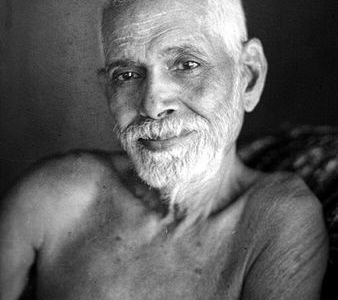
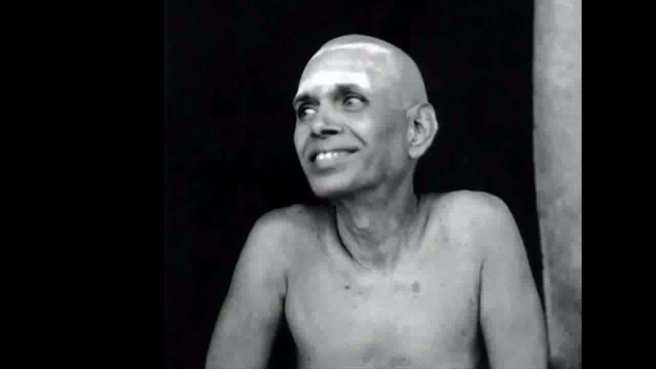
Ramana smiling

The following are verses from Guru Vachaka Kovai, one of the most authoritative texts of Ramana Maharshi’s teachings. The text was written by his disciple Muruganar and thereafter thoroughly checked and amended by Ramana. Here are some verses on the root cause of suffering, our notion of being a doer, with some commentary from Sri Sadhu Om, another devotee of Ramana:

466 The pure Bliss of peace will shine within only for those who have lost the sense of doership. For, this foolish sense of doership alone is the poisonous seed that brings forth all evil fruits.

467 Instead of going on, driven by the restless thoughts, performing actions such as ‘I should do this, I should give up that’ as if they were worthy to be done, acting according to how the Grace of God, the Lord of our soul, leads us, is the right form of truly worshipping Him

476 Whether or not one is performing actions, if the delusion of individuality – the ego, ‘I am the doer of actions’ – is completely annihilated, that is the attainment of actionlessness.

Sri Sadhu Om’s Comments: People generally think that the attainment of actionlessness is a state in which one should remain still, giving up all activities. But this is wrong. Sri Bhagavan Ramana proclaims that the loss of doership alone is the right kind of actionlessness, and this alone is nishkamya karma – action done without any desire for result. 

470 The Lord who has fed you today will ever do so well. Therefore, live carefree, placing all your burden at His feet and having no thought of tomorrow or the future.

471 Know well that even performing tapas (spiritual practice) and yoga with the intention ‘I should become an instrument in the hands of the Lord Siva’ is a blemish to complete self-surrender, which is the highest form of being in His service.

Sri Sadhu Om’s Comments: Since even the thought ‘I am an instrument in the Lord’s hand’ is a means by which the ego retains its individuality, it is directly opposed to the spirit of complete self-surrender, the ‘I’-lessness. Are there not many good-natured people who engage themselves in prayers, worship, yoga and such virtuous acts with the aim of achieving power form God and doing good to the world as one divinely commissioned? It is exposed here that even such endeavours are egotistical and hence contrary to self-surrender. 


Reading Sri Ramakrishna in Calcutta: All Religions point in the same direction

I used to read the works of Sri Ramakrishna as a young teenager. I first came across his books in Calcutta whilst on holiday there visiting family. I think it was in the gargantuan Howrah railway station that I spied a pile of his books. His books, I learnt in later travels to India, can be found in railway stations all over India, often in makeshift stalls that line the train platforms. I remember having to pester my dad to give me the money (was it 5 Rupees?) to buy the small paperback that I still have to this day.

Ramakrishna could barely read and write and his teachings were written down by his friends and devotees. It fills me with a fond nostalgia to read this today (as it popped up on my Facebook timeline!)…

‘Jal’ and ‘Pani’ are 2 words for water in the Bengali language, Jal typically used by Hindus and Pani by Muslims.


Ramana Maharshi: Non-duality and how to be Self-Realised (Atma-Jnana)

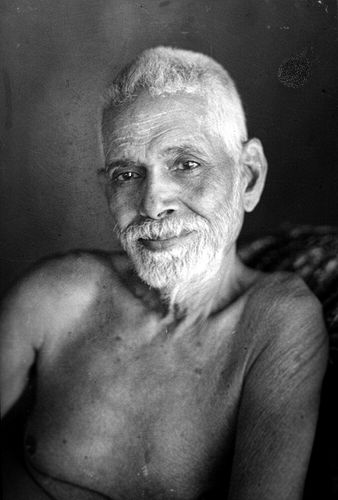
Ramana Maharshi sitting.jpg

In the following excerpts, Ramana Maharshi is telling us that we are already free, totally and completely. Can you accept this? Can you allow these words to move you? Can you intuit the truth to which they point?


If we talk of knowing the Self, there must be two selves, one a knowing self, another the self which is known, and the process of knowing. The state we call realization is simply being oneself, not knowing anything or becoming anything. If one has realized, one is that which alone is and which alone has always been. One cannot describe that state. One can only be that.


Questioner: How long does it take to reach mukti (liberation)?
Maharshi: Mukti is not to be gained in the future. It is there for ever, here and now.
Q: I agree, but I do not experience it.
M: The experience is here and now. One cannot deny one’s own Self.


Questioner: How shall I reach the Self?
Maharshi: There is no reaching the Self. If Self were to be reached, it would mean that the Self is not here and now and that it is yet to be obtained. What is got afresh will also be lost. So it will be impermanent. What is not permanent is not worth striving for. So I say the Self is not reached. You are the Self, you are already that. The fact is, you are ignorant of your blissful state. Ignorance supervenes and draws a veil over the pure Self which is bliss. Attempts are directed only to remove this veil of ignorance which is merely wrong knowledge. The wrong knowledge is the false identification of the Self with the body and the mind. This false identification must go, and then the Self alone remains. Therefore realization is for everyone; realization makes no difference between the aspirants. This very doubt, whether you can realize, and the notion `I-have-not-realized’ are themselves the obstacles. Be free from these obstacles also.


Q: There must be something that I can do to reach this state.
M: The conception that there is a goal and a path to it is wrong. We are the goal or peace always. To get rid of the notion that we are not peace is all that is required.
Q: All books say that the guidance of a Guru is necessary.
A: The Guru will say only what I am saying now. He will not give you anything you have not already got. It is impossible for anyone to get what he has not got already. Even if he gets any such thing, it will go as it came. What comes will also go. What always is will alone remain. The Guru cannot give you anything new, which you don’t have already. Removal of the notion that we have not realized the Self is all that is required. We are always the Self only we don’t realize it.


Q: When a man realizes the Self, what will he see?
M: There is no seeing. Seeing is only being. The state of Self-realization, as we call it, is not attaining something new or reaching some goal which is far away, but simply being that which you always are and which you always have been. All that is needed is that you give up your realization of the not-true as true…At one stage you will laugh at yourself for trying to discover the Self which is so self-evident.


Q: But how to do this and attain liberation?
M: Liberation is our very nature. We are that. The very fact that we wish for liberation shows that freedom from all bondage is our real nature. It is not to be freshly acquired. All that is necessary is to get rid of the false notion that we are bound. When we achieve that, there will be no desire or thought of any sort. So long as one desires liberation, so long, you may take it, one is in bondage.


Q: Is not the realization of one’s absolute being, that is, Brahma-jnana, something quite unattainable for a layman like me?
M: Brahma-jnana is not a knowledge to be acquired, so that acquiring it one may obtain happiness. It is one’s ignorant outlook that one should give up. The Self you seek to know is truly yourself.


Q: How to realize the Heart?
M: There is no one who even for a moment fails to experience the Self. For no one admits that he ever stands apart from the Self. He is the Self. The Self is the Heart.


Q: How can I attain Self- realization?
M: Realization is nothing to be gained afresh; it is already there. All that is necessary is to get rid of the thought `I have not realized’. Stillness or peace is realization. There is no moment when the Self is not. So long as there is doubt or the feeling of non-realization, the attempt should be made to rid oneself of these thoughts. They are due to the identification of the Self with the not-Self. When the not-Self disappears, the Self alone remains. To make room, it is enough that objects be removed. Room is not brought in from elsewhere.


Q: However often Bhagavan teaches us, we are not able to understand.
M: People say that they are not able to know the Self that is all pervading. What can I do ? Even the smallest child says, `I exist; I do; this is mine.’ So, everyone understands that the thing `I’ is always existent. It is only when that `I’ is there that there is the feeling that you are the body, he is Venkanna, this is Ramanna and so on. To know that the one that is always visible is one’s own Self, is it necessary to search with a candle ? To say that we do not know the atma swarupa (the real nature of the Self) which is not different but which is in one’s own Self is like saying, `I do not know myself.`


Q: But how is one to reach this state?
M: There is no goal to be reached. There is nothing to be attained. You are the Self. You exist always. Nothing more can be predicated of the Self than that it exists. Seeing God or the Self is only being the Self or yourself. Seeing is being. You, being the Self, want to know how to attain the Self. It is something like a man being at Ramanasramam asking how many ways there are to reach Ramanasramam and which is the best way for him. All that is required of you is to give up the thought that you are this body and to give up all thoughts of the external things or the not-Self.


Q: It is cruel of God’s leela (play) to make the knowledge of the Self so hard.
M: Knowing the Self is being the Self, and being means existence, one’s own existence. No one denies one’s existence any more than one denies one’s eyes, although one cannot see them. The trouble lies with your desire to objectify the Self, in the same way as you objectify your eyes when you place a mirror before them. You have been so accustomed to objectivity that you have lost the knowledge of yourself, simply because the Self cannot be objectified. Who is to know the Self ? Can the insentient body know it? All the time you speak and think of your `I’, yet when questioned you deny knowledge of it. You are the Self, yet you ask how to know the Self. Where then is God’s leela and where is its cruelty ? Because of this denial of the Self by people the sastras speak of maya, leela, etc.


Q: Yes, I still understand only theoretically. Yet the answers are simple, beautiful and convincing.
M: Even the thought `I do not realize’ is a hindrance. In fact, the Self alone is. Our real nature is mukti. But we are imagining we are bound and are making various, strenuous attempts to become free, while we are all the while free. This will be understood only when we reach that stage. We will be surprised that we were frantically trying to attain something which we have always been and are.


Q: Is mukti the same as realization?
M: Mukti or liberation is our nature. It is another name for us. Our wanting mukti is a very funny thing. It is like a man who is in the shade, voluntarily leaving the shade, going into the sun, feeling the severity of the heat there, making great efforts to get back into the shade and then rejoicing, `How sweet is the shade! I have reached the shade at last!’ We are all doing exactly the same. We are not different from the reality. We imagine we are different, that is we create the bheda bhava [the feeling of difference] and then undergo great sadhana (spiritual practices) to get rid of the bheda bhava and realize the oneness. Why imagine or create bheda bhava and then destroy it?


Q: Since realization is not possible without vasana-kshaya (destruction of mental tendencies/habits), how am I to realize that state in which the tendencies are effectively destroyed?
M: You are in that state now.
Q: Does it mean that by holding on to the Self, the vasanas (mental tendencies) should be destroyed as and when they emerge?
M: They will themselves be destroyed if you remain as you are.


Q: Is one nearer to pure consciousness in deep sleep than in the waking state?
M: The sleep, dream and waking states are mere phenomena appearing on the Self which is itself stationary. It is also a state of simple awareness. Can anyone remain away from the Self at any moment ? This question can arise only if that were possible.
Q: Is it not often said that one is nearer pure consciousness in deep sleep than in the waking state?
M: The question may as well be `Am I nearer to myself in my sleep than in my waking state?’ The Self is pure consciousness. No one can ever be away from the Self. The question is possible only if there is duality. But there is no duality in the state of pure consciousness.

Not mine

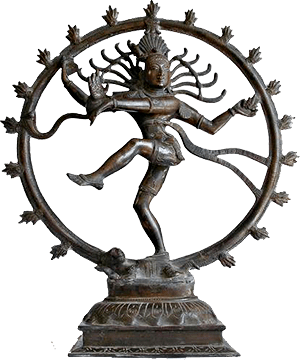
nataraj.png

Nothing is mine.
I did not create
This world,
This body,
Or this mind,
With its thoughts.

They were all given to me.
Yes – even my thoughts were given to me.

None of it has anything to do with me.

Then I look at the ‘me’:
There is no me.
Only this,
None of it mine,
All of it moving.

When you do not cling

moon water.jpg
Image from ana-rosa.tumblr.com

When you do not cling
There is no you.

Actually,
There never was a you.

You are just:*
Water in mirage,
The son of a barren woman,
The snake in a rope,
The moon in a pail of water.

*these are all traditional Indian metaphors used to describe our basic mistake (original sin)

Ramana Maharshi: Self-Realisation is simply being one’s self

Ramana smiling

The state we call Realisation is simply being one’s self, not knowing anything or becoming anything.

If one has realised, one is that which alone is and which alone has always been. One cannot describe that state, but only be That.

Of course, we talk loosely of Self-Realisation for want of a better term.

Ramana Maharshi
(taken from the book Day by Day with Bhagavan, p. 296)

Tom’s comments:

Notice that the search for ‘understanding’ and the search for becoming ‘enlightened’ or ‘self-realised’ are both pursuits of the ego. The ego is looking for security and pleasure and has projected/created these fantasies which it tries to attain.

Instead of trying to attain a projected fantasy, why not instead look at what is actually happening? Look at yourself, look at the ego, the ‘I’. Ask yourself ‘what is this ego? Who am I?’ Investigate for yourself repeatedly and you will see that the ego, the ‘you’ is illusory – it’s just a bundle of thoughts that occur by themselves, spontaneously. ‘Your thoughts’ are not yours at all: note how you cannot chose to stop thinking, stop worrying, stop your addictions. You cannot chose to believe something you don’t. You cannot chose to not believe something you do believe. You cannot stop your ‘bad thoughts’. In fact you probably do not even know what exactly you will be thinking in 5 minutes time let alone tomorrow or 5 days from now.

Another point: if you happen to think you are a dinosaur, it doesn’t necessarily make you one. Similarly if you think that you are an ego (a doer, a thinker, an agent who has authorship over his/her actions), it doesn’t make it true. Yes, the idea of being a doer is just that: it is an idea, a belief that has been tacitly repeated to us and drummed into us since childhood. An oft-repeated lie is then (mistakenly) taken to be true.

In seeing this first-hand, there is no specific intellectual understanding or state of mind gained. It’s just that an illusion has been seen through, like seeing that a frightening snake is in fact just a harmless rope in poor light (or like realising that you are not in fact a dinosaur after all!).

No dogmas, no metaphysics, no complex body-twisting acrobatics, no beliefs and no rituals are necessary (although they may be a part of the apparent journey).

Then all there is is ‘what’s happening’, and what you thought was you is actually just a part of that happening. Or as Bhagavan puts it, all there is is ‘simply being one’s self’.

Non-dual devotion, worship and prayer

child praying.jpg

In advaita (non-duality), we know that the God which is devote ourselves to is not separate from us.

Also see:

Does Jnana (Knowledge) lead to Bhakti (Devotion) or the other way round?
Should I bow to Sri Ramana Maharshi?
Grace alone is of prime importance
Bhakti Yoga (love and devotion) as a complete path to liberation
Ramana Maharshi on those who mock Idol-Worship

For many purists there is no place for devotion and prayer in non-duality. But devotion has always had a prominent role in spiritual traditions, and for good reason: it can be a hugely purifying and uplifting part of spiritual practice with many positive effects on the body and mind and our relationships. (click here for how devotion can be part of a wider spiritual path)

Om! May Brahman protect us!
May Brahman nourish us!
May we have energy!
May we become illumined!
May we not hate!
Om, Shanti, Shanti, Shanti!
(A traditional invocation or prayer from the Upanishads)

Continue reading

Roadmap to enlightenment: a (fairly) comprehensive guide to spiritual practices

This is one of a series of introductory articles – please see the homepage of tomdas.com for more introductory articles. Also see:

In Brief: how to attain Liberation

The entire path explained: the Path of Sri Ramana (Parts 1 and 2; PDF downloads)

This is one of the most important posts I have written – it condenses years of spiritual seeking which has involved exploring dozens of spiritual teachings, reading hundreds of books and texts from spiritual teachers and spiritual traditions across the world, undergoing all sorts of spiritual practices and meditations over the years, entering samadhi’s and experiencing visions of infinite oneness, and a genuine realisation of the Freedom-that-already-is.

The aim of the post is to guide you to a Freedom beyond words, but also stay concise. For all those people who have asked me: ‘That’s all very well but how do I actually become enlightened? How can we free ourselves from suffering? What do we do?’, this is for you, and others like you.

Continue reading

Nisargadatta Maharaj: Ignore your thoughts

Nisargadatta_Maharaj

“It is the mind that tells you that the mind is there. Don’t be deceived. All the endless arguments about the mind are produced by the mind itself, for its own protection, continuation and expansion. It is the blank refusal to consider the convolutions and convulsions of the mind that can take you beyond it.”

Nisargadatta Maharaj, I Am That

My comments:

The word ‘mind’ in the above quote is synonymous with the false sense of individual separate self. This self, this ‘I’, is just a notion, an idea reinforced by the mind. The ‘I’ is a thought, and it is reinforced by thoughts.

Trying to figure this all out (ie. more thought) is a function of the same mind that is ultimately false, imaginary: it is a fruitless endeavour.

A particularly effective sadhana (spiritual practice) is to ignore the content of thoughts as they appear within our consciousness. The energy of the sense of ‘I’ then begins to loosen and its mechanics are exposed and revealed. We can then start to see things as they actually are.

There are broadly two ways this can be done:

1) by concentrating on something else such as a mantra, the breath, or by chanting, etc – ie. a distraction from thoughts;

2) by allowing thoughts to wash past you like clouds in the sky, and in so doing not paying attention to the content of thoughts, eg. a surrender, acceptance, gratitude or mindfulness practice.

When looking for a sadhana, you will naturally be able to find the one that works for you by looking to see which one gives you greatest sense of peace and relief, and by seeing which practice you are naturally inclined towards.

For more about spiritual practices and how they work click here

The nature of Awareness

eye-881895_1920.jpg

This aware principle,
Is already always aware.
Without lifting a finger,
It is effortlessly present.

Within this awareness,
A multitude of phenomena spontaneously arise and fall.
Conceptually we say ‘multitude of phenomena’,
But in reality there is just One Seamless Experience.

Whatever phenomena awareness is aware of,
We can call ‘objects’.
No object is this aware principle,
No object is awareness.

There are no actual separate objects,
Just the appearance of separate objects.
The mind, using concepts like a sword,
Carves up our Seamless Experience into apparent parts.

Let us examine this awareness,
Which is not separate from the objects it observes.
Where does it come from?
What is its nature?

Observe, no particular object of awareness is awareness itself:
An object itself cannot be aware,
The perceived cannot perceive.
Therefore awareness is not an object.

There is no knowledge of awareness:
Awareness cannot be seen, touched, smelt, heard or tasted.
In this sense it cannot be known,
But awareness’s existence is self-evident.

What is this awareness?
– I don’t know!
But I know awareness exists. How?
– Because I am aware!

Observe, there is no awareness of awareness itself,
Only awareness of objects,
(Or in Deep Sleep or Samadhi,
the awareness of the absence of objects),
The existence of awareness,
Is inferred from the presence (or absence) of objects.

So what is awareness but an idea,
Based on the assumption of a subject, a seer?
Awareness is a merely a concept,
Indistinguishable from the objects it is aware of.

Objects are awareness,
Awareness is simply the presence of objects
(or the presence of an absence of objects,
as in Deep Sleep or Samadhi).
‘Objects’ and ‘awareness’ are two names for our One Total Seamless Experience.
See this at once!

All these words,
Simply trying to describe,
What is already our direct experience of life,
Right now.

Words simply point,
To the simplicity of this,
This which is so simple:
It is just our direct experience.

Truly,
What we conceive to be awareness.
Is nothing other than our everyday experience of objects,
This.

Truly,
What is conceived to be the Absolute (ie. the Subject)
Is none other than the relative (ie. objects),
This.

In this,
There is no object or subject,
No relative or absolute,
Just this, beyond words, beyond opposites.

There is only this,
Completely obvious,
Self evident,
Alive,
And elusive of conceptualisation.