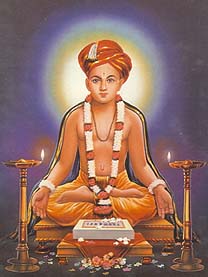
Jnaneshvar (1275–1296), also known as Jnanadev is widely acclaimed as a great self-realised master and teacher whose poetry and writings have influenced many generations after him. He was part of the Nath tradition, an ancient lineage of spiritual masters, which has become recently famous in the West due to Nisargadatta Maharaj (1897-1981), a more recent initiate in the Nath tradition. Continue reading →
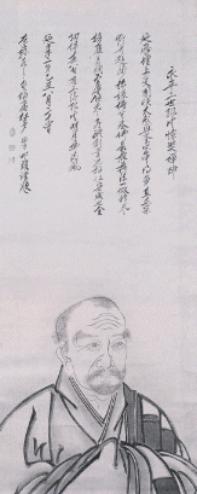
So I’ve been reading ‘Absorption in the Treasury of Light’ by Ejo (1198-1290) and to put it simply, it has blown my mind. The way Ejo expresses both the so-called ‘path’ and ‘state’ of realisation is astounding. I love how he speaks from his direct experience but also draws from scripture. His interspersed scriptural excepts sometimes seem to contradict each other, but the way he juxtaposes them, and in the context of his writing…well the combination results in a potent pointer to the Ultimate. Continue reading →
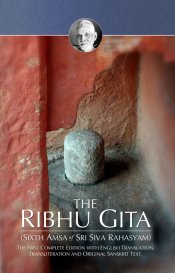
Listen and read the Song of Ribhu. Let the words wash over you. These words are not to be analysed and contemplated; they are to sink into your bones and marrow and stir that Ancient Knowing that is already there within you.
Read, chant, have faith (let go into presence) and be free!
1. Ribhu: Listen again the the supreme knowledge that confers liberation immediately. All is Brahman alone, always. All is tranquility – there is no doubt.
The following is an excerpt from the book ‘Annamalai Swami Final Talks’ (bold added by me):
Annamalai Swami: ….Your mind is an insubstantial shadow that will follow you around wherever you go. Attempts to eliminate or control it cannot succeed while there is still a belief that the mind is real, and that it is something that can be controlled by physical or mental activity.
Question: But this shadow mind must still be eliminated by some means. Continue reading →
The following is an excerpt from the book ‘Annamalai Swami Final Talks’ (bold added by me):
Question: One can have a temporary experience of the Self, the underlying reality, but then it goes away. Can you offer any guidance on how to stabilise in that state? Continue reading →
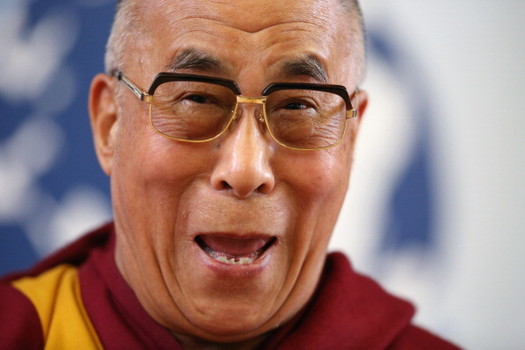
The following excerpt is taken from the book “How to see yourself as you really are” by the Dalai Lama:
What makes all this trouble in the world? Our own counterproductive emotions. Once they are generated, they harm us both superficially and deeply. These afflictive emotions accomplish nothing but trouble from beginning to end. If we tried to counteract each and every one individually, we would find ourselves in an endless struggle. So what is the root cause of afflictive emotions that we can address more fruitfully? Continue reading →
Questioner: If my real self is peace and love, why is it so restless?
Nisargadatta Mahara: It is not your real being that is restless, but its reflection in the mind appears restless because the mind is restless. It is just like the reflection of the moon in the water stirred by the wind. The wind of desire stirs the mind and the ‘me’, which is but a reflection of the Self in the mind, appears changeful. But these ideas of movement, of restlessness, of pleasure and pain are all in the mind. The Self stands beyond the mind, aware, but unconcerned. Continue reading →
Another short story taken from the glorious little collection, Zen Flesh, Zen Bones:
The Thief Who Became a Disciple
One evening as Shichiri Kojun was reciting sutras (Buddhist scriptures) a thief with a sharp sword entered, demanding either his money or his life. Shichiri told him: ‘Do not disturb me. You an find the money in that drawer.’ Then he resumed his recitation.
A little while afterwards he stopped and called: ‘Don’t take it all. I need some to pay taxes with tomorrow.’
The intruder gathered up most of the money and started to leave. ‘Thank a person when you receive a gift,’ Shichiri added. The man thanked him and made off.
A few days afterwards the fellow was caught and confessed, among others, the offence against Shichiri. When Shichiri was called as a witness he said: ‘This man is no thief, at least as far as I am concerned. I gave him the money and he thanked me for it.’
After he had finished his prison term, the men went to Shichiri and became his disciple.
Here is another chapter from the book ‘The Most Direct Means to Eternal Bliss’. For my initial (and brief) opinion on this controversial but useful book click here. This chapter focuses on thought and how thought gets in the way of direct communion with that which lies beyond thought. Continue reading →
I was reading a passage from J. Krishnamurti’s slim book called meditations which reminded me of a passage from The Gospel According to Matthew. The language they use is strikingly similar. I’ll start with the biblical passage as it’s shorter:
But when you pray, go into your room, close the door and pray to your Father, who is unseen. Then your Father, who sees what is done in secret, will reward you.
Matthew 6:6


 Tom Das