J. Krishnamurti: If you listen completely, there is no listener

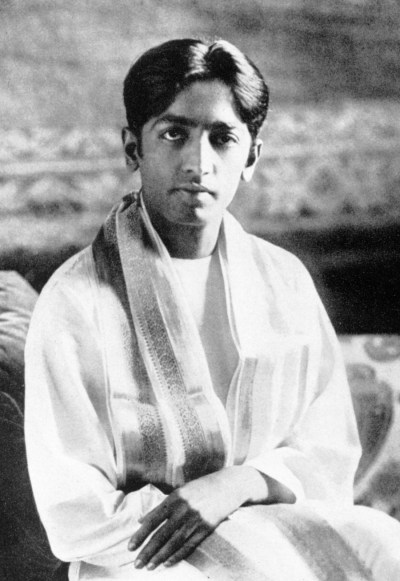
Krishnamurti young

Listen to those crows. Do listen. If you listen completely, is there a centre from which you are listening? Your ears are listening. There is the noise, there is the vibration and all the rest of it, but there is no centre from which you are listening. There is attention.
Therefore if you listen completely, there is no listener; there is only the fact of that noise. To listen completely you must be silent, and that silence is not something in thought, created by thought.
When you listen to that crow that is making the noise before it goes to sleep, so completely that there is no listener, you will see that there is no entity that says, ‘I am listening.’
Jiddu Krishnamurti, The Collected Works, Vol. XVI, p.59 ‘Choiceless Awareness’ Bombay 1966


Tom’s Comments:

Listening is the same as seeing. It goes to the heart of the teachings, it is a complete teaching in itself. If this one teaching is fully understood, penetrated through and through, then that is the entire teaching.

When you truly listen, you are simple seeing things as they actually are, not as you project or interpret them to be. Without the verbiage of your mind with all its opinions and judgements, you see life as it truly is.

This is the living truth. And in that truth it can be seen there is no doer or thinker. The entity that we take ourselves to be can be directly seen to be false – it never existed apart from in our thoughts and imagination.

Jiddu Krishnamurti: True Meditation

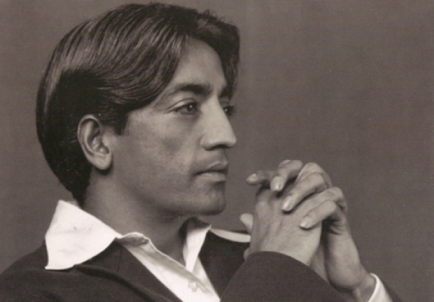
Krishnamurti young.jpg

Meditation is never the control of the body. There is no actual division between the organism and the mind. The brain, the nervous system and the thing we call the mind are one, indivisible. It is the natural act of meditation that brings about the harmonious movement of the whole. To divide the body from the mind and to control the body with intellectual decisions is to bring about contradiction, from which arise various forms of struggle, conflict and resistance.

Every decision to control only breeds resistance, even the determination to be aware. Meditation is the understanding of the division brought about by decision. Freedom is not the act of decision but the act of perception. The seeing is the doing. It is not a determination to see and then to act. After all, will is desire with all it’s contradictions. When one desire assumes authority over another, that desire becomes will. In this there is inevitable division. And meditation is the understanding of desire, not the overcoming of one desire by another. Desire is the movement of sensation, which becomes pleasure and fear. This is sustained by the constant dwelling of thought upon one or the other.

And meditation is the understanding of desire, not the overcoming of one desire by another.

Meditation really is a complete emptying of the mind. Then there is only functioning of the body; there is only the activity of the organism and nothing else; then thought functions without identification as the me and the non-me. Thought is mechanical, as is the organism.

Meditation really is a complete emptying of the mind. Then there is only functioning of the body

What creates conflict is thought identifying itself with one of its parts which becomes the me, the self and the various divisions in that self. There is no need for the self at any time. There is nothing but the body, and freedom of the mind can only happen when thought is not breeding the me.

What creates conflict is thought identifying itself with one of its parts which becomes the me…

There is no self to understand but only the thought which creates the self. When there is only the organism without the self , perception, both visual and non-visual can never be distorted. There is only seeing ‘what is’ and that very perception goes beyond what is. The emptying of the mind is not an activity of thought or an intellectual process. The continuous seeing of what is without any kind of distortion naturally empties the mind of all thought and yet that very mind can use thought when it is necessary. Thought is mechanical and meditation is not.

There is only seeing ‘what is’ and that very perception goes beyond what is.

Excerpt taken from J. Krishnamurti, ‘The Beginnings of Learning’

My awakening experience whilst reading Krishnamurti:

Krishnamurti’s Method

krishnamurti

The following is an excerpt from a talk of Jiddu Krishnamurti that took place in Hamburg, Germany on 5th September 1956. For those of you who are familiar with Krishnamurti’s teachings, you will know that he abhorred the idea of a set method for liberation. However, in his talks he often outlined something that could be called a method in the wider sense, so I have rather cheekily titled this post ‘Krishnamurti’s Method’ 🙂

“So a serious person must surely ask himself this question: is it possible to experience something…beyond the fabrications of the mind? And if it is possible, then what is one to do? How is one to set about it? Continue reading

Krishnamurti: Redefining religion, finding God

krishnamurti

The following is an excerpt from a talk of Jiddu Krishnamurti that took place in Hamburg, Germany on 5th September 1956

“Religion is not to be found in a set of dogmas, beliefs, rituals; I think it is something much greater and far beyond all that. Therefore it is imperative to understand why the mind clings to any particular religion or belief, to any particular dogma. It is only when we understand and free the mind from these beliefs, dogmas, and fears, that there is a possibility of finding out if there is a reality, if there is God. But merely to believe, to follow, seems to me an utter folly…
Continue reading

Krishnamurti: Meditation is natural

evening sky

I recall walking in the gardens of a local convent in Autumn last year. After meandering around for a while I found my self standing by a tree. I looked up to see a dark angular leaf-less branch silhouetted against a luminous evening blue sky. There was complete stillness and a sense of vastness. The universe was functioning, but “I” was not there. Everything was happening by itself, seemingly magical and uncaused. The silence was deafening, as they say. The universe was, as ever, mysterious, strange and peaceful. It was both familiar and unfamiliar at the same time. Continue reading

Jesus and Krishnamurti: The importance of being alone

I was reading a passage from J. Krishnamurti’s slim book called meditations which reminded me of a passage from The Gospel According to Matthew. The language they use is strikingly similar. I’ll start with the biblical passage as it’s shorter:

But when you pray, go into your room, close the door and pray to your Father, who is unseen. Then your Father, who sees what is done in secret, will reward you.
Matthew 6:6

Continue reading

Krishnamurti: The Mind Must Be Utterly Silent

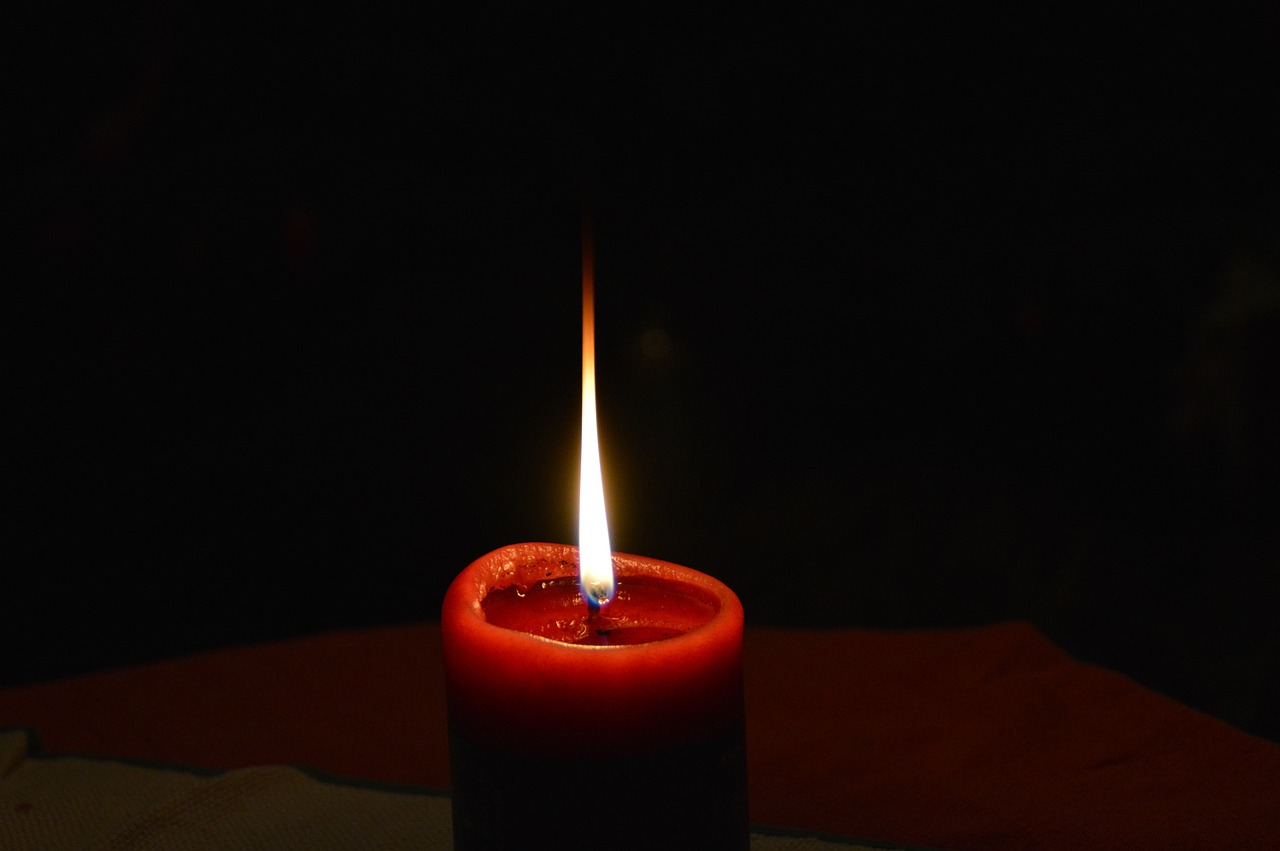
candle red

The following is an excerpt from a talk by Jiddu Krishnamurti:

….Surely, it is only by understanding ourselves patiently, quietly, unobtrusively, that we begin to discover, experience something which is not of our own creation; and it is that which brings about help, which begins to clear the field of our vision.

But you cannot ask for that help; it must come to you darkly, uninvited. Continue reading

Krishnamurti on The essence of meditation

ocean sky

“As you walked on the beach the waves were enormous and they were breaking with magnificent curve and force. You walked against the wind, and suddenly you felt there was nothing between you and the sky, and this openness was heaven.

To be so completely open, vulnerable – to the hills, to the sea, and to man – is the very essence of meditation. To have no resistance, to have no barriers inwardly towards anything, to be really free, completely, from all the minor urges, compulsions, and demands, with all their little conflicts and hypocrisies, is to walk in life with open arms.

And that evening, walking there on that wet sand, with the sea gulls around you, you felt the extraordinary sense of open freedom and the great beauty of love which was not in you or outside you – but everywhere.”

Jiddu Krishnamurti