TRUTH!

None of my words are really true, and neither are any of your words either, not when it comes to ‘Non-duality’. This is not ultimately about having the right concepts or having an accurate description of the ways things ‘really’ are, thankfully.

It is much simpler than that, and from the vantage point of the dualistic mind, much more radical too.

There is just an energetic pointing to a total freedom which can never be encapsulated solely by words, but words may be used (apparently) nonetheless.

It simply is ‘what is’.

ON APPEARANCES

‘Things appear’…’This appearance’…

…Appearance is a descriptive term. This is how things appear to be. To say something ‘is’ or ‘is not’ is to stray into the domain of concepts and beliefs. No need to go there.

HOW TO MISS A GENUINELY REALISED SPIRITUAL TEACHER

miss bus

What if a teacher was genuinely realised but used language in a different way to your teacher of choice? Would you pass them by?

It’s my experience that when people truly get this, they do not necessarily parrot their own teacher (although they may), but have their own unique expression of the same truth. Often this expression can be radically different, at least on the surface.

Take Nisargadatta Maharaj – he expressed his teaching in a very different way to his Guru (Siddharameshwar Maharaj) who taught in a more traditional way which emphasised progession through various specific stages and reading of traditional texts. And Siddharameshwar Maharaj taught in a different way to his guru, Bhauhaseb Maharaj (so much so that Bhauhaseb’s disciples initially rallied against Siddharameshwar) who stressed meditative practice over book reading. Similarly look at other teachers who claim the same lineage: Ranjit Maharaj, Ramakant Maharaj and even Ramesh Balsekar – all have very different expressions, using almost completely different language and methodologies.

We can see the same in the centuries gone by: when we read the various Upanishads, some appear highly dualistic, whilst others are staunchly non-dualistic, some Upanishads are heavily theistic whereas some do not refer to a deity at all.

In Chan/Zen, we can see how each of the Patriarchs, starting with Bodhidharma, expressed the inexpressible in their own inimitable style.

There are many ways to talk about this. There are many ways we can come to this. No need to judge the teachers too much.

When I was a seeker, I used to often judge various teachers, especially when they expressed things that seemed at odds with my own personal understanding. Now I can see how right many of them were (Not all though! Not all teachings are equal!)

I know it’s difficult as a seeker, I really do. Just remember to keep an open mind, watch out when you become too critical, and focus on your own path so you can ‘attain a genuine realisation for yourself’, so to speak 😊 😜

Be open to the notion that some people may be expressing the same thing you are, but just in a different way, and perhaps just in a way you don’t fully understand.

The Self is All/ Self Enquiry in daily life

201908

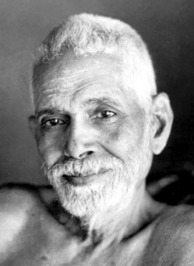
Ramana Maharshi: The Self is all. Are you apart from the Self? Or can the work go on without the Self? The Self is universal: so, all actions will go on whether you strain yourself to be engaged in them or not. The work will go on of itself. Thus Krishna told Arjuna that he need not trouble to kill the Kauravas; they were already slain by God. It was not for him to resolve to work and worry himself about it, but to allow his own nature to carry out the will of the higher power.

Q: But the work may suffer if I do not attend to it.

Ramana Maharshi: Attending to the Self means attending to the work. Because you identify yourself with the body, you think that work is done by you. But the body and its activities, including that work, are not apart from the Self. What does it matter whether you attend to the work or not? Suppose you walk from one place to another: you do not attend to the steps you take. Yet you find yourself after a time at your goal. You see how the business of walking goes on without your attending to it. So also with other kinds of work.

Q: It is then like sleep-walking.

Ramana Maharshi: Like somnambulism? Quite so. When a child is fast asleep, his mother feeds him; the child eats the food just as well as when he is fully awake. But the next morning he says to the mother, “Mother, I did not take food last night”. The mother and others know that he did, but he says that he did not; he was not aware. Still the action had gone on.

A traveller in a cart has fallen asleep. The bulls move, stand still or are unyoked during the journey. He does not know these events but finds himself in a different place after he wakes up. He has been blissfully ignorant of the occurrences on the way, but the journey has been finished. Similarly with the Self of a person. The ever-wakeful Self is compared to the traveller asleep in the cart.

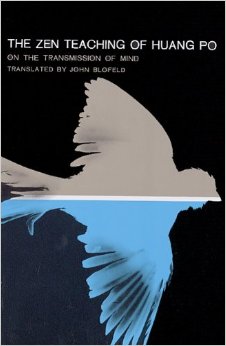
Chan (Zen) Master Huang Po: How is it possible to develop the Supreme-Enlightenment Mind?

Huang Po Zen Teachings

Question: How is it possible to develop the Supreme-Enlightenment Mind?

Huang Po: Bodhi [enlightenment or enlightened mind]* means nothing to attain. Even now, just as you allow thought to arise, you get nothing. Thus, realising that there is absolutely nothing to attain is the Bodhi Mind.

The realisation that there is nowhere to abide and nothing to attain is the Bodhi.

Therefore, Shakyamuni Buddha [the original Buddha, also known as Gautama Buddha] said ‘…there was really no Dharma [teaching or method] by means of which the Tathagata [the Buddha] attained Supreme Enlightenment…’

*[Tom – square bracket comments added by me]

Almost got it?

mike

If you have found a spiritual or non-dual teaching that makes sense for you, or if you think you have ‘almost got it now’, know that it is way off the mark! This doesn’t make sense! 😂 Non-duality or advaita doesn’t make sense! Liberation or enlightenment doesn’t make sense! It cannot be understood!

What’s more – no learning is required. It just is! It is everything. It is ‘what is’. And ‘what is’ works all by itself without need for a ‘me’ or ‘you’. Simply THIS in its totality, beyond all concepts and including all concepts.

But words, even the most precise and wonderfully erudite words, may only give a flavour, an indication of what they are pointing to.

You CAN get quite a good conceptual understanding of liberation- eg. just THIS, as it is, empty of belief in separation/me/subject-object, empty of the personal stories, but allowing everything/all without exclusion (you can substitute in your own personal understanding of non-duality or liberation here if you like).

But the words and concepts are not it – they are never it. They are (initially at least) for the illusory ‘me’ that believes it lives in time and space and has free will. The ‘me’ now thinks it understands, and this conceptual understanding allows the perpetuation of this illusory ‘me’ as well as the concomitant suffering.

…yes, where the ‘me’ is, suffering follows…

There may, however, and apparently, be a ‘transmission’ beyond the words…’one Guru enlightening another Guru’ (not that there are really two)…and the ‘me’ may totally and completely collapse…it is Mystery…it is Grace in Action…what is left cannot be understood at all! It is Self-Celebrating and it doesn’t need to be understood.

…but, paradoxically, there is also no need for any transmission, no need for any collapse, no need for a ‘moment’ – for THIS cannot go anywhere or be lost – it is already whole and unfractured – it is already complete and not lacking a single thing – it has never been lost, and always IS whatever IS.

(How can you lose ‘whatever is’?)

Jesus – ‘do not love the world or things in the world’

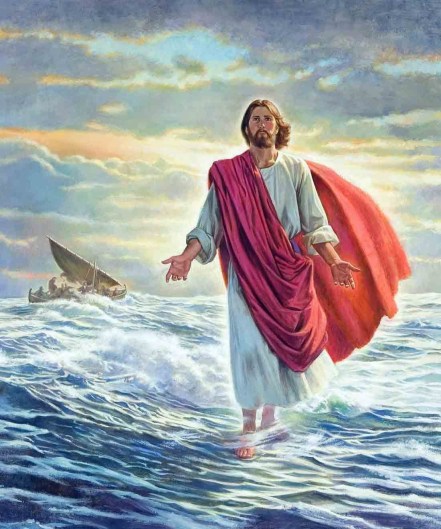
Jesus walks water

Also see:

The Non-Dual Vision of Jesus Christ

Jesus and non-duality

The following quotes are taken from the Bible, and whilst they are taken out of context, together they do reveal a certain power of their own, pointing out the need to turn away from the world towards Source Within (‘the Father’):

Do not love the world or the things in the world. If anyone loves the world, the love of the Father is not in him.
1 John 2:15

You adulterous people! Do you not know that friendship with the world is enmity with God? Therefore whoever wishes to be a friend of the world makes himself an enemy of God.
James 4:4

And the world is passing away along with its desires, but whoever does the will of God abides forever.
1 John 2:17

If anyone comes to me and does not hate his own father and mother and wife and  children and brothers and sisters, yes, even his own life, he cannot be my disciple.
Luke 14.26

…the whole world lies under the sway of the wicked one.
1 John 5:19

…we look not to the things that are seen but to the things that are unseen. For the things that are seen are transient, but the things that are unseen are eternal.
2 Corinthians 4:18

For if you live according to the flesh you will die, but if by the Spirit you put to death the deeds of the body, you will live.
Romans 8:13

So then, none of you can be My disciple who does not give up all his own possessions.
Luke 14:33

…the light shines in the darkness, and the darkness did not comprehend it.
John 1:5

Jesus answered, ‘My kingdom is not of this world. If My kingdom were of this world, My servants would fight, so that I should not be delivered to the Jews; but now My kingdom is not from here.
John 18:36

No one can serve two masters, for either he will hate the one and love the other, or he will be devoted to the one and despise the other. You cannot serve God and money.
Matthew 6:24

Do not be surprised, brothers, that the world hates you.
1 John 3:13

Woe to you, when all people speak well of you, for so their fathers did to the false prophets.
Luke 6:26

If the world hates you, know that it has hated me before it hated you. If you were of the world, the world would love you as its own; but because you are not of the world, but I chose you out of the world, therefore the world hates you.
John 15:18-19

For all that is in the world—the desires of the flesh and the desires of the eyes and pride in possessions—is not from the Father but is from the world.
1 John 2:16

Tom’s interpretation: whilst all is from ‘the Father’ (ie. Source), this type of teaching exposition is given to show us that these types of desires for sense-objects and object-based happiness actually lead us away from liberation. i.e. all objective phenomena (‘all that is in the world’) are ephemeral manifestations of Maya. It is only when we lovingly attend to the Source Within, ‘the Father’, which is both the path of Knowledge and the culmination of the Path of Love, that we realise our already inherent unity with Him (or Her or That).

Keep your life free from love of money, and be content with what you have, for he has said, “I will never leave you nor forsake you.”
Hebrews 13:5

I have given them your word, and the world has hated them because they are not of the world, just as I am not of the world.
John 17:14

His dominion is an everlasting dominion, which shall not pass away, and his kingdom one that shall not be destroyed
Daniel 7:14

Peace I leave with you; my peace I give to you. Not as the world gives do I give to you. Let not your hearts be troubled, neither let them be afraid.
John 14:27

Set your minds on things that are above, not on things that are on earth.
Collosians 3:2

For whoever wishes to save his life will lose it, but whoever loses his life for My sake, he is the one who will save it. And He was saying to them all, “If anyone wishes to come after Me, he must deny himself, and take up his cross daily and follow Me.”
Luke 9:23-24

He [Jesus] turned and said to Peter, ‘Get behind Me, Satan! You are an offense to Me, for you are not mindful of the things of God, but the things of men.’”
Matthew 16:23

One day Jesus invited a man to follow Him and become His disciple—but the man refused. He said he would follow Jesus later, but first he wanted to go bury his father. Jesus responded, “Follow me, and let the dead bury their own dead”
Matthew 8:22.

For as in Adam all die, so also in Christ shall all be made alive.
1 Corinthians 15:22

The Ultimate or Highest Truth according to the Upanishads

There is a famous verse in the Upanishads that explicitly and specifically proclaims to hold the highest truth.

This verse was considered important enough that it was also incorporated into Shankara’s masterpiece Vivekachudamani and also Gaudapada‘s main work, his commentary on the Mandukya Upanishad (the Mandukya Karika).

In fact it is the only verse that I know of that is repeated not only in more than one Upanishad, but is also repeated by the two greatest traditional exponents of Advaita Vedanta (ie. Shankara and Gaudapada) in their subsequent works. Sri Ramana Maharshi also wrote a version of this verse.

Here is the verse:

There is neither destruction (Nirodha) nor creation (Utpatti), none in bondage (Bandha) and none practicing disciplines (Sadhaka). There is none seeking Liberation (Mumukshu) and none liberated (Mukta). This is the ultimate or highest truth (Paramartha).’

As I said above, this verse is found repeated in the Amritabindu Upanishad in verse 10, in the Atma Upanishad in verse 2.31. It was later incorporated by both Gaudapada (Mandukya Karika 2.32) and Shankara (Vivekachudamani verse 574) in their writings. Sri Ramana Maharshi also wrote a version of this verse himself which can be found as verse B28 in the text Guru Vachaka Kovai.

What do you think of this verse?