Buddhism: How enlightenment happens

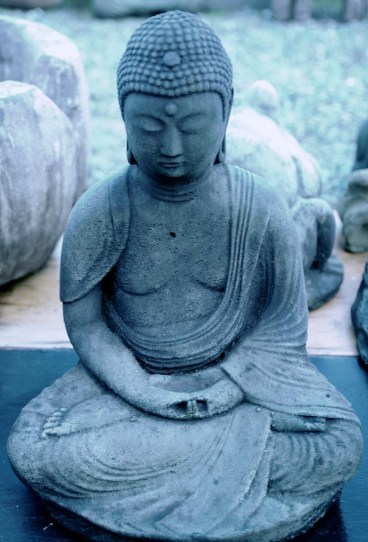
Buddha statue.jpg

If you read the earlier Buddhist texts (the Pali Suttas) you get a very different feel of the Buddha’s teachings compared to the systematised versions of Buddhism that are often more prominently on display today. It becomes apparent that the Buddha taught in different ways to different people and that the true Dhamma (teaching) cannot be grasped.

The eight-fold path that we most often hear about was very probably a central and important part of the Buddha’s teaching, and a truly wonderful teaching in my view, but it is clear that many people came to enlightenment in various ways according to the suttas (Buddhist texts).

We read that some attained enlightenment without practising, and some attained enlightenment simply upon hearing the Buddha speak. Some had a great awakening before practice, and then a practice naturally developed afterwards. Others followed the more traditional way of engaging with spiritual practises first and then attaining arahantship (full enlightenment) afterwards. The fact that arahantship was preceded by many years of practice for the Buddha himself may have affected the way he taught. However the suttas indicate that the Buddha realised that not all came to the Dhamma in the same way. In the Yuganaddha Sutta, Ananda explains the 4 main ways arahantship can arise:

Venerable Ananda said: “Friends, whoever — monk or nun — declares the attainment of arahantship in my presence, they all do it by means of one or another of four paths. Which four?
“There is the case where a monk has developed insight preceded by tranquility…He follows the path, developing it & pursuing it — his fetters are abandoned, his obsessions destroyed.
“Then there is the case where a monk has developed tranquility preceded by insight…He follows that path…his fetters are abandoned, his obsessions destroyed.
“Then there is the case where a monk has developed tranquility in tandem with insight…He follows that path…his fetters are abandoned, his obsessions destroyed.
“Then there is the case where a monk’s mind has its restlessness concerning the Dhamma well under control. There comes a time when his mind grows steady inwardly, settles down, and becomes unified & concentrated. In him the path is born. He follows that path, develops it, pursues it. As he follows the path, developing it & pursuing it — his fetters are abandoned, his obsessions destroyed.”
“Whoever — monk or nun — declares the attainment of arahantship in my presence, they all do it by means of one or another of these four paths.”

You can see here that two aspects of the teaching become very prominent, namely that of achieving tranquility and that of insight. The key is that both are required, but the order in which they are achieved varies. Some naturally are drawn towards becoming more tranquil and insight comes later. Others are more drawn to understanding and insight first and it is this insight that leads to tranquility as ‘fetters are abandoned’ and ‘obsessions destroyed’.

I explain in more detail what is meant by tranquility and insight here, but briefly insight is seeing there is no separate self (anatta in Pali), specifically that there is no separate doer entity. Tranquility when it is cultivated before insight usually refers to the lessening of thoughts and increasing of peace which in turn paves the way for insight. Tranquility after insight usually means a purification of the mind which naturally happens after insight; rather than reducing thoughts, this is the tranquility of freedom, of not being bothered by thoughts or circumstances and not depending on the mind, body or world (ie. anything) for one’s happiness.

In later Buddhist developments many schools developed ‘enlightenment first, practice later’ schools of teaching, notably in the Mahayana traditions, a prime example being Korean Zen master Chinul (1158-1210):

‘There are many avenues of entry into the Way…Sages since time immemorial have all first awakened then cultivated practice, attaining experiential proof based on practice.’
Chinul, Secrets of Cultivating the Mind, verses 19-20
‘If a real teacher points out a way of entry for you, and for a single instant you turn your attention around, you see your own original essence. This essence originally has no afflictions; uncontaminated wisdom is inherently complete in it. Then you are no different from the Buddhas; thus it is called sudden enlightenment.
As for gradual practice, having suddenly realised fundamental essence, no different from Buddha, beginningless mental habits are hard to get rid of all at once. Therefore one cultivates practice based on enlightenment, gradually cultivating the attainment to perfection, nurturing the embryo of sagehood to maturity. Eventually, after a long time, one becomes a sage; therefore it is called gradual practice. It is like an infant, which has all the normal faculties at birth, but as yet undeveloped; only with the passage of years does it become an adult.
Question: By what expedient means can we turn our minds around instantly to realise our inherent essence?
Answer: It is just your own mind; what further expedient means would you apply?’
Chinul, Secrets of Cultivating the Mind, verses 27-30

Chinul talks about the importance of first recognising your true original essence first (insight) before using this insight to purify the mind (tranquility after insight).

Going back to the Pali suttas, the Buddha also repeatedly warned against being attached to any particular teaching or teaching tradition:

‘Do not go by oral tradition, by lineage of teaching, by hearsay, by a collection of texts, by logic, by inferential reasoning, by reasoned cogitation, by the acceptance of a view after pondering it, by the seeming competence of a speaker, or because you think, ‘This ascetic is our teacher.’
AN 3.65 Kesaputti [Kālāma] Sutta

This really is quite a stark warning, and we could see this as a very ‘modern’ and scientific way of approaching this search for freedom from suffering. Again in the Atthaavagga, perhaps the earliest of all the Buddhist texts we know of, the Buddha warns about having any fixed views:

Atthaavagga, Chapter 6
5. Having abandoned what was acquired, not taking up anything, he would not be in dependence even upon knowledge. He truly is not a partisan among the schoolmen; he does not fall back on any view at all.
Atthaavagga, Chapter 10
7. He does not train himself through desire of gain, and he is not upset at lack of gain. He is not opposed to craving, nor is he greedy for savory stimulations.
8. An indifferent onlooker, always mindful, He imagines nothing in the world to be equal, nor superior, nor lower. For him there are no distinguished positions.
14. He for whom there is nothing his own in the world, and who does not sorrow over what is not there, And who does not go by philosophies— He truly is said to be “at peace.”

The Buddha stresses non-clinging, including non-clinging to doctrines, teachings, knowledge and points of view. In fact the Atthaavagga goes even further. Most of the very earliest Buddhist texts do not even mention the four noble truths, let alone the eight-fold path (which is the fourth truth of the four noble truths).

The Atthaavagga appears to go further here by denying much of what is commonly taught. We are not to find this deeper ‘truth’ through seeing, hearing or by any kind of knowledge. We are not to cling to morality or purity, nor their opposites. We are to depend on nothing. Of course, reading the following lines and having insight into them reveals a core ‘truth’, a more sublime Dhamma that is not opposed to the classic eight-fold path at all:

3. [The Buddha said:] There is nothing of which I say, “I declare this,”…But looking among the views, not taking hold of anything, examining, I saw inner peace.
4. [The questioner responds:]…This “inner peace,” whatever it means, How is it made known by the wise?
5. [The Buddha said:] Not by what is viewed, not by what is heard, not by inner knowledge…nor by morality and observances is purity said to be; by absence of what is viewed, by absence of what is heard, by non-knowledge, by amorality, by nonobservance—also not by that. So having let go of these, not taking hold of anything, A peaceful one, not being dependent, would not have longings for existence.
6. [The questioner responds:] Then I imagine that to be a confused philosophy indeed. Some do rely on purity by view.
7. [the Buddha responds:]And having depended upon view, enquiring…you have become confounded by what you have seized upon; And so you have not seen the slightest sense in this. Therefore you hold it to be confused.

So where does this leave us? Should we practice according to a path, or instead cultivate insight and wisdom? I answer this in more detail in this article, but for now, let’s go back to the Korean Zen Master Chinul for the last word:


To practice spontaneous concentration and insight is the sudden approach, using effortless effort, both operative yet both tranquil, spontaneously cultivation intrinsic essence, naturally fulfilling the Way of Buddhas.
To practice formal concentration and insight is the gradual approach taken before enlightenment by those of lesser potential, using curative work, striving to direct each thought toward cutting off confusion and grasping quietude.
…Among those who are suited to the sudden approach, there are also those whose potentials are superior and those whose potentials are inferior. Thus their practice cannot be judged by the same standard.
As for those whose afflictions are slight, who are light and easy in body and mind, who are detached from good in the midst of good and detached from evil in the midst of evil…they rely on spontaneous concentration and insight, which they cultivate simultaneously without effort, naturally real and uncontrived, always in meditation whether active or still, and fulfill the design of nature. Why should they pursue formal practices for curative purposes? When there is no illness, one does not seek medicine.
As for those who, in spite of having first realised sudden awakening, have deep afflictions and rigid mental habits…it is appropriate for them to make provisional use of formal concentration and insight.
Chinul, Secrets of Cultivating the Mind, verses 88-92

Jiddu Krishnamurti: We are talking of something entirely different

‘We are talking of something entirely different, not of self-improvement, but of the cessation of the self’
Jiddu Krishnamurti

Tom’s Comments:

Seeing there is no self (ie. no doer, no independent entity that is the author of thoughts and actions) is ‘cessation of the self’.

It is not something you have to do – that would be more self-improvement.

With this insight suffering falls away by itself, as a side-effect. Not that it matters, for there is no choice, just spontaneous happening.

Poetry: Cannot be lost, cannot be gained

water oceanic.jpg

If you got IT, then lost IT,
I’ve got news for you:
– That wasn’t IT.

If you experienced IT, once, perhaps twice,
I’ve got news for you:
– That wasn’t IT.

If you got IT, and have still got IT,
I’ve got news for you:
– That isn’t IT.

Whatever you get, is also liable to go.
What ever comes, can also go.
What is born, may also die.
That which is subject to appear, is also subject to disappear.

THIS cannot be got,
THIS cannot be lost,
THIS is already here,
(always was)
THIS just IS!
 

Ramana Maharshi: remaining quiet and aware is the state of mind to aim at

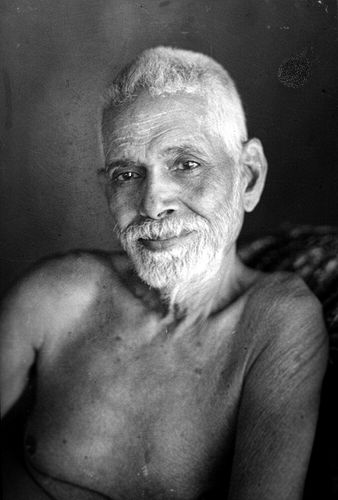
Ramana Maharshi sitting

Questioner:  There are times when persons and things take a vague, almost transparent form, as in a dream. One ceases to observe them as outside, but passively conscious of their existence, while not actively conscious of any kind of selfhood.  There is a deep quietness in the mind.

Is it at such times that one is ready to dive into the Self? Or is this condition unhealthy, the result of self hypnotism? Should it be encouraged as yielding temporary peace?

Ramana Maharshi:  There is Consciousness along with quietness in the mind.  This is exactly to be aimed at.  The fact that the question has formed on this point, without realizing that it is the Self, shows that the state is not steady but casual.

The word ‘diving’ is appropriate when there are outgoing tendencies, and when, therefore, the mind has to be directed and turned within, there is a dip below the surface of externalities.  But when quietness prevails without obstructing the Consciousness, where is the need to dive?

Taken from Talks with Ramana Maharshi, Talk 348


Tom’s comments:

The sadhana (spiritual practice) that Bhagawan recommends above is to simply remain quiet (in mind and thought) and also to remain aware.

This is self-knowledge. This is the Self.

When thoughts can come and go without disturbing this essential quality of mind, there is no need to ‘dive’ using the tools of Self Inquiry (ie. the question ‘Who am I?’). With time it may be seen that nothing ever disturbs this ‘peace that passeth all understanding’, and that nothing ever did.

It was always here, fully manifest, right under our noses.

Here is the gateway to Self-knowledge or liberation.

Practice vs no practice

Many ‘practice orientated paths’ just keep one going round and round samsara. Why? Because the assumption is that the Freedom we seek is not already here and that it has to be obtained.

Many instant-enlightenment teachings also do not result in fruition. Why? Because they shun the need for practice.

For some, diligent practice is required. For others, sporadic practice is required. For some, no practice is required.

For more read here:

Sufism: Infinite ways to an infinite god (even if you don’t believe in God)

Roadmap to enlightenment: a (fairly) comprehensive guide to spiritual practices

Poetry: no way to talk about this

crescent moon.jpg

When this is seen,
It is seen there are so many ways to talk about this,
So many ways to guide others to this,
So many helpful ways,
– yet all of them false.

Ultimately,
All ways are false,
All descriptions are false.
The Truth cannot be contained in words:
The best teaching is whatever works.

No self, True self, or just Self?
Freedom, Enlightenment or Bliss?
Emptiness, Fullness, or Infinite?
Personal, impersonal, or no story at all?
Duality, non-duality? Both, neither?

All can be helpful concepts pointing the way,
None are THE SACRED TRUTH.

The proverbial finger points at the moon,
Don’t cling to the finger!


Please help me to deal with the agony I feel in connection with the suffering of animals in the world

Dear Tom

Could you please help me to deal with the agony I feel in connection with the suffering of animals in the world? I am so utterly moved by every sign of an animal’s suffering, that I don’t feel even glimpses of peace anymore. The latest news was how in some Asian country they use dogs’ fur, and to get it without having the cavaderic rigidity ruining the fur’s quality, the furs are pulled across the ears of the dog with alive body and unimaginable torments. And this is, of course, just one example of many. But I suffer even when I witness how an animal in my neighborhood is not treated with love and kindness.

Could you please share with me how you explain the suffering in the world and what you would recommend to someone like me?

Thank you so much for reading this!


Dear Questioner

There are indeed many terrible things happening in this world, and animal suffering, especially at the hands of humans, is certainly one of them.

So firstly, who says you shouldn’t feel upset when you see animals suffer? Who says you shouldn’t feel pain, sorrow and anger? What’s wrong with feeling so-called negative emotions? Perhaps these thoughts are natural and appropriate, perhaps it is natural for the human organism to feel angry or upset when it perceives injustice and cruelty, perhaps emotions are there to guide us and inform the quality and energy of our response to situations life throws at us – perhaps – who am I or anyone else to tell you otherwise? And more importantly, how will you find out for yourself what is true?

If you accept my or someone else’s answer, that’s second hand knowledge, that’s a belief, a theory to be stored away in your mind along with other theories it has collected. And beliefs and theories can always be doubted. If you are like me, there’s always a corner of your mind that can (and will) doubt the belief. What’s important is that you find out for yourself. So how will you do this?

I recommend you watch yourself, look at yourself, your reactions, how you respond. Write down and/or talk about how it makes you feel when you see animals suffer. Writing things down can be particularly powerful. Notice the thoughts that appear. Notice the words that appear in your head, the narrative. Are there angry thoughts? How do you feel about those who perpetrate these horrific acts? Be honest now, be honest with yourself. Do you judge them? Do you hate them? Do you understand them? Do you forgive them? Find out your genuine thoughts and feelings, allow your mind to speak its truth, find out for yourself. Feel how it feels in your body too. Discover the truth of your reactions on the mental, emotional, and feeling levels. Now you are learning about yourself, your psychology, who you are, discovering, uncovering. This is firsthand factual information, not based on beliefs.

Now, you say that you no longer even feel ‘glimpses of peace’ anymore. A level of emotion that regularly overwhelms you or prevents you functioning in daily life indicates to me that perhaps there are some unresolved issues in you (I say ‘perhaps’ because I do not know for sure – only you can know for sure, only you can find out if my words are true for you – maybe they are not true, maybe they do not apply to you).

Sometimes when we have unresolved issues with ourselves, for examples perhaps we have been mistreated in the past, we project our sadness and pain onto other beings, such as animals. When we see animals suffer, we not only respond to their suffering but we also project our past hurts and suffering onto them, thus adding to the pain felt. This distorts and clouds our emotional response. Again, see if this is true for you. Have you been mistreated in the past? Does the way you feel when you see animals suffering remind you of how you felt when you were younger? Is there still unresolved pain at play? If there is, then gently and lovingly healing this pain will go a long way to re-balancing your emotional response to animal suffering, or any other suffering for that matter, and allow your emotions to more effectively and accurately guide you through life.

In my own experience, when emotions are explored, felt, understood and allowed to flow, the unresolved hurts and pains often underlie them can be brought to the surface and lovingly healed. Distorted concepts and thinking can also be exposed and seen through. Our thoughts and feelings become aligned to reality. Then thoughts, feelings and emotions can become our friends, our guides. They can tell us when someone has crossed the line, when our boundaries have been trespassed, or when we perhaps have gone too far. They can also tell us when something is right, when something is good, when something is working well. This is all part of our intuitive sense, our natural intelligence.

For me personally, every now and then emotions pour through. For example when I see humans, animals or children suffer. Or when I watch a film or hear lyrics that touch something in me. The emotion pours in, and at the same time that’s ok. And because it’s ok on a deeply felt level, not just conceptually, there’s no suffering. Emotion, yes, but no suffering. Sometimes I chose to turn away from watching something cruel on TV to avoid that emotional response, and that’s ok too. I can see why I do it. It’s ok. I accept myself. Sometimes I can see how a past hurt or current attachment may be playing its role in distorting my emotions. And that’s ok. That’s naturally lovingly allowed. And sometimes healing, a deep healing comes from all of this loving acceptance, this Presence that naturally and effortlessly is. Or perhaps it doesn’t. Either way is fine.

It’s a wonderful mystery to me how this all works. Even though I could probably make sense of it psychologically and scientifically, at the heart of it, it’s all a wonderful mystery.

And why all this terrible suffering? I don’t know. I won’t give you some philosophical platitude or logical statement – because the truth is I don’t know. And it can be terrible. But we find ourselves on this world nonetheless, and we find ourselves living this life, having these feelings, dealing with what comes our way…

There is more I could say, but I’ll leave you with the above for now. Let me know how it all goes and please feel free to ask further questions.

With love and gratitude

Tom