Ramana Maharshi: Self-Realisation is simply being one’s self

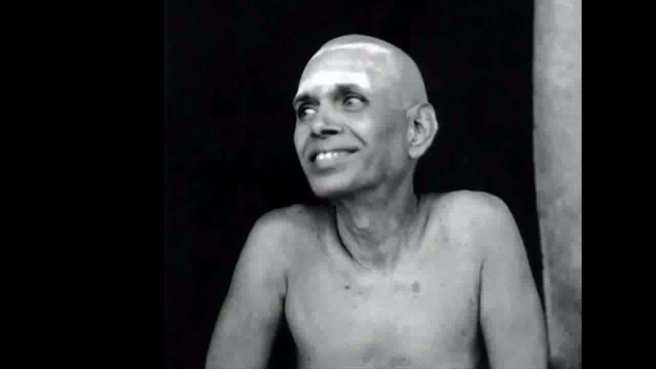
Ramana smiling

The state we call Realisation is simply being one’s self, not knowing anything or becoming anything.

If one has realised, one is that which alone is and which alone has always been. One cannot describe that state, but only be That.

Of course, we talk loosely of Self-Realisation for want of a better term.

Ramana Maharshi
(taken from the book Day by Day with Bhagavan, p. 296)

Tom’s comments:

Notice that the search for ‘understanding’ and the search for becoming ‘enlightened’ or ‘self-realised’ are both pursuits of the ego. The ego is looking for security and pleasure and has projected/created these fantasies which it tries to attain.

Instead of trying to attain a projected fantasy, why not instead look at what is actually happening? Look at yourself, look at the ego, the ‘I’. Ask yourself ‘what is this ego? Who am I?’ Investigate for yourself repeatedly and you will see that the ego, the ‘you’ is illusory – it’s just a bundle of thoughts that occur by themselves, spontaneously. ‘Your thoughts’ are not yours at all: note how you cannot chose to stop thinking, stop worrying, stop your addictions. You cannot chose to believe something you don’t. You cannot chose to not believe something you do believe. You cannot stop your ‘bad thoughts’. In fact you probably do not even know what exactly you will be thinking in 5 minutes time let alone tomorrow or 5 days from now.

Another point: if you happen to think you are a dinosaur, it doesn’t necessarily make you one. Similarly if you think that you are an ego (a doer, a thinker, an agent who has authorship over his/her actions), it doesn’t make it true. Yes, the idea of being a doer is just that: it is an idea, a belief that has been tacitly repeated to us and drummed into us since childhood. An oft-repeated lie is then (mistakenly) taken to be true.

In seeing this first-hand, there is no specific intellectual understanding or state of mind gained. It’s just that an illusion has been seen through, like seeing that a frightening snake is in fact just a harmless rope in poor light (or like realising that you are not in fact a dinosaur after all!).

No dogmas, no metaphysics, no complex body-twisting acrobatics, no beliefs and no rituals are necessary (although they may be a part of the apparent journey).

Then all there is is ‘what’s happening’, and what you thought was you is actually just a part of that happening. Or as Bhagavan puts it, all there is is ‘simply being one’s self’.


Nisargadatta Maharaj: Ignore your thoughts

Nisargadatta_Maharaj

“It is the mind that tells you that the mind is there. Don’t be deceived. All the endless arguments about the mind are produced by the mind itself, for its own protection, continuation and expansion. It is the blank refusal to consider the convolutions and convulsions of the mind that can take you beyond it.”

Nisargadatta Maharaj, I Am That

My comments:

The word ‘mind’ in the above quote is synonymous with the false sense of individual separate self. This self, this ‘I’, is just a notion, an idea reinforced by the mind. The ‘I’ is a thought, and it is reinforced by thoughts.

Trying to figure this all out (ie. more thought) is a function of the same mind that is ultimately false, imaginary: it is a fruitless endeavour.

A particularly effective sadhana (spiritual practice) is to ignore the content of thoughts as they appear within our consciousness. The energy of the sense of ‘I’ then begins to loosen and its mechanics are exposed and revealed. We can then start to see things as they actually are.

There are broadly two ways this can be done:

1) by concentrating on something else such as a mantra, the breath, or by chanting, etc – ie. a distraction from thoughts;

2) by allowing thoughts to wash past you like clouds in the sky, and in so doing not paying attention to the content of thoughts, eg. a surrender, acceptance, gratitude or mindfulness practice.

When looking for a sadhana, you will naturally be able to find the one that works for you by looking to see which one gives you greatest sense of peace and relief, and by seeing which practice you are naturally inclined towards.

For more about spiritual practices and how they work click here

Direct ‘perception’

landscape-192987_1280.jpg

The mind cannot get this,
Just as it cannot deduce the existence of a tree.

The tree is perceived directly,
This is perceived directly.
Whatever is perceived is this.

Perception is just an idea,
That implies the existence of a perceiver,
A perceiver with some physiological apparatus.

There is no experience of perception,
Only an inference,
An inference based on the idea of a perceiver,
For which there is no direct evidence.

So,
There is only this,
Just this.

Perception is just another name
For our experience of life,
ie. this

Life,
Naked,
Is without conceptual overlay.

Unadorned,
It adorns itself,
creating its own beauty.

Life,
Unadorned by concepts,
But including concepts as they rise and fall:
– No thinker can be found.

Forget words, definitions, theories and beliefs:
– They are all useless here;
Just more conceptual overlay:
– It could all be entirely mistaken.

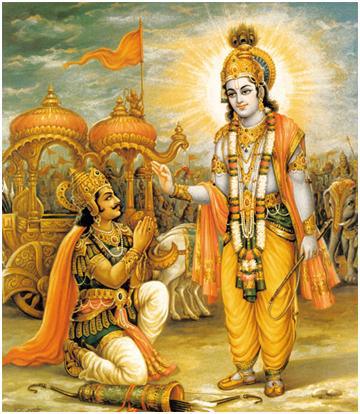
Bhagavad Gita: Krishna teaches that nature does everything

Arjuna Krishna

Under the influence of false ego one thinks himself to be the doer of activities, while in reality all the activities are carried out by nature as natural process

Bhagavad Gita, Chapter 3 verse 27

Here, in the Bhagavad Gita (The Lord’s Song), Krishna tells his friend Arjuna a great truth: that the notion of there being any separate entity that takes itself to be the doer is false. There is no doer, the ego is a false entity; there is only nature acting according to its own inherent principles.


No ego

meditation-857916_1280

If you say “spiritual enlightenment does not exist”,
You have denied yourself, and anyone who believes you, a route to end suffering:
“Suffering can end”, thus the wise ones have proclaimed.

If you say “you can be enlightened”, “your suffering can end”
Then by saying ‘you’, you are perpetuating the false concept of self.

Suffering can end, but your suffering cannot end.
Continue reading

Nisargadatta Maharaj: If my real self is peace and love, why is it so restless?

I Am That

Questioner: If my real self is peace and love, why is it so restless?

Nisargadatta Mahara: It is not your real being that is restless, but its reflection in the mind appears restless because the mind is restless. It is just like the reflection of the moon in the water stirred by the wind. The wind of desire stirs the mind and the ‘me’, which is but a reflection of the Self in the mind, appears changeful. But these ideas of movement, of restlessness, of pleasure and pain are all in the mind. The Self stands beyond the mind, aware, but unconcerned.
Continue reading

Beyond self-realisation

face illusion flower
There is nobody here

No sadhanas are required
No sadhana (spiritual practice) can lead to self realisation. No map can take you to where you already are, and no practice can transform you into that which you always have been.

All sadhanas such as meditation, mindfulness, mantra, puja, selfless service and devotion – all sadhanas are for the illusory individual. They are an extension of greed/egotism. It is this web of illusion, all hinged upon the idea of being a person with a body and mind, that prevents the obvious from being ‘seen’. Continue reading

Non-duality has nothing to do with non-duality

face illusion
There is no person here

There is no non-duality in non-duality. What do I mean by that? Non-duality is non-conceptual. This means there is also no sense of non-duality in it. If you think this is all about oneness, then that’s not non-duality. That’s a concept of oneness. Same with non-duality. If you think this is all about non-duality or ‘x’ ‘y’ or ‘z’ other concepts, then that’s also wrong. There are no concepts in non-duality, yet all concepts operate within it. Continue reading

Stop believing your thoughts

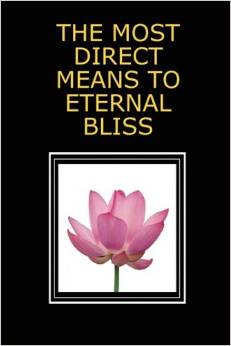
MDMTEB

Here is another chapter from the book ‘The Most Direct Means to Eternal Bliss’. For my initial (and brief) opinion on this controversial but useful book click here. This chapter focuses on thought and how thought gets in the way of direct communion with that which lies beyond thought. Continue reading