Annamalai Swami: How to stabilise in the Self

annamalai swami final talks

The following is an excerpt from the book ‘Annamalai Swami Final Talks’ (bold added by me):

Question: One can have a temporary experience of the Self, the underlying reality, but then it goes away. Can you offer any guidance on how to stabilise in that state?
Continue reading

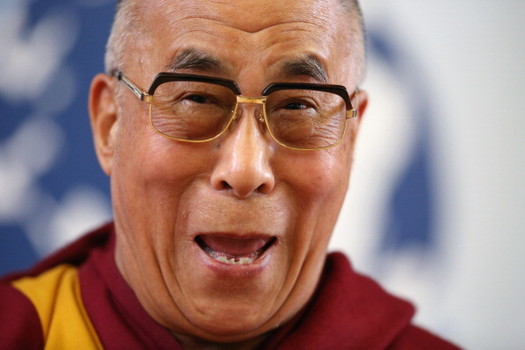
Dalai Lama: end suffering by developing insight

(Photo by Oli Scarff/Getty Images)

The following excerpt is taken from the book “How to see yourself as you really are” by the Dalai Lama:

What makes all this trouble in the world? Our own counterproductive emotions. Once they are generated, they harm us both superficially and deeply. These afflictive emotions accomplish nothing but trouble from beginning to end. If we tried to counteract each and every one individually, we would find ourselves in an endless struggle. So what is the root cause of afflictive emotions that we can address more fruitfully? Continue reading

The end of seeking

To realise that there is no point to the spiritual search is the end of seeking spiritual experiences.

This absence of seeking is itself the fulfillment we were looking for.zen circle

Here there is no enlightenment. This is the enlightenment.

An apparent paradox.

Now things are seen for what they are: a mysterious unfolding of events, thoughts, feelings, desires and happenings.

All seamless,

Ever-changing and therefore without form,

And without a doer.

Just what is.

Spirituality is not physics

church door

Spirituality is not physics. Lots of people who are interested and immersed in spirituality get confused about this. Just because something feels/ is perceived/ is intuited a certain way, does not mean that it is actually like that. It’s obvious really. Spirituality deals with subjective experience. Science deals with learning how to predict what will occur in various different situations. Some examples:

eg. I have a feeling/perception that all is one and everything is interconnected. Therefore everything in the universe is actually one and interconnected.

Continue reading

Beyond self-realisation

face illusion flower
There is nobody here

No sadhanas are required
No sadhana (spiritual practice) can lead to self realisation. No map can take you to where you already are, and no practice can transform you into that which you always have been.

All sadhanas such as meditation, mindfulness, mantra, puja, selfless service and devotion – all sadhanas are for the illusory individual. They are an extension of greed/egotism. It is this web of illusion, all hinged upon the idea of being a person with a body and mind, that prevents the obvious from being ‘seen’. Continue reading

Non-duality has nothing to do with non-duality

face illusion
There is no person here

There is no non-duality in non-duality. What do I mean by that? Non-duality is non-conceptual. This means there is also no sense of non-duality in it. If you think this is all about oneness, then that’s not non-duality. That’s a concept of oneness. Same with non-duality. If you think this is all about non-duality or ‘x’ ‘y’ or ‘z’ other concepts, then that’s also wrong. There are no concepts in non-duality, yet all concepts operate within it. Continue reading

Ramana Maharshi: Be still

buddha silver

All the texts say that in order to gain release one should render the mind quiescent; therefore their conclusive teaching is that the mind should be rendered quiescent; once this has been understood there is no need for endless reading.

Ramana Maharshi (from Who Am I)

One of the problems of Ramana’s teachings is that they are so simple. Most people do not want to be still and keep the mind quiet. They want to avoid themselves by discussing and understanding the concepts.

Now conceptual discussion has its place, but once one has understood the import of the teachings, namely silence, then it is time to sit down and shut up. Muruganar, who is regarded as Ramana’s closest and most influential devotee, says the same about Ramana’s teachings in his masterpiece Guru Vachaka Kovai:

What our Master clearly teaches by way of great, good, powerful tapas (spiritual effort) is only this and nothing more
BE STILL
Apart from this the mind has no task to do or thought to think

Guru Vachaka Kovai
(verse 773)

And in case you still haven’t got the message, here’s another quote from Who Am I, which is the publication that Ramana had issued at his Ashram as an introduction to his teachings. Note that the Sanskrit word ‘Jnana’ below literally means ‘knowledge’ and in a spiritual context refers to Self-Knowledge/Realisation or Liberation itself:

Questioner: What is wisdom-insight (jnana-drsti)?
Ramana Maharshi: Remaining quiet is what is called wisdom-insight.

Ramana Maharshi (from Who Am I)

Krishnamurti: The Mind Must Be Utterly Silent

candle red

The following is an excerpt from a talk by Jiddu Krishnamurti:

….Surely, it is only by understanding ourselves patiently, quietly, unobtrusively, that we begin to discover, experience something which is not of our own creation; and it is that which brings about help, which begins to clear the field of our vision.

But you cannot ask for that help; it must come to you darkly, uninvited. Continue reading

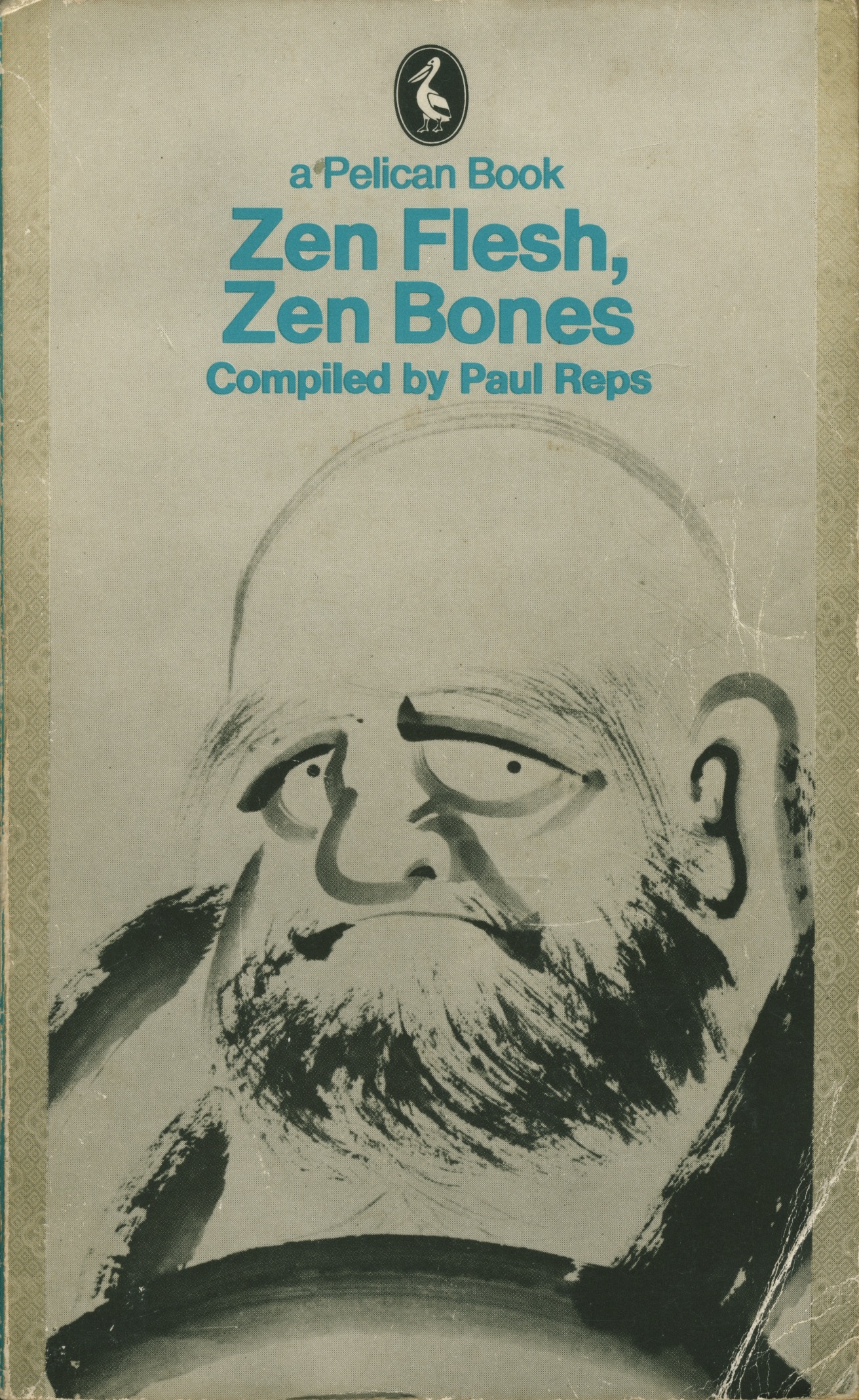
Zen story: the 3 sutras

zen flesh zen bones

Tetsugen, a devotee of Zen in Japan, decided to publish the sutras (Buddhist texts), which at that time were available only in Chinese. The books were to be printed with wood block in an edition of seven thousand copies, a tremendous undertaking.

Tetsugen began by travelling and collecting donations for this purpose. Continue reading