Action starts at 20 mins 30 secs into the video
Interview was streamed live on 18th Feb 2016
Action starts at 20 mins 30 secs into the video
Interview was streamed live on 18th Feb 2016
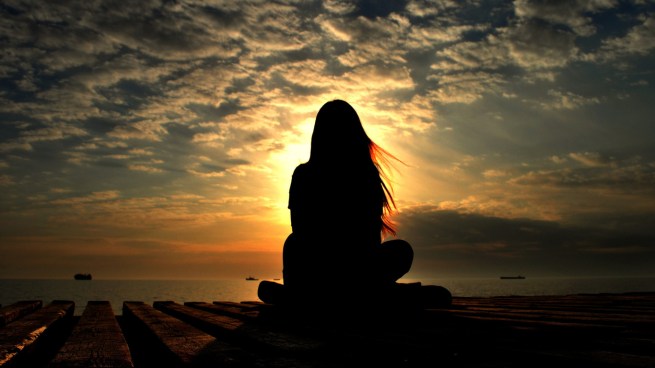
Ask a thousand questions,
Receive a thousand answers,
The real answer is not in words:
It’s the Presence that always is.
Thoughts want to know what real,
Want to have it all figured out,
One day it’s all seen through,
What’s left is the Presence that always is.
When you can, stop. Allow silence to gently fill you up,
Feel it bloom and grow within your heart,
That warm glow, that inner light, infiltrating everything,
The Presence that always is.
Feelings come and go,
Sometimes flowing, sometimes sticky,
‘Embrace them with’, ‘allow them to merge into’,
The Presence that always is.
Deep within your heart,
Presence emanates and embraces,
The sacred heart within and without, embracing all,
The Presence that always is.
The totality of experience,
‘Body’, ‘mind’ and ‘world’,
Everything that is happening or has ever happened,
Is just this Presence that always is.
Who am I…? Presence is here
Silence…Presence is here
Preoccupied with thought and deed…Presence is here
Hurt and afraid…The Presence that always is.
Life and laughter…Presence is here
Tears and pain…Presence is here
Not sure what going on? Presence is here
Now what do I do? ……………………
See also I AM
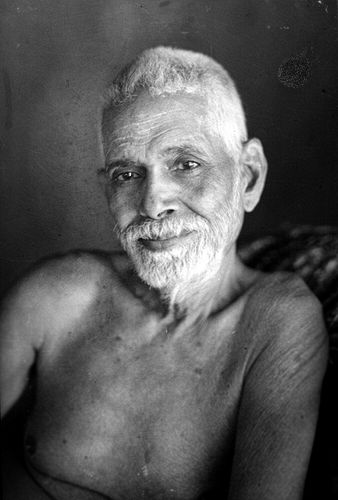
Time and time again I hear from spiritual seekers that they glimpsed the Self, they experienced that ecstasy, but it slipped through their fingers and fell away. Their question to me is how to get it back again. This is the wrong question, this is the wrong way, as it is based on a fundamental misunderstanding of the path.
Everything that comes can also go. Everything that comes, all experiences that have been attained, are not the Self.
The Self is no particular experience. It is always here, fully manifest, fully evident. Everything that is perceived is It. It is not different from whatever is being perceived to be happening.
Realising that ‘this is It’ is Self-realisation. It is simply seeing what already is the case. When it is seen, there is no desire to reach a new experience, and a seeing that everything happens spontaneously without the presence of a separate doer-entity. Here suffering falls away as the simple truth of no-doer is seen.
Actions, thoughts and desires continue to manifest themselves, spontaneously, but there is nobody doing it, just like the wind blowing or digestion happening. Things happen, no doer.
As long are you are alive, you always are, you always exist. No matter what happens, you are. This knowledge of (your) being is Self-knowledge. It is not something to attain, just something to be ‘acknowledged’. It is not separate from whatever is perceived to be happening. How can this ‘knowledge’ be lost?
“There will come a time when one will have to forget all that one has learned.”
from ‘Who am I’ by Ramana Maharshi
Ultimate truth is simply that which never changes. It is here, now, everywhere and always already in its full glory. It is not separate from whatever is happening or from what is currently being experienced. Ultimate truth does not require you to believe in it or even do anything for it. Just drop all wrong thoughts and whatever remains is It. It cannot be caught in concepts.
The main role of the spiritual path is not to learn about ultimate truth, as it cannot be accumulated, but to discard falsehood. Seeing through false assumptions is what is called ‘spiritual knowledge’. It is not knowledge in the conventional sense at all really.
Conventionally speaking, learning is about accumulation of knowledge, but spiritual learning is more like pruning a hedge or chipping away at a block of stone to reveal a beautiful sculpture beneath. Put simply, spiritual learning is unlearning. Spiritual knowledge is seeing through false ideas.
“The state of Self-realisation, as we call it, is not attaining something new or reaching some goal which is far away, but simply being that which you always are and which you always have been. All that is needed is that you give up your realisation of the not-true as true.”
Ramana Maharshi
Anything that is learnt as being true is in the realm of relative knowledge. Anything that is learnt can also be forgotten whereas the Ultimate neither comes nor goes. Any statement posited as being true can be questioned and doubted leaving with it the bitter taste of uncertainty.
The Ultimate cannot be conceptualised. Conceptualisation itself relies on the Ultimate for its existence. All statements of truth rely on supporting structures and logic, eg. underpinning scientific or philosophical reasoning. The Ultimate truth stands by itself without needing outside support. It is none other than what you truly are. Look and you shall see.
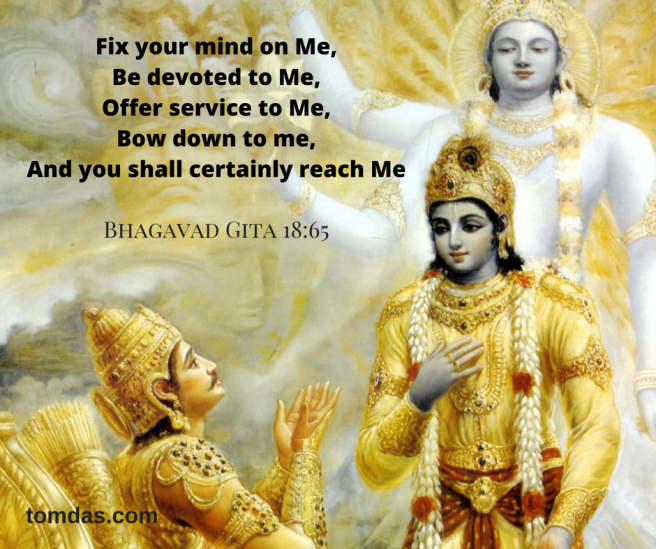
Lord Krishna states this is his most secret teaching: to love Him, to devote ourselves to Him, to be with Him knowingly.
He is already in each of our hearts, He is already everywhere and everything, everything is already done by Him.
Here knowledge, scripture and philosophy all crumble as, through our devotion, the heart opens. All are consumed by Him, and all we are left with is Him in all His glory.
We never were. All there ever was was Him.
❤ ❤ ❤
As Jesus said when asked:
“Teacher, which is the great commandment in the Law?”
And he [Jesus] said to him,
“You shall love the Lord your God with all your heart and with all your soul and with all your mind.This is the greatest and first commandment.”
Matthew 22:36-38
❤ ❤ ❤
Also, as Shankara sung in his Bhaja Govindam:
“Worship Govinda, worship Govinda, worship Govinda,
Oh fool! Other than chanting the Lord’s names, there is no other way to cross the life’s ocean.”
❤ ❤ ❤
So, all that’s left for me do to is bow down and praise Him
❤ ❤ ❤
Hare Krishna!
Om Namah Shivaya!
May all beings be happy and well!
Praise be to God!
❤ ❤ ❤
See also:
The pre-eminent form of worship

The ego thinks it has all the ‘answers’,
Thinks it knows exactly how the enlightenment game works,
Thinks it knows which practice is best,
All its concepts lined up.
Of course it has no clue.
Pride means it pretends to know what it doesn’t,
Clinging to what it hopes will work,
According to its limited understanding.
Who can blame it?
My advice: realise first, talk later.

Tom’s comments:
Many truth seekers suppose that the ‘fully self-realised guru’ would act in a certain way:
speak, walk, dress in certain ways,
never angry, always kind,
never unhappy, ever-blissful
pure and faultless
What a prison!
Freedom does not care for that!
In Freedom our humanity naturally shines
❤
Also see All exist in me
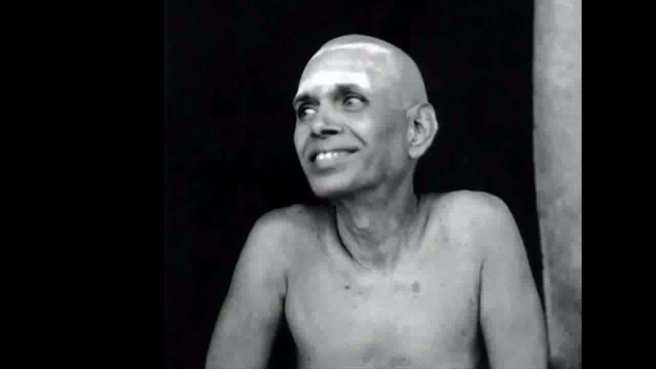
Talks with Sri Ramana Maharshi
Talk 183
See also:
Ramana Maharshi on non-doership and self-realisation
Ramana Maharshi: Self-inquiry (atma vichara) and doership

One way of talking about spirituality is that it is that which is concerned with the ultimate truth or absolute truth. The concept is that absolute truth is universal, never changes and can be directly perceived/experienced at all times and places. It cannot be learnt or accumulated as it is always already present and known. I use various capitalised words synonymously to describe it, eg. God, Truth, Love, Wholeness, Love, the Universe. The teaching is that its perception does not require special equipment (such as a microscope or telescope) and it does not depend even on the body, mind or senses. It cannot be described and defies and transcends all concepts. Absolute truth cannot even be divided into the absolute and relative, the division being merely a conceptual one.
It cannot be learnt or accumulated as it is always already present and known.
In contrast to this, worldly knowledge can be called relative knowledge or relative truth. This includes scientific knowledge, knowledge of skills such as a sports game or knowing facts such as how tall Mount Everest is. This knowledge is relative because it does not stand alone and is only true in relation to something else. For example the height of Mount Everest depends on various factors such as defining the point from which height is measured and the unit of measurement. The height will also change over time as the mountain topography changes. In fact one of the cardinal features of relative knowledge is that it changes over time depending on specifics relating to time and place. Relative knowledge can also be accumulated and developed over time. Lastly it requires the body-mind-senses to reveal/discover it.
So to summarise we have two concepts, the relative and the absolute. The relative is concerned with those things which change. We can lump all things that change together and call it the world. This world includes the world outside us, as well as our inner world of thoughts, feelings, emotions and psychic perceptions. The absolute is that which, in theory at least, remains the same no matter what. You could call this Spirit. It is always and already known by everyone whether they know it or not.
So to summarise we have two concepts, the relative and the absolute. The relative is concerned with those things which change…The absolute is that which, in theory at least, remains the same no matter what…It is always and already known by everyone whether they know it or not.
Strictly speaking, this division into relative and absolute itself is arbitrary, but because we take ourself to be a doer, this division is provisionally made so our mistake can be corrected. Once corrected, concepts of relative and absolute disappear (we see they are also false concepts), and all that remains is this, the unnameable. But until that point, the concepts are useful teaching aids pointing one in the right direction like the proverbial finger that points at the moon: don’t worship the finger otherwise you will miss the moon in all its heavenly glory. The flip side is that once you have seen the moon, you don’t need the finger any more. Teachings are always conceptual and are to be thrown away eventually.
Strictly speaking, this division in relative and absolute itself is arbitrary, but because we take ourself to be a doer, this division is provisionally made so our mistake can be corrected.
This means, according to my definitions above, talking about and working with emotions, feelings and thought processes is still in the domain of the relative world and so is not spiritual. I would even go as far as to say as that someone who is only interested in these things remains a materialist caught in the clutches of the ego. In this teaching we place our attention beyond the body, senses and mind (including any psychic powers and mystical experiences) and discover what appears to transcend and permeate everything.
Teachings are always conceptual and are to be thrown away eventually.
Now, before I get accused of being a nihilist let me make it clear that I am not saying that we shouldn’t do worldly things. Politics, medicine, health, social work, psychotherapy, psychic work, art, music, etc, all have their place and worth. But there is something more. I sometimes call this Spirit, but you can use any word that resonates with you. Or you can use no word at all.
Through discovering that which already (apparently) transcends the world (which is the same as discovering your ‘true nature’, that which you already are) you can ‘realise’ your Natural State. It’s just noticing something that is already here, but that noticing is powerfully transformative and enables us to realise that we are already, and have always been, free.
Once [the root mistake has been] corrected, concepts of relative and absolute disappear (we see they are also false), and all that remains is this, the unnameable.
 Tom Das