I am
The ‘ultimate means’ to liberation
The following is the last few verses of Advaita Bodha Deepika, a classical vedanta text that summarises the theories and methods of vedanta. It was also a favourite text of Ramana Maharshi’s. Here is the culmination of the teaching, as stated in the last verses of Chapter 8.
(Note, if you are unsure about why this chapter starts in this way and why we are even discussing ‘extinguishing the mind’, have a look at this post here Advaita Bodha Deepika: Vital Teachings for Self-Realisation which explains the rationale behind this first question):
Disciple: How can the mind be extinguished?
Master: To forget everything is the ultimate means. But for thought, the world does not arise. Do not think and it will not arise. When nothing arises in the mind, the mind itself is lost. Therefore do not think of anything, forget all. This is the best way to kill the mind.
To forget everything is the ultimate means
D.: Has anyone else said so before?
M.: Vasishta said so to Rama thus: ‘Efface thoughts of all kinds, of things enjoyed, not enjoyed, or otherwise. Like wood or stone, remain free from thoughts.
Rama: Should I altogether forget everything?
Vasishta: Exactly; altogether forget everything and remain like wood or stone.
Rama: The result will be dullness like that of stones or wood.
Vasishta: Not so. All this is only illusion. Forgetting the illusion, you are freed from it. Though seeming dull, you will be the Bliss Itself. Your intellect will be altogether clear and sharp. Without getting entangled in worldly life, but appearing active to others remain as the very Bliss of Brahman and be happy.
Unlike the blue colour of the sky, let not the illusion of the world revive in the pure Ether of Consciousness-Self. To forget this illusion is the sole means to kill the mind and remain as Bliss.
Though Shiva, Vishnu, or Brahman Himself should instruct you, realisation is not possible without this one means. Without forgetting everything, fixity as the Self is impossible. Therefore altogether forget everything.’
…altogether forget everything and remain like wood or stone….Though seeming dull, you will be the Bliss Itself. Your intellect will be altogether clear and sharp.
D.: Is it not very difficult to do so?
M.: Though for the ignorant it is difficult, for the discerning few it is very easy. Never think of anything but the unbroken unique Brahman. By a long practice of this, you will easily forget the non-self. It cannot be difficult to remain still without thinking anything. Let not thoughts arise in the mind; always think of Brahman.
In this way all worldly thoughts will vanish and thought of Brahman alone will remain. When this becomes steady, forget even this, and without thinking ‘I am Brahman’, be the very Brahman. This cannot be difficult to practise.
Now my wise son, follow this advice; cease thinking of anything but Brahman. By this practice your mind will be extinct; you will forget all and remain as pure Brahman.
Never think of anything but the unbroken unique Brahman…When this becomes steady, forget even this, and without thinking ‘I am Brahman’, be the very Brahman. This cannot be difficult to practise.
Tom’s commentary:
It is not only Sage Vasistha who tells us we need to ‘forget all’. In the Ashtavakra Gita, sage Ashtavakra says in chapter 16, verse 1:
‘My son! You may recite or listen to countless scriptures, but you will not be established in the Self unless you forget all.’
Similarly Ramana Maharshi says in his text ‘Who am I?’:
‘Eventually all that one has learnt will have to be forgotten’
In the traditional path of Knowledge or Jnana, first we are to know our True Self (Atman) and know this to be the same as the Absolute (Brahman). Then we are to be still and renounce all desires.
This spiritual knowledge (Jnana) of ‘I am Brahman’ (Aham Brahmasmi) allows the mind to become still and desireless. Note this does not mean that the body becomes totally inert – no – rather it continues to function naturally according to its destiny (Prarabdha Karma) until the body dies.
Shankara states this multiple times, eg, in Vivekachudamani, and also in his many commentaries, eg. in his commentary upon the Kena Upanishad – in his introduction to the Kena Upanishad Shankara writes:
And [the Self] being eternal, it is not to be secured by any means other than the cessation of ignorance. Hence the only duty is to renounce all desires after the realisation of the unity of the indwelling Self and Brahman.
This is akin to Self-Surrender, as spoken by Sri Ramana Maharshi:
There is no destiny. Surrender, and all will be well. Throw all the responsibility on God. Do not bear the burden yourself. What can destiny do to you then?”
(Talks 244)
and again here:
Question: Surrender is said to be Bhakti [the path of devotional love]. But Sri Bhagavan [Ramana Maharshi] is known to favour enquiry [ie. the path of Knowledge or Jnana] for the Self. There is thus confusion in the hearer.
Ramana Maharshi: Surrender can take effect only when done with full knowledge. Such knowledge comes after enquiry. It ends in surrender.
(Talks 462)
Relax into Unknowing/Faith in Being
Relax into Unknowing
What does that mean?
It means to relax, to let go of everything.
What are you left with?
You are left with whatever is.
You are left with this,
Just this.
No matter how much you let go,
This is.
Or you could say:
No matter how much you let go,
You are.
This Letting Go,
Is the coming into contact with being.
This is what it means to abide as the ‘I am’.
This is what it means to ‘remember who you are’.
It’s can become obvious that
All perceived things,
All phenomena,
Come and go.
The objects of the external world come and go,
Thoughts come and go,
Feelings come and go.
Knowledge comes and goes,
Expericences come and go,
States of consciousness come and go.
The body is a process
Of constant change,
As is everything else.
It too comes and goes.
In this sense independent objects do not exist in of themselves.
All there is is movement,
Constant movement appearing as form,
But no static unchanging form can be found
– Not even for a moment.
This Being/Unknowing is always here.
It can be consciously known when you relax and notice it,
Notice that which is ever present and unchanging in your experience.
When this unchanging essence/being is realised
And understood to always be here,
Undisturbed by comings and goings,
Then we do not need to keep on returning
to the practice of relaxing into unknowing/being.
Instead we can have Faith In Being.
This is Self-Knowledge.
Quote: YOU STILL ARE

I AM
 Everything is happening,
in every nook and cranny,
everything shining,
saying ‘I AM’
Sights, sounds, visions and sensations,
flurrying and flitting,
dancing for us,
each saying ‘I AM’
The auditory landscape whooshing through,
ceaselessly onwards,
speaking to me,
constantly saying ‘I AM’
The energy of life,
abundant and obvious,
Zip! Zap! Zoom!
right in our faces, everything:
‘I AM’
A Christmas message: was Jesus ever Born?
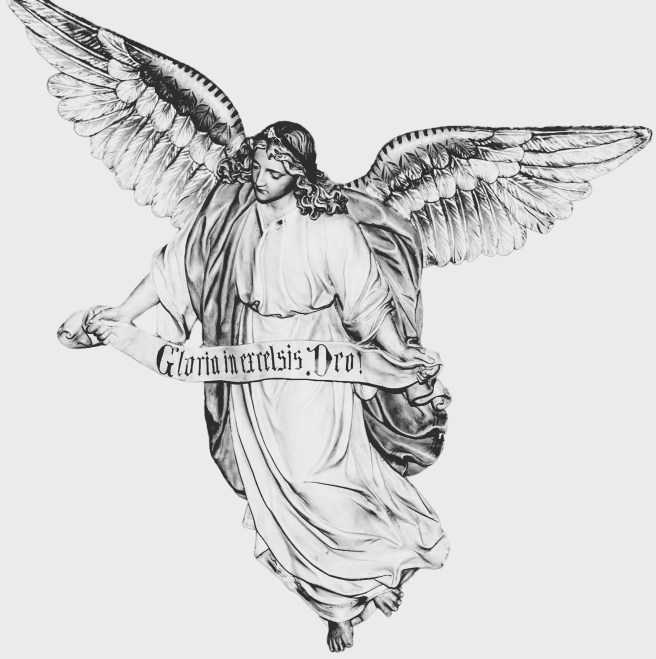
The true light that gives light to everyone was coming into the world. He was [already] in the world, and though the world was made through him, the world did not recognize him.
John 1:9-10
Christmas is meant to be about celebrating the birth of Jesus, and the above bible verse tells of his coming. But was Jesus ever born? I’m not asking whether or not he existed, I’m asking was Jesus an entity that was born into this world, or was Jesus something else?
In John’s gospel the opening chapter proclaims the coming birth of Jesus Christ. But in verse 10 (above) it clearly states that Jesus already existed prior to his birth, and prior to the existence of the world: he was already in the world, the world was made through him, but the world knew him not.
This is not referring to the human Jesus made of flesh and blood, but something else, something deeper, more subtle, more universal and more potent. This Christ is the True Light, as per verse 9 above, the deeper essence of Christ. A few chapters later in John’s Gospel Jesus himself testifies that he was never born:
Jesus said to them, “Truly, truly, I say to you, before Abraham was, I am.”
John 8:58
Note, Jesus doesn’t say ‘I was’, he says ‘I AM‘, again indicating he is and always has been beyond the notion of time. Anyone who has studied vedanta and other spiritual traditions would be familiar with similar sayings espoused by countless sages in ages gone past.
Jesus is not identifying himself as the body-mind entity, but as the Absolute, the Father, the unborn, that which always IS, that which is never not.
So here’s to wishing you all a very Merry Christmas, and when we come together to celebrate Jesus’s birth, let us remember the deeper import of Jesus’s teachings: to be with the Father, the Absolute, that to which we are all slaves whether we know it or not.
“Teacher, which is the great commandment in the Law?” And he [Jesus] said to him, “You shall love the Lord your God with all your heart and with all your soul and with all your mind.This is the greatest and first commandment.”
Matthew 22:36-38
And it is in discovering this slavery that we actually ‘become’ free.
So Jesus said to them, “Truly, truly, I say to you, the Son can do nothing of his own accord, but only what he sees the Father doing. For whatever the Father does, that the Son does likewise.”
John 5:19
Merry Christmas everyone!!!
❤ ❤ ❤
Guru

Do you really think a spiritual teacher can teach you anything?
How can the guru really know what is right for you?
Every word of his leads you into further illusion,
Concept upon concept,
A field full of traps
– do not walk there!
– do not listen to him!
It is here!

Don’t try to figure it out,
The mind will never get this.
My mind still hasn’t got it,
Yet I am.
There is nothing to find here.
No matter how hard you look
You can never find it.
Ahh! It is here!
I find my strongest desire is to create a monument, to build something which will outlast me

Questioner: When I look into myself, I find my strongest desire is to create a monument, to build something which will outlast me. Even when I think of a home, wife and child, it is because it is a lasting, solid, testimony to myself. Continue reading
Nisargadatta Maharaj: How can I make my mind steady?

Questioner: As a child fairly often I experienced states of complete happiness, verging on ecstasy: later, they ceased, but since I came to India they reappeared, particularly after I met you. Yet these states, however wonderful, are not lasting. They come and go and there is no knowing when they will come back.
Nisargadatta Maharaj: How can anything be steady in a mind which itself is not steady?
Q: How can I make my mind steady?
M: How can an unsteady mind make itself steady? Of course it cannot. It is the nature of the mind to roam about. All you can do is to shift the focus of consciousness beyond the mind.
Q: How is it done?
M: Refuse all thoughts except one: the thought ‘I am’. The mind will rebel in the beginning, but with patience and perseverance it will yield and keep quiet. Once you are quiet, things will begin to happen spontaneously and quite naturally without any interference on your part.
Q: Can I avoid this protracted battle with my mind?
M: Yes, you can. Just live your life as it comes, but alertly, watchfully, allowing everything to happen as it happens, doing the natural things the natural way, suffering, rejoicing — as life brings. This also is a way.
Q: Well, then I can as well marry, have children, run a business… be happy.
M: Sure. You may or may not be happy, take it in your stride.
Q: Yet I want happiness.
M: True happiness cannot be found in things that change and pass away. Pleasure and pain alternate inexorably. Happiness comes from the self and can be found in the self only. Find your real self (swarupa) and all else will come with it.
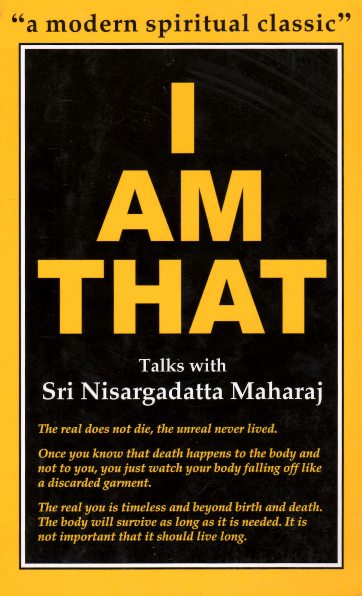
The above excerpt is from I Am That by Nisargadatta Maharaj
Tom’s comments:
There are so many gems in just this short passage! First Maharaj points out the mind need not be directly controlled and that the very nature of the mind is to roam, ruminate and be unsteady. Instead focus on something else: the sense ‘I AM’. Then the goal of a quiet mind will naturally arise.
Maharaj then gives us more: if we are not drawn to this sadhana (spiritual practice), then we can try an alternative. Instead we can surrender to whatever happens, keeping a watchfulness about ourselves whilst we do so. This, rather like the ‘I AM’ sadhana, also has the effect of quietening the mind and prevents the ego having room to manoevure. The ‘I’ which is always trying to meddle in things is cut off, restricted. There is much more to how these methods work and how they can be practised – I have written an article here explaining more on this.
Lastly Maharaj gives us a final nugget: ‘True happiness cannot be found in things that change and pass away.’
Experience, knowledge, insight and consciousness all come and go – so where does this leave us? Where can we seek if we do not seek in this world of impermanent things? Here we pass from the domain of the mind to that which is beyond words. Call it ‘true self’ (swarupa) or ‘no-self’, words do not apply.
 Tom Das