mindfulness
Who cares about Freedom/Enlightenment/Nirvana?

Who cares about Freedom/Enlightenment/Nirvana?
Who is it that cares? What is it that cares? Why do you want it?
Notice that this very teaching is pointing out that the entity that wants these things is itself a fiction. It is the false ego that cares. And the false ego does not exist. (Note that I use the word ‘ego’ as a synonym for ‘the doer’)
What do you imagine Freedom/Enlightenment/Nirvana to be?
How do you imagine it will benefit you? Any benefit you imagine enlightenment will give you is only temporary at best. What comes can also go. Freedom means that you are free from the need for any improvements to what is.
Will enlightenment make you happy?
Happiness can come, and it will also eventually go. Happiness and all states of mind are necessarily transient. Enlightenment is already present, and is not dependent on happiness or on your state of mind. Enlightenment doesn’t need to be happy.
Maybe you think enlightenment will give you the unshakable knowledge that you are immortal?
The problem here is that all knowledge is uncertain and can be doubted. Yes, all knowledge. If you think that you are Pure Consciousness, if you think it’s all about no-mind or no-ego, if you think it’s all about Jesus or Krishna, all of these are within the field of knowledge.
You may have cleverly deduced and convinced yourself that you are immortal using some kind of conceptual construct loosely based on your experience, but the truth is that you don’t actually know.
So, what happens when you die?
How can you know what happens when you die? No matter how you justify it, no matter how many psychic intuitions or spiritual experiences you have, the truth is that you don’t know for sure what happens after death. This question may perhaps be answered by science in the future, but we are not there yet.
Think of a time when you were utterly convinced something was true, but now you look back and realise how wrong you were. Knowledge also comes and goes. Perspectives change as we grow and mature and experience different things.
Enlightenment is beyond knowledge. Enlightenment does not depend on knowledge or the mind. Unlike knowledge and states of mind, Enlightenment cannot be attained – it is already here.
OK, then what’s left?
If enlightenment is not about attaining a particular state of mind or gaining some kind of knowledge, then what’s left? What’s left is simply what’s happening. That’s all. Enlightenment/freedom/nirvana is not about attaining anything at all. All we ‘know’ is whatever is happening is whatever is happening. Or, to be more accurate, whatever we perceive (to be happening) is what we perceive.
Pointing out mistakes
We can go a little further too: we can also point out mistakes in our thinking. If we think Father Christmas is real, we can notice and point out there is no conclusive evidence to support that, despite appearances to the contrary (eg. presents appearing beneath the tree on Christmas Day). Any happiness or pleasure we derive from believing in Father Christmas is similarly based on our wrong notions/illusion.
Similarly, if someone takes themselves to be a doer, an entity that is free to choose and take credit and blame for its actions, then we can point out that there is no evidence to support this position, despite appearance to the contrary. All suffering that results from belief in doership is similarly based on illusion.
Be honest and humble
So, we can ‘know’ (ie. perceive) whatever’s happening right now, and we can know what we don’t know.
Basically, let’s be honest and humble and not pretend we know things that we don’t. Let’s not pretend we are this or that, let’s not strive towards spiritual ideals which are just mental projections – it’s all fear based, ego-based.
No need to strive
Instead of striving towards projected notions of Enlightenment, why not look at where we are. Why not stay with what is?
The movement away from what is is based on aversion and fear. Can you see that? This movement away is the fear. This movement away is the suffering. It is all based on the notion ‘I am the doer’ or ‘I am the ego’.
When we stop striving, we become available to see things as they are, we become free to understand. When we see there is no ego/doer, there is no striving/desire. Even if there is desire, there is no identification with it, so there is no suffering.
Natural relaxation, emotions and intelligence
When we see that there is nothing to attain, we naturally relax. It happens by itself. As we relax, positivity and well-being flow into our system. We are free to be ourselves, which means we are free to let whatever happens happen – we have no choice in this anyway as there is no doer!
Emotions come and go: they are free to be felt and experienced.
The body-mind starts to balance itself, regulate itself and develop its natural sensitivity and intelligence.
Insights and understanding pours through, illusion falls away as it is seen through. Love starts to blossom.
Or maybe it doesn’t. It’s for you to find out for yourself, in freedom, if what I am saying is true.
The ‘miracle’ of life
Relax, notice and discover.
What are we left with? Just what’s happening. So simple, and beyond words. Just life, living, simply, spontaneously. The fact that it or anything is here at all is the ‘miracle’.
Ramana Maharshi on non-doership and self-realisation
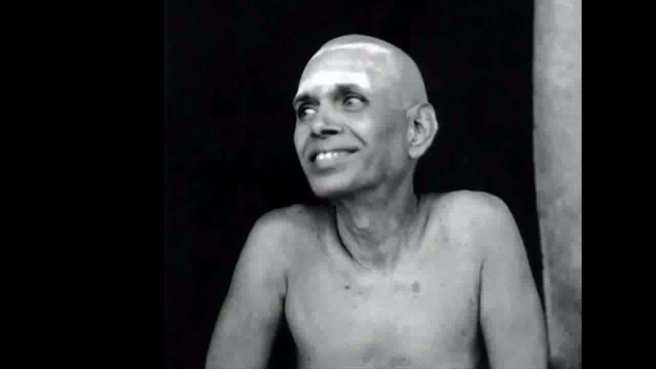
The following are verses from Guru Vachaka Kovai, one of the most authoritative texts of Ramana Maharshi’s teachings. The text was written by his disciple Muruganar and thereafter thoroughly checked and amended by Ramana. Here are some verses on the root cause of suffering, our notion of being a doer, with some commentary from Sri Sadhu Om, another devotee of Ramana:
466 The pure Bliss of peace will shine within only for those who have lost the sense of doership. For, this foolish sense of doership alone is the poisonous seed that brings forth all evil fruits.
467 Instead of going on, driven by the restless thoughts, performing actions such as ‘I should do this, I should give up that’ as if they were worthy to be done, acting according to how the Grace of God, the Lord of our soul, leads us, is the right form of truly worshipping Him
476 Whether or not one is performing actions, if the delusion of individuality – the ego, ‘I am the doer of actions’ – is completely annihilated, that is the attainment of actionlessness.
Sri Sadhu Om’s Comments: People generally think that the attainment of actionlessness is a state in which one should remain still, giving up all activities. But this is wrong. Sri Bhagavan Ramana proclaims that the loss of doership alone is the right kind of actionlessness, and this alone is nishkamya karma – action done without any desire for result.
470 The Lord who has fed you today will ever do so well. Therefore, live carefree, placing all your burden at His feet and having no thought of tomorrow or the future.
471 Know well that even performing tapas (spiritual practice) and yoga with the intention ‘I should become an instrument in the hands of the Lord Siva’ is a blemish to complete self-surrender, which is the highest form of being in His service.
Sri Sadhu Om’s Comments: Since even the thought ‘I am an instrument in the Lord’s hand’ is a means by which the ego retains its individuality, it is directly opposed to the spirit of complete self-surrender, the ‘I’-lessness. Are there not many good-natured people who engage themselves in prayers, worship, yoga and such virtuous acts with the aim of achieving power form God and doing good to the world as one divinely commissioned? It is exposed here that even such endeavours are egotistical and hence contrary to self-surrender.
Jiddu Krishnamurti: True Meditation

Meditation is never the control of the body. There is no actual division between the organism and the mind. The brain, the nervous system and the thing we call the mind are one, indivisible. It is the natural act of meditation that brings about the harmonious movement of the whole. To divide the body from the mind and to control the body with intellectual decisions is to bring about contradiction, from which arise various forms of struggle, conflict and resistance.
Every decision to control only breeds resistance, even the determination to be aware. Meditation is the understanding of the division brought about by decision. Freedom is not the act of decision but the act of perception. The seeing is the doing. It is not a determination to see and then to act. After all, will is desire with all it’s contradictions. When one desire assumes authority over another, that desire becomes will. In this there is inevitable division. And meditation is the understanding of desire, not the overcoming of one desire by another. Desire is the movement of sensation, which becomes pleasure and fear. This is sustained by the constant dwelling of thought upon one or the other.
And meditation is the understanding of desire, not the overcoming of one desire by another.
Meditation really is a complete emptying of the mind. Then there is only functioning of the body; there is only the activity of the organism and nothing else; then thought functions without identification as the me and the non-me. Thought is mechanical, as is the organism.
Meditation really is a complete emptying of the mind. Then there is only functioning of the body
What creates conflict is thought identifying itself with one of its parts which becomes the me, the self and the various divisions in that self. There is no need for the self at any time. There is nothing but the body, and freedom of the mind can only happen when thought is not breeding the me.
What creates conflict is thought identifying itself with one of its parts which becomes the me…
There is no self to understand but only the thought which creates the self. When there is only the organism without the self , perception, both visual and non-visual can never be distorted. There is only seeing ‘what is’ and that very perception goes beyond what is. The emptying of the mind is not an activity of thought or an intellectual process. The continuous seeing of what is without any kind of distortion naturally empties the mind of all thought and yet that very mind can use thought when it is necessary. Thought is mechanical and meditation is not.
There is only seeing ‘what is’ and that very perception goes beyond what is.
Excerpt taken from J. Krishnamurti, ‘The Beginnings of Learning’
My awakening experience whilst reading Krishnamurti:
Not mine
Nothing is mine.
I did not create
This world,
This body,
Or this mind,
With its thoughts.
They were all given to me.
Yes – even my thoughts were given to me.
None of it has anything to do with me.
Then I look at the ‘me’:
There is no me.
Only this,
None of it mine,
All of it moving.
Zen: How should one approach enlightenment?

Two great Chan (Zen) masters speak:
Zhaozhou: How should one approach enlightenment?
Nanquan: If you try to head for it, you immediately turn away from it.
Tom’s comments:
So, what to do?
Roadmap to enlightenment: a (fairly) comprehensive guide to spiritual practices
This is one of a series of introductory articles – please see the homepage of tomdas.com for more introductory articles. Also see:
In Brief: how to attain Liberation
The entire path explained: the Path of Sri Ramana (Parts 1 and 2; PDF downloads)
This is one of the most important posts I have written – it condenses years of spiritual seeking which has involved exploring dozens of spiritual teachings, reading hundreds of books and texts from spiritual teachers and spiritual traditions across the world, undergoing all sorts of spiritual practices and meditations over the years, entering samadhi’s and experiencing visions of infinite oneness, and a genuine realisation of the Freedom-that-already-is.
The aim of the post is to guide you to a Freedom beyond words, but also stay concise. For all those people who have asked me: ‘That’s all very well but how do I actually become enlightened? How can we free ourselves from suffering? What do we do?’, this is for you, and others like you.
This cannot be figured out

The mind cannot get this,
Cannot describe this,
Cannot come to it by logic.
It cannot be deduced,
Or inferred.
It cannot be gained,
Or lost.
The good news is that it doesn’t need to be.
It is already here.
It is just
whatever’s here.
It’s too ordinary to notice

It’s too ordinary for you to notice.
Whenever you’re seeking,
Whatever you’re seeking,
You’re seeking something else,
A mental projection,
A fantasy.
The self that causes all the mischief,
All the suffering,
Is an imagined entity.
It is seeking its own end
– how absurd!
No-self is already here.
To notice this,
There is nothing that you need to notice,
(Nothing you need to do)
As it is always being noticed.
It is simply the totality of whatever is already being perceived,
And in that totality there has never actually ever been a perceiver,
The perceiver being an imagined entity.
Ask yourself “Who am I?”,
“What is the I”,
And you will find no “I” there,
“I” being just an empty thought.
Reality is simply that which remains
When no actual “I” is seen,
When things are seen as they are,
Which is always the case.
There is nothing you need to do,
Nothing to realise,
Only cease adding the notion of “I”,
Only cease to believe in that “I” for which there is no evidence.
Then the notion of “I” can still appear,
The “I” can still come and go as it pleases,
(for this “I” is just a thought,
and like all phenomena,
its appearance cannot be controlled,
spontaneously appearing and disappearing by itself)
But it is no longer believed in.
The “I” being seen through,
Reality shines by itself,
As it has always done.
This is nothing new,
I hesitate to say nothing special,
As it is also truly wonderful.
Reality being everywhere and ever-present
– what is more ordinary and commonplace than that?
Two types of Happiness: Joy and Pleasure
I was invited to contribute a few articles for naturalhealthstar.com. The first one was published today and is on the two types of happiness, which I have called Joy and pleasure.
If you are interested please click here to read more.
[Update: the above link no longer works so I have reproduced the article below:]
Imagine strolling barefoot along a sandy tropical beach watching the sunset. Can you imagine what it feels like? Now imagine winning the lottery, and what that feels like. These two scenarios, whilst both pleasant, feel different don’t they? Take a few moments to feel both these imaginary scenarios in turn and get a sense for how they each feel.
For me with the sunset the feeling is more peaceful, connected, warm and gentle. With the lottery there is more excitement at the sense of gain. If you explore your feelings and sensations further, you can see that with the sunset the sense of self is diminished, perhaps even absent, and in its place is a sense of wholeness or connectedness. With the lottery the sense of self is reinforced and strengthened.
Here’s another example: imagine how it feels to interact with a young child, perhaps one you know, laughing and playing with them. Now contrast this with a situation when someone respected you or admired you and how that felt. You could take it one step further perhaps and remember how it felt when you were in a position of power over someone, when you were in control. Again, whilst these feelings are probably all positive feelings, interacting with a child is gentler and there is more of a sense of connection. When you are being respected or dominating someone there is a sense of self-aggrandisement.
So why am I pointing out this distinction? Because genuine fulfillment always comes when the sense of self lessens. I call this Joy. When this happens we feel more at ease, more connected, gentler and more loving. It is how we feel when we are with our loved ones, when we are following our hearts desire and when we are with nature. It is a completely natural unlearnt emotion. We feel it more with the heart and abdomen – this may sound strange, but look for yourself where you feel the emotion in your body.
The positive feelings that come from self-reinforcement on the other hand are relatively short lived and actually fuel a sense of emptiness or lack that keeps us unfulfilled. I call this pleasure. We feel it more in the mind. It is ego-based, driven by a sense of lack, and something that has to be taught to us. We have to be conditioned through our society and upbringing to value social status, good grades, cheap-thrills and domination over others.
So, reflect on your life. How much time is spent chasing pleasures and thrills, and how much time is spent experiencing Joy? Pleasure comes though acquisition. Acquiring things, titles, sensations and experiences. It is essentially addictive in nature and leads to more suffering. Joy comes through letting go, through being with something, through playing, and through giving and service. It is a natural expression of who we really are deep down.
 Tom Das