What will never let you down?

Everyone and everything will eventually let you down. Make no mistake about this – it’s just a matter of time. Be sure to understand this.

This is not pessimism but reality. You can then enter into life knowlingly. We can enter into love and engage with life out of understanding rather than ignorance.

Know that everything will eventually let you down. You cannot rely on anyone or anything to give you lasting happiness, so dont expect that from people or things. Anything else leads to suffering.

The only exception is the ever-present Self, which of course is no particular object, yet is non-separate from everything. It is all there is. It is the essence of who you are. It is you.

And luckily its nature is sat-chit-ananda.

Therefore take refuge only in the Self.

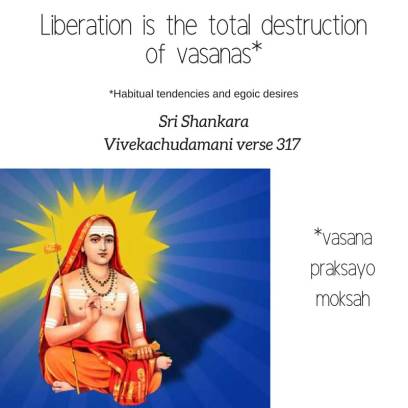
Shankara – Vasanas and the nature of liberation

Vasana destruction.jpg


Tom: Liberation is total destruction of habitual egoic desires or vasanas. Only then does suffering end and ethical behaviour naturally arise. Only then do the vedic teachings come to fruition.

Vasanas naturally start to fall away once the illusion of a separate limited ‘me’ is seen through, and life becomes correspondingly easier as the freedom of no-self is seen, but just that seeing alone is not the full liberation until the vasanas have completely dropped off. Until then suffering and egoic behaviour will continue despite the realisation of freedom.

Vasana after truth.jpg

Even after the ‘Truth has been realised’, remain as the Self to root out ignorance and vasanas.

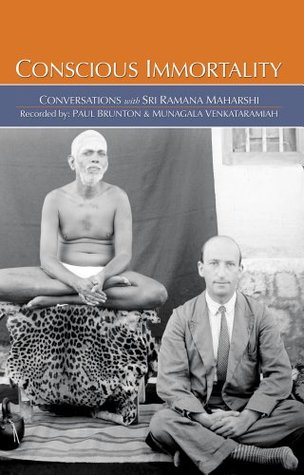
Ramana Maharshi: Conscious Immortality

Conscious Immortality Ramana Maharshi

The following is taken from Chapter 14 of Conscious Immortality and is instructive about the path to complete liberation. As often is the case with Ramana’s writings, there is much packed into each phrase. My comments have been interspersed in blue italics, and I pray you find these to be of assistance. If they are not, please feel free to ignore them:

“The Self is like a powerful hidden magnet within us. It draws us gradually to itself, though we imagine we are going to it of our own accord.

Tom: we imagine that we are seeking, whereas actually we are being moved by the Self, as is everything else likewise being orchestrated by Oneness. Next the basic teaching is given in concise form:

“When we are near enough, it puts an end to our other activities, makes us still, and then swallows up our own personal current, thus killing our personality. It overwhelms the intellect and over floods the whole being.

Tom: the teaching goes like this: first we naturally drop and turn away from outer (egoic) activities as we realise that we no longer need them. Then we become still. Lastly after having been still for some time, our personhood is ‘swallowed up’ by the self. Then all that remains is fullness, the Self. That’s all there ever was.

“We think we are meditating upon it and developing towards it, whereas the truth is that we are as iron filings and it is the Atman-magnet that is pulling us towards itself. Thus the process of finding Self is a form of Divine Magnetism.

Tom: again the notion of personal doership is being undercut here – we are all but puppets of the Lord. We take ourselves to be the orchestrator of our actions, whereas we are His instruments playing His song. So does this mean that we do not have to practice?

It is necessary to practise meditation frequently and regularly until the condition induced becomes habitual and permanent throughout the day. Therefore meditate.

You lost sight of the bliss because your meditative attitude had not become natural and because of the recurrence of vasanas. When you become habitually reflective, the enjoyment of spiritual beatitude becomes a matter of natural experience.

Tom: Ramana instructs us to practice meditation regularly, so that the meditative attitude becomes the predominant habitual way of being. How to meditate? This will be explained below:

“It is not by a single realisation that “I am not the body but the Atman” that the goal is reached. Do we become high in position by once seeing a king? One must constantly enter into samadhi and realise one’s Self, and completely blot out the old vasanas and the mind, before it becomes the Self.

Tom: here Ramana makes a central point. It is often mistakenly thought that realising who you are is a one time affair. However here Ramana emphasises that this realisation alone is insufficient for true liberation to dawn. One must time and time again sink into Samadhi and remove the habitual tendencies (vasanas) that cause us to identify as a finite body-mind entity. This simple but essential teaching is often side-stepped by those who would like the fruits of liberation without the need to actually practice and drive out the vasanas/habitual ignorance.

The example that one cannot become a king simply by seeing a king is cited by Ramana. This example is reminiscent of that given in Chapter 7 of Advaita Bodha Deepika, one of Ramana’s favourite texts, where it is repeatedly told that mere knowledge of the king by a beggar does not transform the beggar into a king. Similarly, the jiva is not so easily transformed into the Self, so to speak, by simply knowing of the Self. So, how can the jiva be ‘transformed into the Self’? Ramana will enlighten us:

“If you keep to the thought of the Self, and be intently watching for it then even that one thought which is used as a focus in concentration will disappear and you will BE, the true Self. Meditation on Self is our natural state.

Only because we find it hard do we imagine it to be an arbitrary and extraordinary state. We are all unnatural.

The mind resting in the Self is its natural condition, but instead of that our minds are resting in outward objects. After the expulsion of name and form (nama-rupa) which compose the external world, and by dwelling on existence-knowledge-bliss (sat-chit-ananda), take care to prevent the re-entry into the mind of the expelled name and form.

Tom: here the essence of spiritual practice is given: we are to rest as the self. How to do that? We are to not rest in outward objects, we are to pay no attention to name and form (nama-rupa) and instead dwell on awareness-consciousness-Being-Bliss, which is our own true nature. This is simply Self abiding as Self, or Being being Being.

We are to take care not to allow the mind to again shoot outwards into the world and dwell on the forms (that it itself projects).

We are to cultivate thought of this Self, and eventually this thought too will disappear and all that will be left is Self without any trace of jiva or the idea that I am a limited body-mind entity.

We can see that this is the same teaching that is given in the Upanishads and by Sri Shankara in Vivekachudamani and in Shankara’s Commentaries.

How does Namaskaram lead to moksha (liberation)?

In response to this post here about how Namaskaram can lead to moksha (liberation), I received the following question:

Q. How does namaskaram cleanse the energy? How will it lead to moksha?

Tom: regular practice of Namaskaram with heartfelt devotion and feeling purifies the mind, transforming rajas (passionate energy) and tamas (dull or negative energy) to sattva (peaceful energy).

Then it sacrifices the ego in the depth of silence so that all that remains is the pristine pure reality.

Om Tat Sat

All praise to me!

Janaka ashtavakra
King Janaka receiving teachings from Sage Ashtavakra
From Chapter 2 of the Ashtavakra Gita, spoken by King Janaka after he has realised the Self:
11. Wonderful am I! Adoration to myself who know no decay and survive even
the destruction of the world, from Brahma down to a clump of grass.
12. Wonderful am I! Adoration to myself who, though with a body, am One,
who neither go anywhere nor come from anywhere but abide pervading the
universe.
13. Wonderful am I! Adoration to myself! There is none so capable as I, who am
bearing the universe for all eternity without touching it with the body.
14. Wonderful am I! Adoration to myself who have nothing or have all that is
thought and spoken of.

False enlightenment


diamond

The mere understanding that ‘there is no person’ is not by itself enough. The mere understanding/seeing or knowledge ‘there is no separation’, ‘there is no doer’, ‘there is no separate self’ is by itself not enough.

For suffering to end, the self-referential habitual tendencies (vasanas) which originally arose from the belief in separation, these vasanas must also end. These vasanas are those addictive tendencies which aim to seek fulfillment in experiences and things (ie. in objects).

Seeing ‘there’s nobody here’ is seeing through the illusion of separation. However the functioning of self-referential addictive vasanas may continue due to the deeply established force of habit, and so the suffering resulting from these on the phenomenal level continues.

Once the illusion of (separate) self is seen as an illusion*, one must still remove the vasanas**. How? We are advised simply to ‘be still’.

…one must still remove the vasanas. How? We are advised simple to ‘be still’.

There is an apparent contradiction here, for if the separate self is seen through and seen to be false, then who or what is being still? Well, when the vasanas arise, it is really the sense of/belief in separate self that arises, out of habit, which means that although the individual person has intellectually been seen to be non-existent, it is actually the person who knows this. The person is the ignorance, which means that the ignorance has not been fully rooted out. ie. ignorance is still present.

So, insight (into no-self) having been attained (in the mind), now we are advised to be still in order to purify our minds of the vasanas. Shankara famously wrote: vasana kshaya moksham, which means ‘destruction of the vasanas is Moksha (liberation).’

Ask yourself:

-Can the ego make the ego still?
-Can thought still thought?
-Can we become effortless through effort?

The answer is no. Knowing this, be still.

Allow what comes to come, allow what goes to go. See there is nobody here. As the vasanas/ego/sense of ‘me’ arise, allow them to fall again.

Be still.

Note that being still is not doing something. It is not trying hard to be still – that is just more effort. Rather ‘be still’ means not adding to this, or rather to stop seeking and grasping, letting things be as they are, no longer looking for fulfillment in objects.

Being still is not doing something

The above reasoning and this last sadhana (spiritual practice) of stillness is beautifully expressed in the classic Advaita text Advaita Bodha Deepika, which was recommended by Ramana Maharshi as a manual for Advaita. The text takes the seeker through all aspects of the path. see here for a short excerpt:

The Ultimate means to liberation

Similarly in Buddhism and Zen we see the same teachings. See here for an example:

Zen: The sure way to enlightenment

*traditionally the Vedanta path is threefold. Firstly the teachings are heard (sravana), then they are comtemplated upon (manana) and their truth is realised/ignorance is removed. Then lastly the vasanas or habitual tendencies which originally arose due to ignorance are purified (nididhyasana).

**Many people stop after manana, once the truth has been understood and realised (in the intellect). The scriptures warn us that whilst this realisation can bring great peace and relief, and can be mistaken for full realisation/enlightenment, this is not the end of the journey, for the belief in a jiva/limited entity is still intact. Even without trusting the scriptures, by simply being aware of and open to what is happening, it can be seen that unless the addictive self-referential vasanas are allowed to arise in stillness, then without being taken up and acted on, allowed to then dissolve and die, the self-created suffering and self-centred (potentially destructive) behaviours on the phenomenal experiential level continue. Being still is simply a natural way of allowing the ignorance-based conditioning to naturally arise and fall away of its own accord.


How to meditate for spiritual enlightenment

buddha side

Meditation can serve many purposes: increased happiness, improved concentration and academic performance, clarity and insight into everyday issues, improved health and sleep, etc. This article’s meditation will likely help with all or most of these, but the end goal is none of the above. The goal here is total freedom, enlightenment, nirvana or moksha (all are used as synonyms here). I have included some Sanskrit words in brackets in case you are interested.

Contemplate this

No object, gross or subtle, can lead to lasting fulfillment.

I recommend you contemplate deeply on this.

For most of us, after a little contemplation, this becomes obvious to us. However,we can go further: if we continue on this contemplation, we can start to realise that even seeking momentary pleasure or momentary fulfillment in objects is a cause of suffering. Subtlely,  we still believe that our fulfillment lies in obtaining contact with the objects of our desire. Subtlely, we are reinforcing the sense of ‘I’ or ‘me’, also known as the ego, and the root cause of suffering is continued.

Contemplate deeply on this.

First, that objects cannot give us lasting fulfillment. Secondly, that getting involved in the world of objects in order to be psychologically fulfilled is already the path of ignorance and suffering.

Similarly, seeking enlightenment or liberation in the world of objects or using an object such as thought as a means of enlightenment is also futile. So, what to do?

‘Look within’

When this is realised at a deeper and deeper level within ourselves, dispassion (vairagya) arises. We ‘turn away’ from worldly objects, meaning we no longer look for happiness in objects.

Remember, that experiences are also objects – they are known to us, they are felt and perceived, and they, like other objects, come and go. Peace, love, oneness – all these can be experienced, and all experiences come and go. Insight into the impermanence of phenomena leads to not clinging to such experiences. This is called ‘turning inwards’ or ‘looking within’.

The role of a formal practice

For most people, I recommend a formal practice of spending as much time as you can each day without engaging with thoughts, whilst still remaining awake and aware (ie. not in trance and not asleep).

Formal practice is useful as ignorance, or taking yourself to be a separate self, is so deeply ingrained, that even when the mind is ordinarily quiet in everyday life, it is still stained with this ignorance that is merely dormant, and so insight does not manifest (unless the seeker is especially ripe/ready). A period everyday of being away from thoughts, upon which ignorance depends, is of a great benefit and can greatly quicken the spiritual search.

Actually doing a formal practice, as opposed to simply talking about silence and so on, is one of the best ways of taking the spiritual quest out of the mind or intellect, and transforming clever concepts into genuine spiritual understanding and insight.

Not doing a spiritual practice is one of the best ways of remaining caught in the clutches of the intellect and ego for years to come. Often the mind will come up with reasons and select teachings that say no practice is required, so beware the tendency of the ego to find a way to perpetuate itself rather than foster its own demise.

Sit in a comfortable position with your back upright. This is so you don’t fall asleep and are able to maintain a serene stability of mind for an extended period of time. Having a practice in the same place and the same time of day can be a useful aid to this, as the mind becomes trained to become quiet at that time and place over time.

‘But I don’t like to meditate’

Meditation is not for everyone, and my writings are tips for you to take on board and apply to your life as you feel is best. If you don’t like meditation, then I would recommend you try some other kind of formal practice, be it chanting, yoga or mindfulness, as you see fit. Over time the idea is that these practices will calm your mind, and purify and balance your energies and you will start to be naturally drawn to a more contemplative peaceful (sattvic) practice.

‘I want to meditate but my mind is too busy’

If you feel drawn to meditation, but your mind is too noisy, then, like the example above, I would try some preliminary practices first, such as light exercise, hatha (physical) yoga, chanting or breathing exercises. Try meditation immediately after one or more of these preliminary practices and your mind should be considerably quieter.

Follow your heart and intuition and do what you feel drawn to. Allow this to be your practice as long as it feel right for you. There are no strict rules and better to follow your own genuine path (swadharma) rather than someone else’s if it doesn’t feel right.

A method of meditation

  1. Prior to meditation, start by chanting for 3-5 minutes. This cleanses the energetic system and allows for a deeper and more awake meditation.
  2. Take your time to settle down and allow the mind to become calm. I find that spending 2-3 minutes allowing myself to sit with my eyes open and take in my surroundings is helpful in transitioning between being engaged with the world to meditation.
  3. Also take time to feel the body, allowing each part of the body to be experienced, and also allow each part of the body to relax. Pay particular attention to the forehead, jaw, and shoulders, where a lot of tension is often held. If you can, energetically allow the sense of you to drop down into your chest and belly area and feel relaxed.
  4. Allow the mind to become relaxed. Take up the attitude that everything is welcome here, and allow everything to come and go. Sensations, sounds, thoughts, all can come and go. Accept what is. Allow your mind to become light, carefree and happy. Happy acceptance is the general aim, not to be a state of mind that is forced, but to be allowed to arise.
  5. Now start to withdraw your  mind. Use an anchor if required: this can be a mantra (a sound that is repeated, such as ‘Om’, which can be repeated for example on every outbreath), an object (either real external object, or better still, a visualised object), or the breath. As the meditation progresses the anchor should become gradually more subtle, so I often start with counting my breaths, then I let go of counting and just stay with the breath, then I just stay with the feeling of peace and happiness for as long as I feel until I am ready for the next step:
  6. By now the mind should be relatively quiet and also stable in that quietude. There are several options of what you can do here, and as everyone is different, the exact method will vary from person to person. Essentially, notice that even peace and quietude are subtle objects. Either let them go or be aware of them whilst simultaneously knowing they are not you and that you and ‘your bliss’ do not depend on them. Here we are getting in touch with that which is not an object, that which is ever present, that which does not come and go, that which is the nature of presence-awareness-bliss (sat-chit-ananda), that which is the essence of who you are (atman), or pure subjectivity (drik). This process of separating the perceiver/subject (drik) from that which is perceived/objects (drisya) is technically known as discrimination (viveka), or discernment.
  7. Follow your intuition. The key is to not focus on objects, not to engage with the world of objects, not to identify with the body-mind and to also question this notion of ‘I’. You can rest in I AM and eventually you will see that this I AM is also an object that appears to the ‘real I’ which is not an object. This is the approach from the ‘sat‘ (being) aspect of sat-chit-ananda (reality) Or you can let yourself be aware of awareness, that which is not an object, that which you are, and allow the brightness of awareness to vividly shine and outshine all objects, consuming all objects in its dazzling light. This is the approach from the ‘chit‘ (consciousness-awareness) aspect of reality. Or you can bathe in the happiness that arises when there is no concern for objects and deriving happiness from the myriad phenomena that rise and fall – thus approaching reality from its ‘ananda’ (blissful/happiness) aspect. A fourth method is to ask ‘Who am I’, and search for the root of the ‘I thought’, as prescribed by Ramana Maharshi, and allow this to take you to the Source, which is none other than reality itself, and abide there until all tendencies to identify as a separate ‘I’ or ‘me’ are rooted out. See here for more details on this.
  8. Note that while it is important not to ultimately get caught up in feelings of bliss and peace, or get similarly locked into a trance state, it can be of benefit to linger here for a while. Why? Because it feels good and it is purifying. The effects of lingering in peace eventually do wear off, but they still have some provisional purifying effect and have value in countering negative tendencies and bad habits/psychological states we may be prone to entering into. Eventually, when the time is right, we can let go of peace and bliss too, but no rush is needed in all this. All in good time. ‘Good things come to those who wait.’
  9. Be happy, relax, do not cling, have faith

In summary

Contemplate how all objects, gross and subtle, cannot lead to enlightenment complete, and rest in your true nature, devoid of objects and full of peace and bliss.

Establish a daily practice and do not allow reasoning from the ego to convince you otherwise. Note how the the ego may resist this. The ego is prone to selecting teachings that lead to its continuance rather than its demise.

Use preliminary techniques relating to the world, body and mind as suits your disposition and take your time. Use an anchor if required, and eventually allow this to give way to a deeper silence in which you are fully awake and aware. There is no rush and this should be enjoyable and relaxing rather than hard work.

Play the long game rather than strive for short term gains. Relax.

Allow yourself to feel any phenomena – notice they are not the essence of you, the subject. Locate the sense of ‘me’, and notice this too is an object. Rest in that ‘placeless place’ where no objects are.

Trust your intuition and be careful not to fall asleep or get (too) caught up in experiences including peace and bliss.

Best wishes to you, practice, practice, practice, and please get in touch if you feel I can be of assistance

🙏


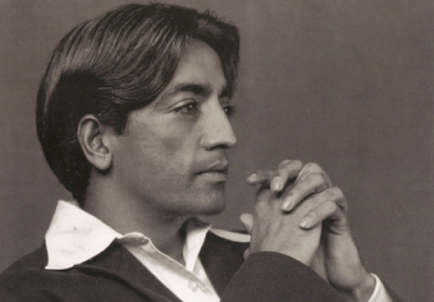
Krishnamurti: how am I to be free, free to live happily?


krishnamurti

The following is written by Jiddu Krishnamurti, taken from BULLETIN 6, 1970

…the centre says to itself: how am I to be free, free to live happily, completely, openly, and act without sorrow or remorse? But it is still the centre asking the question. The centre is the past. The centre is the ‘me’ with its selfish activities which knows action only in terms of reward and punishment, achievement or failure, and its motives, causes and effects. It is caught in this chain and the chain is the centre and the prison.

There is another action which comes when there is a space without a centre, a dimension in which there is no cause and effect. From this, living is action. Here, having no centre, whatever is done is free, joyous, without pain or pleasure. This space and freedom is not a result of effort and achievement, but when the centre ends the other is.

But we will ask how can the centre end, what am I to do to end it, what disciplines, what sacrifices, what great efforts am I to make? None. Only see without choice the activities of the centre, not as an observer, not as an outsider looking inward, but just observe without the censor. Then you may say: I cannot do it, I am always looking with the eyes of the past. Be aware, then, of looking with the eyes of the past, and remain with that. Don’t try to do anything about it; be simple and know that whatever you try to do will only strengthen the centre and is a response of your own desire to escape.

So there is no escape, no effort and no despair. Then you can see the full meaning of the centre and the immense danger of it, and that is enough.

What remains?

silence lake sunset

What is the ego?
Will you accept my definition or find out for yourself?

Stop, be aware of what is happening:
Notice the content of your thoughts.
Notice the feelings that accompany the thoughts:
Is there tension and stress in a particular thought?

Or is there a freedom,
A space where thought is free to move,
Free to come and go as it pleases?

And what is the ego?
What does it feels like?
What kind of energy does it bring into the physical organism?

Be open to feel this ego:
Get a sense of what it feels like in its many guises.
Relax and let it in.

Notice a cascade of thoughts and feelings:
When they are believed in and invested in,
The egoic thoughts weave an apparently believable story line,

But when seen for what it is,
Inherently empty of any self,
Just empty thoughts coming and going,
With some associated sensations,
And perhaps an interpretive thought accompanying and interpreting what the ‘feelings mean’.

Notice there may be an urge to get out of the ego,
A movement of thought that attempts to end the ego may occur,
And notice that this is simply more of the ego,
More of this activity based on this false sense of self,
Based on this false notion of separation.

When things are seen for what they are,
And allowed to unfold as they are,
And illusion born of thought is no longer believed in,
What remains?