Muruganar
Seven Steps to Awakening | PDF download | Michael Langford | Sri Ramana Maharshi | Nisargadatta Maharaj | Shankara | Yoga Vasistha

One of the best books ever written for spiritual liberation/self-realisation is the Seven Steps to Awakening, compiled by Michael Langford, incorporating teachings from Sri Ramana Maharshi, Sri Muruganar, Sri Sadhu Om, Sri Vasistha and Sri Shankara to name a few.
It is one of my recommended books for liberation. Of particular interest is the introduction to the text which is very instructive. As with other books by Michael Langford, all of which are highly recommended, the style may not suit everyone, but serious seekers of liberation will hopefully find the content to be of great benefit and overlook any perceived stylistic deficits.
I am therefore sharing the full text here as a PDF (see below), but I highly recommend you buy a paper copy of the book for yourself to support the author.
It is best read together with The Most Direct Means to Eternal Bliss, another book also by Michael Langford.
Again, please do read the introduction, reflect upon the teachings therein and follow the suggestions given.
Namaste and best wishes!
You can download the entire text as a PDF here
Gaining a deeper understanding of Sri Ramana Maharshi’s teachings: Sri Muruganar, Sri Sadhu Om & Lakshmana Sarma
To my knowledge, the only living human being who was said by Sri Ramana Maharshi to have attained Self-Realisation was Sri Muruganar, a devotee of Sri Ramana’s for over 25 years.
Muruganar also was one of 2 people who had personal one-to-one tuition from Sri Ramana on the actual deeper meaning of the teachings (the other person was K. Lakshmana Sarma).
Muruganar recorded Sri Ramana’s teaching in the text Guru Vachaka Kovai, which is said by Sri Ramana Ashram to be ‘the most precise, systematic and authoritative exposition of Sri Bhagavan’s teaching, explaining step by step the theory, the practice and the experience of jnana, the Truth supreme which is Being as Life Eternal, Pure Awareness, Perfect Bliss. Thus, the most comprehensive collection of the Maharshi’s sayings is Guru Vachaka Kovai…’
Sri Sadhu Om spent many years with Sri Ramana Maharshi and after Sri Ramana’s death he spent many years with Muruganar. Muruganar said that Sri Sadhu Om was the only person who really understood Sri Ramana’s teachings. Sri Sadhu Om wrote several books on Sri Ramana’s teachings such as The Path of Sri Ramana and Sadhanai Saram (the essence of spiritual practice) and translated them into English himself.
K. Lakshmana Sarma, another long time devotee of Sri Ramana’s, was the only other person (other than Sri Muruganar) to have 1 to 1 tuition on the true meaning of Sri Ramana’s teachings; this tuition lasted several years. Lakshmana Sarma was often unhappy to see people misinterpreting and misunderstanding Sri Ramana’s teachings and he wrote several books such as Maha Yoga and a commentary on 40 verses on reality to explain Sri Ramana’s true teachings, and he translated them into English himself.
Most people, when they hear the teachings, their ego-mind immediately distorts the teaching, and this often converts a liberating teaching into a non-liberating teaching. So the person recording the teaching is of utmost importance if we want to understand the true teaching that will lead to liberation.
I therefore recommend you read the above texts if you want to discover a truly liberating teaching, free from distortion, that will quickly and effectively lead to liberation, which is eternal bliss and the cessation of suffering.
We also have the texts that Sri Ramana Maharshi himself wrote.
You may be pleased to know that I have compiled all of the above (and some more), which you can download for free, on my Recommended Reading List.
The above text has also been added as an appendix to the recommended reading list
Sri Ramana Maharshi explains the truth of Dakshinamurti’s Silent Teaching | Silence | Mouna | Self-Realisation
The Self alone, the Sole Reality,
Exists for ever.
If of yore the First of Teachers
Revealed it through unbroken silence
Say, who can reveal it in spoken words?
– Ekatma Panchakam, Sri Bhagavan.
Sri Bhagavan once told the story that follows to Sri Muruganar. This brings out the profound significance of the Supreme Silence in which the First Master, Sri Dakshinamurti is established.
Sri Bhagavan said, “When the four elderly Sanakadi rishis first beheld the sixteen-year-old Sri Dakshinamurti sitting under the banyan tree, they were at once attracted by Him, and understood that He was the real Sadguru. They approached Him, did three pradakshinas around Him, prostrated before Him, sat at His Feet and began to ask shrewd and pertinent questions about the nature of reality and the means of attaining it.
Because of the great compassion and fatherly love (vatsalya) which He felt for His aged disciples, the young Sri Dakshinamurti was overjoyed to see their earnestness, wisdom and maturity, and gave apt replies to each of their questions.
But as He answered each consecutive question, further doubts arose in their minds and they asked further questions. Thus they continued to question Sri Dakshinamurti for a whole year, and He continued to clear their doubts through His compassionate answers.
Tom: Dakshinamurti is often said to have taught in silence. However here Bhagavan Sri Ramana corrects that view and notes that initially there was a 1 year period in which Dakshinamurti answered questions and the devotees underwent hearing the teachings (sravana), asking questions and reflecting on the teachings (manana) before the silent teaching was given.
Finally, however, Sri Dakshinamurti understood that if He continued answering their questions, more doubts would arise in their minds and their ignorance (ajnana) would never end. Therefore, suppressing even the feeling of compassion and fatherly love which was welling up within Him, He merged Himself into the Supreme Silence. Because of their great maturity (which had ripened to perfection through their year-long association with the Sadguru), as soon as Sri Dakshinamurti assumed Silence, they too automatically merged into Supreme Silence, the true state of the Self.”
Tom: Eventually listening to teachings, asking questions and contemplating upon the answers (ie. sravana and manana), important as they may appear to be initially, must cease, and we must turn towards the Self (ie. nididhyasana). That is, sravana and manana should lead to nididhyasana.
Wonderstruck on hearing Sri Bhagavan narrating the story in this manner, Sri Muruganar remarked that in no book was it mentioned that Sri Dakshinamurti ever spoke anything. “But this is what actually happened”, replied Sri Bhagavan curtly.
From the authoritative way in which Sri Bhagavan replied and from the clear and descriptive way in which He told the story,
Sri Muruganar understood that Sri Bhagavan was none other than Sri Dakshinamurti Himself!
~ From ‘The Silent Power’ (selections from The Mountain Path and The Call Divine, the above piece was contributed by Sri Sadhu Om, with Tom’s additional comments in italiscised red)
To Know the Self is to Be the Self | The nature of Self-Knowledge or Jnana
The nature of Self-knolwedge
The true nature of the world or universe | Sri Muruganar | Sri Guru Ramana Prasadam
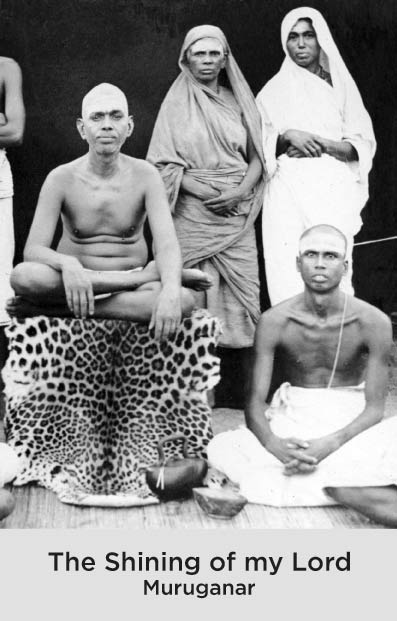
Sri Muruganar was one of the most important of Sri Ramana Maharshi’s devotees: he spent over 20 years being lovinginly devoted to his Guru, Sri Ramana, and he was, to my knowledge, the only living person who Sri Ramana said had realised the Self.
In the wonderful text Sri Guru Ramana Prasadam, Sri Muruganar writes verse after verse after verse explaining how through his Guru’s Grace and Teachings he too came to fully realise the Self.
On page 137 he writes about the true nature of the world or universe, as follows:
‘The viewpoint [that there is] a phenomenal world is given as a provisional hypothesis principally for those of low and middling attainment, who are the vast majority, and who do not have both an intense longing to realise the truth and a total absense of desire for sense enjoyments, resulting from perceiving the inherent defects [of those sense enjoyments].
‘In the scriptures themselves, enlightened Jnanis proclaim that the world appears to the ego-mind – formed by the know joining consciousness with the insentient (cit-jada granthi) – and that the Self remains in total union with that world.
However, in truth, nothing exists apart from the one Self. Hence, from the ultimate viewpoint, it remains unattached, there being nothing other than itself – like the underlying screen in a cinama show.‘
The Shining of My Lord – Quotes explaining the Essential Spiritual Practice
The following quotes, taken from the publication ‘The Shining of my Lord’ by Sri Muruganar, clearly and concisely explain the direct path to Self-Realisation.
In this context, the words ‘sadhana‘ and ‘tapas‘ both essentially mean spiritual practice.
‘Swarupa‘ means your own true nature, referring to the Self, the Ultimate Reality that you ARE.
The word ‘pure’ in the phrase ‘pure consciousness’ refers to consciousness devoid of any objects or arising phenomena, a reference again to the Self, your Swarupa.
I recommend you listen to this video in which the following quotes are read aloud for you, as this can often result in the same teachings being heard in a different and more powerful way:
502. The sadhana is to withdraw the mind from the sense objects of the world, which arise through the ignorance of taking the body to be ‘I’, and fix it in the feet of the Lord’s grace, pure consciousness. For those who are fully convinced of the efficacy of this sadhana, and who are able to practise it, there will be no need to abandon it to perform any other great tapas
503. Until everything shines wholly as swarupa, eschew all [perceived phenomena] as your enemies.
508. Those who abide as pure consciousness will experience the truth, the Self that exists as their own intimately close associate, but if the mind is allowed to move about among the senses through the pathways of the five senses, life will become shameful, losing its beauty.
509. If consciousness leaves the heart and manifests outwardly, it will experience perplexity through the false and deceitful sense objects. If it becomes extremely clear and remains firmly settled in consciousness-the-supreme, pure grace, and then merges with it, life will become blissful.
516. The ego deserves to be stigmatised whereas the Self alone deserves to be worshipped and saluted. Save and protect yourself completely from the treacherous maya, whose form is the ego, by the daily practice of abidance in the pure Self in order that the abidance may become firm and habitual.
492. For those who keenly desire as their principal priority a merger with the beauty of grace, the swarupa that abides in the heart as pure consciousness, it is not even slightly acceptable to have any connection with objects enjoyed by the senses, which are concepts of the fake entity, the deluding consciousness.
417. If we perform sadhana to the limit of our abilities, the Lord will accomplish for us that which is beyond our capabilities. If we fail to do even that which is within our capabilities, there is not the slightest fault in the grace of the Lord.
423. Devotion exists in many different forms, varying according to the quality of the devotee’s mind. However, only devotion to grace, the swarupa that shines as pure consciousness, enables one to reach directly the unsurpassed state of the supreme.
Concise Instructions for Self Enquiry & Self-Realisation (Ramana Maharshi & Muruganar)
Muruganar: The Pre-eminent form of worship
Through the grace of my Lord’s glorious revelation I learned that the pre-eminent form of worship – which alone is worthy of him – who shines within the heart as the Self – is just to be. Thus did I learn to worship him without worshipping through the simple act of being.
Sri Guru Ramana Prasadam, verse 389
Sri Guru Ramana Prasadam was written by Muruganar (1890-1973), one of the most eminent of Sri Ramana Maharshi’s devotees. Muruganar was liberated shorty after meeting Ramana and thereafter continued to spend several decades alongside him. It is because of Muruganar’s questioning and urging that Ramana composed works such as ‘Self-Knowledge’, ‘The Essence of Instruction’ and ‘Forty Verses on Reality’. These succinct works contain the essence of Ramana’s (written) teachings. We are indeed indebted to Muruganar! Continue reading
 Tom Das