Integrating knowledge, spontaneous action

This post is continued from Discarding Knowledge as Ignorance

Do you go around repeatedly saying your name so that you remember it? Do you have to walk around saying “I am Tom, I am Tom, I am Tom?” (obviously substitute in your name).

Or do you spend most of your life not even thinking about your name, but when someone calls out your name, the understanding ‘My name is Tom’ automatically acts: you turn your head and respond?

It’s the same with understanding there is no doer: initially you may need to think about it, go through the reasoning, and realise there is no evidence for a doer. It is a conscious process. Because we have been conditioned to think of ourselves as being a doer, there is often a process of deconditioning.

It may also take time for all the suffering based on the ‘I am the doer’ notion to fall away. Other notions such as ‘I am to blame’ or ‘I could/should have done it differently’ or ‘I am not worthy’ may still all be at play. All these depend on the root belief ‘I am a separate doer-entity’. Again, there may be a conscious process of applying this understanding in order to deal with suffering as it arises and uprooting the associated beliefs upon which suffering depends.

But once this has been done, then we don’t need to think about it. The knowledge of ‘there is no doer’ has been ingrained into us. We do not need to think about it, we no longer need to repeat the process of understanding.

But just as when someone asks your name, you can spontaneously respond ‘My name is ____’, when someone asks you ‘Are you a doer?’, you can instantly reply ‘there is no doer’.

This post is continued here: Am I the body? Am I not the body?
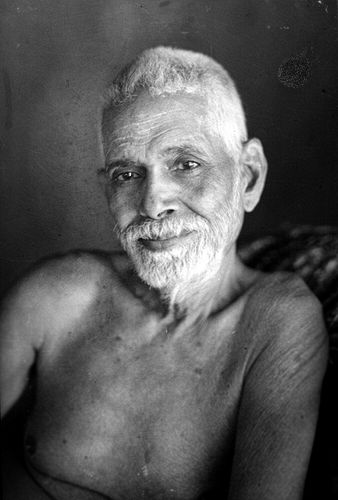
Ramana Maharshi: Once you realise the Self, it becomes your direct and immediate experience. It is never lost.

Ramana Maharshi sitting
‘Once you realise the Self, it becomes your direct and immediate experience. It is never lost.’
Ramana Maharshi

Time and time again I hear from spiritual seekers that they glimpsed the Self, they experienced that ecstasy, but it slipped through their fingers and fell away. Their question to me is how to get it back again. This is the wrong question, this is the wrong way, as it is based on a fundamental misunderstanding of the path.

Everything that comes can also go. Everything that comes, all experiences that have been attained, are not the Self.

The Self is no particular experience. It is always here, fully manifest, fully evident. Everything that is perceived is It. It is not different from whatever is being perceived to be happening.

Realising that ‘this is It’ is Self-realisation. It is simply seeing what already is the case. When it is seen, there is no desire to reach a new experience, and a seeing that everything happens spontaneously without the presence of a separate doer-entity. Here suffering falls away as the simple truth of no-doer is seen.

Actions, thoughts and desires continue to manifest themselves, spontaneously, but there is nobody doing it, just like the wind blowing or digestion happening. Things happen, no doer.

As long are you are alive, you always are, you always exist. No matter what happens, you are. This knowledge of (your) being is Self-knowledge. It is not something to attain, just something to be ‘acknowledged’. It is not separate from whatever is perceived to be happening. How can this ‘knowledge’ be lost?

Is reality impersonal?

Children playing

This is a question that often comes up, and many teachers often state that reality is impersonal. I myself have written a piece stating just this (complete with an impersonal looking image). However, like so many things we can write and say about reality, it is often correct in one way but false in another. As I’ve stated many times before, reality cannot be captured in words.

We could say that reality is impersonal or both personal and impersonal, or we could say that it is neither personal or impersonal. All these statements would be correct in the correct context.

But are these statements helpful? To say that reality is either personal or impersonal is ultimately besides the point. The essential point is to see things as they are, or rather to stop believing in all our concepts about reality – then reality shines, as it always has done. Who cares if it’s personal or impersonal?

Continue reading

Sudden vs gradual enlightenment

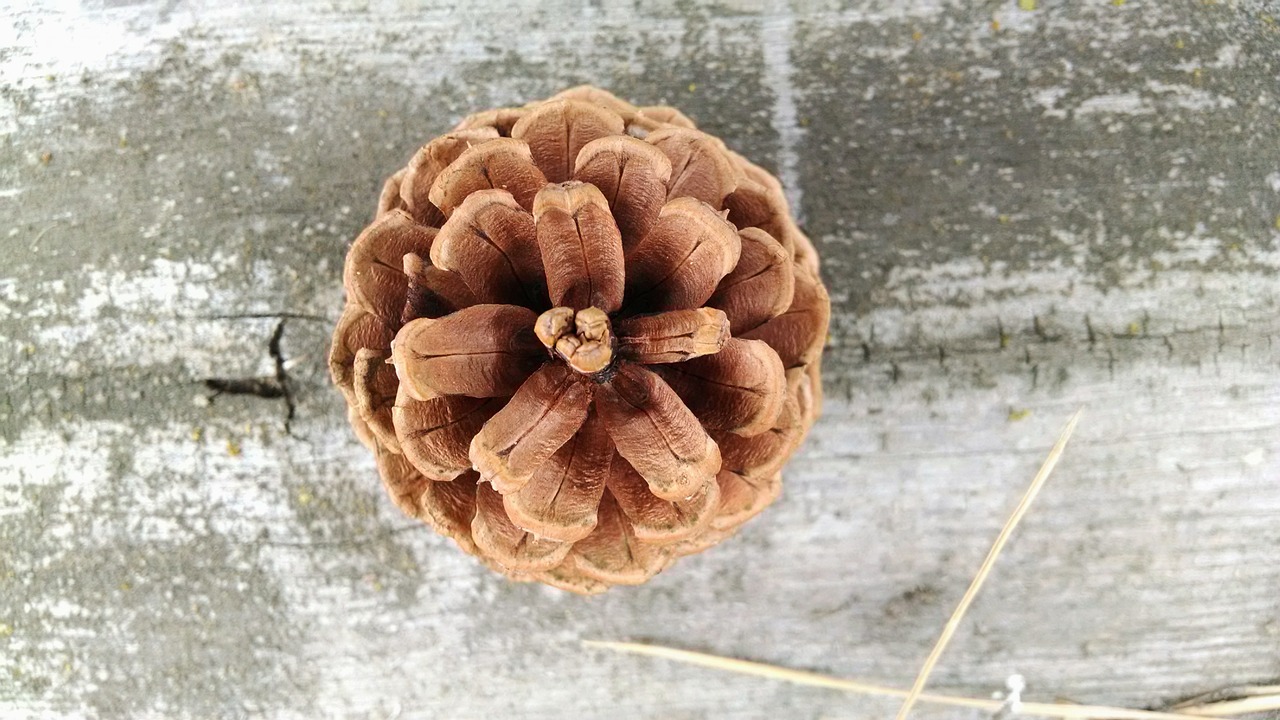
pine cone

First there was the gradual path, the progressive path: I could, through practice, become enlightened.

Then there was the instant path, the sudden path: I could, through a flash of insight, become enlightened.

Now, I am happily lost. Continue reading

Annamalai Swami: How to calm the mind

annamalai swami final talks

The following is an excerpt from the book ‘Annamalai Swami Final Talks’ (bold added by me):

Annamalai Swami: ….Your mind is an insubstantial shadow that will follow you around wherever you go. Attempts to eliminate or control it cannot succeed while there is still a belief that the mind is real, and that it is something that can be controlled by physical or mental activity.

Question: But this shadow mind must still be eliminated by some means.
Continue reading

Annamalai Swami: How to stabilise in the Self

annamalai swami final talks

The following is an excerpt from the book ‘Annamalai Swami Final Talks’ (bold added by me):

Question: One can have a temporary experience of the Self, the underlying reality, but then it goes away. Can you offer any guidance on how to stabilise in that state?
Continue reading