Advaita Vedanta: Gaudapada’s Method (Mandukya Upanishad Karika)

SwansCygnus_olor

Gaudapada is a giant in the history of Advaita, and he is often known as the great-grandfather of Advaita Vedanta. Here in this post I want to focus on the practical aspects of the principle text of Gaudapada, the Mandukya Karika (you can read the entire text here), aimed at the seeker of liberation. What is Gaudapada urging the seeker of liberation to actually do? There are many other aspects of the karika too, such as the metaphysical and philosophical elucidations, but maybe I will save discussion of these for a future post. Here I will stick to the practical method Gaudapada prescribes in order to attain liberation (Moksha).

Gaudapada (c. 6th century CE) was the great-guru of Shankara (788-820 CE), ie. he was Shankara’s guru’s guru. And for those of you who don’t know, Shankara is the person who made the word non-duality (Sanskrit: Advaita) famous. It was he who brought together various texts and propped them up with logic and scriptural arguments and essentially systematised and founded what is today known as Advaita Vedanta.

While we know very little about Gaudapada and his life, he is famous for writing a commentary on the Mandukya Upanishad called the Mandukya Karika or Gaudapada’s Karika. Whilst Gaudapada was not a Buddhist, it is clear that he drew heavily on Buddhist teachings in the karika, often using near exact copies of some Buddhist phrases in his writings, and much of what he writes will be very familiar to those who have studied Mahayana Buddhism or Tibetan Buddhism.

In my view much of the methodology for spiritual practice as well as the conceptual framework within which Gaudapda forms his views is much more similar to Buddhist thought that any Vedanta scripture that we know of that comes before Gaudapada. Conversely, we have many Buddhist scriptures that in essence give the same practical method for enlightenment as Gaudapada, the only substantive difference with Gaudapada being their philosophical way of interpreting and writing about the nature of reality. Now whilst I have been studying both Vedanta and Buddhism for over twenty years, I still do not consider myself to be an expert on the scriptures, so I welcome any corrections or alternative views you want to put my way.

As an interesting aside, the only copies of the Mandukya Upanishad we have are those which are combined with Gaudapada’s commentary. As no earlier versions without the commentary have been found, this has led some to speculate that perhaps Gaudapada himself wrote the Mandukya Upanishad. Textually and stylistically this seems unlikely, but, like with many upanishadic texts, their precise origins and authorship remains shrouded in darkness.


I thought I’d start with verse 90 of Chapter 4 of Gaudapada’s Karika, as it gives an overview of his approach:

IV 90. One should be conversant, at the very outset, with four things. These are as follows: the things to be avoided, the goal to be realised, the disciplines to be cultivated and the tendencies to be rendered ineffective. Of these four, all except the goal to be realised ie. the Supreme Reality, exist only as products of the imagination.

Gaudapada lists four things we should know from the outset as a spiritual seeker: what we are looking for, what we should do, what we should not do and what habitual tendencies we should get rid of. The supreme reality he is speaking of is none-other than Brahman. This is the goal to be realised, and all else, he states, is illusory. Essentially Gaudapada is saying there appears to be a spiritual path with a seeker and a goal and things to do and things to not do, but actually all there is is Reality. The spiritual path is an illusion.

He makes this clearer in this famous oft quoted verse from Chapter 2 verse 32:

II 32. There is neither dissolution nor creation, none in bondage and none practicing disciplines. There is none seeking Liberation and none liberated. This is the absolute truth.

As we are stuck in illusion, what is the (illusory) way out? What is the (illusory) path we should follow? Gaudapada has already stated that the goal of the search is Brahman. Much of the Karika is devoted to philosophical explanation and reasoning about the nature of Brahman, illusion, cause and effect, duality vs. non-duality, etc, but in the following verses Gaudapada gives us a method we can use, and in doing so he also gives us an experiential definition of Brahman. The following verses are from Chapter 3 (click here for just a list of these specific verses without my commentary):

III 40. Yogis who are ignorant of non-duality depend on the control of the mind for attaining fearlessness, the destruction of misery, Self-Knowledge and imperishable peace.

First Gaudapada makes it clear that for one who is not already self-realised or liberated  (‘ignorant of non-duality’), or for those who do not immediately realise the Self upon the mere hearing of the teachings – ie. the vast majority of seekers, control of mind is the method.

Shankara explains this in his commentary on this verse and states ‘…those other Yogis...who possess inferior or middling understanding…the Yogis belonging to this class can experience fearlessness as a result of the discipline of the mind. To them the destruction of misery is also dependent upon mental control. The ignorant can never experience the cessation of misery, if the mind, (considered) related to Ātman, becomes active [Tom: ie. the mind must be rendered inactive]. Besides, their knowledge of self is dependent on their control of the mind. And similarly, eternal peace, known as Mokṣa (or liberation), in their case, depends upon the mental discipline.’

What are the fruits of this method? They are fearlessness, the end of suffering, knowledge of the supreme reality and unending peace. That control of mind is required was already stated in verse III.35 in which he writes ‘The controlled mind is verily the fearless Brahman’ – he is essentially saying that the mind is to be still and egoic vasanas (habitual tendencies) need to be removed – a point which he will reiterate later in verse III.46 below.

III 41. The mind is to be brought under control by undepressed effort; it is like emptying the ocean, drop by drop, with the help of a blade of kusa grass.

Gaudapada then says that this (illusory) path takes much effort, ie. a spiritual practice is required, and he likens this to using a blade of grass to empty the ocean drop by drop. Whilst Brahman is already fully here and now, an (apparent) path is required to remove (apparent) ignorance. As I said before, this post will not dwell too much on the philosophical aspects, but focus on practical steps for the (apparent) seeker. So how do we proceed on this path?

III 42. The mind distracted by desires and enjoyments should be brought under control by proper means; so also the mind enjoying pleasure in inactivity (laya). For the state of inactivity is as harmful as the state of desires.

Here Gaudapada states we should not be distracted by desire for sensual pleasures and warns us that dwelling in the pleasure of inactivity (laya) is also not the way, for this is actually just another sensual pleasure that fuels the egoic process further. ‘Inactivity’ here is a translation of the Sanskrit word ‘laya’ which means a tamasic state, not the still/silent mind that is one with Brahman. In his commentary on these verses Shankara equates laya with susupti, deep sleep; Shankara writes:

‘The word ‘laya’ in the text indicates susupti, ie. deep sleep in which state one becomes oblivious of all things…the mind should be withdrawn from the state of laya as it should be withdrawn from objects…’

Already here, for those of you versed in a variety of Buddhist thought, you will see the familiarity in the methodology, in which dwelling on any sense object is pointed out as nothing other than egoic desire. But why should we turn away from these desires? Isn’t desire for pleasure natural and human?

III 43. Turn back the mind from the enjoyment of desires, remembering that they beget only misery. Do not see the created objects, remembering that all this is the unborn Atman.

We see another classic Buddhist teaching here. It is pointed out that seeking pleasure, or ‘enjoyment of desires’, just leads to further suffering. This is akin to the Buddha’s teachings on Dukkha (Pali for suffering). In fact the Sanskrit word here used is ‘Dukkham’, almost paying homage to the Buddha’s teachings. All pleasures come and go, and though they may please us for a short time, eventually they leave us. And when they do, they leave us wanting more, feeling incomplete, addicted to our desire for more and more and more. And so the seeking-suffering, the wheel of samsara, continues

The remedy suggested here is to see all this as the ‘unborn Atman’, and not to see the objects themselves at all: ‘Do not see the created objects, remembering that all this is the unborn Atman.’

What problems may we encounter on this path, and how do we remedy them?

III 44. If the mind becomes inactive, arouse it from laya; if distracted, make it tranquil. Understand the nature of the mind when it contains the seed of attachment. When the mind has attained sameness, do not disturb it again.

This verse mimics the Buddhist scriptures we see detailing various Buddhist meditation methods, in which remedies for both inactivity and distraction are advised so that the meditator can find that still point of equanimity. Again, the idea is of neither slipping into the dull state of laya with all its bliss and laziness (tamas), nor being hyper-agitated and enamoured with thoughts and the world (rajas), and thus peace (sattva) is attained.

Are there any further stumbling blocks on this path?

III 45. The yogi must not taste the happiness arising from samadhi; he should detach himself from it by the exercise of discrimination. If his mind, after attaining steadiness, again seeks external objects, he should make it one with Atman through great effort.

The instructions Gaudapa give us are extremely concise, and each of these terse verses could be unpacked in much greater detail. Here the seeker is warned not to become attached to happiness, which is nothing other than another subtle object. Seeking objects in order to gain fulfillment is a sure way of perpetuating the ego-illusion together with its addiction to feeling good.

Shankara writes in his commentary on this verse (III.45) ‘The seeker should not taste that happiness that is experienced by the Yogis seeking Samadhi. In other words, he is not to be attached to that happiness. What then should be done by the student? He should be unattached to such happiness…he should turn away the mind from such happiness…’

The second sentence also highlights another important aspect of the teaching, namely that even after steadiness of mind is attained, there can be a lapse back in to delusion/ignorance, where the ego and it’s object-centred desires raise their head. The remedy for this is continued practice. Avoid this step at your peril.

What about when the mind no longer falls back into egoic desire or laya?

III 46. When the mind does not lapse into inactivity [laya] and is not distracted by desires, that is to say, when it remains unshakeable and does not give rise to appearances, it verily becomes Brahman.

Here we are given a pragmatic definition of self-realisation or Brahman – ie. when ignorance no longer remains, when the mind is still and no longer deviates and follows egoic desires, where the grasping mind has essentially died.

To put this into vedanta-speak, Gaudapada is equating realisation of Brahman with stillness of mind that is not attending to objects and removal of the egoic vasanas, something reiterated by Shankara when he famously wrote vasana kshaya moksham, which means ‘destruction of the vasanas is Moksha (liberation)’. It is also completely in line with Sri Ramana Maharshi’s teachings, see here or here for an example.

The Sanskrit word that has been translated as ‘unshakable’ here is also the same as the Sanskrit word for silent or quiet. Shankara explains this in his commentary on the verse:

‘When the mind brought under discipline by the above-mentioned methods, does not fall into the oblivion of deep sleep, nor is distracted by external objects, that is to say, when the mind becomes silent – like the flame of a light kept in a windless place; or when the mind does not give rise to objects – when the mind is endowed with these characteristics [ie. silent and not giving rise to objects], it verily becomes one with Brahman.’

So I will end this post here. The actual instructions are few, and for those with faith they can easily be followed. Be patient – remember – slow and steady wins the race. Re-read the above verses a few times so they sink in, and best wishes.

Om Shanti Shanti Shanti

See also:
The ‘Ultimate Means’ to Liberation
False Enlightenment

Do real gurus use Facebook, Instagram, Twitter, have websites and advertise?

mike myers true guru

There is a notion going around some spiritual circles that ‘real gurus’ don’t advertise: they don’t have websites; they don’t go on Facebook or Twitter; and they definitely don’t have a blog. Of course, many genuinely awakened people don’t do any of these things – but the same could be said the the un-awakened too. ‘Real gurus’, apparently, sit around all day wearing nothing but a loin cloth, always speak in profound dolcit tones, and have a nice long wispy beard. Gotta have the beard.

Let me ask you, is life so limited? Is it really such a transgression to want to share something you’ve found? Listening to some people it does seem that way. I make no qualms about the fact that I do advertise, that there is a desire to reach out to others to share this wonderful discovery that I call Freedom. It’s not as if I try to hide it! And many people who have found ‘my teachings’ have benefitted from my sharing – not that I take any personal credit for any of this.

There is a natural desire to want to share what I have found. I don’t think this has to be the way it is for everyone, but it does seem to be the way it is over here in this body-mind called Tom. It doesn’t mean I’m not sharing something genuine. It doesn’t mean my realisation is only half-baked. It certainly doesn’t mean that I’m only in it for the money. If one day the desire to share this teaching stopped, and who knows, it might one day, then that would be fine too. For now, I’ll just keep on going. Why? Because that’s what’s happening.

Ramana Maharshi

ramana maharshi

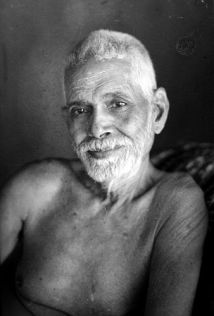
Let’s look at a good example where the myth of not advertising comes from – the example of Ramana Maharshi. Now, many of you know that I have a deep resonance with his teachings and that a sense of devotion towards him spontaneously arose in me quite unexpectedly towards the end of my seeking journey. So I mean no offense at all when I use him as an example. Ramana Maharshi primarily taught in silence and wasn’t obviously/outwardly trying to share any teaching to the masses in an evangelical kind of way. Ramana didn’t travel around the world or even around India – he never really left the mountain of Arunachala once he got there as a teenager, and when he wasn’t being silent, he sometimes talked about the power of silence. Here is an example:

‘Silence of a realised being is most powerful. He sends out waves of spiritual influence which draw many people towards him. Yet he may sit in a cave and maintain complete silence. He never needs to go out among the public. If necessary he can use others as his instrument.’

Here is another example, again from Ramana Maharshi:

‘Contact with an enlightened sage is good. They will work through silence. By speaking their power is reduced. Silence is most powerful. Speech is always less powerful than silence…’

So there we have it. One of the most revered enlightened sages of modern times has said it clear as day. We can therefore deduce that if you’re on Facebook, you’re definitely not realised…right? Well not quite. Let’s take a look.

Shankara

Shankara shankaracharya

If we take the example of Shankara, a giant of Vedic spirituality and considered to be the founder of Advaita Vedanta, we have a very different character outwardly. Shankara fervently travelled the length and breadth of 8th century India preaching and debating those who disagreed with him, setting up schools all across the subcontinent and advertising how his teachings were better and superior to those around him.

Interestingly Ramana Maharshi clearly considered Shankara to be somebody who was fully awakened or self-realised, and yet Shankara clearly went out ‘among the public’. Ramana translated several of Shankara’s works from Sanskrit into Tamil for the benefit of his devotees who were unable to read Sanskrit and described how Shankara’s teachings could lead to liberation. In Ramana’s translation of Shankara’s vivekachudamai, Ramana says of Shankara ‘Sri Sankara, guru of the world (jagathguru), shines as the form of Lord Shiva‘. A worthy complement indeed.

And yet this was a person who certainly did not just stay quiet or stay silent, and he definitely did go out into the public, contrary to the quotes from Ramana Maharshi above. What can we make of this apparent contradiction?

Nisargadatta Maharaj and his lineage

nisargadatta_maharaj

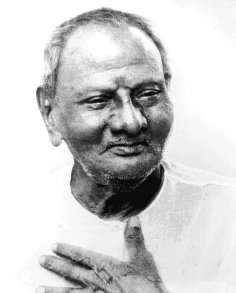
Lets take another example – that of Nisargadatta Maharaj, another revered sage from the 20th centuty. Whilst he did travel widely prior to his awakening, and a small amount afterwards too, he taught mainly from a room in a noisy street in Bombay. As far as I’m aware he didn’t really advertise much himself, but like Ramana, he permitted books about his teachings to be written and sold. So in this way, Nisargadatta would fit the model of a guru who did not solicit disciples and did not, overtly at least, go out to spread the word in public.

However, interestingly, Nisargadatta’s guru, Siddharameshwar Maharaj, travelled extensively around the state of Maharastra teaching those who came to him, sharing his teachings ‘out in the world’. He actively travelled around this part of India sharing his teahings with anyone who resonated with or who would listen to what he was saying.

In Nisargadatta’s lineage, they also teach using texts from Shankara. In verse 38 of Shankara’s Vivekachudamani it is written:

It is the very nature of the great souls to move of their own accord towards removing other’s troubles’

And in verse 37:

They themselves have crossed the dreadful ocean of the world. Without any selfish motive they help others to cross.

One of Ramana Maharshi’s favourite books is a Tamil  Advaita classic called Kaivalya Navaneeta, or the Cream of Liberation. In verses 34 and 35 this is written:

I have already told you that the sages, liberated while alive, appear to be active in many ways according to their parabdha*. My good boy, hear me further, the activities of the sage are solely for the uplift of the world. He does not stand to lose or gain anything. 

*Parabdha, refers to parabdha karma, which means the results of past actions that have not yet manifested. ie. the playing out of conditioning, or, if you want, destiny.

Samarth Ramdas

Dasbodh

Sri Samarth Ramdas is one of the leading figures in Nisargadatta’s lineage from the 17th century. His written text Dasbodh became one of the main texts, perhaps the main text in Nisargadatta’s lineage. There is a story of Samarth Ramdas meeting Guru Hargobind, the sixth of the ten Sikh gurus. It goes like this:

Samarth Ramdas questions Guru Hargobind about his expensive attire, comparing him to the more austere Guru Nanak: “Guru Nanak was a Tyagi sadhu – a saint who had renounced the world. You are wearing arms and keeping an army and horses. You allow yourself to be addressed as Sacha Patshah, the True King. What sort of a sadhu are you?”
Guru Hargobind replied, “Internally a hermit, and externally a prince. Arms mean protection to the poor and destruction of the tyrant. Baba Nanak had not renounced the world but had renounced Maya, i.e. ego”
Ramdas responded by stating: “This appeals to my mind”.

Guru Hargobind here was teaching Ramdas that what is important is not the outward appearance, but the inward state of mind. Some saints are renunciates, like Guru Nanak, others are more ‘worldly’, at least in outward appearance. This is just the way it is. There is no choice in the matter.

Ramdas subsequently went on to do many things out in the world, contrary to what Ramana says in his statement above. Ramdas started to go out and gather many people around him in order to counter the recent Islamic teachings that had spread into India and convince people of the superiority of the Vedic traditions. He built temples, schools and even statues to promote his cause. In fact much of Ramdas’s magnum opus, Dasbodh, is about living in and dealing with the real world. Ramdas was also quite political, actively opposing the caste system, promoting women’s rights in both spiritual and non-spiritual arenas, recruiting female disciples and also backing a Hindu king to overthrow a Muslim one.

In start contrast to Ramana’s silent power, Ramdas said that sages who sat in one place were lesser saints than the ones who engaged in the world. Also in stark contrast to Ramana, Ramdas said that when he died it would be his books, ie. his words, that would carry the teachings forwards and these words should be cherished.

What a contrast! Here we have a silent sage promoting silence, and an active politically-inclined one promoting activity! What can we make of this?

Other examples in brief

I could go on: King Janaka is often given as an example of an enlightened sage who is wealthy and of the world. Vidyaranya, who wrote Pancadasi, a staple text in the Shankara’s Advaita Vedanta tradition, was very active politically and was political advisor to several kings of the day. More recently Swami Vivekananda and Swami Chinmayananda both set up ‘missions’ to spread the word and both travelled and advertised widely in order to do this.

Conclusion

I hope to any discerning reader, even without citing all these examples, it should be obvious that there is nothing intrinsically wrong with advertising, having a website or even, god-forbid, ‘tweeting’. These activities don’t automatically mean you are an ‘unenlightened’ waste of space. What is important is the purity of motivation and genuineness of insight-realisation. We don’t have to just believe what Ramana or Ramdas said, but we can think and see the reality of it all for ourselves.

As Guru Hargobind said, it is not about renouncing the world, but renouncing the ego. By this I mean seeing through the illusion of believing yourself to be a separate doer entity that authors its thoughts and actions (ie. insight), and the removal of the compulsive habitual tendencies (vasanas) that stem from that false belief (ie. purification).

I’ll leave you with a traditional description of an enlightened sage. It describes how a sage may be silent, but also may be active ‘like a python attacking its prey’! The point is that the unique conditioning of the purified body-mind of a ‘sage’ plays itself out in unique and often varied ways. Again we are quoting from Shankara’s Vivekachudamani, starting at verse 536 (apologies for the male chauvinist language assuming the sage is a ‘he’):

The enlightened sage (the knower of Brahman)…if people provide him with comforts and luxuries, he enjoys them and plays with them  like a child. He bears no outward mark of a holy man…He may wear costly clothing or none…He may seem like a madman or like a child, or sometimes like an unclean spirit…Sometimes he appears to be a fool, sometimes a wiseman…Sometimes he is calm and silent. Sometimes he draws people to him, as a python attacks its prey. Sometimes people honor him greatly, sometimes they insult him. Sometimes they ignore him…He acts, yet is not bound by his action. He reaps the fruit of past actions, yet is unaffected by them.

❤ ❤ ❤


Shankara’s way to Enlightenment, with verses from Atma Bodha

Atma Bodha is a short text attributed to Shakara and was written approximately 1400 years ago. It literally means ‘Self Knowledge’ (atma = self, bodha = understanding or knowledge) and it outlines a methodology to lead a seeker from suffering to liberation. Incidentally, bodha is the same root word that forms the word Buddha, which means ‘the one who knows or understands’.

It comprises a class of scriptures called prakarana granthas. Prakarana means ‘procedure’ or ‘task’ and grantha means ‘text’. Taken together prakarana grantha means ‘instruction manual’. These instruction manuals were written for those who do not have the capacity or time to read the voluminous traditional texts such as the vedas and upanishads or for those who were looking for a synopsis of their vedantic studies, and so give us a summary teaching which we can practically apply to our lives.

Ramana Maharshi thought this text important enough to translate it from Sanskrit to Tamil so that Tamil-speaking locals who could not understand Sanskrit could still benefit from its teachings. In his introduction to his translation, Ramana describes Shankara as the one who brings forth enlightenment. Similarly in the Inchegarei Sampradaya, the lineage to which Nisargadatta Maharaj belonged, Shankara is considered an enlightened sage and his writings are studied as a matter of course.

Below are some selected quotes from Shankara’s Atma Bodha. We will see how in these quotes the basic methodology (after the entry criteria for this teaching are briefly alluded to) is:

1) Firstly viveka, or distinguishing between what is Brahman and what is not. Brahman is identified as the unchanging subject and the world of objects (ie. the body, mind and world) is said to be not-Brahman. This is an artificial duality that is temporarily set up in order to counter and remove the deeply ingrained belief in the doer-entity or ego (ahamkara). We will see how this duality is later resolved into non-duality and furthermore into non-conceptuality.

2) Once the subject-object distinction (viveka) has been properly made then this knowledge or understanding is to be practised. This is done by the practise of identification with the subject, Brahman, and turning away from the phenomena that arise in our awareness.

3) Eventually, after long practice of this, the doer-entity that we once took ourselves to be is seen to be an illusion. This ignorance is removed.

4) Once the doer-entity is seen to be unreal, then the interpretive notions of subject and object can also be done away with. Having completed their purpose, the concepts of subject and object are also seen to be false beliefs and are allowed to fall away.

5) Everything is ‘resolved into Brahman’, not literally, but in the way we label reality. Before, at the first step of viveka,  the unchanging subject was considered Brahman/Atman and the changing world of objects (the mind, body and world) were said to be not-Brahman/Atman. Now ignorance is removed, everything is seen to be Brahman and the duality set up by viveka is removed.

6) Eventually we stop needing to label reality at all. What we are left with is just this, this present experience, devoid of concepts of self or reality or even Brahman. So simple, so direct, how can it be put into words?

Verse 5. The knowledge [I am Brahman], when unceasingly practiced, drives out all ignorance, then itself disappears.

Shankara - the knowledge then itself disappears

37. The mental impression ‘I am Brahman’, created by ceaseless practice, destroys ignorance and the resultant suffering, just as medicine destroys disease.

Shankara - I am Brahman destroys ignorance (1)

41. There are no distinctions such as ‘Knower’, the ‘Knowledge’ and the ‘Object of Knowledge’ in the Supreme Self

Shankara- there are no distinctions in the Supreme Self.

64. All that is perceived, or heard, is Brahman and nothing else

Shankara- All that is perceived is Brahman and nothing else

Turiya – the fourth state, or is it?

om star.png

In my recent interview on Buddha at the Gas Pump, Rick asked me about Turiya, the 4th state of consciousness.

According to Vedanta, Turiya is that state of consciousness which lies beyond the 3 states of consciousness that we all ordinarily experience, namely the waking state, the dream state and the deep sleep state. In experiencing Turiya directly there is the possibility of liberation.

You can listen to our exchange on the video below. After the interview I decided to see what Ramana Maharshi had said about Turiya and was relieved to find that he agreed with me 🙂 😛 (at least on this occasion – he probably agrees with Rick on other occasions!)

Here is what Ramana had to say about Turiya:

From Talks with Sri Ramana Maharshi, Talk 353:

Questioner: What is turiya?

Ramana Maharshi: There are three states only, the waking, dream and sleep. Turiya is not a fourth one; it is what underlies these three. But people do not readily understand it. Therefore it is said that this is the fourth state and the only Reality. In fact it is not apart from anything, for it forms the substratum of all happenings; it is the only Truth; it is your very Being. The three states appear as fleeting phenomena on it and then sink into it alone. Therefore they are unreal.

This view is also the traditional view of Turiya in vendanta as expounded by Gaupada in his Mandukya Karika.

So does this mean that Rick’s view is wrong? I don’t think so. His view is also a useful view, but in a slightly different way. Thinking of Turiya as a 4th state distinct from the others can also be a beneficial teaching when used in the teachings of a skilled teacher with a genuine realisation. Rick’s notion of entering a (nirvikalpa) samadhi and this having a purifying effect on the waking state is also a valid way of approaching this realisation/freedom.

It’s important to note that these teachings are ways of describing our experience. They are concepts, and form conceptual ways of carving up our experience with the intended effect of leading the seeker to liberation. They are not intended to be based in physiology or  ‘science’ in my view.

The point of these specific teachings/concepts is to point out the awareness-consciousness that does not come and go, regardless of what is happening. Whether or not they are successful in achieving that end is the test of how good the teaching is, not how well it is based in human physiology or scientific observations. It is therefore impossible to say one teaching is better than the other – the teaching that works is the ‘best’ teaching for that situation (this is the notion of expedient means in Buddhism)

Eventually, when you realise that consciousness is the essence of you, and remain as that, unidentified as body or mind, the illusory sense of doership is eventually destroyed. With it, the dualistic notion of a consciousness that is in some way distinct, underlying and permanent is also destroyed. What you are left with is what is already here: this, nameless, beyond words (and inclusive of words).

For a more detailed discussion of Turiya please see here:

http://www.advaita.org.uk/discourses/teachers/turiya_peter.htm

4 things you (may) need before you can be enlightened

buddha leaf.jpg

Over the centuries, the lives of countless enlightened and self-realised sages have been studied and investigated, contrasting how they were prior to and after enlightenment, searching for clues as to what may aid other seekers in reaching total and complete liberation. Through this investigation several common qualities have been found which, if developed, aid the spiritual seeker to reach their goal.

In Vedanta, traditionally, there are four qualities (sadhana catustaya in Sanskrit) that a person should cultivate prior to engaging with the higher teachings of vedanta. These qualities, or qualifications,  are deemed necessary to have, at least in some degree, before enlightenment can subsequently be achieved.

A similar notion that a certain level of attainment or qualification is required before higher teachings are taught are found throughout spiritual traditions, including many ‘no-path’ schools such as Dzogchen, Mahamudra and Zen (all types of Buddhism).

The idea is that without these qualities being present the seeker may have many insights and epiphanies, but the results will be unstable, with insights often coming and going, the results being a continued sense of lack and frustration. In a more mature seeker this may result in so-called ‘flip-flopping’, when the seeker has repeated experiences of being enlightened only to find, much to their dismay, that these experiences also end and suffering resumes.

The idea is that without these qualities being present the seeker may have many insights and epiphanies, but the results will be unstable, with insights often coming and going, the results being a continued sense of lack and frustration.

Conversely, when a seeker has developed these qualities, when exposed to the higher teachings of vedanta they make quick progress and quickly attain moksha (Freedom), which does not come and go.

Below Shankara, that great proponent of advaita vedanta (non-duality), tells us that these qualities are more important than other factors in attaining moksha. This quote is taken a text attributed to Shankara called vivekachudamani, one of his most famous texts and one of my favourites when I was a seeker:

Ultimate success in spiritual endeavours depends chiefly upon the qualifications of the seeker. Auxiliary conveniences such as time and place all have a place indeed, but they are essentially secondary.
Vivekachudamani by Adi Shankara, verse 14

The 4 Qualities (sadhana catustaya)

Here are the 4 qualities, sometimes known as the ‘4 Ds’, (with the Sankrit word in brackets):

  1. Discrimination (viveka): being able to tell the difference between what is permanent and what is transient
  2. Dispassion (vairagya): not desiring what is transient/impermanent; turing away from the impermanent towards what is permanent
  3. Discipline (samadisatkasampatti): dropping trivial activities and turning towards the teaching and what is permanent.(Samadisatkasampatti  more literally refers to the six treasures, each of which will be discussed in later posts).
  4. Desire for freedom (mumuksutvam): this helps overcomes the ups and downs that life may bring and enables the seeker to overcome obstacles along the way.

There are several texts that outline these 4 qualities, perhaps the most succinct being Shankara’s Vivekachudamani which I have already mentioned above:

17. He alone is considered qualified to inquire after the supreme Reality (Brahman), who has discrimination, detachment, qualities of calmness etc., and a burning desire for liberation.
18. Great sages have spoken of four qualifications for attainment which, when present, succeed in the realization of Brahman and in the absence of which the goal is not attained.
Vivekachudamani by Adi Shankara, verses 17 & 18

Risk Factors vs qualifications

Before we look at each of the qualities in turn (in forthcoming articles), I would like to give my view. I don’t think these qualities are definite prerequisites for Freedom or self-realisation, important as they are. I think of them more as risk factors – ie. there may be an increased risk of enlightenment if these qualities are cultivated. Having the qualities does not guarantee enlightenment, and not having them does not bar one from Freedom.

It should be obvious really, but just because a particular tradition states something is necessary, doesn’t mean it is so – that’s my take on things at least. For me this Freedom is so simple, beyond simple actually, as it already is, that the whole notion of qualifications seems a bit arbitrary.

That being said, I do think they are of importance, and understanding and practising them will benefit many seekers, both in terms of increasing their day-to-day happiness, and in  terms of realising Freedom.

It has been said that this knowledge of the four qualities required for enlightement has come about by looking at and studying the lives of hundreds of spiritual seekers and knowers-of-Freedom (Jnanis) and seeing if they had anything in common. When we go through each of the four qualities I hope that you will be able to see, in a commonsense way, how these qualities work together and the principles that underlie them, and how they can indeed aid the attainment of moksha (the realisation of Freedom).

At the same time I feel it is important that we bear in mind that there are also inherent problems with the notion of qualifications which must also be understood if one is to engage with them effectively, namely that the very idea of a progressive path to Freedom (implied by the need for qualifications) can itself be an obstacle to realising that-which-already-is.

I will explore each of the above 4D’s in turn in forthcoming articles.

Nisargadatta Maharaj: In reality there is no person

Nisargadatta_Maharaj

The person is merely the result of a misunderstanding. In reality, there is no such thing.

Feelings, thoughts and actions race before the watcher in endless succession, leaving traces in the brain and creating an illusion of continuity.

A reflection of the watcher in the mind creates the sense of “I” and the person acquires an apparently independent existence.

In reality there is no person, only the watcher identifying himself with the ‘I’ and the ‘mine’.

Taken from I Am That by Nisargadatta Maharaj

Continue reading

Jnaneshvar: Is Sat-Chit-Ananda the supreme?

jnaneshwar

Jnaneshvar (1275–1296), also known as Jnanadev is widely acclaimed as a great self-realised master and teacher whose poetry and writings have influenced many generations after him. He was part of the Nath tradition, an ancient lineage of spiritual masters, which has become recently famous in the West due to Nisargadatta Maharaj (1897-1981), a more recent initiate in the Nath tradition.
Continue reading