Zen
Jiddu Krishnamurti: ‘Complete Attention’
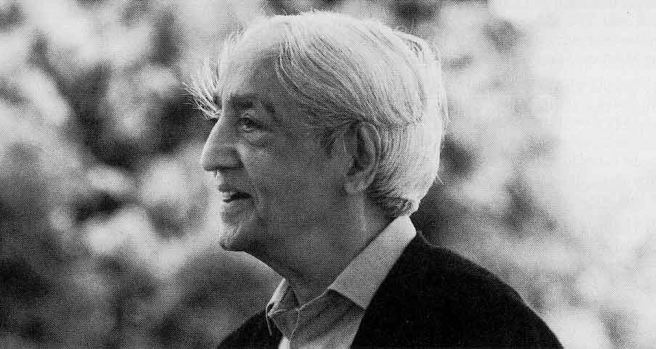
Jiddu Krishnamurti used words in a very specific and often unusual way. He, generally speaking, uses the word ‘attention’ to signify awareness without the presence of the ego or chooser, and therefore without resistance or direction. Below is an example, taken from The Book of Life, June 12th:
What do we mean by attention? Is there attention when I am forcing my mind to attend? When I say to myself, “I must pay attention, I must control my mind and push aside all other thoughts,” would you call that attention? Surely that is not attention.
What happens when the mind forces itself to pay attention? It creates a resistance to prevent other thoughts from seeping in; it is concerned with resistance, with pushing away; therefore it is incapable of attention. That is true, is it not?
To understand something totally you must give your complete attention to it. But you will soon find out how extraordinarily difficult that is, because your mind is used to being distracted, so you say, “By Jove, it is good to pay attention, but how am I to do it?” That is, you are back again with the desire to get something, so you will never pay complete attention. … When you see a tree or a bird, for example, to pay complete attention is not to say, ”That is an oak,” or, “That is a parrot,” and walk by.
In giving it a name you have already ceased to pay attention… Whereas, if you are wholly aware, totally attentive when you look at something, then you will find that a complete transformation takes place, and that total attention is the good.
There is no other, and you cannot get total attention by practice. With practice you get concentration, that is, you build up walls of resistance, and within those walls of resistance is the concentrator, but that is not attention, it is exclusion.
Also, see here: If you listen completely there is no listener
Nonduality: What does ‘there is no person’ actually mean?
‘Letting Go of Liberation’ – One day talk on Non-duality by Tom Das
 Dear All
I’ll be speaking this Saturday 19th January 2019 at the Horse and Coaches Pub near Waterloo Station, London UK.
If you are interested in attending, details are on this link.
To be notified of any future events, please sign up to my meetup page which is where I list all my events.
In addition to this, I will be holding my usual online meeting this Thursday 17th January at 8pm UK time.
Best wishes
Tom
Start 2019 with a ‘Satsang’!
 Hello everyone and Happy New Year to you all!
Just a reminder that Satsang will take at the Druid’s Head, Kingston upon Thames, London UK this Thursday at 7pm. Further details can be found here.
No prior knowledge or experience is required, so if you have never attended before and feel in some way drawn to this, why not come along? We are a small and welcoming group that focus on bringing these wonderful teachings directly into daily life.
If you are not in the UK, you can still attend online meetings. Details are on the same link and I recommend you register on meetup (see link) if you want to receive notices of any upcoming events or changes to events, as this is where I post all my events.
Best wishes and with love
Tom
Which Spiritual Teaching is Best?
God and Faith
The key to nonduality and yoga
See if you can spot the common themes from the following 🙂
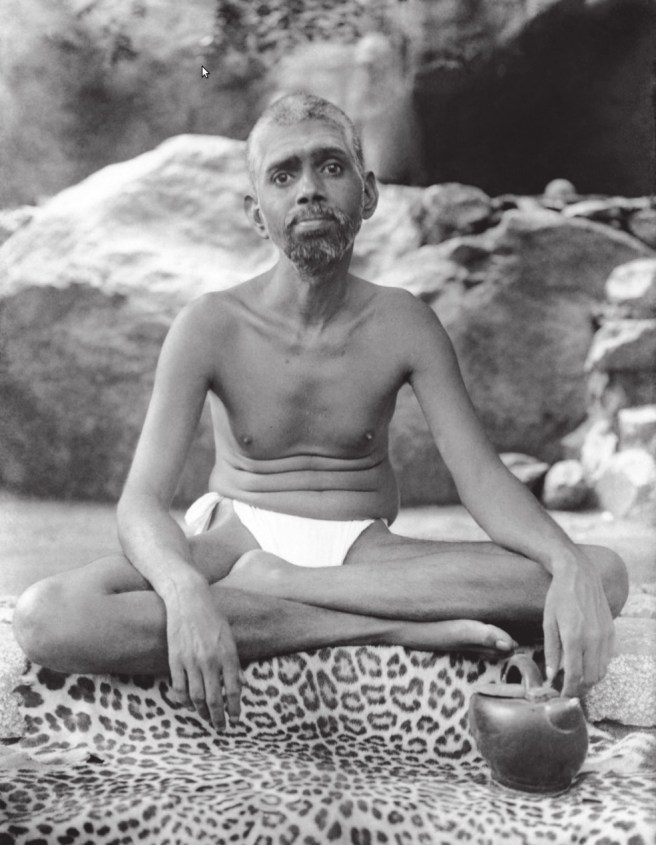
From Ramana Maharshi’s ‘Who am I?’:
Q. What is wisdom-insight (jnana-drsti)?
Ramana: Remaining quiet is what is called wisdom-insight
From Advaita Bodha Deepika (one of Ramana’s favourite traditional scriptures), Chapter 3:
17. Master: With complete stillness of mind, samsara will disappear root and branch. Otherwise there will be no end to samsara, even in millions of aeons (Kalpakotikala).
18. Disciple: Cannot samsara be got rid of by any means other than making the mind still?
M.: Absolutely by no other means; neither the Vedas, nor the shastras nor austerities, nor karma, nor vows, nor gifts, nor recital of scriptures of mystic formulae (mantras), nor worship, nor anything else, can undo the samsara. Only stillness of mind can accomplish the end and nothing else.
19. D.: The scriptures declare that only Knowledge can do it. How then do you say that stillness of the mind puts an end to samsara?
M.: What is variously described as Knowledge, Liberation, etc., in the scriptures, is but stillness of mind.
D.: Has any one said so before?
20-27. M.: Sri Vasishta had said…
Also from Chapter 3 of Advaita Bodha Deepika:
29-30. D.: How can the mind be made still?
M.: Only by Sankhya. Sankhya is the process of enquiry coupled with knowledge. The realised sages declare that the mind has its root in non-enquiry and perishes by an informed enquiry.
D.: Please explain this process.
M.: This consists of sravana, manana, nididhyasana and samadhi, i.e., hearing, reasoning, meditation and Blissful Peace, as mentioned in the scriptures. Only this can make the mind still.
31-32. There is also an alternative. It is said to be yoga.
D.: What is yoga?
M.: Meditation on Pure Being free from qualities.
D.: Where is this alternative mentioned and how?
M.: In the Srimad Bhagavad Gita, Sri Bhagavan Krishna has said: What is gained by Sankhya can also be gained by yoga. Only he who knows that the result of the two processes is the same, can be called a realised sage.
33-34. D.: How can the two results be identical?
M.: The final limit is the same for both because both of them end in stillness of mind. This is samadhi or Blissful Peace. The fruit of samadhi is Supreme Knowledge; this remains the same by whichever process gained.
From Ramana Maharshi’s ‘Who am I?’:
‘All the texts say that in order to gain release one should render the mind quiescent; therefore their conclusive teaching is that the mind should be rendered quiescent; once this has been understood there is no need for endless reading.’
Also see:
Does stillness of mind lead to liberation?
The ‘ultimate means’ to liberation
Ramana Maharshi: a quick and simple method to self-realisation
The great-perfection: a non-practice
False Zen – Zen/Ch’an Master Yuanwu
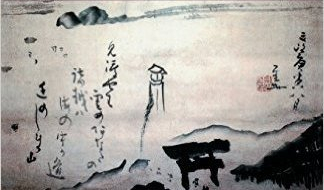
Yuanwu (1063-1135) was a great Chinese Ch’an (Zen) master, a key figure in Chan teachings who is most famous for writing the Blue Cliff Record. He wrote several letters which are instructive and insightful into early Ch’an/Zen teachings and in the except below he writes about false enlightenment and the perils of instant enlightenment without practice, something that has never ‘been a part of the real practice of Buddhism’:
Some people hear this kind of talk and jump to conclusions claiming:
“I understand! Fundamentally there is nothing to Buddhism – it’s there in everybody. As I spend my days eating food and wearing clothes has there ever been anything lacking?”
Then they settle down in the realm of unconcerned order ordinariness, far from realising that nothing like this has ever been a part of the real practice of Buddhism.
Later on in the same letter Yuanwu writes:
Nowadays there are many bright Zen monks in various localities who want to pass through directly. Some seek too much and want to understand easily.
As soon as they know a little bit about the aim of the Path and how to proceed, they immediately want to show themselves as adepts.
Yet they have already missed it and gone wrong.
(The above excerpt was taken from ‘Zen Letters: teachings of Yuanwu’ translated by JC and Thomas Cleary, p. 27-29)
For more on Yuanwu’s comments on the zen way to attain enlightenment see here:
Zen (Ch’an) Master Yuanwu: The Sure Way to Enlightenment, The Way of Zen
and
 Tom Das