The Union of Meditation and Self-Enquiry – The two paths of Vedanta – Panchadasi by Vidyaranya Swami

idf631

Traditionally there are two paths to liberation according to Advaita Vedanta (Nondual Vedanta). In Panchadasi, a traditional advaita vedanta text, Vidyaranya Swami refers to them as the path of Meditation and that of Self-Enquiry.

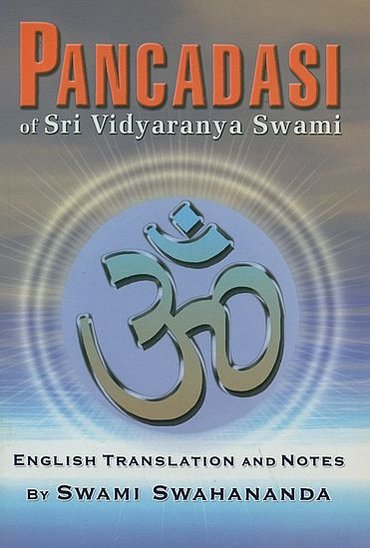
Panchadasi was written by Vidraranya Swami (1380-1386) over 600 years ago and contains the essence of the vedanta scriptures over 15 chapters (‘pancha’ means 5 and ‘dasi’ means 10, so together they refer to 15 chapters).

  • This following excerpt from chapter 1 gives an overview of the vedantic path to moksha.
  • The next excerpt from chapter 9 shows how the 2 vedantic paths in the title are in fact the same.
  • I have then chosen a few more excerpts from subsequent chapters aimed at encourging the seeker in their sadhana (spiritual practice) and extolling the virtues of meditation.

My comments are interspersed in red and bold type has been also added by myself for emphasis.

The full text of Panchadasi is available here for download

Best wishes

Tom


Overview of the path – from Chapter 1:

1.40. By discrimination of the subtle body (and recognition of its variable, transient character), the sheaths of the mind, intellect, and vital airs are understood to be different from the Self, for the sheaths are conditions of the three gunas, and differ from each other (qualitatively and quantitatively).

This indicates that the mind is able to discriminate (viveka – ie. to differentiate the unchanging self from the changing gross and subtle objects experienced) between the self and the gross and subtle bodies – ie. the body and mind. However the mind cannot so easily discriminate the self from the causal body in which the latent tendencies remain dormant. For this meditation is helpful, as follows:

1.41. Avidya (manifested as the causal body of bliss sheath) is negated in the state of deep meditation (in which neither subject nor object is experienced), but the Self persists in that state; so it is the invariable factor. But the causal body is a variable factor, for though the Self persists, it does not.

This is referring to samadhi, in which the subject-object duality has been removed. Also see Chapter 9 verse 126 of Panchadasi:

‘When meditation on the attributeless Brahman is mature it leads to Samadhi. This state of intense concentration at case leads on to the Nirodha state in which the distinction between subject and object is eliminated.’

This experience in meditation allows one to realise that the causal body also is not the Self:

1.42. As the slender, internal pith of munja grass can be detached from its coarse external covering, so the Self can be distinguished through reasoning from the three bodies (or the five sheaths). Then the Self is recognised as the supreme consciousness.

1.52. The Self is untouched by doubts about the presence or absence of associates, connotations and other adventitious relationships, because they are superimposed on it phenomenally.

Like a mirror is untouched by the contents of the reflection, like the cinema screen is untouched by the scenes in the movie, the Self remains untouched and unaffected by life.

Now Vidyaranya tells us of the advaitic path, consisting of sravana, manana, nididhyasana and samadhi. Shankara does the same here.

1.53. The finding out or discovery of the true significance of the identity of the individual self and the Supreme with the aid of the great sayings (like Tat Tvam Asi) is what is known as sravana. And to arrive at the possibility of its validity through logical reasoning is what is called manana.

Sravana, literally meaning hearing, means to hear or listen to the teachings. To thereafter think about the teachings and their logic is called manana.

1.54. And, when by sravana and manana the mind develops a firm and undoubted conviction, and dwells constantly on the thus ascertained Self alone, it is called unbroken meditation (nididhyasana).

Sravana and manana naturally lead to unbroken meditation, or nididhyasana. This eventually leads to removal of the subject-object duality and culminates in samadhi:

1.55. When the mind gradually leaves off the ideas of the meditator and the act of meditation and is merged in the sole object of meditation. (ie. the Self), and is steady like the flame of a lamp in a breezeless spot, it is called the super-conscious state (samadhi).

1.56. Though in samadhi there is no subjective cognition of the mental function having the Self as its object, its continued existence in that state is inferred from the recollection after coming out of samadhi.

There is no experience as such in samadhi, as the mind (and memory) does not temporarily exist, so the state is not known as such at the time. The next verse tells us that it persists dependent upon ‘effort and will made prior to its achievement’ and through ‘constant efforts’:

1.57. The mind continues to be fixed in Paramatman in the state of samadhi as a result of the effort of will made prior to its achievement and helped by the merits of previous births and the strong impression created through constant efforts (at getting into samadhi).

1.58. The same idea Sri Krishna pointed out to Arjuna in various ways e.g., when he compares the steady mind to the flame of a lamp in a breezeless spot.

He is referring to Krishna’s teaching to Arjuna in the Bhagavad Gita, Chapter 6 verse 19:

‘Just as a lamp in a windless place does not flicker, so the disciplined mind of a yogi remains steady in meditation on the self.’

1.59. As a result of this (nirvikalpa) samadhi millions of results of actions, accumulated in this beginningless world over past and present births, are destroyed, and pure dharma (helpful to the realisation of Truth) grows.

1.60. The experts in Yoga call this samadhi ‘a rain cloud of dharma’ because it pours forth countless showers of the bliss of dharma.

1.61. The entire network of desires is fully destroyed and the accumulated actions known as merits and demerits are fully rooted out by this samadhi.

1.62. Then the great dictum, freed from the obstacles (of doubt and ambiguity), gives rise to a direct realisation of the Truth, as a fruit in one’s palm – Truth which was earlier comprehended indirectly.

The above 4 verses indicate how powerfully purifying nirvikalpa samadhi is in rooting out the habitual tendencies to identify with the body-mind, when gives rise to direct realisation of the Truth or Liberation.

1.63. The knowledge of Brahman obtained indirectly from the Guru, teaching the meaning of the great dictum, burns up like fire all sins, committed up to that attainment of knowledge.

1.64. The direct realisation of the knowledge of the Self obtained from the Guru’s teaching of the great dictum, is like the scorching sun, that dispels the very darkness of Avidya, the root of all transmigratory existence.

1.65. Thus a man distinguishes the Self from the five sheaths, concentrates the mind on It according to the scriptural injunctions, becomes free from the bonds of repeated births and deaths and immediately attains the supreme bliss.

In summary, the path is viveka (differentiating the unchanging self from the changing objects experienced) plus unbroken meditation on the self.


We see a similar reasoning given in Chapter 9:

The unity of meditation and self-enquiry – From Chapter 9:

9.126. When meditation on the attributeless Brahman is mature it leads to Samadhi. This state of intense concentration leads on to the Nirodha state in which the distinction between subject and object is eliminated.

‘Nirodha’ is the term used in yoga to indicate what in vedanta is known as nirvikalpa samadhi. Ceaseless meditation on the Self leads to the knowledge ‘I am Brahman’:

9.127. When such complete cessation of mental activity is achieved, only the association-less entity (Atman) remains in his heart. By ceaseless meditation on It based on the great Sayings, arises the knowledge ‘I am Brahman’.

9.128. There is then a perfect realisation of Brahman as the immutable, association-less, eternal, self-revealed, secondless whole, as indicated in the scriptures.

The author backs up his above statements by showing how the same ideas are present in the Holy Upanishads which are the most important texts in Vedanta teachings and hold the highest authority:

9.129. The Amritabindu and other Upanishads recommend Yoga for the same object. It is clear therefore that meditation on the attributeless Brahman is superior to other types of worship.

A warning for those who give up their meditation:

9.130. Those who give up meditation on the attributeless Brahman and undertake pilgrimages, recitations of the holy formulas and other methods, may be compared to ‘those who drop the sweets and lick the hand’.

Here the questioner points out the 2 main vedantic paths to liberation, one being meditation or yoga, the other being self-enquiry. The following verses indicate that the higher and quicker path is self-enquiry, but both paths are actually the same in the end:

9.131. (Doubt): This applies also to those who meditate on the attributeless Brahman giving up enquiry into Its nature. (Reply): True, therefore only those who are not able to practise enquiry have been asked to meditate on the attributeless Brahman.

9.132. Those who are very fickle-minded and agitated do not have the knowledge of Brahman by the practice of enquiry. Therefore control of the mind is the chief means for them. By it their mind becomes free from distractions.

9.133. For those whose intellects are no longer distracted nor restless but are merely covered by a veil of ignorance, the analytical system called Sankhya (intellectual enquiry) is prescribed. It will quickly lead them to spiritual illumination.

The above verse indicates that for enquiry to work, the mind must already be pure and stable and with only a small amount (‘a veil’) of ignorance. If not, then a calming practice, such as meditation, karma yoga or surrender/bhakti are required.

9.134. ‘The state of spiritual balance is obtainable by both the Sankhyas (those who follow the path of enquiry) and the Yogis (those who practise meditation). He really knows the meaning of the scriptures who knows that the paths of enquiry and meditation are the same’.


The path of meditation

Continuing with Chapter 9, here follows several statements from Shruti (ie. the Upanishads), the most authoritative Vedanta texts, extolling the virtues and efficacy of the path of meditation

9.138. So the future life of a man is determined by the nature of his thoughts at the time of death. Then as a devotee of the Personal God is absorbed in Him, so a meditator on the attributeless Brahman is absorbed in It and obtains Liberation.

9.140. As by meditation on the Personal God knowledge of the nature of Ishvara arises, so by meditation on the attributeless Brahman, knowledge of Its nature arises and destroys the ignorance which is the root of rebirth.

9.141. A meditator becomes Brahman who is ‘unattached, desireless, free from body and organs and fearless’. Thus the Tapaniya Upanishad speaks of liberation as the result of meditation on the attributeless Brahman.

9.142. By the strength of meditation on the attributeless Brahman knowledge arises. So the scriptural verse, ‘Verily there is no other path to liberation (except knowledge)’ does not conflict with this.

9.143. So the Tapaniya Upanishad points out that liberation comes from desireless meditation. The Prasna Upanishad also says that by meditation with desire one enters into the region of Brahma.

9.146. Such a worshipper, by virtue of his meditation on the attributeless Brahman, enters the world of Brahma and there obtains direct knowledge of Brahman. He is not born again, he gets ultimate release at the end of the four Yugas.

9.147. In the Vedas meditation on the holy syllable Aum in most places means meditation on the attributeless Brahman, though in some places it means meditation on Brahman with attributes.

9.148. Pippalada being asked by his pupil Satyakama says that Aum means Brahman both with and without attributes.

9.149. Yama too, questioned by his pupil Nachiketas, replied that he who meditates on Aum knowing it as the attributeless Brahman obtains the fulfilment of his desires.

9.150. He who meditates properly on the attributeless Brahman gets direct knowledge of Brahman either in this life or at the time of death or in the world of Brahma.

9.151. The Atma Gita also clearly says that those who cannot practise discrimination should always meditate on the Self.

9.152. (The Self as if says): ‘Even if direct knowledge of Me does not seem to be possible, a man should still meditate on the Self. In the course of time, he doubtlessly realises the Self and is freed’.

9.153. ‘To reach treasures deeply hidden in the earth, there is nothing for it but to dig. So to have direct knowledge of Me, the Self, there is no other means than meditation on one’s Self’.

9.155. Even if there is no realisation, think ‘I am Brahman’. Through meditation a man achieves even other things (like the Deities), why not Brahman who is ever-achieved?

A stark warning not to stop meditating before the goal is reached:

9.156. If a man, who is convinced by his experience that meditation, practised day by day, destroys the idea that the not-Self is the Self, nevertheless becomes idle and neglects meditation, what difference, tell us, is there between him and a brute ?

9.157. Destroying his idea that the body is the Self, through meditation a man sees the secondless Self, becomes immortal and realises Brahman in this body itself.

9.158. The meditator who studies this Chapter called the ‘Lamp of Meditation’, is freed from all his doubts and meditates constantly on Brahman.


From Chapter 11:

Chapter 11 further focuses upon the role of meditation as opposed to inquiry:

11.110. In the Maitrayani Upanishad of the Yajur Veda, sage Sakayanya spoke of the great bliss experienced in Samadhi to the royal sage Brihadratha while discoursing on Samadhi.

11.111. ‘As fire without fuel dies down and becomes latent in its cause, so the mind, when its modifications have been silenced, merges in its cause’.

11.112. ‘To the mind fixed on Reality, merged in its cause and impervious to the sensations arising from the sense-objects, the joys and sorrows (together with their occasions and materials) experienced as a result of the fructifying Karma seem unreal’.

11.114. ‘Through the purification of his mind a man destroys the impressions of his good and evil Karma and the purified mind abiding in Atman enjoys undiminishing bliss’.

11.115. ‘If a man were to focus his mind on Brahman, as he commonly does on the objects of senses, what bondage would he not be free from ?’

11.116. ‘Mind has been described as of two types, pure and impure. The impure is that which is tainted by desires, the pure is that which is free from desires’.

11.117. ‘The mind alone is the cause of bondage and release. Attachment to objects leads to bondage and freedom from attachment to them leads to release’.

11.118. ‘The bliss arising from absorption in the contemplation of the Self, when all sins and taints are washed off through the practice of Samadhi, cannot be described in words. One must feel it in one’s own heart’.

11.119. Though it is rare for men to keep their minds long in the state of absorption (Samadhi), still even a glimpse of it confers conviction about the bliss of Brahman.

11.121. Such a man ignores the bliss experienced in the state of mental quiescence and is ever devoted to the supreme bliss and meditates on it.

11.122. A woman devoted to a paramour, though engaged in household duties, with all the time be dwelling in mind on the pleasures with him.

11.123. Similarly the wise one who has found peace in the supreme Reality will be ever enjoying within the bliss of Brahman even when engaged in worldly matters.

11.124. Wisdom (Jnana) consists in subjugating the desires for sense-pleasure, even when the passions are strong and in engaging the mind in meditation on Brahman with the desire to enjoy the bliss.

In Ramana’ Maharshi’s ‘Who am I?’, the question as to the nature of Jnana arises and is simply answered:

Questioner: What is wisdom-insight (jnana-drsti)?

Ramana Maharshi: Remaining quiet is what is called wisdom-insight.

See here for more

11.125. A man carrying a burden on his head feels relief when he removes the load; similarly a man freed from worldly entanglements feels he is in rest.

11.126. Thus relieved of burden and enjoying rest, he fixes his mind on the contemplation of the bliss of Brahman, whether in the state of detachment or experiencing pain or pleasure according to fructifying Karma.

11.130. Enjoying both the bliss of Brahman taught in the scriptures and the worldly bliss unopposed to it, the Jnani of truth knows them both in the same way as one who knows two languages.

11.131. When the Jnani experiences sufferings, he is not disturbed by them as he would have been before. Just as a man half-immersed in the cool water of the Ganges feels both the heat of the sun and the coolness of the water, so he feels the misery of the world and the bliss of Brahman at the same time.


And to finish, one of my favourite verses here:

From Chapter 13:

13.3. The world is born of bliss, it abides in bliss and is merged in bliss. How then can it be anything other than this bliss?


Has anyone else spotted this glaring error in the Bhagavad Gita? Plus a summary of the Gita’s teachings

One of my favourite spiritual books is the Bhagavad Gita. It, perhaps, is the reason I stumbled into my love of what could be called Eastern Spirituality or Eastern Mysticism, and the Gita was one of the first few holy texts I read. It contains a number of different but intricately related teachings that, together, knit the fabric for a beautiful teaching. It also has an epic and somewhat unusual setting, for a spiritual text at least, namely the battleground of Kurukshetra in which Arjuna is seeking advice prior to going into battle from his charioteer, Krishna. It just so happens that Krishna is in fact God incarnate, and so a wonderful dialogue and spiritual discourse commences.

I do not consider the Gita to be a perfect text, for a number of reasons which I will not delve into in this post, but for many years it has seemed to me that there is a glaring error in its current format, one that I have not heard much of, and one that can be easily rectified. In fact, when this error is seen and rectified, the Gita, in my opinion, is much more satisfying to read, albeit still with its imperfections.

What is the error? It is that Chapters 3 and 4 are the wrong way round. It took me a while to figure this out, and I wonder if this idea has occurred to other people too? A quick google search has not revealed to me that other people have noticed this. However, surely for any discerning reader, the transition from Chapter 2 to Chapter 3 is jarring in the very least. I remember feeling this jarring sensation when I first read the Gita, but as I said, it took me a while to figure out its resolution.

Let me explain:

Chapter 1 sets the scene of the ensuing battle, and it is in Chapter 2 that the main spiritual teaching begins. After Arjuna collapses in a fit of despair, panic and disillusionment and asks Krishna for help, Krishna gives a broad outline of the main teachings of the Gita. Krishna tells Arjuna that he need not fear, that the essence of him is eternal and indestructible, and that he should perform his noble duty with honour. Krishna, still in Chapter 2, then goes on to describe the path to spiritual liberation, the path of yoga in which one should be equanimous of mind amidst daily life and also practice withdrawing the senses and enter into a meditative samadhi in which the mind is controlled and allowed to become still, unphased by sense-objects and desires. Krishna spends a considerable number of verses on this theme, finally stating that this will lead to the attainment of Brahman, or the Absolute or God, in which there is no suffering or delusion.

However, when we come to chapter 3, seemingly oblivious to what Krishna has just instructed him, Arjuna asks him a completely unrelated question:

3.1 O Krishna, if you say that knowledge is superior to action, why ask me to fight in this terrible battle?

Krishna has not spoken in any great length about knowledge thus far, the main emphasis of the teaching being on yoga and meditative samadhi. Krishna has also not explicitly said that knowledge is superior to action, something that comes later in chapter 4 (4.33, see below). Admittedly, in the next verse of chapter 3 Arjuna does say he is confused:

3.2 My mind is confused, your words seem contradictory. Please clarify to me which path will lead me to the greatest good?

If we take the question at face value, Arjuna is implying that Krishna has taught two seemingly opposed teachings and Arjuna is unsure of how these can be reconciled. However, thus far, there has not been any substantive conflicting teaching given. Of course, all these issues are easily and happily resolved when we simply switch the position of Chapters 3 and 4. Before we look at how this resolution occurs, lets see Krishna’s response to Arjuna, still in Chapter 3:

3.3 Krishna said: Arjuna, as I have told you before, there are two paths of faith: the path of knowledge (Jnana Yoga) for the philosophically inclined, and the path of action (Karma Yoga) for the active.

Without swapping Chapters 3 and 4 around, this verse makes little sense. Krishna has not yet outlined two yogas, that of Jnana Yoga and Karma Yoga. He does, however, outline these in Chapter 4.

Let us now look at Chapter 4 – what I think should actually be Chapter 3. If we recall, Chapter 2 ends with Krishna speaking at length on the path of meditative yoga in which the senses should be withdrawn, the mind controlled and stilled, and desires for sense-pleasures effaced. This, Krishna says, will lead to Brahman, or God. Chapter 4 opens as follows, logically continuing from this conclusion in Chapter 2:

4.1 Krishna said: I taught this eternal yoga to Vivasvan [the sun god]; Vivasvan taught it to Manu [the father of humanity]; Manu passed it to King Iksvaku

This makes complete sense as the start of Chapter 3 and would avoid the jarring switch to Arjuna’s question about the two paths that are not described until later on in the current text. What Krishna explains in Chapter 4 is a logical continuance of explaining the origins of the yoga described in the latter part of Chapter 2.

In Chapter 4, Krishna goes on to reveal to Arjuna that he, Krishna, is not merely a trusted friend and charioteer, but actually God-incarnate who manifests in every age when he is needed to impart spiritual wisdom to humanity. He briefly describes the benefits of worshipping Him and other Gods, and introduces and explains the teaching on the path of action or Karma Yoga starting at around verse 4.14 to around 4.32.

Then, starting at verse 4.33 through to the last verse 4.42, Krishna introduces and explains the path of knowledge (Jnana). Verse 4.33 is particularly important, as it implies that Jnana is a higher path than that of Karma:

4.33 Better than sacrifice of material goods is sacrifice in Jnana, for action culminates in Jnana

This now makes sense of Arjuna’s question in 3.1 when he states that Krishna has placed knowledge higher than action. The last two verses of the chapter, verses 4.41 and 4.42, are also potentially quite confusing, as 4.41 states that action should be renounced, while 4.42 encourages Arjuna to stand and fight:

4.41 One who has given up action through yoga, and has dispelled doubts by knowledge, one who lives in the Self, is not bound by action (karma).

4.42 Therefore, Arjuna, with the sword of knowledge (jnana) remove the doubts in yourself, and taking refuge in yoga, stand and fight.

Given this context, with Krishna having just explained the two seemingly different paths of karma yoga and jnana yoga, and then ended his discourse by stating actions are to be renounced (4.41), and then to stand and fight (4.42), it is completely understandable that Arjuna is confused. His questions in verses 3.1 and 3.2 (see above) make complete sense now and we lose that jarring sensation that was previously present when we go from Chapter 2 to Chapter 3. Krishna’s response in 3.3 also makes more sense in this context, as if we switch chapters 3 and 4, Krishna has just told Arjuna of the two paths: ‘Arjuna, as I have told you before, there are two paths…jnana yoga…and karma yoga..’.

Chapter 3 (what should in my view be Chapter 4) then explains and extols the virtues and benefits the path of karma yoga more fully.

At the start of Chapter 5 Arjuna continues along this line of questioning, asking Krishna:

5.1 First you recommend giving up work [ie. chapter 2 in which sense withdrawal is advocated] and then you recommend work in yoga [ie. chapter 3 in which karma yoga is advocated]. Please tell me clearly which path is best.

Again, this makes more sense if Chapter 3 was actually Chapter 4 – otherwise why wait a whole chapter before asking this question? The whole thing flows much more like a normal conversation with Chapters 3 and 4 swapped around. Chapter 5 then says how both paths lead to the same goal, but that the path of action/Karma Yoga is superior.

Only at the end of Chapter 5 is the topic of meditation and withdrawal of the senses from the sense objects again taken up in verse 5.26-5.28.

Chapter 6 then goes on to explain how both paths end up with the mind being stilled, and that to start off with, the path is yoga in action, but the path ends with stillness of mind (verse 6.3). The rest of Chapter 6 is devoted to the path of meditation and stillness of mind, with a few verses now introducing the teachings of Bhakti (devotion to or love of God) in verses 6.29-6.32.

With just the simple swapping around of chapters 3 and 4, in my view the potency and philosophical narrative of the Bhagavad Gita greatly enhanced. Themes are introduced in a wonderfully natural and logical way, with one theme leading into another –  a beautiful and coherent development of ideas, as follows: from an overview of the teachings in Chapter 2, to an introduction to the two main paths in Chapter 4, then firstly focussing on the path of action in Chapters 3 and 5, and then to the more advanced path of meditation in Chapter 6, and then the introduction to Bhakti, a theme that is progressively developed in the next 6 chapters (chapters 7 to 12).

So my suggested order is as follows:

  • Chapter 1: the battle scene is set and Arjuna falls into panic and despair at the thought of going to war.
  • Chapter 2: reassurance given to Arjuna by Krisha who also gives an overview of the path, with a large focus on the yoga of renunciation, stillness of mind and meditation in the latter part of the chapter.
  • Chapter 4: Krishna explains how this yoga has been taught to previous generations and then introduces the two paths of Karma Yoga and Jnana Yoga.
  • Chapter 3: Arjuna asks which of these two paths is superior. Krishna explains the value of Karma Yoga and explains this more fully.
  • Chapter 5: Arjuna persists with his question about which path is better, and Krishna states both paths lead to the same goal, but Karma Yoga is better.
  • Chapter 6: Krishna then states that beginners start with Karma yoga, but as one advances stillness of mind and the yoga of meditation becomes more important. Themes of Bhakti are introduced.
  • Chapter 7-12: The theme of Bhakti is further introduced and the nature of God and devotional worship is elaborated upon.
  • Chapters 13-18: the path of knowledge, special or specific teachings, and concluding instructions are given.

So, what do you think? Is the way I am looking at it correct? Even though I have been reading and studying these texts for over 20 years, I do not consider myself to be an expert and I am not a sanskrit scholar either. My suggestion is to simply swap around chapters 3 and 4 when you read the Bhagavad Gita. Please let me know your views in the comments.

Namaste and Hare Krishna!

Om Shanti Shanti Shanti!

Be as you are

When you take yourself to be real, the world also seems real. Then problems too seem to exist, and with it suffering.

Please know this directly: all this is empty, all this is zero. Just like a dream, there is only You, so there is nothing to fear.

God, guru, and the apparent world – all these are You.

Your nature is peace, love and happiness. You need nothing. You are ever-whole, ever-complete, ever-undefiled.

Your nature is naturally unattached, without desire, unchanging and at peace.

So don’t take this body-mind-world to be real (they will take care of themselves). Instead be what you are: be at peace, be happy and rest naturally, ever-unchanging and unattached.

Namaste

🙏🙏🙏

Does stillness of mind lead to liberation?

51m5pnpvk0l

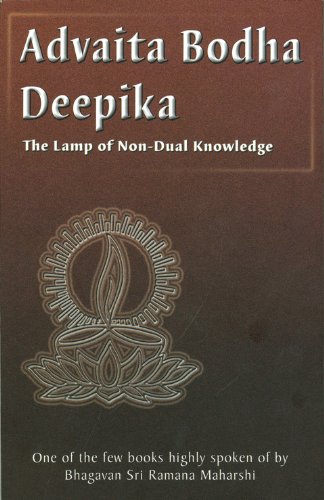
Advaita Bodha Deepika is a traditional text and a masterpiece, summarising the methods and techniques of advaita vedanta. It was a favourite text of Sri Ramana Maharshi and was often recommended by him. Here is what it says about how to attain liberation, the following is from Chapter 3:

17…Master: With complete stillness of mind, samsara will disappear root and branch. Otherwise there will be no end to samsara, even in millions of aeons (Kalpakotikala).
18. Disciple: Cannot samsara be got rid of by any means other than making the mind still?
M: Absolutely by no other means; neither the Vedas, nor the shastras nor austerities, nor karma, nor vows, nor gifts, nor recital of scriptures of mystic formulae (mantras), nor worship, nor anything else, can undo the samsara. Only stillness of mind can accomplish the end and nothing else.
19. D: The scriptures declare that only Knowledge can do it. How then do you say that stillness of the mind puts an end to samsara?
M: What is variously described as Knowledge, Liberation, etc., in the scriptures, is but stillness of mind.
D: Has any one said so before?
20 M: Sri Vasishta had said…

41k1lywu0sl

Beloved Ramana Maharshi says the same in Guru Vachaka Kovai, verse 141:

All the jnana* scriptures that teach the way to redemption proclaim in unison that restraining and stilling the mind is the best means for liberation. This is also emphasised by jnanis*. If, after a certain amount of study, one knows this to be the inner purport of the scriptures, one should then direct ones whole effort towards that [practice]. What is the use of continuously studying more and more scriptures without doing this?

*Jnana, literally meaning knowledge, refers to the teachings of spiritual liberation, whereas jnani, literally ‘knower’, refers to the spiritually liberated sage.


In Ramana’s ‘Who am I?’, the question as to the nature of Jnana arises and is simply answered:

Questioner: What is wisdom-insight (jnana-drsti)?
Ramana Maharshi: Remaining quiet is what is called wisdom-insight.


The Katha Upanishad states the same, in verse 2.3.10:

When the five organs of perception become still, together with the mind, and the intellect ceases to be active: that is called the Supreme State [Brahma-Vidya or Self Knowledge].

Shankara’s commentary on this above verse (Katha Upanishad, verse 2.3.10) states the following:

‘At the time when the five senses…, together with the mind…, which is now no longer functioning and thinking, are at rest in the Self alone, after turning away from objects, and with the intellect…no longer engaging with its functioning, that they call the highest state [Brahma-Vidya or Self-Knowledge].’

Earlier in the Katha Upanishad we see the following verse:

The Lord created the senses out-going: therefore, one sees outside and not the Self within. Some intelligent man, with his senses turned away (from their objects), desirous of immortality, sees the Self within.
~ Katha Upanishad 2.1.1

In his commentary on this above verse (Katha Upanishad 2.1.1), Shankara writes:

‘…the perceiver sees the external objects which are not-Self/not the Atman, such as sound, etc., and not the Self within. Though this is the nature of the world, some (rare) discerning man, like turning back/ reversing the current of a river, sees the Self within…The group of sense organs, beginning with the ear, should be turned away from all sense-objects. Such a one, who is purified thus, sees the indwelling self. For it is not possible for the same person to be engaged in the thought of sense-objects and to have the vision of the Self as well.

In his commentary on Katha Upanishad verse 1.2.20 Sri Shankara writes:

‘…One whose intellect has been withdrawn from all objects, gross and subtle, when this takes place, this is known as ‘inactivity of the sense organs’. Though this ‘inactivity of the sense organs’ one sees that glory of the Self. ‘Sees’ means he directly realises the Self as ‘I am the Self’ as thereby becomes free from suffering’


The Amritabindu Upanishad equates the controlled/stilled mind with Jnana (knowledge) and liberation:

2. It is indeed the mind that is the cause of men’s bondage and liberation. The mind that is attached to sense-objects leads to bondage, when unattached from sense-objects it tends to lead to liberation. So they [the sages] say.
3. Since liberation is based on the mind devoid of desire for sense objects, therefore, the mind should always be made free of such desire, by the seeker after liberation.
4. When the mind, with its attachment for sense-objects annihilated, is fully controlled within the heart and thus realises its own essence, then that is the Supreme State (Brahma-Vidya or Self-Knowledge is gained).
5. The mind should be controlled [made still] so that it becomes merged in the heart. This is Jnana (knowledge) and this is Dhyana (meditation). All else is argumentation and verbiage.

The Advaitic giant, Sri Gaudapada, (Shankara’s guru’s guru) writes in his Mandukya Karika:

The controlled mind is verily the fearless Brahman’ Chapter 3, verse 35

And in verse 37 of the same chapter he writes:

[Atman is] beyond all expression by words and beyond all acts of mind; It is all peace, eternal effulgence free from activity and fear and attainable by samadhi’ Chapter 3, verse 37

In the wonderfully authoritative Advaita Vedanta text Yoga Vasistha it is written:

The rock-like state in which all thoughts are still and which is different from the waking and dream states, is one’s supreme state [Brahma-Vidya or Self-Knowledge].

And elsewhere in the same Yoga Vasistha it is said:

Just as the great ocean of milk became still when the Mandara Mountain (with which it was churned by the Devas and the Asuras) became still, even so the illusion of samsara comes to an end when the mind is stilled.

And again from Yoga Vasistha…

He who casts away from his mind all objects ofperception and, attaining perfect quiescence, remains still as space, unaffected by sorrow, is a liberated man; he is the Supreme Lord.


Shankara states the same multiple times, eg, in Vivekachudamani, and also in his many commentaries, eg. in his commentary upon the Kena Upanishad – in his introduction to the Kena Upanishad Shankara writes:

And [the Self] being eternal, it is not to be secured by any means other than the cessation of ignorance. Hence the only duty is to renounce all desires after the realisation of the unity of the indwelling Self and Brahman.

Also see:

The key to nonduality and yoga

In brief: How to attain liberation

The ‘ultimate means’ to liberation

Shankara on Samadhi (stillness of mind)

Ramana Maharshi: be still

Ramana Maharshi: a quick and simple method to self-realisation

False enlightenment

Shankara on the Mind, Samadhi (stillness of mind), Manonasa (destruction of mind), and Liberation

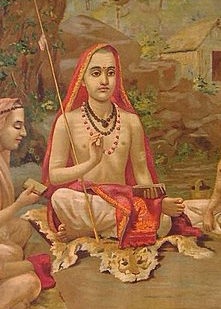
Shankara shankaracharya

Also see:

   Shankara: How to Meditate for Self-Realisation

Gaudapada – The Self is attainable by Samadhi

The following are quotes from Shankara’s Vivekachudamani on the Mind, samadhi (stillness of mind), manonasa (destruction of mind) and it’s relationship to moksha (liberation). There are many false teachings around, so I hope you find these teachings to be helpful and instructive.

Vivekachudamani is one of the most important in the Advaita Vedanta tradition. Attributed to Shankara, for centuries it has traditionally been used as a practice manual for seekers of spiritual liberation. Many mahatmas (great souls) have considered this text to contain all that is required to know in order to attain liberation.

Swami Chinmayananda, that great Sanskrit scholar and traditional teacher of Advaita Vedanta, said Vivekachudamani contained the distilled wisdom from the Upanishads and Bhagavad Gita and presents it in a systematic readable form for a seeker of liberation, in which both ‘the goal and path are exhaustively dealt with’. He wrote of Vivekachudamani that ‘no other help is needed’ other than this text on the quest to liberation.

A very young (and already enlightened) Sri Ramana Maharshi also translated the entire text into Tamil for the benefit of his companions and devotees who were unable to read Sanskrit, in what was perhaps Ramana’s first spiritual work. The fact that Ramana wrote very little yet bothered to translate this in its entirely, that this was the first scripture he chose to translate, and that this is the longest of the scriptures he ever translated (to my knowledge) perhaps gives you an indication of the significance of this text. Ramana himself wrote an introduction to his own translation and in it he said that Vivekachudamani explained ‘in detail the points that have to be grasped by those who seek liberation, and thereby directing them to the true and direct path’ and also that Vivekachudamani contained the essence of Shankara’s commentaries on the triple canon of Vedenta (Bhagavad Gita, Upanishads and Brahma Sutras), in an easy to read form.

Indeed, there is nothing in Vivekachudamani that cannot be found in the Vedantic triple canon.

So here is some of what Shankara says about Mind and Liberation, my comments are in italicised red:


The mind is ignorance

First Shankara equates mind with ignorance, saying they are one and the same, hinting the mind must be destroyed (manonasa), a theme that is taken up again later on:

169. There is no Ignorance (Avidya) outside the mind. The mind alone is Avidya, the cause of the bondage of transmigration. When that is destroyed, all else is destroyed, and when it is manifested, everything else is manifested.

Shankara in these next two verses repeats that mind is synonymous with ignorance and the cause of bondage or suffering.

179. Man’s transmigration is due to the evil of superimposition, and the bondage of superimposition is created by the mind alone.

180. Hence sages who have fathomed its secret have designated the mind as Avidya or ignorance, by which alone the universe is moved to and fro, like masses of clouds by the wind.

The mind (ie. ignorance) creates the world

Then he states the world is but an illusion projected by the mind, like a dream:

170. In dreams, when there is no actual contact with the external world, the mind alone creates the whole universe consisting of the experiencer etc. Similarly in the waking state also; there is no difference. Therefore all this (phenomenal universe) is the projection of the mind.

This is essentially equating the mind with maya.

171. In dreamless sleep, when the mind is reduced to its causal state, there exists nothing (for the person asleep), as is evident from universal experience. Hence man’s relative existence is simply the creation of his mind, and has no objective reality.

172. Clouds are brought in by the wind and again driven away by the same agency. Similarly, man’s bondage is caused by the mind, and Liberation too is caused by that alone.

177. The mind continually produces for the experiencer all sense-objects without exception, whether perceived as gross or fine, the differences of body, caste, order of life, and tribe, as well as the varieties of qualification, action, means and results.

Stay away from the mind

Shankara warns the seeker to stay away from the mind:

176. In the forest-tract of sense-pleasures there prowls a huge tiger called the mind. Let good people who have a longing for Liberation never go there.

Manonasa (destruction of the mind)

Shankara teaches us that the mind eventually must die, and the method of how to do this:

277. The Yogi’s mind dies, being constantly fixed on his own Self.

What happens when we do not follow this teaching?

309. Even though completely rooted out, this terrible egoism, if revolved in the mind even for a moment, returns to life and creates hundreds of mischiefs, like a cloud ushered in by the wind during the rainy season.

325. If the mind ever so slightly strays from the Ideal and becomes outgoing, then it goes down and down, just as a play-ball inadvertently dropped on the staircase bounds down from one step to another.

326. The mind that is attached to the sense-objects reflects on their qualities; from mature reflection arises desire, and after desiring a man sets about having that thing.

407. This apparent universe has its root in the mind, and never persists after the mind is annihilated. Therefore dissolve the mind by concentrating it on the Supreme Self, which is thy inmost Essence.

481. My mind has vanished, and all its activities have melted, by realising the identity of the Self and Brahman; I do not know either this or not-this; nor what or how much the boundless Bliss (of Samadhi) is

502. How can there be merits and demerits for me, who am without organs, without mind, changeless, and formless – who am the realisation of Bliss Absolute? The Shruti also mentions this in the passage “Not touched”, etc.!

Shut out the world, focus attention on Brahman

327. Hence to the discriminating knower of Brahman there is no worse death than inadvertence with regard to concentration. But the man who is concentrated attains complete success. (Therefore) carefully concentrate thy mind (on Brahman).

328. Through inadvertence a man deviates from his real nature, and the man who has thus deviated falls. The fallen man comes to ruin, and is scarcely seen to rise again.

335. When the external world is shut out, the mind is cheerful, and cheerfulness of the mind brings on the vision of the Paramatman. When It is perfectly realised, the chain of birth and death is broken. Hence the shutting out of the external world is the stepping-stone to Liberation.

339. To realise the whole universe as the Self is the means of getting rid of bondage. There is nothing higher than identifying the universe with the Self. One realises this state by excluding the objective world through steadfastness in the eternal Atman.

The need for Nirvikalpa Samadhi

Shankara, over many verses, makes it clear that the mind must be totally stilled in Nirvikalpa Samadhi, in which there is awareness present without thoughts and other objects:

341. To the Sannyasin who has gone through the act of hearing, the Shruti passage, “Calm, self-controlled.” Etc., prescribes Samadhi for realising the identity of the universe with the Self.

Shankara drums home the necessity of Samadhi over many verses, here using the phrase ‘barring those’ to clearly state that only through nirvikalpa samadhi can egotism be destroyed (and liberation attained). He makes it clear that in nirvikalpa samadhi no objects/phenomena will be present, and there will be ‘no oscilation of mind‘.

342. Even wise men cannot suddenly destroy egoism after it has once become strong, barring those who are perfectly calm through the Nirvikalpa Samadhi. Desires are verily the effect of innumerable births.

344. …But the victory is undoubtedly (complete and) free from obstacles when there is no oscillation of the mind due to the unreal sense-objects.

The term Samadhi refers to a state of mind that is stilled but also aware and not asleep:

353. When the Atman, the One without a second, is realised by means of the Nirvikalpa Samadhi, then the heart’s knot of ignorance is totally destroyed.

354. Such imaginations as “thou”, “I” or “this” take place through the defects of the Buddhi. But when the Paramatman, the Absolute, the One without a second, manifests Itself in Samadhi, all such imaginations are dissolved for the aspirant, through the realisation of the truth of Brahman.

355. The Sannyasin, calm, self-controlled, perfectly retiring from the sense-world, forbearing, and devoting himself to the practice of Samadhi, always reflects on his own self being the Self of the whole universe. Destroying completely by this means the imaginations which are due to the gloom of ignorance, he lives blissfully as Brahman, free from action and the oscillations of the mind.

Shankara again stresses the importance of Samadhi, stating those alone are free or liberated.

356.Those alone are free from the bondage of transmigration who, attaining Samadhi, have merged the objective world, the sense-organs, the mind, nay, the very ego, in the Atman, the Knowledge Absolute – and none else, who but dabble in second-hand talks.

The above verse is a rendering from the Amritabindu Upanishad – see here for what the Amritabindu Upanishad states.

357. Through the diversity of the supervening conditions (Upadhis), a man is apt to think of himself as also full of diversity; but with the removal of these he is again his own Self, the immutable. Therefore the wise man should ever devote himself to the practice of Nirvikalpa Samadhi, for the dissolution of the Upadhis.

Again, Shankara uses the word only to drive home the importance of Samadhi:

360. The truth of the Paramatman is extremely subtle, and cannot be reached by the gross outgoing tendency of the mind. It is only accessible to noble souls with perfectly pure minds, by means of Samadhi brought on by an extraordinary fineness of the mental state.

361. As gold purified by thorough heating on the fire gives up its impurities and attains to its own lustre, so the mind, through meditation, gives up its impurities of Sattva, Rajas and Tamas, and attains to the reality of Brahman.

Nirvikalpa Samadhi refers to the complete absence of ‘mind waves’ or modifications of consciousness, in which there is only pure awareness or consciousness present devoid of thoughts and perceptions. Again and again Shankara states that it is Samadhi of the Nirvikalpa variety (ie. no thoughts and no objects) that leads directly to self-realisation :

362. When the mind, thus purified by constant practice, is merged in Brahman, then Samadhi passes on from the Savikalpa to the Nirvikalpa stage, and leads directly to the realisation of the Bliss of Brahman, the One without a second.

363. By this Samadhi are destroyed all desires which are like knots, all work is at an end, and inside and out there takes place everywhere and always the spontaneous manifestation of one’s real nature.

How much clearer can Shankara make the case for the essential practice of Nirvikalpa Samadhi?

364. Reflection should be considered a hundred times superior to hearing, and meditation a hundred thousand times superior even to reflection, but the Nirvikalpa Samadhi is infinite in its results.

Shankara continues to stress the importance of the thoughtless aware state of samadhi, or, to put it more simply, being still of mind:

365. By the Nirvikalpa Samadhi the truth of Brahman is clearly and definitely realised, but not otherwise, for then the mind, being unstable by nature, is apt to be mixed up with other perceptions.

Drown or destroy the mind by turning away from the world and fixing in on Brahman

Drowning the mind implies its death, meaning the death of ignorance. As Shankara has already equated mind with ignorance, this is the same as manonasa (destruction of the mind) and the same as self-realisation:

366. Hence with the mind calm and the senses controlled always drown the mind in the Supreme Self that is within, and through the realisation of thy identity with that Reality destroy the darkness created by Nescience, which is without beginning.

375. The extremely dispassionate man alone has Samadhi, and the man of Samadhi alone gets steady realisation; the man who has realised the Truth is alone free from bondage, and the free soul only experiences eternal Bliss.

376. For the man of self-control I do not find any better instrument of happiness than dispassion, and if that is coupled with a highly pure realisation of the Self, it conduces to the suzerainty of absolute Independence; and since this is the gateway to the damsel of everlasting liberation, therefore for thy welfare, be dispassionate both internally and externally, and always fix thy mind on the eternal Self.

377. Sever thy craving for the sense-objects, which are like poison, for it is the very image of death, and giving up thy pride of caste, family and order of life, fling actions to a distance. Give up thy identification with such unreal things as the body, and fix thy mind on the Atman. For thou art really the Witness, Brahman, unshackled by the mind, the One without a second, and Supreme.

378. Fixing the mind firmly on the Ideal, Brahman, and restraining the external organs in their respective centres; with the body held steady and taking no thought for its maintenance; attaining identity with Brahman and being one with It – always drink joyfully of the Bliss of Brahman in thy own Self, without a break. What is the use of other things which are entirely hollow?

379. Giving up the thought of the non-Self which is evil and productive of misery, think of the Self, the Bliss Absolute, which conduces to Liberation.

Continuously meditate on Brahman

380. Here shines eternally the Atman, the Self-effulgent Witness of everything, which has the Buddhi for Its seat. Making this Atman which is distinct from the unreal, the goal, meditate on It as thy own Self, excluding all other thought.

381. Reflecting on this Atman continuously and without any foreign thought intervening, one must distinctly realise It to be one’s real Self.

382. Strengthening one’s identification with This, and giving up that with egoism and the rest, one must live without any concern for them, as if they were trifling things, like a cracked jar or the like.

383. Fixing the purified mind in the Self, the Witness, the Knowledge Absolute, and slowly making it still, one must then realise one’s own infinite Self.

384. One should behold the Atman, the Indivisible and Infinite, free from all limiting adjuncts such as the body, organs, Pranas, Manas and egoism, which are creations of one’s own ignorance – like the infinite sky.

398. When the mind-functions are merged in the Paramatman, the Brahman, the Absolute, none of this phenomenal world is seen.

More on Samadhi

Again, Shankara says we must end the mind (Manonasa):

407. This apparent universe has its root in the mind, and never persists after the mind is annihilated. Therefore dissolve the mind by concentrating it on the Supreme Self, which is thy inmost Essence.

408. The wise man realises in his heart, through Samadhi, the Infinite Brahman, which is something of the nature of eternal Knowledge and absolute Bliss, which has no exemplar, which transcends all limitations, is ever free and without activity, and which is like the limitless sky, indivisible and absolute.

409. The wise man realises in his heart, through Samadhi, the Infinite Brahman, which is devoid of the ideas of cause and effect, which is the Reality beyond all imaginations, homogeneous, matchless, beyond the range of proofs, established by the pronouncements of the Vedas, and ever familiar to us as the sense of the ego.

410. The wise man realises in his heart, through Samadhi, the Infinite Brahman, which is undecaying and immortal, the positive Entity which precludes all negations, which resembles the placid ocean and is without a name, in which there are neither merits nor demerits, and which is eternal, pacified and One.

411. With the mind restrained in Samadhi, behold in thy self the Atman, of infinite glory, cut off thy bondage strengthened by the impressions of previous births, and carefully attain the consummation of thy birth as a human being.

Shankara again makes it clear that when he speaks of Samadhi, he is speaking of that aware state in which there are no objects or ‘limiting adjuncts’ present:

412. Meditate on the Atman, which resides in thee, which is devoid of all limiting adjuncts, the Existence-Knowledge-Bliss Absolute, the One without a second, and thou shalt no more come under the round of births and deaths.

480. Concentrating the mind for some time on the Supreme Brahman, he rose, and out of supreme bliss spoke as follows.

More on Manonasa

Manonasa (destruction of the mind), a synonym for moksha, is declared by this scripture:

481. My mind has vanished, and all its activities have melted, by realising the identity of the Self and Brahman; I do not know either this or not-this; nor what or how much the boundless Bliss (of Samadhi) is

502. How can there be merits and demerits for me, who am without organs, without mind, changeless, and formless – who am the realisation of Bliss Absolute? The Shruti also mentions this in the passage “Not touched”, etc.!

Ajata (‘unborn’)

Here Shankara repeats the line found in Guadapada’s Karika, which itself is a repetition of the Upanishadic verse:

574. There is neither death nor birth, neither a bound nor a struggling soul, neither a seeker after Liberation nor a liberated one – this is the ultimate truth.

True vedanta

This is the true vedanta:

575. I have today repeatedly revealed to thee, as to one’s own son, this excellent and profound secret, which is the inmost purport of all Vedanta, the crest of the Vedas

Also see:

FALSE VEDANTA – a warning from Shankara

False enlightenment

Advaita vedanta scholars and false teachers

Shankara – summary of the path to enlightenment

Towards the beginning of Shankara’s Vivekachudamani, he summarises the entire vedantic path in 3 verses. The 509 verses that follow these 3 verses are mere elucidation on these 3 verses.

Verse 69 indicates the fruit of the path – the end of suffering (‘bondage of samsara’):

69. Listen attentively, O learned one, to what I am going to say. By listening to it thou shalt be instantly free from the bondage of Samsara.

The first step on the path is vairagya, or dispassion. This leads to a calm mind in which the ego is not allowed to act out:

70. The first step to Liberation is the extreme aversion to all perishable things, then follow calmness, self-control, forbearance, and the utter relinquishment of all work enjoined in the Scriptures.

Then the teachings are heard (sravana), reflected upon (manana), followed by a period of meditation on the Self (nididhyasana) for the ‘Muni’ (jewel) which is nothing other than moksha (liberation). Notice the stress on the ‘long, constant and unbroken meditation’. Then follows the nirvikalpa state (samadhi) which in turn leads to Nirvana (liberation or extinguishment of desires/egoic vasanas):

71. Then come hearing, reflection on that, and long, constant and unbroken meditation on the Truth for the Muni. After that the learned seeker attains the supreme Nirvikalpa state and realises the bliss of Nirvana even in this life.

This is the vedantic path in a nutshell. 

For the entire text of Vivekachudamani click here.

Who Am I? (Nan Yar?) by Sri Ramana Maharshi

ramana umbrella

See also: Recommended Reading: Books for Enlightenment, Liberation and Self-Realisation

Many state that in this short text alone is contained all you need to attain liberation. And I would agree! Together with Upadesa Saram and Ulladu Narpadu (click on the links for downloadable PDF versions), a comprehensive set of teachings for liberation is given to us in concise form by Sri Ramana Maharshi. I also highly recommend reading The Path of Sri Ramana which explains in detail the entire path to liberation.

Ramana was not only genuinely self-realised, but he also had an in-depth knowledge of the traditional scriptures and their various methodologies. Here he has distilled their essence for us, enabling the serious seeker to find the direct path and not be side-tracked by various doctrinal intricacies and conceptual dead-ends.

How lucky are we to have these teachings given to us to keep us on the straight, narrow and true path!

There are many versions of this text titled ‘Who am I?’ (Nan Yar? in the original Tamil), all with subtle variations, but this one I have selected below is the essay version which is the only version I know of that was written by Bhagavan Sri Ramana Maharshi himself. The version I recommend you read is the essay version translated by Sri Sadhu Om which you can find as a PDF here. This is taken from the appendix of The Path of Sri Ramana Part 1 and is one of the most accurate of the available English translations. You can listen to the audiobook here:

There is also a more common Q&A version of which you can find the PDF version of Who Am I here.

The framework for this essay originated from a series of answers that a philosophy graduate Sivaprakasam Pillai wrote down in 1902 after asking Bhagavan a corresponding series of questions whilst at Virupaksha cave on Arunachala, and was first published by Sri Pillai 21 years later in 1923.

Sometime in the mid-1920s, Bhagavan removed the questions and fashioned the answers into an essay form and he also added an introductory paragraph on the nature of happiness. It is the English translation of this essay which is found below.

The resultant essay was on sale in pamphlet form at the ashram and served to provide an introduction and practical summary of instructions for self-enquiry or Bhagavan’s ‘direct path’ to liberation. Many times when people asked Bhagavan questions, he asked them to read this essay first, and only ask further questions if they still had any afterwards.

Om Namo Bhagavate Sri Ramanaya Om

Sri Ramana Maharshi 1902

Who Am I?

by

Sri Ramana Maharshi

Every living being longs always to be happy, untainted by sorrow; and everyone has the greatest love for himself, which is solely due to the fact that happiness is his real nature. Hence, in order to realize that inherent and untainted happiness, which indeed he daily experiences when the mind is subdued in deep sleep, it is essential that he should know himself. For obtaining such knowledge the inquiry ‘Who am I?’ in quest of the Self is the best means.

‘Who am I?’ I am not this physical body, nor am I the five organs of sense perception; I am not the five organs of external activity, nor am I the five vital forces, nor am I even the thinking mind. Neither am I that unconscious state of nescience which retains merely the subtle vasanas (latencies of the mind), while being free from the functional activity of the sense-organs and of the mind, and being unaware of the existence of the objects of sense-perception.

Therefore, summarily rejecting all the above-mentioned physical adjuncts and their functions, saying ‘I am not this; no, nor am I this, nor this’ — that which then remains separate and alone by itself, that pure Awareness is what I am. This Awareness is by its very nature Sat-Chit-Ananda (Existence-Consciousness-Bliss).

If the mind, which is the instrument of knowledge and is the basis of all activity, subsides, the perception of the world as an objective reality ceases. Unless the illusory perception of the serpent in the rope ceases, the rope on which the illusion is formed is not perceived as such. Similarly, unless the illusory nature of the perception of the world as a objective reality ceases, the Vision of the true nature of the Self, on which the illusion is formed, is not obtained.

The mind is a unique power (sakti) in the Atman, whereby thoughts occur to one. On scrutiny as to what remains after eliminating all thoughts, it will be found that there is no such thing as mind apart from thought. So then, thoughts themselves constitute the mind. Nor is there any such thing as the physical world apart from and independent of thought. In deep sleep there are no thoughts: nor is there the world. In the wakeful and dream state thoughts are present, and there is also the world. Just as the spider draws out the thread of the cobweb from within itself and withdraws it again into itself, in the same way the mind projects the world out of itself and absorbs it back into itself.

The world is perceived as an apparent objective reality when the mind is externalized, thereby forsaking its identity with the Self. When the world is thus perceived, the true nature of the Self is not revealed: conversely, when the Self is realized the world ceases to appear as an objective reality.

By a steady and continuous investigation into the nature of the mind, the mind is transformed into That to which ‘I’ refers; and that is in fact the Self. Mind has necessarily to depend for its existence on something gross; it never subsists by itself. It is this mind that is otherwise called the subtle body, ego, jiva, or soul.

That which arises in the physical body as ‘I’ is the mind. If one inquires whence the ‘I’-thought in the body arises in the first instance, it will be found that it is from hrdayam (literally ‘I am the Heart), or the Heart. That is the source and stay of the mind. Or again, even if one merely continuously repeats to oneself inwardly ‘I-I’ with the entire mind fixed thereon, that also leads one to the same source.

The first and foremost of all thoughts that arise in the mind is the primal ‘I’-thought. It is only after the rise or origin of the ‘I’-thought that innumerable other thoughts arise. In other words, only after the first personal pronoun, ‘I’, has arisen, do the second and third personal pronouns (‘you, he’ etc.) occur to the mind; and they cannot subsist without the former.

Since every other thought can occur only after the rise of the ‘I’-thought and since the mind is nothing but a bundle of thoughts, it is only through the inquiry ‘Who am I?’ that the mind subsides. Moreover, the integral ‘I’-thought, implicit in such enquiry, having destroyed all other thoughts, gets itself destroyed or consumed, just as the stick used for stirring the burning funeral pyre gets consumed.

Even when extraneous thoughts sprout up during such enquiry, do not seek to complete the rising thought, but instead, deeply enquire within, ‘To who has this thought occurred?’ No matter how many thoughts thus occur to you, if you would with acute vigilance enquire immediately as and when each individual thought arises to whom it has occurred, you would find it is to ‘me’. If then you enquire ‘Who am I?’ the mind gets introverted and the rising thought also subsides. In this manner as you persevere more and more in the practice of Self-enquiry, the mind acquires increasing strength and power to abide in its Source.

It is only when the subtle mind is externalized through the activity of the intellect and the sense-organs that gross name and form constituting the world appear. When, on the other hand, the mind stays firmly in the Heart, they recede and disappear. Restraint of the outgoing mind, and its absorption in the Heart, is known as introversion (antarmukha-drishti). The release of the mind, and its emergence from the Heart is known as bahirmukha-drishti (objectiveness).

If in this manner the mind becomes absorbed in the Heart, the ego or ‘I’, which is the center of the multitude of thoughts, finally vanishes and pure Consciousness or Self, which subsists during all the states of the mind, alone remains resplendent. It is this state, where there is not the slightest trace of the ‘I’-thought, that is the true Being of oneself. And that is called Quiescence or Mouna (silence).

This state of mere inherence in pure Being is known as the Vision of Wisdom. Such inherence means and implies the entire subsidence of the mind in the Self. Nothing other than this, and no psychic powers of the mind such as thought-reading, telepathy, and clairvoyance, can be Wisdom.

Atman alone exists and is real. The threefold reality of world, individual soul, and God is, like the illusory appearance of silver in the mother of pearl, an imaginary creation in the Atman. They appear and disappear simultaneously. The Self alone is the world, the ‘I’ and God. All that exists is but the manifestation of the Supreme.

For the subsidence of mind there is no other means more effective and adequate than Self-enquiry. Even though by other means the mind subsides, that is only apparently so; it will rise again.

For instance, the mind subsides by the practice of pranayama (restraint and control of breath and vital forces); yet such subsidence lasts only as long as the control of breath and vital forces continues; and when they are released, the mind also gets released and immediately, becoming externalized, it continues to wander through the force of its subtle tendencies.

The source of the mind is the same as that of breath and vital forces. It is really the multitude of thoughts that constitutes the mind; and the ‘I’-thought is the primal thought of the mind, and is itself the ego. But breath too has its origin at the same place whence the ego rises. Therefore, when the mind subsides, breath and vital forces also subside; and conversely, when the latter subside, the former also subsides.

Breath and vital forces are also described as the gross manifestation of the mind. Till the hour of death the mind sustains and supports these forces in the physical body; and when life becomes extinct the mind envelops them and carries them away. During sleep, however, the vital forces continue to function, although the mind is not manifest. This is according to the divine law and is intended to protect the body and to remove any possible doubt as to whether it is dead or alive while one is asleep. Without such arrangement by nature, sleeping bodies would often be cremated alive. The vitality apparent in breathing is left behind by the mind as a ‘watchman’. But in the wakeful state and in samadhi, when the mind subsides, breath also subsides. For this reason (because the mind has the sustaining and controlling power over breath and vital forces and is therefore ulterior to both of them), the practice of breath control is merely helpful in subduing the mind, but cannot bring about its final extinction.

Like breath control, meditation on form, incantations, invocations, and regulation of diet are only aids to control of the mind. Through the practice of meditation or invocation the mind becomes one-pointed. Just as the elephant’s truck, which is otherwise restless, will become steady if it is made to hold an iron chain, so that the elephant goes its way without reaching out for any other object, so the ever-restless mind, which is trained and accustomed to a name or form through meditation or invocation, will steadily hold on to that alone.

When the mind is split up and dissipated into countless varying thoughts, each individual thought becomes extremely weak and inefficient. When, on the contrary, such thoughts subside more and more till they finally get destroyed, the mind becomes one-pointed and, thereby acquiring strength and power of endurance, easily reaches perfection in the method of enquiry in quest of the Self.

Regulation of diet, restricting it to satvic food taken in moderate quantity, is of all the rules of conduct the best; and it is most conducive to the development of the satvic qualities of the mind. These, in their turn, assist one in the practice of Atma vichara or enquiry in quest of the Self.

Countless vishaya-vasanas (subtle tendencies of the mind in relation to objects of sense gratification), coming one after the other in quick succession like the waves of the ocean, agitate the mind. Nevertheless, they too subside and finally get destroyed with progressive practice of Atma dhyana or meditation on the Self. Without giving room even to the thought which occurs in the form of doubt, whether it is possible to stay merely as the very Self, whether all the vasanas can be destroyed, one should firmly and unceasingly carry on meditation on the Self.

However sinful a person may be, if he would stop wailing inconsolably: ‘Alas! I am a sinner, how shall I attain Liberation?’ and, casting away even the thought that he is a sinner, if he would zealously carry on meditation on the Self, he would most assuredly get reformed.

So long as subtle tendencies continue to inhere in the mind, it is necessary to carry on the enquiry: ‘Who am I?’. As and when thoughts occur, they should one and all be annihilated then and there, at the very place of their origin, by the method of enquiry in quest of the Self.

Not to desire anything extraneous to oneself constitutes vairagya (dispassion) or nirasa (desirelessness). Not to give up one’s hold on the Self constitutes jnana (knowledge). But really vairagya and jnana are one and the same. Just as the pearl diver, tying stones to his waist, dives down into the depths and gets the pearl from the sea bed, so every aspirant pledged to vairagya can dive deep into himself and realize the precious Atman. If the earnest seeker would only cultivate the constant and deep contemplative ‘remembrance’ (smrti) of the true nature of the Self till he has realized it, that alone would suffice. Distracting thoughts are like the enemy in the fortress. As long as they are in possession of it, they will certainly sally forth. But if, as and when they come out, you put them to the sword the fortress will finally be captured.

God and the Guru are not really different: they are identical. He that has earned the Grace of the Guru shall undoubtedly be saved and never forsaken, just as the prey that has fallen into the tiger’s jaws will never be allowed to escape. But the disciple, for his part, should unswervingly follow the path shown by the Master.

Firm and disciplined inherence in the Atman, without giving the least scope for the rise of any thought other than the deep contemplative thought of the Self, constitutes self-surrender to the Supreme Lord. Let any amount of burden be laid on Him, He will bear it all. It is, in fact, the indefinable power of the Lord that ordains, sustains, and controls everything that happens. Why then should we worry, tormented by vexatious thoughts, saying: ‘Shall we act this way? No, that way,’ instead of meekly but happily submitting to that Power? Knowing that the train carries all the weight, why indeed should we, the passengers travelling in it, carry our small individual articles of luggage on our laps to our great discomfort, instead of putting them aside and sitting at perfect ease?

That which is Bliss is also the Self. Bliss and the Self are not distinct and separate but are one and the same. And That alone is real. In no single one of the countless objects of the mundane world is there anything that can be called happiness. It is through sheer ignorance and unwisdom that we fancy that happiness is obtained from them. On the contrary, when the mind is externalized, it suffers pain and anguish. The truth is that every time our desires get fulfilled, the mind, turning to its source, experiences only that happiness which is natural to the Self. Similarly in deep sleep, in spiritual trance (samadhi), when fainting, when a desired object is obtained, or when evil befalls an object considered undesirable, the mind turns inwards and enjoys that Bliss of Atman. Thus wandering astray, forsaking the Self, and returning to it again and again is the interminable and wearisome lot of the mind.

It is pleasant under the shade of a tree, and scorching in the heat of the sun outside. A person toiling in the sun seeks the cool shade of the tree and is happy under it. After staying there for a while, he moves out again but, unable to bear the merciless heat of the sun, he again seeks the shade. In this way he keeps on moving from shade to sun and sun to shade.

It is an unwise person who acts thus, whereas the wise man never leaves the shade: in the same way the mind of the Enlightened Sage (Jnani) never exists apart from Brahman, the Absolute. The mind of the ignorant, on the other hand, entering into the phenomenal world, suffers pain and anguish; and then, turning for a short while towards Brahman, it experiences happiness. Such is the mind of the ignorant.

This phenomenal world, however, is nothing but thought. When the world recedes from one’s view — that is when one is free from thought — the mind enjoys the Bliss of the Self. Conversely, when the world appears — that is when thought occurs — the mind experiences pain and anguish.

Not from any desire, resolve, or effort on the part of the rising sun, but merely due to the presence of his rays, the lens emits heat, the lotus blossoms, water evaporates, and people attend to their various duties in life. In the proximity of the magnet the needle moves. Similarly the soul or jiva, subjected to the threefold activity of creation, preservation, and destruction which take place merely due to the unique Presence of the Lord, performs acts in accordance with its karma (fruits of past actions, in the present life), and subsides to rest after such activity. But the Lord Himself has no resolve; no act or event touches even the fringe of His Being. This state of immaculate aloofness can be likened to that of the sun, which is untouched by the activities of life, or to that of the all-pervasive ether, which is not affected by the interaction of the complex qualities of the other four elements.

All scriptures without any exception proclaim that for attaining Salvation the mind should be subdued; and once one knows that control of the mind is their final aim it is futile to make an interminable study of them. What is required for such control is actual enquiry into oneself by self-interrogation: ‘Who am I?’ How can this enquiry in quest of the Self be made merely by means of a study of the scriptures?

One should realize the Self by the Eye of Wisdom. Does Rama need a mirror to recognize himself as Rama? That to which the ‘I’ refers is within the five sheaths (physical, vital, mental, knowledge-experience, and bliss), whereas the scriptures are outside them. Therefore, it is futile to seek by means of the study of scriptures the Self that has to be realized by summarily rejecting even the five sheaths.

To enquire ‘Who am I that is in bondage?’ and to know one’s real nature is alone Liberation. To keep the mind constantly turned within, and to abide thus in the Self is alone Atma-vichara (Self enquiry), whereas dhyana (meditation) consists in fervent contemplation of the Self as Sat-Chit-Ananda (Being-Consciousness-Bliss). Indeed, at some time, one will have to forget everything that has been learnt.

Just as it is futile to examine the rubbish that has to be swept up only to be thrown away, so it is futile for him who seeks to know the Self to set to work enumerating the tattvas (classifications of the elements of existence) that envelop the Self and examining them, instead of casting them away. He should consider the phenomenal world with reference to himself as merely a dream.

Except that the wakeful state is long and the dream state is short there is no difference between the two. All the activities of the dream state appear, for the time being, just as real as the activities of the wakeful state seem to be while awake. Only, during the dream state, the mind assumes another form or a different bodily sheath. For thoughts on the one hand, and name and form on the other, occur simultaneously during both the wakeful and dream states.

There are not two minds, one good and the other evil. It is only the vasanas or tendencies of the mind that are of two kinds, good and favorable, evil and unfavorable. When the mind is associated with the former it is called good, and when associated with the latter it is called evil. However evil-minded other people may appear to you, it is not proper to hate or despise them. Likes and dislikes, love and hatred, are equally to be eschewed. It is also not proper to let the mind often rest on objects or affairs of mundane life. As far as possible one should not interfere in the affairs of others. Everything offered to others is really an offering to oneself; and if only this truth were realized, who is there that would refuse anything to others?

If the ego rises, all else will also rise; if it subsides all else will also subside. The deeper the humility with which we conduct ourselves, the better it is for us. If only the mind is kept under control, what matters it where one may happen to be?