Sadhanai Saram (the essence of spiritual practice): Devotion and Self-Enquiry | Ramana Maharshi | Advaita Vedanta | PDF download

The PDF file available on this link contains beautiful profound & essential Advaita Vedanta teachings for those who are genuinely seeking liberation. We find this text not only summarises Bhagavan Sri Ramana’s teachings and Advaita Vedanta teachings, but goes into them in tremendous depth with a clarity that is often not found elsewhere, Namaste

Tom Das's avatarTom Das

The following are the first 21 verses from Sadhanai Saram (The Essence of Spiritual Practice) by Sri Sadhu Om. This text contains very beautiful and deep teachings for those who are genuinely seeking liberation. We find this text not only summarises the teachings of Bhagavan Sri Ramana as well as Advaita Vedanta teachings, but goes into them in tremendous depth with a clarity that is often not found elsewhere.

These initial verses presented below beautifully display both devotion to Bhagavan and the path of Self-Enquiry.

You can download the full text of Sadhanai Saram here as a PDF file

Invocation

  1. O Sri Ramana, bestow Your Grace upon me so that I may in experience flawlessly attain the unequalled and unsurpassed essence of the practice (sadhana) of Self-knowledge, the excellent path “Who am I?” which you have discovered to be the central and foremost among all the various paths.
  2. O Sri…

View original post 1,410 more words

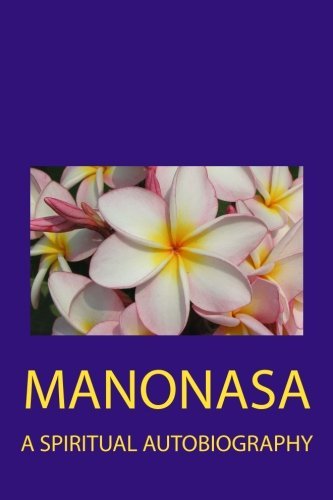
The nature of liberation | Manonasa by Michael Langford | Ramana Maharshi | PDF download

This is one of a series of introductory articles – please see the homepage of tomdas.com for more introductory articles.

In the following PDF file below, the nature of liberation or self-realisation is described, in detail, in a way I have not seen elsewhere.

A cautionary note is that the teachings in the PDF below are very radical, and agreement with these teachings is not required for liberation; ie. an in-depth intellectual understanding of liberation is not a pre-requisite for liberation, although it may be helpful for some. More important than understanding what liberation is, is understanding the path to liberation and following this path until the very end.

One of the books I highly recommend on my recommended reading list is ‘Manonasa’ by Michael Langford. There are many wonderful aspects about this book that give the genuine seeker of liberation many hints, tips and instructions that are not commonly found elsewhere, hence the potential value of this book. As with many of Michael Langford’s books, the style in which it is written will not suit everyone, but a genuine seeker will hopefully be able to look past any apparent or perceived stylistic deficiencies to find the treasure buried within.

So therefore I do recommend you buy and read this book for yourself.

There is a section of the book that describes Liberation or Manonasa in great detail in a way I have not found elsewhere – and this can be particularly valuable to some seekers – you can download the relevant section below as a PDF file:

In the PDF file the following is explained:

-The nature of Manoasa (Manonasa is a traditonal word for liberation, rather like Nirvana)

-An important barrier to Manonasa

-Quotes from various different sources and sages to show that this is the traditional teaching of various sages and not just Michael Langford’s personal views

-Explanations as to how this can actually be the case

Download Understanding Manonasa by Michael Langford

Namaste & Blessings

Tom

For more articles that further expand upon this same topic, please also see here:

How can the Jnani (sage) function with NO THOUGHTS? Sri Ramana Maharshi

Ramana Maharshi: how to abide as the Self, the world is not real, attend to yourself

Does the Sage (Jnani) see the world? Does the world appearance exist after liberation?

Multiplicity, plurality and polarity ARE duality | Non-duality | Sri Ramana Maharshi

Who can conceive of the state of the Jnani? Sri Sadhu Om | The true nature of the Jnani

What exactly is Jnana (knowledge) according to Shankara and Gaudapada and the vedanta scriptures?

Is the Self a witness? Or is it everything? Or both? How to realise the Self?

Ramana Maharshi: The world should be considered like a dream

You intuitively already know this in your heart | Self-Knowledge | Advaita Vedanta | Non-duality

This knowledge is already fully within you

All the Spiritual Knowledge you ever need is already within you (it actually is you). What is this Spiritual Knowledge? It is knowledge of what you truly are, namely Pure Ever-Blissful Ever-Full Eternal Formless Spirit.

You already fully know this

You already know this. You have always eternally known this. This knowledge has always been within you, intuitively, meaning non-verbally ie. NOT knowledge in the mind and NOT knowledge known by a person. It is innate inborn knowledge that cannot be lost, ever, and does not need to be gained ever.

If you look within, take the time to really feel, then perhaps you will intuit that you have always known that you are infinite, formless and divine, beyond time and space.

Intuitively you have always known that you are not merely flesh and bone, you are not this mere body and mind.

You do not need any new knowledge or understanding in the mind for this path.

So, what’s the problem?

Well, in truth there is no problem, and there never has been, and never will be (no problems are real, and time such as past and future are also not actually real)…and you already intuitively and deeply know that there is no problem…but…

…But so long as you believe the limiting ideas thrown out by the mind – and all the mind’s ideas are limiting – then you will consider yourself to be limited. You will consider yourself to have name and form, you will consider yourself to be flesh and blood, and to be subject to birth, disease, suffering and death. You will consider the world to be real and you will consider problems to be real.

In Truth you are Spirit Divine, Eternal, Lumonious, Blissfull, devoid of time, space, individuality, devoid of one iota of suffering, devoid of one iota of multiplicity or duality, ever whole, pure, pristine Beauty and Love.

This ‘knowledge’ is not in the mind – no body or mind is required for this ‘knowledge

As I said, you know this already – ‘in your heart’ – meaning intuitively this is known, ie. this is not known and can never be known with the mind or with concepts/thoughts, but it is always known in your Heart or Being.

Your True Nature always knows itself to be Divine, fully. This knowledge does not require and body or mind, both of which, together with the world, are non-existent and unreal.

In truth there is no you and me. There is only ONE, THAT. And ‘we’ are THAT ONE.

The only ‘issue’ (not that there really is any issue) is that we take on wrong concepts, believing ourselves to be a body-mind entity living in a world when actually these are all false and non-existent In Truth.

‘Ignorance’

All ‘we have to do’ to realise this is lose the wrong concepts, lose the wrong beliefs, which means to stop attending to them, to stop paying attention to the body + mind + world, especially our thoughts and concepts. All we have to do is have faith in our own innate unborn non-mental non-conceptual knowledge of what we are, and attend to and nurture that intuitive-faith-knowingness-self.

Then, as ignorance slips away, all will eventually be seen to be One and Yourself, Shining as Pure Consciousness, initially with Objects Present (Savikalpa, with forms or with objects) and then in its pure Divine Form devoid of objective phenomena (Nirvikalpa, without form or without objects).

‘Self-Knowledge’

This is Self-Knowledge devoid of a shred ignorance, this is what already IS, this is what you already are, this is what is already and eternally intuitively known ‘in the heart’, meaning never with the mind.

The Self always fully knows itself to be Divine and Full, without words, without a body and without a mind – ignorance never really ever was.

If anything is needed, all we have to do is to nurture and attend to this intuitive self-knowledge. It is the guru, it will teach us, it will reveal itself to us.

‘The Teaching’

Therefore the teaching is simply: KNOW THYSELF or BE THYSELF or ATTEND TO THYSELF or HAVE FAITH IN AND NURTURE YOUR OWN INNATE INTUITIVE KNOWING/KNOWLEDGE

Ignore body/mind/world and see/intuit only consciousness-beingness-love-bliss. Attend to your beingness-knowingness, which is Self-Knowledge. Nurture, stoke and tend to this intuitive knowing – it will grow and consume everything. This is what you truly are.

And of course, you know all of this already

Namaste

❤️🕉

Q. Why turn within? Nonduality as I have experienced it is the actual disappearance of what is considered within and without, one seamless blending

Tom Das's avatarTom Das

meditation moon prayer

Also see: IN BRIEF: HOW TO ATTAIN LIBERATION (MOKSHA)

Q. Why turn within at all? Nonduality as I have experienced it is the actual disappearance of what is considered within and without. One seamless blending.

Tom: It’s fairly easy for many to realise there is no real within or without, ie. that what we consider inner, such as the mind and thoughts, are non-separate from the supposed outer world. It is all one movement. But it is usually the mind that realises this, in combination with some kind of a genuine seeing.

However these teachings I share here are to end suffering. Most people interested in non-duality do realise on some level the false dividing line between self and other (ie. inner and outer), but suffering still continues due to the habitual egoic tendencies (vasanas).

Basically, the false identity as the ego-mind entity remains intact at a deeper level, and…

View original post 144 more words

Turn Within? Really? Isn’t this dualistic and doesn’t this just strengthen the ego? | Self-Enquiry | Atma Vichara | Awareness Watching Awareness

Tom Das's avatarTom Das

om1

The symbol Om represents the Self, the eternal Truth Within

Also see: 

IN BRIEF: HOW TO ATTAIN LIBERATION (MOKSHA)

HOW TO END EGO-SUFFERING (and why other spiritual paths tend not to ultimately work)

‘Do not reject this teaching saying – ‘all is already one’, or ‘what is needed to be yourself?’ or ‘This is It, already – what practice is required and for who?’ or ‘There is no ego already’. This is the ego’s way of avoiding its own destruction.’

Some people, when they hear of the true teachings of Self-Enquiry, they attend to it straight away and realise the Self, the eternal happiness and bliss that is devoid of misery and suffering, the Kingdom of Heaven that is found within.

Others spend time roaming and suffering in the arid desert of other ways (or ‘non-ways’) and teachings first, teachings that pertain to gross and subtle objects (ie body, mind…

View original post 994 more words

Q. Tom, what do you think of neo-advaita?

Questioner: Tom, what is your view on some of the Neo-Advaitists who do not seem to agree that there is a Self? All I hear from them is ‘there is only what is; there is no self’?

Tom: If you find these types of teaching helpful, meaning if they provide you with some kind of ease/happiness/peace/fulfilment/a sense of freedom, then that is good, and in that case I encourage you to engage with them as there is likely to be something of value there for you.

However my sense is that for the most part they are not truly liberating teachings but are predominantly spoken of from the mental/intellectual level. But what do I know! It is for you to decide what is right for you. What do you think?

Questioner: I’ll be totally honest with you. I can find some peace of mind with many ‘spiritual’ teachings. For instance I sometimes envy my Christian friends who seem so sure they will be spending eternity in heaven, but I left Catholicism and I can never believe that again. With Buddhism and nonduality I see different views within each, some saying there is a self, others denying self.

For me I can navigate life somewhat with some peace and happiness, but there always seems to be the ultimate fear of death no matter what. The neo-Advaitists say they have conquered death because they’ve died already, so to speak. But isn’t that throwing the baby out with the bathwater? So many contradictions.

In Buddhism some say the ‘self’ reincarnates, some, like Zen say there is no such thing. For Ramana is the Self immortal? What Self is there after death? Is it just silent and empty? You say it is found in deep sleep. But deep sleep is still ‘on this side’, in life. It is not the same as death. How can one know death while alive? How is one certain I AM is not also impermanent? Isn’t Ramana’s Self also an objectification? Like I doubt the truth of my Christian friends’ heaven, I always doubt that Self.

Tom: Yes, I had all these same doubts as you. My idea was to keep on searching until I found something that gave me all the answers I was looking for. The problem is that you will not find such a thing! There are always unanswered questions and problems with all spiritual systems and teachings on the conceptual level if you are intellectually probing/questioning enough.

However for me what then happened is that I unexpectedly fell in love with Sri Ramana Maharshi, and started to develop faith in his teachings (even though I perceived many ‘flaws’ and problems with his teachings). However, it was following his teachings with faith and love and devotion, despite the apparent problems with the teachings, that allowed all my doubts and questions to be answered and resolved so that now none remain. So this is what I share now.

Namaste

Guru Stuti by Shankara translated into Tamil by Sri Ramana Maharshi | Advaita Vedanta Summarised

Have you ever wished that the entire Advaita Vedanta teachings were summarised in a very short traditional text, say eight verses long? Well here are eight verses of a work called ‘Guru Stuti’ or ‘Praise to the Guru’ written by Adi Shankara about 1400 years ago, and translated into Tamil by Sri Ramana Maharshi. If you read it carefully you will find the essence of the entire teaching is briefly given.

Here the Tamil verses and English translation of these are presented. For the original Tamil script see here. My commentary is in italiscised red – I have tried to keep my commentary brief and I hope it does not intrude on the beauty and terse nature of the text, enjoy!


Guru Stuti

Written by Sri Shankara, translated into Tamil By Sri Ramana Maharshi

Introduction written by Sri Ramana Maharshi

When Sankaracharya was going about the country debating with the exponents of the various schools of thought and overcoming them he once came to the town of Mahishmati in the north where Mandana Mishra the exponent of Vedic rituals lived. He overcame him in debate but his wife refused to concede victory until she was also defeated. So, Sankarachaiya argued with her and defeated her in all subjects except erotics. He then asked for a respite of one month and after shedding his body in a cave under the custody of his disciples, entered into the dead body of King Amaruka and sported among the hundred queens in the guise of their husband. When the disciples found that the period specified by their Guru had already expired they grew anxious. So some of them went to him in the disguise of minstrels and sang the following hymn to remind him.


1. Nēti-nēti yādi vākkā niḍē-dittu mūrttā p;ūrttam
Ēdumē taḷḷar killā edaissuva svarūpa māga
Vōdaruñ sādu vānōr uḷḷattil koḷḷu vārgaḷ
Ādimei aṛivā nanda avvastu vanḍṛō nīdān

1. That is the Truth which the wise realize as the Self, the residuum left over on withdrawing from external objects, with or without form (ether, air, fire, water and earth), by a careful application of the scriptural injunction ‘not this, not this’ — Thou art That!

Tom: The truth is what remains when one has withdrawn and discarded external objects. The truth, which is your very own Self, your own True Nature, is realised by those who withdraw their attention from all external objects so only Truth, or Pure Consciousness remains.

How to withdraw one’s attention? Through applying the teaching of ‘neti-neti’. What remains is the Self, devoid of objects and duality and suffering – You are That!

As our experiences consist of objective phenomena, we should not rely on our experiences, which are maya (illusion), to discover the truth, but we should turn within and discover that which is in ourself. This is further explained in the following verses, if you read carefully and discerningly.

‘With or without form’ I think refers to the need to withdraw attention from both gross objects (with form, eg. tables, chairs, experiences) and subtle objects (without form, eg. thoughts, feelings, imaginings, subtl realms, etc), or alternatively it could mean to withdraw from all objects perceived (with form) or imaginary (without form).


2. Uttiyāṅ kutti-nālē umiye num aindu kōsam
Buddhi-yāṛ pirittup pinnarp porundi-ḍum arisi pōlum
Ettinai sattukkaḷ kaṇḍu idayattil anuba vippar
Astamil nitta siddha avvastu vanḍṛō nīdān

2. That is the Truth which, after generating the fundamentals (ether, air, fire, water and earth), and entering the world, lies hidden beneath the five sheaths, and which has been threshed out by the wise with the pestle of discernment, just as the grain is recovered by threshing and winnowing the chaff — Thou art That!

Tom: The Truth, or the Self or Brahman, (apparently through Maya or through ignorance) generates or creates the five elements (the ‘fundamentals’), and pervades its own creation whilst simultaneously underlying the creation as the substratum. The next verse will explain that all this apparent creation of elements/objects is actually unreal.

The wise, with discrimination (viveka) discover the Self, the underlying substratum, by separating it from and discarding the five sheaths that constitute the body-mind-ignorance ‘covering’. Note the carefully chosen metaphor of threshing and winnowing which refers to the processes by which the grain is obtained by thoroughly and fastidiously removing all the outer coverings of the husk and chaff, and discarding them in order to reveal the treasure that lies within.

In the preceding verse it is said one’s attention is turned away from objects by ‘neti-neti’, whereas here it is said that it is with discernment or discrimination. We should therefore see that ‘neti-neti’, discrimination and discarding the coverings of gross and subtle objects go together.


3. Poṛi-gaḷām parigaḷ tammaip pulan-gaḷil viḷaṅgun dōsha
Aṛivenuṅ kasai yaḍittē ahamugak kayiṭṭṛāl īrttav
Aṛivaṛi aṛijñar ettil aṇaitton-ḍṛāyp piṇit tiruppar
Aṛiporuṭ katīta māna avvastu vanḍṛō nīdān

3. Just as wild horses are broken-in by whipping and stabling them, so also the unruly senses, straying among objects, are lashed by the whip of discrimination, showing that objects are unreal, and are tethered by the rope of pure intellect to the Self by the wise. Such is the Truth — Thou art That!

Tom: All objects, gross and subtle, are in Truth illusory, unreal, non-existent! Do not attend or pay attention to them!

The unruly senses wander and engage with sense objects, meaning the one intent on liberation should not allow their senses to stray from the path in this way.

How is this to be done? The intellect should hear this teaching and, using discrimination (viveka), cease to attend these unreal temporary objects, none of which can lead to Eternal Bliss. The pure intellect, meaning the intellect devoid of desire for sense object, transcends itself and unceasingly realises itself as Self by tethering the senses to the Self, ie placing ones pure loving attention onto your innermost Core, the Heart, the I AM, the Self – you are That!


4. Pūkkaḷi ninḍṛu vēṛāyp porun-diḍuñ sūtti rampōḷ
Jākki-ra mādi yāna sar-vattum vēṛa dāna
Sāk„hiyā nōkki yādais sattukkaḷ agatta ṇaivar
Ākkamu nīkka millā avvastu vanḍṛō nīdān

4. The Truth has been ascertained by the wise to be the substratum which is different from the waking, dream and deep sleep states, and from its own expanded modes, which indeed are held together by it like the flowers strung together on a garland — Thou art That!

Tom: Here a radical truth is proclaimed: in Truth you are not related to the three states of waking, dream or deep sleep. You have nothing to do with them or their contents. Truth or Self is different from the entire three states – they are false, untrue, illusory – they do not actually exist.

The three states only seem to exist due to ignorance (of Truth-Self). From the point of view of ignorance or duality, the three states are supported or held together by the Self, like the thread running though a garland of flowers.

You are the Substratum-Subject-Self that is devoid of objects and thoughts, that is without the three states of waking, dreaming and deep dreamless sleep! You are different to these superimpositions which only seem to exist due to ignorance! You are That!


5. Kaṭaka maku-ḍādi yāvuṅ kana-kamē yāgumā pōḷ
Jaḍa chittā mulagam yavuñ chaṭṭṛumē binna minḍṛi
Suḍarumav vaḍivā yenḍṛu choṭṭṛi-ḍum vēdam yadai
Aḍinaḍu muḍi villāda avvastu vanḍṛō nīdān

5. That is the Truth which the scriptures show to be the primal cause of all, elucidating the point clearly by such texts as ‘Purusha is all this’ and ‘like gold in ornaments of gold’ — Thou art That!

Tom: Purusha here means Self. You are That Self. This verse indicates that the Self is the primal cause of all (apparent) manifestation (ie. objects), and the quoted verses are to support this idea only.


6. Inanilit tanuvil yānā ilaṅgu-van ēkanȾ yenḍṛu
Anisa-mum vēda vādi āyinōr muyaṛchi yōḍum
Inimai-yāi eḍuttu raippar ettat-tuvattai nanḍṛāi
Anartta-mil edārtta māna avvastu vanḍṛō nīdān

6. The Truth has been forcefully proclaimed by the scriptures in such texts as ‘He who is in the sun, is in man.’ ‘He who shines in the sun, shines in the right eye’ — Thou art That!

Tom: The Self, which is the nature of Self Knowledge, is all pervading and is the essence of all. Discover this Essence – you are That Essence only. That which is the essence of the world is in fact within you. Therefore, the idea is, discover it within and not through objective phenomena.

That which is in the seemingly faraway and magnificent sun is actually also found within our ever-near and lowly self. This is the meaning here. You don’t need to travel to the faraway magnificent sun, or other such faraway magnificent places. Just go within yourself to discover the Highest of all Truths.


7. Arumaṛai vākki nālē ahatti-niṛ shraddai yōḍum
Arun-tavam yāgan dānam ādinal aṛaṅga ḷālē
Arumaṛai yavargaḷ ettai aṛin-diḍa avāvu ginḍṛār
Arumaṛaip poruḷāi ninḍra avvastu vanḍṛō nīdān

7. What pure brahmins seek so eagerly by the recitation of the Vedas, by religious gifts, by earnest application of their hard-earned knowledge and by renunciation, is the Truth — Thou art That!

Tom: All efforts of all spiritual practitioners are only to discover the Truth of Self that lies ‘within’. You are That Truth already! All you have to do is realise your Self! Nothing more is required!


8. Sānti muda lāna vuṭṭṛu santa-tan tannāṛ ṭannil
Āynde-dai aṛijñar kaṇḍav aṛivinba meyyā enḍṛu
Mīndela muḍittoḷir-var migu bavak kēda nīttē
Āzhndaṛi tatva māna avvastu vanḍṛō nīdān

8. That is the Truth which the valiant have gained by seeking, with controlled mind, with abstinence, penance, etc, and by diving into the Self. Realizing it, they are considered to be heroes with their highest purpose accomplished. That is the transcendental Sat-Chit-Ananda after gaining which there is nothing more to worry about since perfect peace reigns — Thou art That!

Tom: the valiant, meaning those who bravely turn inwards, away from gross and subtle objects as explained in previous verses, and undertake Self-Enquiry, those whose minds have become peaceful and quiet, those who Dive (or Sink) Inwards, ‘into the Self’- they realise the Self, which is the Truth. They are the True Heroes, those who have realised the Self, this is the True Accomplishment, as compared to what society considers to be worldly heroic deeds (in Maya).

Once this inward path has been undertaken, and the Self is Realised, that is the end of the path – there is no more to be done! No need to integrate the teachings with the world or daily life, no need to further purify the mind, no need for anything else! There is only That.

Integration of the teachings or further purification and the like simply mean genuine or full realisation has not occurred and the ego-entity still persists. This is simply more ignorance. Further practices ‘post-liberation’ are only for the ego-mind entity.

When Self has truly been realised, what has needed to be done has been done! That is realisation. That is liberation. That is the end of suffering. Nothing more needs to be done! That is perfect eternal Peace. You are That!


Sri Ramana Maharshi’s Outro

On hearing these verses the Acharya bade his disciples go away and promptly came out of the body of the King and re-entered his own. He then went to the wife of Mandana Misra and, after defeating her, made her and her husband his followers. Thereafter he went on his way enlightening the whole world.


Om Tat Sat

Vivekachudamani by Sri Shankara: Resources and PDF downloads | Translation by Sri Ramana Maharshi | Advaita Vedanta | Crest Jewel of Discrimination

Here are some resources and links relating to this superb traditional Advaita Vedanta text that gives us a step-by-step method for Self-Realisation and Liberation.

Attributed to Sri Shankara, written approximately 1400 years ago, Vivekachudamani (‘The Crest Jewel of Discrimination’ or the ‘The Highest Treasure of Wisdom’) was also recommended by Sri Ramana Maharshi who said this text explains ‘…in detail the points that have to be grasped by those who seek liberation, and thereby directing them to the true and direct path‘:

Shankara’s Vivekachudamani as translated by Sri Ramana Maharshi: https://tomdas.com/2019/03/04/vivekachudamani-as-translated-by-sri-ramana-maharshi/

Sri Ramana’s introduction to Vivekachudamani where he summarises the entire path to liberation: https://tomdas.com/2019/02/25/ramana-maharshis-introduction-to-shankaras-crest-jewel-of-discrimination-vivekachudamani-and-summary-of-its-teachings/

The 10 most important verses of Vivekachudamani as selected by Sri Ramana Maharshi: https://tomdas.com/2020/05/14/the-ten-most-important-verses-of-shankaras-vivekachudamani-according-to-sri-ramana-maharshi/

Is Vivekachudamani sexist? https://youtu.be/VPZw6cgczLw

A more traditional verse by verse translation of Vivekachudamani by Swami Madhavananda: https://tomdas.com/2018/10/01/vivekachudamani-crest-jewel-of-discrimination-by-shankara/

A more accurate verse by verse translation of Vivekachudamani with word for word transliteration and translation by Achyarya Pranipata Chaitanya:

Spiritual, emotional and non-dual guidance & counselling with Tom Das

For the last seven years I have been actively guiding people in their spiritual, emotional and human journeys. From non-duality and spiritual experiences, to helping people through relationship and practical issues, I have met with hundreds of people and have pretty much seen it all!

It’s a deep honour and privilege for me to assist people in this way.

If you feel moved to, you can now book a 1 to 1 session with me directly using this link.

To find out more about what I offer, pricing, etc, please see this link here.

Namaste & best wishes

Tom