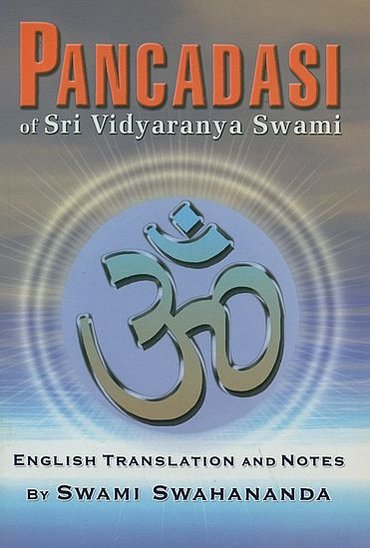
Traditionally there are two paths to liberation according to Advaita Vedanta (Nondual Vedanta). In Panchadasi, a traditional advaita vedanta text, Vidyaranya Swami refers to them as the path of Meditation and that of Self-Enquiry.
Panchadasi was written by Vidraranya Swami (1380-1386) over 600 years ago and contains the essence of the vedanta scriptures over 15 chapters (‘pancha’ means 5 and ‘dasi’ means 10, so together they refer to 15 chapters).
- This following excerpt from chapter 1 gives an overview of the vedantic path to moksha.
- The next excerpt from chapter 9 shows how the 2 vedantic paths in the title are in fact the same.
- I have then chosen a few more excerpts from subsequent chapters aimed at encourging the seeker in their sadhana (spiritual practice) and extolling the virtues of meditation.
My comments are interspersed in red and bold type has been also added by myself for emphasis.
The full text of Panchadasi is available here for download
Best wishes
Tom
Overview of the path – from Chapter 1:
1.40. By discrimination of the subtle body (and recognition of its variable, transient character), the sheaths of the mind, intellect, and vital airs are understood to be different from the Self, for the sheaths are conditions of the three gunas, and differ from each other (qualitatively and quantitatively).
This indicates that the mind is able to discriminate (viveka – ie. to differentiate the unchanging self from the changing gross and subtle objects experienced) between the self and the gross and subtle bodies – ie. the body and mind. However the mind cannot so easily discriminate the self from the causal body in which the latent tendencies remain dormant. For this meditation is helpful, as follows:
1.41. Avidya (manifested as the causal body of bliss sheath) is negated in the state of deep meditation (in which neither subject nor object is experienced), but the Self persists in that state; so it is the invariable factor. But the causal body is a variable factor, for though the Self persists, it does not.
This is referring to samadhi, in which the subject-object duality has been removed. Also see Chapter 9 verse 126 of Panchadasi:
‘When meditation on the attributeless Brahman is mature it leads to Samadhi. This state of intense concentration at case leads on to the Nirodha state in which the distinction between subject and object is eliminated.’
This experience in meditation allows one to realise that the causal body also is not the Self:
1.42. As the slender, internal pith of munja grass can be detached from its coarse external covering, so the Self can be distinguished through reasoning from the three bodies (or the five sheaths). Then the Self is recognised as the supreme consciousness.
1.52. The Self is untouched by doubts about the presence or absence of associates, connotations and other adventitious relationships, because they are superimposed on it phenomenally.
Like a mirror is untouched by the contents of the reflection, like the cinema screen is untouched by the scenes in the movie, the Self remains untouched and unaffected by life.
Now Vidyaranya tells us of the advaitic path, consisting of sravana, manana, nididhyasana and samadhi. Shankara does the same here.
1.53. The finding out or discovery of the true significance of the identity of the individual self and the Supreme with the aid of the great sayings (like Tat Tvam Asi) is what is known as sravana. And to arrive at the possibility of its validity through logical reasoning is what is called manana.
Sravana, literally meaning hearing, means to hear or listen to the teachings. To thereafter think about the teachings and their logic is called manana.
1.54. And, when by sravana and manana the mind develops a firm and undoubted conviction, and dwells constantly on the thus ascertained Self alone, it is called unbroken meditation (nididhyasana).
Sravana and manana naturally lead to unbroken meditation, or nididhyasana. This eventually leads to removal of the subject-object duality and culminates in samadhi:
1.55. When the mind gradually leaves off the ideas of the meditator and the act of meditation and is merged in the sole object of meditation. (ie. the Self), and is steady like the flame of a lamp in a breezeless spot, it is called the super-conscious state (samadhi).
1.56. Though in samadhi there is no subjective cognition of the mental function having the Self as its object, its continued existence in that state is inferred from the recollection after coming out of samadhi.
There is no experience as such in samadhi, as the mind (and memory) does not temporarily exist, so the state is not known as such at the time. The next verse tells us that it persists dependent upon ‘effort and will made prior to its achievement’ and through ‘constant efforts’:
1.57. The mind continues to be fixed in Paramatman in the state of samadhi as a result of the effort of will made prior to its achievement and helped by the merits of previous births and the strong impression created through constant efforts (at getting into samadhi).
1.58. The same idea Sri Krishna pointed out to Arjuna in various ways e.g., when he compares the steady mind to the flame of a lamp in a breezeless spot.
He is referring to Krishna’s teaching to Arjuna in the Bhagavad Gita, Chapter 6 verse 19:
‘Just as a lamp in a windless place does not flicker, so the disciplined mind of a yogi remains steady in meditation on the self.’
1.59. As a result of this (nirvikalpa) samadhi millions of results of actions, accumulated in this beginningless world over past and present births, are destroyed, and pure dharma (helpful to the realisation of Truth) grows.
1.60. The experts in Yoga call this samadhi ‘a rain cloud of dharma’ because it pours forth countless showers of the bliss of dharma.
1.61. The entire network of desires is fully destroyed and the accumulated actions known as merits and demerits are fully rooted out by this samadhi.
1.62. Then the great dictum, freed from the obstacles (of doubt and ambiguity), gives rise to a direct realisation of the Truth, as a fruit in one’s palm – Truth which was earlier comprehended indirectly.
The above 4 verses indicate how powerfully purifying nirvikalpa samadhi is in rooting out the habitual tendencies to identify with the body-mind, when gives rise to direct realisation of the Truth or Liberation.
1.63. The knowledge of Brahman obtained indirectly from the Guru, teaching the meaning of the great dictum, burns up like fire all sins, committed up to that attainment of knowledge.
1.64. The direct realisation of the knowledge of the Self obtained from the Guru’s teaching of the great dictum, is like the scorching sun, that dispels the very darkness of Avidya, the root of all transmigratory existence.
1.65. Thus a man distinguishes the Self from the five sheaths, concentrates the mind on It according to the scriptural injunctions, becomes free from the bonds of repeated births and deaths and immediately attains the supreme bliss.
In summary, the path is viveka (differentiating the unchanging self from the changing objects experienced) plus unbroken meditation on the self.
We see a similar reasoning given in Chapter 9:
The unity of meditation and self-enquiry – From Chapter 9:
9.126. When meditation on the attributeless Brahman is mature it leads to Samadhi. This state of intense concentration leads on to the Nirodha state in which the distinction between subject and object is eliminated.
‘Nirodha’ is the term used in yoga to indicate what in vedanta is known as nirvikalpa samadhi. Ceaseless meditation on the Self leads to the knowledge ‘I am Brahman’:
9.127. When such complete cessation of mental activity is achieved, only the association-less entity (Atman) remains in his heart. By ceaseless meditation on It based on the great Sayings, arises the knowledge ‘I am Brahman’.
9.128. There is then a perfect realisation of Brahman as the immutable, association-less, eternal, self-revealed, secondless whole, as indicated in the scriptures.
The author backs up his above statements by showing how the same ideas are present in the Holy Upanishads which are the most important texts in Vedanta teachings and hold the highest authority:
9.129. The Amritabindu and other Upanishads recommend Yoga for the same object. It is clear therefore that meditation on the attributeless Brahman is superior to other types of worship.
A warning for those who give up their meditation:
9.130. Those who give up meditation on the attributeless Brahman and undertake pilgrimages, recitations of the holy formulas and other methods, may be compared to ‘those who drop the sweets and lick the hand’.
Here the questioner points out the 2 main vedantic paths to liberation, one being meditation or yoga, the other being self-enquiry. The following verses indicate that the higher and quicker path is self-enquiry, but both paths are actually the same in the end:
9.131. (Doubt): This applies also to those who meditate on the attributeless Brahman giving up enquiry into Its nature. (Reply): True, therefore only those who are not able to practise enquiry have been asked to meditate on the attributeless Brahman.
9.132. Those who are very fickle-minded and agitated do not have the knowledge of Brahman by the practice of enquiry. Therefore control of the mind is the chief means for them. By it their mind becomes free from distractions.
9.133. For those whose intellects are no longer distracted nor restless but are merely covered by a veil of ignorance, the analytical system called Sankhya (intellectual enquiry) is prescribed. It will quickly lead them to spiritual illumination.
The above verse indicates that for enquiry to work, the mind must already be pure and stable and with only a small amount (‘a veil’) of ignorance. If not, then a calming practice, such as meditation, karma yoga or surrender/bhakti are required.
9.134. ‘The state of spiritual balance is obtainable by both the Sankhyas (those who follow the path of enquiry) and the Yogis (those who practise meditation). He really knows the meaning of the scriptures who knows that the paths of enquiry and meditation are the same’.
The path of meditation
Continuing with Chapter 9, here follows several statements from Shruti (ie. the Upanishads), the most authoritative Vedanta texts, extolling the virtues and efficacy of the path of meditation
9.138. So the future life of a man is determined by the nature of his thoughts at the time of death. Then as a devotee of the Personal God is absorbed in Him, so a meditator on the attributeless Brahman is absorbed in It and obtains Liberation.
9.140. As by meditation on the Personal God knowledge of the nature of Ishvara arises, so by meditation on the attributeless Brahman, knowledge of Its nature arises and destroys the ignorance which is the root of rebirth.
9.141. A meditator becomes Brahman who is ‘unattached, desireless, free from body and organs and fearless’. Thus the Tapaniya Upanishad speaks of liberation as the result of meditation on the attributeless Brahman.
9.142. By the strength of meditation on the attributeless Brahman knowledge arises. So the scriptural verse, ‘Verily there is no other path to liberation (except knowledge)’ does not conflict with this.
9.143. So the Tapaniya Upanishad points out that liberation comes from desireless meditation. The Prasna Upanishad also says that by meditation with desire one enters into the region of Brahma.
9.146. Such a worshipper, by virtue of his meditation on the attributeless Brahman, enters the world of Brahma and there obtains direct knowledge of Brahman. He is not born again, he gets ultimate release at the end of the four Yugas.
9.147. In the Vedas meditation on the holy syllable Aum in most places means meditation on the attributeless Brahman, though in some places it means meditation on Brahman with attributes.
9.148. Pippalada being asked by his pupil Satyakama says that Aum means Brahman both with and without attributes.
9.149. Yama too, questioned by his pupil Nachiketas, replied that he who meditates on Aum knowing it as the attributeless Brahman obtains the fulfilment of his desires.
9.150. He who meditates properly on the attributeless Brahman gets direct knowledge of Brahman either in this life or at the time of death or in the world of Brahma.
9.151. The Atma Gita also clearly says that those who cannot practise discrimination should always meditate on the Self.
9.152. (The Self as if says): ‘Even if direct knowledge of Me does not seem to be possible, a man should still meditate on the Self. In the course of time, he doubtlessly realises the Self and is freed’.
9.153. ‘To reach treasures deeply hidden in the earth, there is nothing for it but to dig. So to have direct knowledge of Me, the Self, there is no other means than meditation on one’s Self’.
9.155. Even if there is no realisation, think ‘I am Brahman’. Through meditation a man achieves even other things (like the Deities), why not Brahman who is ever-achieved?
A stark warning not to stop meditating before the goal is reached:
9.156. If a man, who is convinced by his experience that meditation, practised day by day, destroys the idea that the not-Self is the Self, nevertheless becomes idle and neglects meditation, what difference, tell us, is there between him and a brute ?
9.157. Destroying his idea that the body is the Self, through meditation a man sees the secondless Self, becomes immortal and realises Brahman in this body itself.
9.158. The meditator who studies this Chapter called the ‘Lamp of Meditation’, is freed from all his doubts and meditates constantly on Brahman.
From Chapter 11:
Chapter 11 further focuses upon the role of meditation as opposed to inquiry:
11.110. In the Maitrayani Upanishad of the Yajur Veda, sage Sakayanya spoke of the great bliss experienced in Samadhi to the royal sage Brihadratha while discoursing on Samadhi.
11.111. ‘As fire without fuel dies down and becomes latent in its cause, so the mind, when its modifications have been silenced, merges in its cause’.
11.112. ‘To the mind fixed on Reality, merged in its cause and impervious to the sensations arising from the sense-objects, the joys and sorrows (together with their occasions and materials) experienced as a result of the fructifying Karma seem unreal’.
11.114. ‘Through the purification of his mind a man destroys the impressions of his good and evil Karma and the purified mind abiding in Atman enjoys undiminishing bliss’.
11.115. ‘If a man were to focus his mind on Brahman, as he commonly does on the objects of senses, what bondage would he not be free from ?’
11.116. ‘Mind has been described as of two types, pure and impure. The impure is that which is tainted by desires, the pure is that which is free from desires’.
11.117. ‘The mind alone is the cause of bondage and release. Attachment to objects leads to bondage and freedom from attachment to them leads to release’.
11.118. ‘The bliss arising from absorption in the contemplation of the Self, when all sins and taints are washed off through the practice of Samadhi, cannot be described in words. One must feel it in one’s own heart’.
11.119. Though it is rare for men to keep their minds long in the state of absorption (Samadhi), still even a glimpse of it confers conviction about the bliss of Brahman.
11.121. Such a man ignores the bliss experienced in the state of mental quiescence and is ever devoted to the supreme bliss and meditates on it.
11.122. A woman devoted to a paramour, though engaged in household duties, with all the time be dwelling in mind on the pleasures with him.
11.123. Similarly the wise one who has found peace in the supreme Reality will be ever enjoying within the bliss of Brahman even when engaged in worldly matters.
11.124. Wisdom (Jnana) consists in subjugating the desires for sense-pleasure, even when the passions are strong and in engaging the mind in meditation on Brahman with the desire to enjoy the bliss.
In Ramana’ Maharshi’s ‘Who am I?’, the question as to the nature of Jnana arises and is simply answered:
Questioner: What is wisdom-insight (jnana-drsti)?
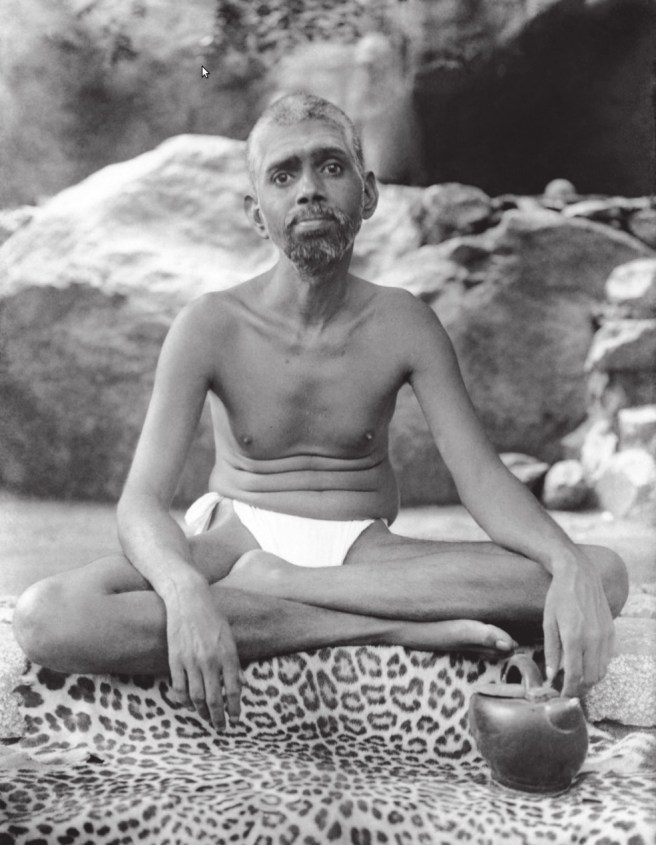
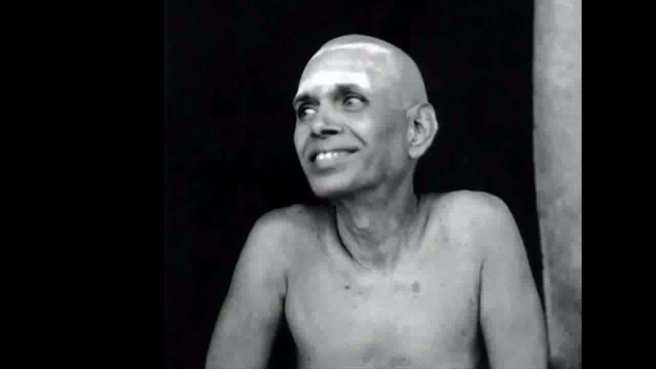
Ramana Maharshi: Remaining quiet is what is called wisdom-insight.
See here for more
11.125. A man carrying a burden on his head feels relief when he removes the load; similarly a man freed from worldly entanglements feels he is in rest.
11.126. Thus relieved of burden and enjoying rest, he fixes his mind on the contemplation of the bliss of Brahman, whether in the state of detachment or experiencing pain or pleasure according to fructifying Karma.
11.130. Enjoying both the bliss of Brahman taught in the scriptures and the worldly bliss unopposed to it, the Jnani of truth knows them both in the same way as one who knows two languages.
11.131. When the Jnani experiences sufferings, he is not disturbed by them as he would have been before. Just as a man half-immersed in the cool water of the Ganges feels both the heat of the sun and the coolness of the water, so he feels the misery of the world and the bliss of Brahman at the same time.
And to finish, one of my favourite verses here:
From Chapter 13:
13.3. The world is born of bliss, it abides in bliss and is merged in bliss. How then can it be anything other than this bliss?