Ramana Maharshi: To remain as you are, without question or doubt, is your natural state

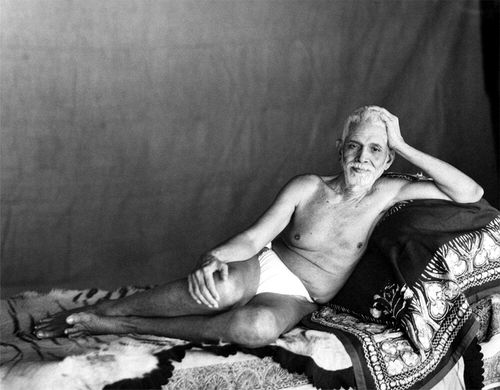
Ramana reclining

To remain as you are, without question or doubt, is your natural state
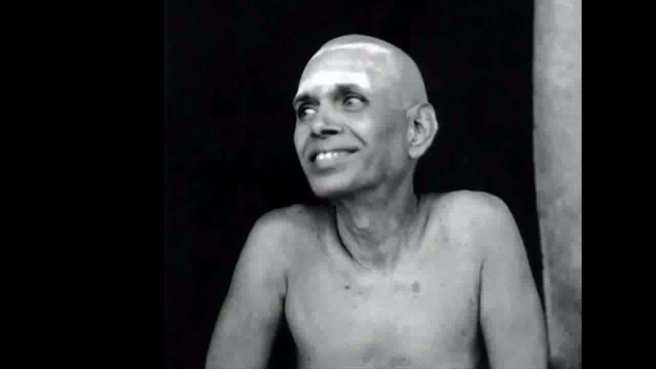
Ramana Maharshi

This is still an instruction for the spiritual seeker: ‘to remain as you are’.

With liberation, questions and doubts are irrelevant, as the natural state is simply whatever is. Nothing can obstruct it. It is always here and manifests as whatever is arising. It can never be obstructed and is always in plain sight.

However for the seeker, ie. the person that takes themselves to be the author of their thoughts and actions, the instruction to remain as you are and not worry about or get entangled with thoughts, questions and doubts, is one of the highest and most refined spiritual teachings available.

Be still, forget all concept of who you are, notice things as they happen. Regardless of what is happening, you know that you are, never what you are, only that you are.

When the mind and its concepts are no longer being believed, what use is there to talk of separation or no separation, self or no-self?

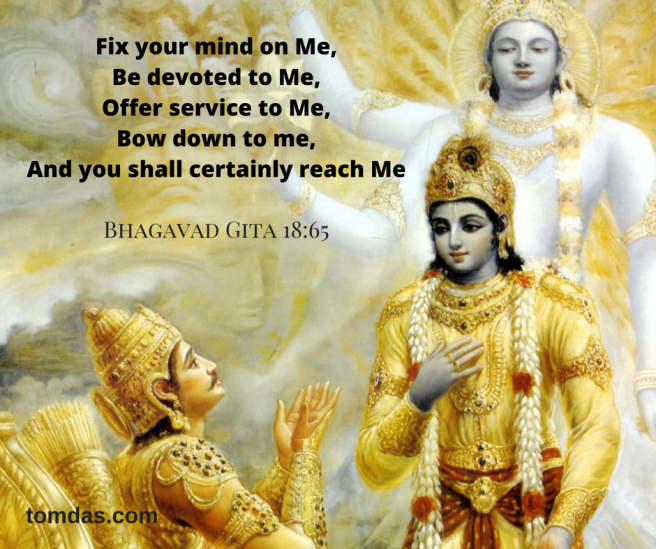
Bhagavad Gita: the most secret teaching

BG fix your mind on me.png

Lord Krishna states this is his most secret teaching: to love Him, to devote ourselves to Him, to be with Him knowingly.

He is already in each of our hearts, He is already everywhere and everything, everything is already done by Him.

Here knowledge, scripture and philosophy all crumble as, through our devotion, the heart opens. All are consumed by Him, and all we are left with is Him in all His glory.

We never were. All there ever was was Him.

❤ ❤ ❤

As Jesus said when asked:

“Teacher, which is the great commandment in the Law?”
And he [Jesus] said to him,
“You shall love the Lord your God with all your heart and with all your soul and with all your mind.This is the greatest and first commandment.”

Matthew 22:36-38

❤ ❤ ❤

Also, as Shankara sung in his Bhaja Govindam:

“Worship Govinda, worship Govinda, worship Govinda,
Oh fool! Other than chanting the Lord’s names, there is no other way to cross the life’s ocean.”
(Govinda is another name for Krishna. Literally it means ‘protector of cows’ referring to Krishna’s youth as a cow herd.)

❤ ❤ ❤

So, all that’s left for me do to is bow down and praise Him

❤ ❤ ❤

Hare Krishna!

Om Namah Shivaya!

May all beings be happy and well!

Praise be to God!

❤ ❤ ❤

See also:

Was Jesus ever born?

The pre-eminent form of worship


Buddha: Why do spiritual people fight with each other?

buddha side.jpg

“Why is it that, Master Kaccana, that ascetics fight with ascetics?”
“It is, brahmins, because of attachment to views, adherence to views , fixation on views, addiction to views, obsession with views, holding firmly to views that ascetics fight with ascetics.”
Anguttara Nikaya

Today’s spiritual scene is in many ways the same as it has always been: while some people wake up to things as they are and go beyond words and scripture, others stay fixed in their views, cling to their scriptures and concepts, and in doing so remain stuck in suffering and samsara.

So, why are so many spiritual people arguing with each other? Master Kaccana was one of the Buddha’s main disciples and was said to be the most skilled in espousing the dhamma (the teaching). He says it simply: people are wedded to their concepts, their views, their scriptures and their ideas, and that is why they fight with each other.

The true dhamma cannot be spoken. The true teacher knows their words are ultimately untrue and that words are merely conceptual pointers, indicators, and not descriptions of what is. The true teacher is not wedded to a particular teaching method, or a particular form of words, and naturally adapts the teaching to the situation at hand. A single word, a prescription for practice, a gesture, a glance, a lecture: the teaching comes to us in many forms.

If we truly listen, the living teacher constantly teaches the living teaching. The teaching is inseparable from our hearts and the life we find ourselves living: it is none other than daily life.

The teaching is here, already. Are we open to it?


Poetry: the all knowing ego

Punch and judy.JPG

The ego thinks it has all the ‘answers’,
Thinks it knows exactly how the enlightenment game works,
Thinks it knows which practice is best,
All its concepts lined up.

Of course it has no clue.

Pride means it pretends to know what it doesn’t,
Clinging to what it hopes will work,
According to its limited understanding.

Who can blame it?

My advice: realise first, talk later.

Humility and realisation

humility flower.jpg

An important part of the teaching is to realise the limits of our ability to know or understand things. Often we think we know or understand things only to later find that we were deluding ourselves. The very ideas we think we know to be true are the same ones that keep us trapped and prevent realisation occurring.

The very ideas we think we know to be true are the same ones that keep us trapped and prevent realisation occurring.

Remember that realisation does not mean arriving at a new understanding: it is actually the realisation that the beliefs we held about ourself, specifically the ‘I am the doer’ belief, do not have the evidence required to support them. If we just follow the evidence, we will not make claims that are unjustified, and we preserve our humility and integrity. Any understanding we subsequently develop will have strong foundations.

Being humble just means not pretending to know something that you don’t. Similarly if you think you know something but are not completely sure, it means admitting that uncertainty. In that space of doubt, there is room for something true to emerge and be seen. In acknowledging the limitations and assumptions of our thought processes we are entering into what is actual and true.

In that space of doubt, there is room for something true to emerge and be seen.

To put it differently, humility is a form of honesty, and it is this being completely honest with ourselves that forms a firm foundation from which this teaching can take root, grow and thrive.


Ramana Maharshi: Laugh and cry!

ramana umbrella.jpg

The realized person weeps with the weeping,

laughs with the laughing,

plays with the playful,
sings with those who sing,
keeping time to the song.

What does he lose?

Tom’s comments:

Many truth seekers suppose that the ‘fully self-realised guru’ would act in a certain way:

speak, walk, dress in certain ways,
never angry, always kind,
never unhappy, ever-blissful
pure and faultless

What a prison!
Freedom does not care for that!

In Freedom our humanity naturally shines

Also see All exist in me

Ramana Maharshi: just ‘lose’ the ego

Ramana smiling

Be what you are…All that is needful is to lose the ego, That what is, is always there. Even now you are That…
…The thought ‘I have not seen’, the expectation to see and the desire of getting something, are all the working of the ego.
You have fallen into the snares of the ego. The ego says all these and not you. Be yourself and nothing more!

Talks with Sri Ramana Maharshi
Talk 183

See also:
Ramana Maharshi on non-doership and self-realisation
Ramana Maharshi: Self-inquiry (atma vichara) and doership