Many thanks to you all. ropeandsnake.com is now tomdas.com

After receiving lots of feedback I’ve decided to combine my personal website (tomdas.com) together with my blog (ropeandsnake.com).

The result is that all my blog posts that were previously on ropeandsnake.com have now moved across to tomdas.com.

They can now be found under the ‘blog’ tab at the top of the screen.

Can I also take this opportunity to thank you all for your support. I love writing what I write and meeting you in person. It’s a real privilege and blessing to be able to share these teachings with you all!

With love

Tom


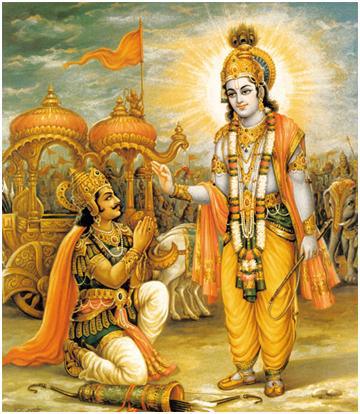
Bhagavad Gita: Krishna teaches that nature does everything

Arjuna Krishna

Under the influence of false ego one thinks himself to be the doer of activities, while in reality all the activities are carried out by nature as natural process

Bhagavad Gita, Chapter 3 verse 27

Here, in the Bhagavad Gita (The Lord’s Song), Krishna tells his friend Arjuna a great truth: that the notion of there being any separate entity that takes itself to be the doer is false. There is no doer, the ego is a false entity; there is only nature acting according to its own inherent principles.


Join us! Regular Non-Duality & Spirituality Meetings Online and In Person

tom-das-meetings-heart-flower

Why not join us? We meet online twice a week to discuss non-duality and spirituality. All are welcome, no prior knowledge is required.
Click here for more details or click on the ‘meetings tab above.

It’s too ordinary to notice

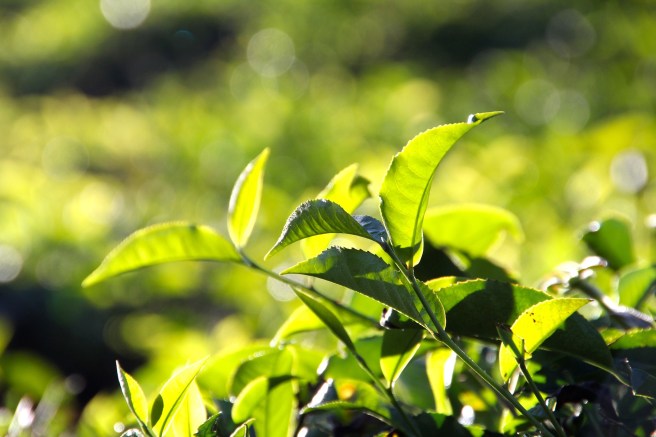
tea leaf

It’s too ordinary for you to notice.

Whenever you’re seeking,
Whatever you’re seeking,
You’re seeking something else,
A mental projection,
A fantasy.

The self that causes all the mischief,
All the suffering,
Is an imagined entity.
It is seeking its own end
– how absurd!

No-self is already here.
To notice this,
There is nothing that you need to notice,
(Nothing you need to do)
As it is always being noticed.
It is simply the totality of whatever is already being perceived,
And in that totality there has never actually ever been a perceiver,
The perceiver being an imagined entity.

Ask yourself “Who am I?”,
“What is the I”,
And you will find no “I” there,
“I” being just an empty thought.

Reality is simply that which remains
When no actual “I” is seen,
When things are seen as they are,
Which is always the case.

There is nothing you need to do,
Nothing to realise,
Only cease adding the notion of “I”,
Only cease to believe in that “I” for which there is no evidence.

Then the notion of “I” can still appear,
The “I” can still come and go as it pleases,
(for this “I” is just a thought,
and like all phenomena,
its appearance cannot be controlled,
spontaneously appearing and disappearing by itself)
But it is no longer believed in.

The “I” being seen through,
Reality shines by itself,
As it has always done.

This is nothing new,
I hesitate to say nothing special,
As it is also truly wonderful.

Reality being everywhere and ever-present
– what is more ordinary and commonplace than that?
Tao Te Ching: Mastery of the world

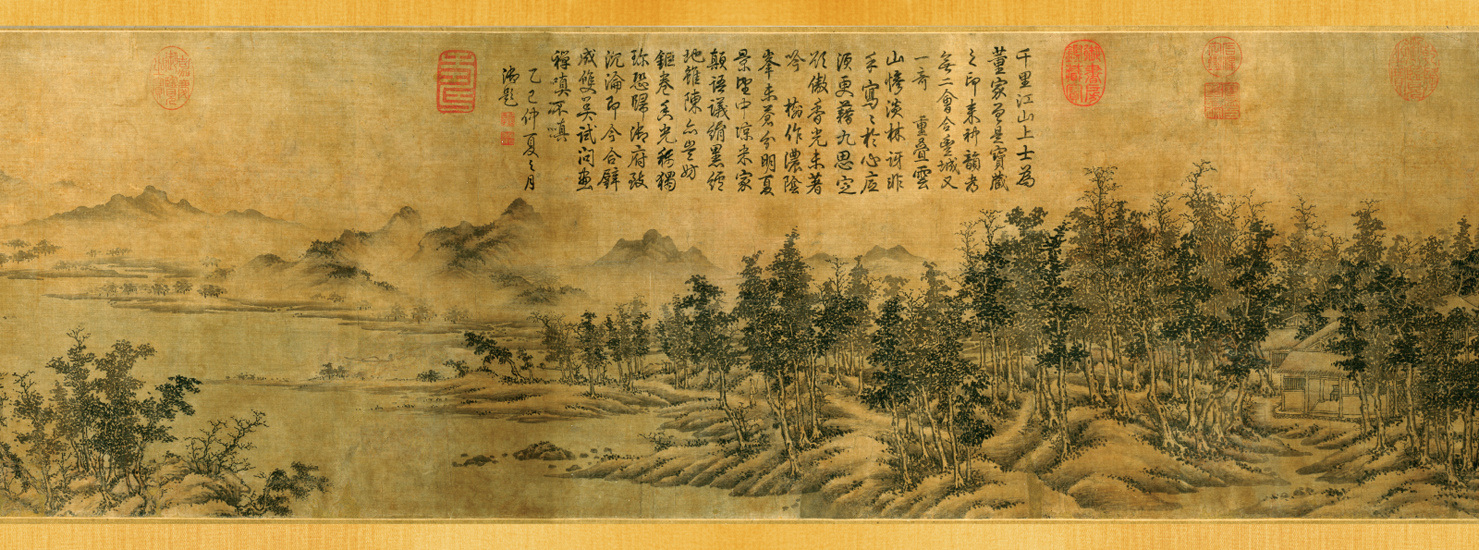
Tao te ching

This is one of my favourite verses from the Tao Te Ching, an ancient Chinese text overflowing with wisdom (If you have not read it, I highly recommend you do – it is easy to find a translation online).

Here in this verse we are instructed to let go, let go and let go again, until not even the notion of our very self remains. Here we have let go of all ideas of spiritual practice, of spiritual paths and of even letting go.

Then, perhaps, non-action will ‘happen’. This is the culmination of the so-called spiritual path: no-doer, nothing more remains to be done, nothing remaining undone – this is ‘mastery of the world’.

One who seeks knowledge,
learns something new everyday.
One who seeks the Tao,
unlearns something new everyday.

Less and less remains,
until you arrive at non-action.
When you arrive at non-action,
nothing will be left undone.*

Mastery of the world is achieved,
by letting things take their natural course.
You can not master the world,
by changing the natural way.

Tao Te Ching verse 48

*An alternative translation is:
When there is no doer,
nothing remains to be done’

Insight

Insight is not personal insight.

With personal insight, you have an insight,
You realise this or that,
You realise x, y or z.

All personal insight is based on concepts or thought,
– they are all subject to change,
– they are all subject to doubt.

With Insight it is the person that is seen through;
Insight is there without a person having an insight:
Everything is just Insight,
There is only Insight.

Like realising the lake is a mirage:
Your personal insights and doubts were just ripples on its surface;

Then the whole of spirituality is done for,
No need for any of it anymore,
What else is there to do?
What can be done when there is no doer?

Is reality impersonal?

Children playing

This is a question that often comes up, and many teachers often state that reality is impersonal. I myself have written a piece stating just this (complete with an impersonal looking image). However, like so many things we can write and say about reality, it is often correct in one way but false in another. As I’ve stated many times before, reality cannot be captured in words.

We could say that reality is impersonal or both personal and impersonal, or we could say that it is neither personal or impersonal. All these statements would be correct in the correct context.

But are these statements helpful? To say that reality is either personal or impersonal is ultimately besides the point. The essential point is to see things as they are, or rather to stop believing in all our concepts about reality – then reality shines, as it always has done. Who cares if it’s personal or impersonal?

Continue reading