Ramana Maharshi: just ‘lose’ the ego

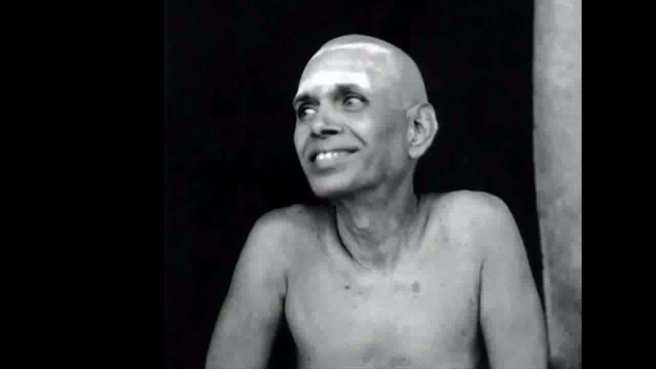
Ramana smiling

Be what you are…All that is needful is to lose the ego, That what is, is always there. Even now you are That…
…The thought ‘I have not seen’, the expectation to see and the desire of getting something, are all the working of the ego.
You have fallen into the snares of the ego. The ego says all these and not you. Be yourself and nothing more!

Talks with Sri Ramana Maharshi
Talk 183

See also:
Ramana Maharshi on non-doership and self-realisation
Ramana Maharshi: Self-inquiry (atma vichara) and doership

Absolute vs Relative Truth

mountain valley light.jpg

One way of talking about spirituality is that it is that which is concerned with the ultimate truth or absolute truth. The concept is that absolute truth is universal, never changes and can be directly perceived/experienced at all times and places. It cannot be learnt or accumulated as it is always already present and known. I use various capitalised words synonymously to describe it, eg. God, Truth, Love, Wholeness, Love, the Universe. The teaching is that its perception does not require special equipment (such as a microscope or telescope) and it does not depend even on the body, mind or senses. It cannot be described and defies and transcends all concepts. Absolute truth cannot even be divided into the absolute and relative, the division being merely a conceptual one.

It cannot be learnt or accumulated as it is always already present and known.

In contrast to this, worldly knowledge can be called relative knowledge or relative truth. This includes scientific knowledge, knowledge of skills such as a sports game or knowing facts such as how tall Mount Everest is. This knowledge is relative because it does not stand alone and is only true in relation to something else. For example the height of Mount Everest depends on various factors such as defining the point from which height is measured and the unit of measurement. The height will also change over time as the mountain topography changes. In fact one of the cardinal features of relative knowledge is that it changes over time depending on specifics relating to time and place. Relative knowledge can also be accumulated and developed over time. Lastly it requires the body-mind-senses to reveal/discover it.

So to summarise we have two concepts, the relative and the absolute. The relative is concerned with those things which change. We can lump all things that change together and call it the world. This world includes the world outside us, as well as our inner world of thoughts, feelings, emotions and psychic perceptions. The absolute is that which, in theory at least, remains the same no matter what. You could call this Spirit. It is always and already known by everyone whether they know it or not.

So to summarise we have two concepts, the relative and the absolute. The relative is concerned with those things which change…The absolute is that which, in theory at least, remains the same no matter what…It is always and already known by everyone whether they know it or not.

Strictly speaking, this division into relative and absolute itself is arbitrary, but because we take ourself to be a doer, this division is provisionally made so our mistake can be corrected. Once corrected, concepts of relative and absolute disappear (we see they are also false concepts), and all that remains is this, the unnameable. But until that point, the concepts are useful teaching aids pointing one in the right direction like the proverbial finger that points at the moon: don’t worship the finger otherwise you will miss the moon in all its heavenly glory. The flip side is that once you have seen the moon, you don’t need the finger any more. Teachings are always conceptual and are to be thrown away eventually.

Strictly speaking, this division in relative and absolute itself is arbitrary, but because we take ourself to be a doer, this division is provisionally made so our mistake can be corrected.

This means, according to my definitions above, talking about and working with emotions, feelings and thought processes is still in the domain of the relative world and so is not spiritual. I would even go as far as to say as that someone who is only interested in these things remains a materialist caught in the clutches of the ego. In this teaching we place our attention beyond the body, senses and mind (including any psychic powers and mystical experiences) and discover what appears to transcend and permeate everything.

Teachings are always conceptual and are to be thrown away eventually.

Now, before I get accused of being a nihilist let me make it clear that I am not saying that we shouldn’t do worldly things. Politics, medicine, health, social work, psychotherapy, psychic work, art, music, etc, all have their place and worth. But there is something more. I sometimes call this Spirit, but you can use any word that resonates with you. Or you can use no word at all.

Through discovering that which already (apparently) transcends the world (which is the same as discovering your ‘true nature’, that which you already are) you can ‘realise’ your Natural State. It’s just noticing something that is already here, but that noticing is powerfully transformative and enables us to realise that we are already, and have always been, free.

Once [the root mistake has been] corrected, concepts of relative and absolute disappear (we see they are also false), and all that remains is this, the unnameable.

Turiya – the fourth state, or is it?

om star.png

In my recent interview on Buddha at the Gas Pump, Rick asked me about Turiya, the 4th state of consciousness.

According to Vedanta, Turiya is that state of consciousness which lies beyond the 3 states of consciousness that we all ordinarily experience, namely the waking state, the dream state and the deep sleep state. In experiencing Turiya directly there is the possibility of liberation.

You can listen to our exchange on the video below. After the interview I decided to see what Ramana Maharshi had said about Turiya and was relieved to find that he agreed with me 🙂 😛 (at least on this occasion – he probably agrees with Rick on other occasions!)

Here is what Ramana had to say about Turiya:

From Talks with Sri Ramana Maharshi, Talk 353:

Questioner: What is turiya?

Ramana Maharshi: There are three states only, the waking, dream and sleep. Turiya is not a fourth one; it is what underlies these three. But people do not readily understand it. Therefore it is said that this is the fourth state and the only Reality. In fact it is not apart from anything, for it forms the substratum of all happenings; it is the only Truth; it is your very Being. The three states appear as fleeting phenomena on it and then sink into it alone. Therefore they are unreal.

This view is also the traditional view of Turiya in vendanta as expounded by Gaupada in his Mandukya Karika.

So does this mean that Rick’s view is wrong? I don’t think so. His view is also a useful view, but in a slightly different way. Thinking of Turiya as a 4th state distinct from the others can also be a beneficial teaching when used in the teachings of a skilled teacher with a genuine realisation. Rick’s notion of entering a (nirvikalpa) samadhi and this having a purifying effect on the waking state is also a valid way of approaching this realisation/freedom.

It’s important to note that these teachings are ways of describing our experience. They are concepts, and form conceptual ways of carving up our experience with the intended effect of leading the seeker to liberation. They are not intended to be based in physiology or  ‘science’ in my view.

The point of these specific teachings/concepts is to point out the awareness-consciousness that does not come and go, regardless of what is happening. Whether or not they are successful in achieving that end is the test of how good the teaching is, not how well it is based in human physiology or scientific observations. It is therefore impossible to say one teaching is better than the other – the teaching that works is the ‘best’ teaching for that situation (this is the notion of expedient means in Buddhism)

Eventually, when you realise that consciousness is the essence of you, and remain as that, unidentified as body or mind, the illusory sense of doership is eventually destroyed. With it, the dualistic notion of a consciousness that is in some way distinct, underlying and permanent is also destroyed. What you are left with is what is already here: this, nameless, beyond words (and inclusive of words).

For a more detailed discussion of Turiya please see here:

http://www.advaita.org.uk/discourses/teachers/turiya_peter.htm

Don’t believe the false sense of limitation

hills and pool.jpg

In spiritual matters, if the first step is in the wrong direction, the whole path follows in being wrong. The very suffering it aims to quench is perpetuated by this initial mistake. Once this tiny mistake is corrected, the path becomes straight and clear and Spirit pours through. What mistake is it that I am talking of? The mistake is to think of yourself as being a limited entity.

The mistake is to think of yourself as being a limited entity.

It is like travelling on a wagon with a stone lodged on one of the wheels: the ride is bumpy and uncomfortable. And the faster you drive, the more effort you put into it, the bumpier the ride – there are no points for effort here.

Effort alone is not enough. Effort has to be skilfully directed for it to be effective. We must attack the problem directly at its root. If you take the time to stop and examine the wagon, then remove the stone from the wheel, the journey becomes smooth. Furthermore, much less effort is required to drive once the root problem is solved. Similarly we must also stop and look at our very basic assumptions about life, challenge them, see how they are erroneous and cause needless suffering and ensure they do not operate in daily life.

Effort alone is not enough. Effort has to be skilfully directed for it to be effective.

And what are these assumptions? They are primarily about our identity, our idea of ‘self’ or ‘me’ or ‘I’, also known as the ego. As long as you assume you are a limited separate entity you will consider yourself to be vulnerable to injury and death, so suffering will continue. You will seek security and pleasure, and fear uncertainty and pain.

As long as you assume you are a limited separate entity you will consider yourself to be vulnerable to injury and death, so suffering will continue.

This in turn gives rise to the notion of doership – the notion that the individual is master and controller of their thoughts and actions. There are many other concepts that we hold, often unconsciously, but all are tied to this notion of a separate ‘I’ (the illusion of separation). If that is rooted out, then all the other branches that grow from it wither and die. If the ‘I’ is left intact, then new falsehoods grow back and suffering continues.

So instead of simply ploughing forwards on a spiritual path, first try to stop and look. Find out who you really are. In terms of spiritual understanding realise that this does not mean that you accumulate more knowledge of ‘who you are’. It means that you dispel falsehoods. Find out your concepts of what you are and critique them. When all false assumptions are seen to be mistaken, then they are naturally discarded and what remains is what you are: Ultimate Truth.

So instead of simply ploughing forwards on a spiritual path, first try to stop and look. Find out who you really are…When all false assumptions are seen to be mistaken, then they are naturally discarded and what remains is what you are

This cannot be described, and need not be described. Every description is misleading, including calling it ‘Ultimate Truth’. It can only be ‘lived’ or ‘experienced’. Self-knowledge is non-conceptual; for how can the Self, what you are, be encapsulated in words? It cannot!

All descriptions of Truth have value as they may be useful pointers on the way but they should be known to be ultimately false. Hold onto helpful teachings while they are useful, then throw them away! (They fall away naturally if you let them)

Ramana Maharshi: the essence of realisation

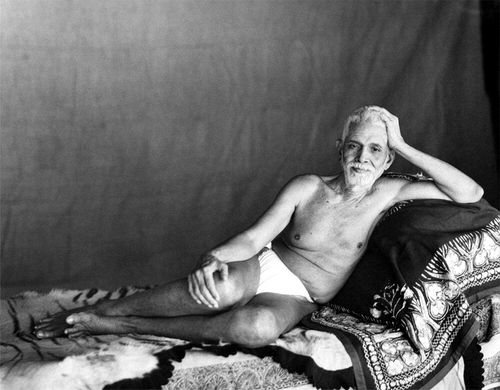
Ramana reclining.jpg

Killing the ego is the only thing to accomplish.

Realisation is already there. No attempt is needed to attain realisation. For it is nothing external, nothing new.

It is always and everywhere here and now too.

Talks with Sri Ramana Maharshi
Talk 174

Tom’s comments:

Time after time, again and again, Ramana says the only thing needed to do is remove the ego. Reality does not need to be realised, for it is already and always being realised.

Remove the ego, and reality shines by itself, as it always has done.

What is the ego? The ego is the notion of doership.

How to remove the ego? See that the sense of doership is an illusion. It doesn’t exist. There is no doer, there never was a doer, it was all imagined!


THE LIGHT THAT SHINES WITHIN

spiral.jpg

There is a light. A light that shines within. You can call it the light of consciousness. It is the light by which we can see, hear, smell, taste, touch and think. When we close our eyes and imagine something, it is also illumined by this inner light. When we imagine only darkness but are still thinking, this ‘light’ is that which ‘illumines’ our thoughts as well as the darkness. We know both light and dark because of it. It also illumines our dreams as well as our waking life.

Have you ever noticed this light, this inner light? Have you ever noticed how, peculiarly, it never changes? It is the one constant: your thoughts and opinions have no doubt changed over time; your body has grown and altered over years past; your emotions most probably fluctuate throughout the day. But the light by which you are conscious/aware of these remains the same.

Imagine yourself as a young child. Do you remember what it was like to be you back then? Try to picture a specific memory in your mind. Do you, like me, have a sense that you were basically the same person then as you are now? If so, what is it now that is the same as then? As I said, your thoughts,body and feelings have all changed over time, but something remains the same, unchanged. What is that unchanged essence? This is the inner presence-light that cannot be put into words but is always there.

That light can also be felt as a presence. Actually, it cannot be felt as anything, rather through it feeling occurs and presence is felt. For though it perceives, it cannot be perceived. For though it illumines, it cannot be illuminated/seen (just like how electricity which illumines a light bulb cannot be seen). But it is undeniably present (Please note that putting this into words makes something that is as simple as our own being seem overly complex. If you stick to your own direct experience, you will see how simple it all is).

From the point of view of your own direct experience of living, this illuminating-presence is the essence of what you are. No matter what happens to you, it is unscathed, unchanged, unharmed, unmodified.

‘Blades do not pierce it, fire does not burn it, waters do not wet it, and the wind does not parch it’
Bhagavad Gita 2.23

If you believe your thoughts and take yourself to be a limited body-mind entity, this aware-presence can be felt as something external looking down at you – it can be felt as God’s ever-present gaze lovingly embracing you.

‘For in him we live and move and have our being.’
Acts 17:28

If however you remain silent, as thoughts subside this sense of identification can fall away and you can see that this presence is actually the essence of what you already are. We can see that our true-nature is awareness-consciousness-spirit.

‘The eye with which I see God is the same eye with which God sees me.’
Meister Eckhart

Know that spirit or light within cannot be described or pinned down. It is everywhere, as light is everywhere, but it is no particular thing. Any object you can see/feel/perceive is not that spirit-light. It cannot be experienced, as it is that which allows experience to occur – it transcends experience. And while it is no particular thing and no particular experience, without it no things would be experienced. In this sense all things are dependent on it.

‘They can’t say, ‘Here it is!’ or ‘There it is!’ You see, the kingdom of God is within you.’
Luke 17:21

This is the divine essence that resides in each and every one of us. See, if you believe in God but do not have a feel for this inner spirit-light, then your god is simply a projection of your mind/thought. If however you feel this inner light, then what need have you for belief? Divine spirit is already here lighting up and animating your life. Instead learn to trust it, have faith in it – it is not a projection, but a sense of eternal unchanging presence that is always there patiently waiting, patiently supporting you. Pay attention to it throughout the day, allow it to seep into your being, engulf you and wash you clean.

‘Trust in the Lord with all your heart, and do not lean on your own understanding. In all your ways acknowledge him,and he will make straight your paths.’
Proverbs 3:5-6

Lean on Spirit, the innermost essence of you, and see what happens. Allow God to reveal herself to you. Like falling asleep, this is not something you can do, but something you have to allow to happen.

‘Abandon all varieties of religion and just surrender unto Me. I shall deliver you from all sinful reactions. Do not fear.’
Bhagavad Gita 18.66

Ultimately God is beyond all concepts and labels, even concepts of consciousness or inner light. All concepts of the ultimate dissolve in that Unnameable Reality.