Reading Sri Ramakrishna in Calcutta: All Religions point in the same direction

I used to read the works of Sri Ramakrishna as a young teenager. I first came across his books in Calcutta whilst on holiday there visiting family. I think it was in the gargantuan Howrah railway station that I spied a pile of his books. His books, I learnt in later travels to India, can be found in railway stations all over India, often in makeshift stalls that line the train platforms. I remember having to pester my dad to give me the money (was it 5 Rupees?) to buy the small paperback that I still have to this day.

Ramakrishna could barely read and write and his teachings were written down by his friends and devotees. It fills me with a fond nostalgia to read this today (as it popped up on my Facebook timeline!)…

‘Jal’ and ‘Pani’ are 2 words for water in the Bengali language, Jal typically used by Hindus and Pani by Muslims.

 

Non-dual devotion, worship and prayer

child praying.jpg

In advaita (non-duality), we know that the God which is devote ourselves to is not separate from us.

Also see:

Does Jnana (Knowledge) lead to Bhakti (Devotion) or the other way round?
Should I bow to Sri Ramana Maharshi?
Grace alone is of prime importance
Bhakti Yoga (love and devotion) as a complete path to liberation
Ramana Maharshi on those who mock Idol-Worship

For many purists there is no place for devotion and prayer in non-duality. But devotion has always had a prominent role in spiritual traditions, and for good reason: it can be a hugely purifying and uplifting part of spiritual practice with many positive effects on the body and mind and our relationships. (click here for how devotion can be part of a wider spiritual path)

Om! May Brahman protect us!
May Brahman nourish us!
May we have energy!
May we become illumined!
May we not hate!
Om, Shanti, Shanti, Shanti!
(A traditional invocation or prayer from the Upanishads)

Continue reading

Sufi mystic Abol-Hasan speaks

soul and loaf bread

Here are some gems from Sheikh Abol-Hasan, a Sufi mystic from the 11th century AD. His words continue to astound me. I have followed each quote with my commentary in italics and hope this does not detract from the quotes themselves.

One may speak of those absent,
but one who is Ever Present,
one can say nothing of
Sheikh Abol-Hasan, saying 92

How can we speak of Him? How can we talk of Him? All talk of Him is fanciful, all the more so if we take our descriptions and theories about Him seriously. Continue reading

Beyond self-realisation

face illusion flower
There is nobody here

No sadhanas are required
No sadhana (spiritual practice) can lead to self realisation. No map can take you to where you already are, and no practice can transform you into that which you always have been.

All sadhanas such as meditation, mindfulness, mantra, puja, selfless service and devotion – all sadhanas are for the illusory individual. They are an extension of greed/egotism. It is this web of illusion, all hinged upon the idea of being a person with a body and mind, that prevents the obvious from being ‘seen’. Continue reading

Ramana Maharshi: The 4 paths to freedom (the 4 yogas)

In this passage below Ramana Maharshi talks about the four traditional Hindu paths to ending suffering or moksha (liberation/freedom). The four paths are traditionally called the paths of knowledge (jnana), love or devotion (bhakti), meditation (raja yoga), and doing good works (karma).

Almost every spiritual tradition around the world will fit into one of more of these four paths Continue reading

Sufism: Infinite ways to an infinite god (even if you don’t believe in God)

soul and loaf bread

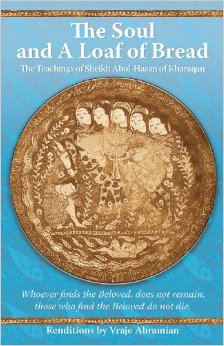
There are infinite ways to an infinite God; there are as many ways to God as there are people or beings: I have often thought this to myself, so whilst leafing through a newly purchased book (pictured above), I was pleasantly surprised to read a quote by Sheikh Abol-Hasan, a Sunni Muslim and Sufi from 10th century Persia, saying just this:

There are as many paths to the Lord as there are grains of sand and drops of rain…whomever seeks, eventually finds his way There
Sheikh Abol-Hasan, saying 141 from ‘The Soul and A Loaf of Bread’

These infinite ways are just variations of the One Way. And this One Way, for the purposes of exposition, can broadly be subdivided into two: one path for those who believe in God and one path for those who do not. Continue reading