Are you or are you not the body?

This follows on from my previous post.

It is an observable fact that our direct experience alone does not provide us with sufficient evidence to say whether or not objects in the world arise solely from consciousness (ie. philosophical idealism), or whether consciousness is a product of the material word (eg. the human brain) which in turn perceives an image of that material world (ie. philosophical realism).
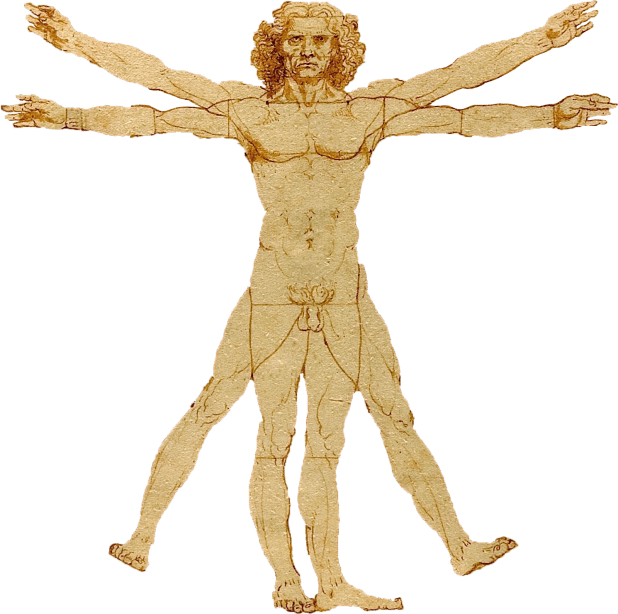
Portale_Leonardo_da_Vinci.png

Not that these are the only two possibilities – there other theories that could also account for our present experience, and perhaps other explanations that our limited human minds are incapable of understanding – but for the purposes of this article we will not go into this.

The point is, from our direct experience alone, we do not know if what we call the body is solely an image that arises in our consciousness, or if that image is a representation of a real body somewhere outside our consciousness which in turn gives rise to consciousness.

To be continued here: Why does understanding the body matter?

Do you know for certain that you are the body?

Sculpture Male Body Naked Gestures Man Human
Do you know for certain that you are the body?
Do you know for certain that you are not the body?
The honest answer to both these questions is ‘no’.
‘I am not the body’ is a tool by which one can weed out the ‘I am the body’ notion.
Then once the work is done, like the thorn used to remove a thorn, throw them both away.
What is reality then?
Reality is simply whatever is left over when concepts of self and no-self are no longer believed in.
Reality is the ineffable indescribable indefinable ever-obvious ever-present ‘now’.
Tom Das

These verses will be elucidated further in upcoming posts:

  1. Are you or are you not the body?
  2. Why does understanding the body matter?
  3. Why seeing/understanding alone may not be enough
  4. Integrating the understanding of no-doer
  5. Problems with utilising conceptual tools
  6. Practising Knowledge
  7. Discarding knowledge as ignorance
  8. Integrating knowledge/spontaneous action
  9. Am I the body?

Muruganar: The Pre-eminent form of worship

Through the grace of my Lord’s glorious revelation I learned that the pre-eminent form of worship – which alone is worthy of him – who shines within the heart as the Self – is just to beThus did I learn to worship him without worshipping through the simple act of being.
Sri Guru Ramana Prasadam, verse 389

Sri Guru Ramana Prasadam was written by Muruganar (1890-1973), one of the most eminent of Sri Ramana Maharshi’s devotees. Muruganar was liberated shorty after meeting Ramana and thereafter continued to spend several decades alongside him. It is because of Muruganar’s questioning and urging that Ramana composed works such as ‘Self-Knowledge’, ‘The Essence of Instruction’ and ‘Forty Verses on Reality’. These succinct works contain the essence of Ramana’s (written) teachings. We are indeed indebted to Muruganar! Continue reading