 There is no ‘you’
that is enlightened
or not enlightened:
there is only enlightenment. Continue reading
There is no ‘you’
that is enlightened
or not enlightened:
there is only enlightenment. Continue reading
 When things are seen for what they are,
it can be seen there is no doer:
there is just what’s happening
happening.
Suffering tends
to drastically lessen
as old ideologies fall away. Continue reading

You have never done a thing.
Why?
Because you do not exist.
You did not chose your gender (at birth),
the colour of your eyes, Continue reading
To realise that there is no point to the spiritual search is the end of seeking spiritual experiences.
This absence of seeking is itself the fulfillment we were looking for.
Here there is no enlightenment. This is the enlightenment.
An apparent paradox.
Now things are seen for what they are: a mysterious unfolding of events, thoughts, feelings, desires and happenings.
All seamless,
Ever-changing and therefore without form,
And without a doer.
Just what is.

It just so happens that in the so-called ‘West’ there has been a rapid development of science in the last few centuries. If we want to understand how things work, if we want to develop technologies and medicine, we turn to ‘Western’ science.
Also, it just so happens that when it comes to introspection and exploration of subjective inner states of consciousness, the so-called ‘East’ has had the historical monopoly. There have been a few thousand years of rigorous exploration of consciousness through meditative, contemplative, tantric and various other practices. This has allowed humans to discover and access mental states in which truths about our minds and subjective experience can be discovered and experienced first-hand without the need for belief. Continue reading
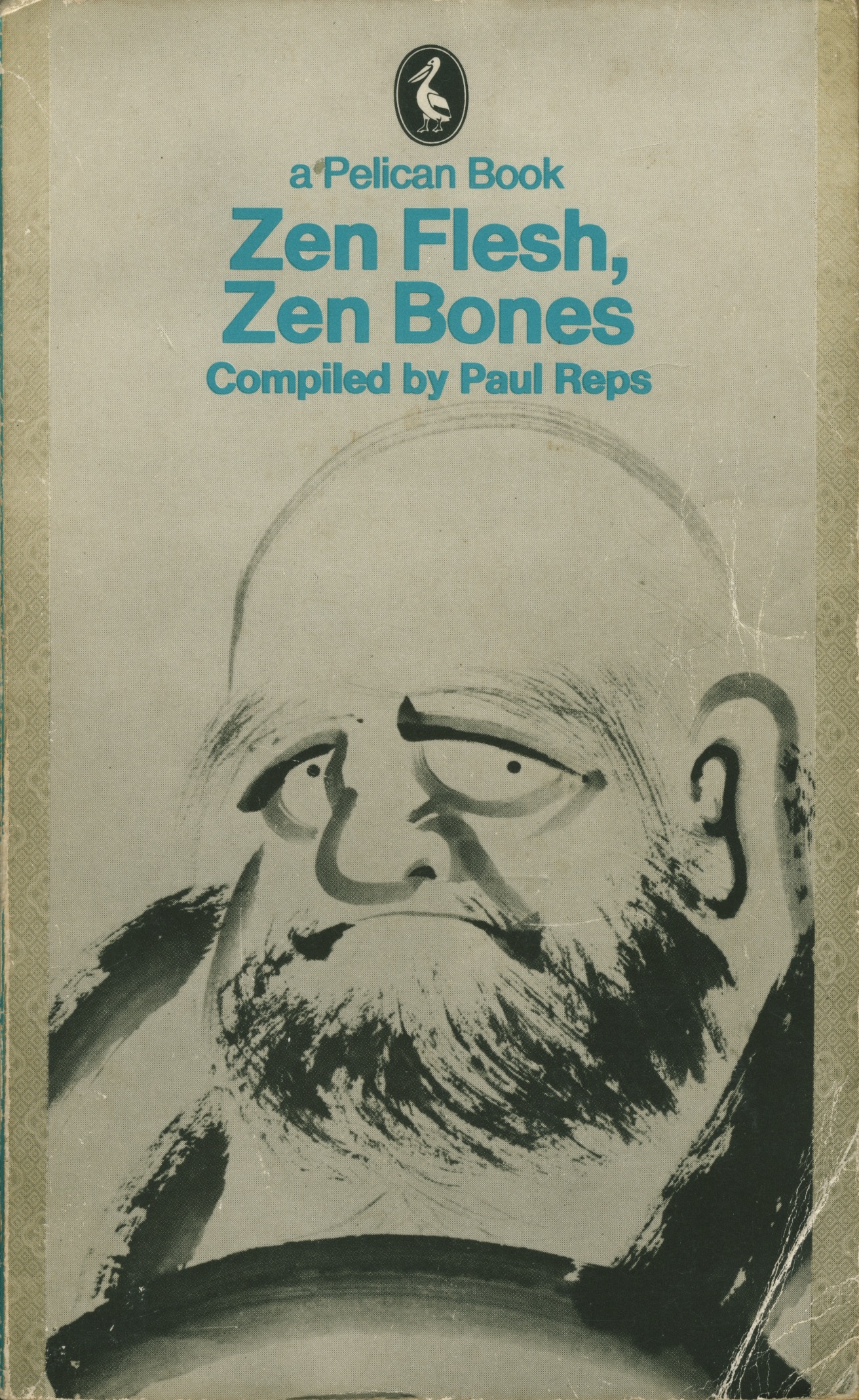
Another short story taken from the glorious little collection, Zen Flesh, Zen Bones:
The Thief Who Became a Disciple
One evening as Shichiri Kojun was reciting sutras (Buddhist scriptures) a thief with a sharp sword entered, demanding either his money or his life. Shichiri told him: ‘Do not disturb me. You an find the money in that drawer.’ Then he resumed his recitation.
A little while afterwards he stopped and called: ‘Don’t take it all. I need some to pay taxes with tomorrow.’
The intruder gathered up most of the money and started to leave. ‘Thank a person when you receive a gift,’ Shichiri added. The man thanked him and made off.
A few days afterwards the fellow was caught and confessed, among others, the offence against Shichiri. When Shichiri was called as a witness he said: ‘This man is no thief, at least as far as I am concerned. I gave him the money and he thanked me for it.’
After he had finished his prison term, the men went to Shichiri and became his disciple.
I was reading a passage from J. Krishnamurti’s slim book called meditations which reminded me of a passage from The Gospel According to Matthew. The language they use is strikingly similar. I’ll start with the biblical passage as it’s shorter:
But when you pray, go into your room, close the door and pray to your Father, who is unseen. Then your Father, who sees what is done in secret, will reward you.
Matthew 6:6
The heart of the teachings are just this. Here is the most excellent of sadhanas (spiritual practices). Gotta love Swami Chinmayananda for keeping it real. I especially like the way he says “I am not insulting you”:

Most of the great spiritual traditions claim that there is something eternal and supremely infinite, something that is all-knowing, all-powerful and present everywhere (omniscient, omnipotent and omnipresent).
If that is the case, then this Infinite must already be here, right now. If it isn’t already present right now, then it is not omnipresent. This is a vital point to grasp – if there is such a thing as the Infinite, then it must already be fully here, right now, otherwise it is limited and therefore not infinite.
It is not that certain mystical or transcendental experiences are experiences of the Infinite but our normal everyday experiences are not. No, all our experiences must be of Him. We must always be experiencing the Infinite.
This has several ramifications for the spiritual seeker. This means that the problem we face is not that we are apart from God and need to find Him or experience Him. No, the issue is that we are already always experiencing God but do not know it.
The issue is not one of acquiring a special experience or state of mind. It is that we do not correctly understand our current experience as it is right now. Even traditions that do not admit a God such Buddhism acknowledge that understanding, or insight, is what is key:
“If you do not have insight into the way you yourself and all things actually are, you cannot recognize and get rid of the obstacles to liberation from cyclic existence, and, even more important, the obstructions to helping others.”
Dalai Lama (from How to See Yourself as You Really Are)
Armed with this knowledge, we can mature in our spiritual seeking. So-called materialistic or worldly life is characterised by chasing experiences such as pleasure, power, fearlessness, pride and security. Many spiritual seekers just transfer this same pattern of yearning for worldly experiences into their quest for spiritual experiences. However as we mature in our spiritual search we can stop chasing states of mind and experiences – all of which are temporary – and instead start to try and understand our direct experience as it is right now.
This understanding or insight, whilst based upon our direct experience, is not a search for a particular experience, but an understanding of experience itself.
“That is why the insight that can liberate you from these afflictions is the key to happiness…Insight brings love, and love is not possible without insight, understanding. If you do not understand, you cannot love. This insight is direct understanding, and not just a few notions and ideas.”
Thich Nhat Hanh
A few years ago I read some of the earliest Buddhist texts that we currently know of and was shocked at how different they are to what is generally taught as being Buddhism today. Even Theravada Buddhism, which has the claim of being the oldest surviving school of Buddhism, often presents its teachings in very different ways. These early teachings were direct, forceful and devoid of complexities and lengthy philosophising. They reminded me much more of the pithy statements of Zen and Dzogchen Buddhism, which is surprising as these Buddhist schools are chronologically much later developments that occurred roughly 1000 years after the Buddha’s time. Continue reading
 Tom Das