This is one of a series of introductory articles – please see the homepage of tomdas.com for more introductory articles.
This post is also an extract of a much larger post which you can read here which provides extensive quotes from Shankara, Gaudapada, Sri Ramana Maharshi, Yoga Vasistha and Ribhu Gita to give scriptural backing to the 20 points below.
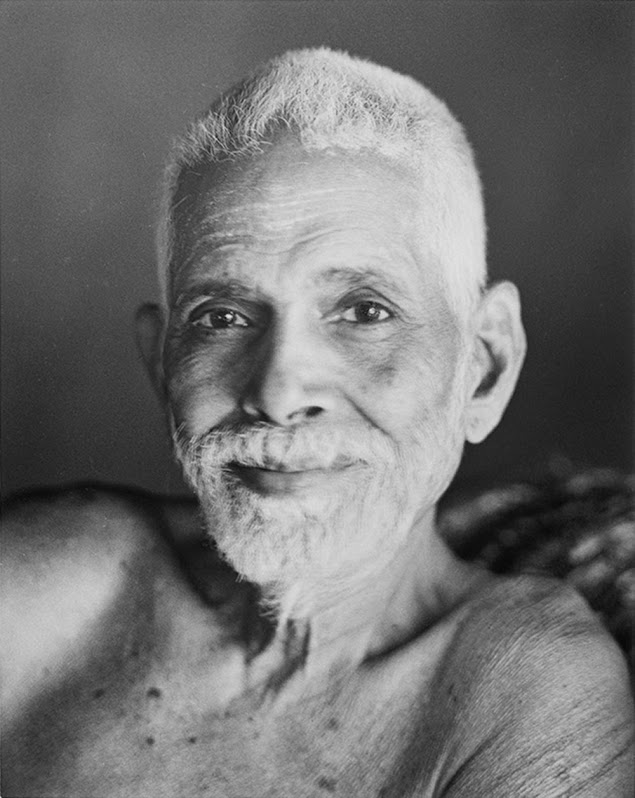
There was a particular conceptual world-view that great sages such as Sri Ramana Maharshi encouraged us to take on, if we are able to, in order to facilitate our spritual practice and thereby attain self-realisation or liberation.
For lower seekers of liberation, meaning for those whose minds were unable to be open to the higher teachings, Sri Ramana Maharshi and the great sages often did not give the teachings we will outline below, but for those whose minds were ready and ripe, he would often encourage this following view of creation and the world, as it is this conceptual view that most readily allows the seeker’s mind to properly do self-enquiry and thereby realise the Self.
However, rest assured, that regardless of how one conceives of the world, meaning that even if you do NOT agree with the teachings below, if one makes an earnest attempt to understand and carry out Self-Enquiry, liberation will be assured irrespective of your conceptual view on liberation and the world. Then you will discover the truth for yourself.
A warning/disclaimer
The teachings that are given below, whilst they are open to anyone, are very radical in their nature. It is not recommended that you read them if you are not an earnest seeker of liberation or if your mind is likely to be destabilised by a more radical notion of the nature of the universe or what liberation looks like.
We will see that these same exact teachings have been given for many centuries, but traditionally these teachings would only be given to a prepared mind, a mind prepared by devotion, faith and loving surrender. This infuses the mind and heart with an energy of peace, calm and loving kindness and happiness. It is this stable peaceful mind that is most able to receive these teachings, although it is possible there can be some exceptions to this.
Some people can find these teachings quite distressing and destabilising and the author of this post takes no responsibility for providing this information to you that has been traditionally written about and taught for many centuries and is already in the public domain.
Be open minded to receive these teachings
Similarly, the ego-mind will often reject these teachings when it first hears them. Often a person’s ego will only be able to come to these teachings once it has suffered enough. The more insight the ego has into suffering, and the more it is able to contemplate the causes of suffering, then the more likely it is able to appreciate the truth of these teachings.
Usually only a sharp intellect is usually able to discern these teachings. Many people read these types of spiritual teachings and immediately project their own preconceived ideas onto them, and so distort the teachings from the very beginning. If we keep an open mind and read the range of quotes given, we will inevitably see what they are truly pointing too. If we cling to our own preconceived notions then we are less likely to receive these teachings in the way they were intended.
These teachings are rare and often misunderstood
Many prominent spiritual teachers, including prominent teachers of advaita and non-duality, give out distorted versions of these teaching, so it is important to be able to temporarily put aside all you have learnt whilst reading or listening to these teachings if you really want to understand what the intended communication actually is.
It is also important to not assume that all spiritual teachers are teaching their own versions of the Same One Teaching, and be open to the fact that they may be teaching very different things; just because a teaching is helpful, doesn’t mean it is liberating; and just because a teaching isn’t liberating, it doesn’t mean it will not be helpful to you.
My recommendation is that you listen to what Sri Ramana Maharshi has to say, and the best way to do that now that his body has passed is to read his own writings themselves.
The Jnani does not see the world
Sri Ramana often said that the Jnani (self-realised or liberate Sage) is totally unaware of the body, the mind and the world, and that the liberated sage also has no awareness of the 3 states of dream, deep sleep or waking, all of which are a projection of ignorance (aka the mind). We will see below that Sri Shankara says the same, as does his guru’s guru, Sri Gaudapada, as well as his student, Sri Suresvara. The quotes given in the later part of this post will concentrate on demonstrating that this was indeed the teachings of these great teachers.
The Conceptual Teaching Framework for the Teachings
The following conceptual teaching framework is consistently given from the Vedas, the Upanishads, Sri Ramana Maharshi, Sri Gaudapada, Sri Shankara, and Sri Suresvara as well as others such as Ramakrishna, Vasistha and Ashtavakra, and it is this larger framework that the quotes that will be given later fit into. It is essentially a combination of the Ajata Vada and Dristi Sristi Vada views. The reason for different views on how the world is created in explained by Sri Ramana Maharshi in his answer to question 10 in his text Self-Enquiry (click here to download the text) as follows:
Question: If the entire universe is of the form of mind, then does it not follow that the universe is an illusion? If that be the case, why is the creation of the universe mentioned in the Veda?
Sri Ramana Maharshi: There is no doubt whatsoever that the universe is the merest illusion. The principal purport of the Veda is to make known the true Brahman, after showing the apparent universe to be false. It is for this purpose that the Vedas admit the creation of the world and not for any other reason. Moreover, for the less qualified persons creation is taught, that is the phased evolution of prakriti (primal nature), mahat-tattva (the great intellect), tanmatras (the subtle essences), bhutas (the gross elements), the world, the body, etc., from Brahman [Tom: ie. the lower seeker is taught a traditional creation model of the world in which the subtle elements progressively evolve into more complex structures, etc], while for the more qualified simultaneous creation is taught, that is, that this world arose like a dream on account of one’s own thoughts induced by the defect of not knowing oneself as the Self [Tom: ie. the defect of not knowing oneself is ignorance, and this creates thoughts, and these project the world akin to a dream, so the world is a creation of ignorance or delusion]. Thus, from the fact that the creation of the world has been described in different ways it is clear that the purport of the Vedas rests only in teaching the true nature of Brahman after showing somehow or other the illusory nature of the universe. That the world is illusory, every one can directly know in the state of realization which is in the form of experience of one’s bliss-nature
Without understanding the creation framework that the teachings are operating in, the teachings are much more difficult to follow. The opposite is also true, in that understanding this framework may greatly aid our journey to liberation. Please note that all of the following points have strong scriptural support and form the clearest most consistent interpretation of the scriptures according to the great sages who have proclaimed them – see the recommended reading list for books that explain these teachings more thoroughly and in greater detail:
1. There is only the Self and you are That. Self-realisation and liberation are synonyms and they represent the highest possible ‘attainment’ in which duality, suffering and any sense of individuality are competely destroyed never to return again. See a summary of Sri Ramana Maharshi’s teachings here for more on this and how to realise this for yourself.
2. In the Self there are no objects or arisings or appearances at all (this is the doctrine of ajata vada – no phenomena are created or born in it, not even as an appearance, see link for more). The Self is:
- homogenous (the same throughout, without any variation whatsoever)
- unchanging (without possibility of change arising within or being projected upon it)
- ‘one without a second’
- formless (ie. without form and without the possibility of any form arising in it)
- without karma (without action or movement, also known as ‘silence’ or ‘stillness’) or the possibility of karma/action (karma literally means action or change, more commonly refering to the chain of cause and effect)
- without thoughts or the possibility of thoughts
- non-dual (without duaity)
- devoid of time and space and therefore devoid of samara (the cycle of birth and death)
- blissful – it is heaven, the culmination of all desires, everything you have ever wanted and more, devoid of suffering and without any problems or questions or doubts.
- Peace, Silence and Stillness. See here for what it really means to be still according to Sri Ramana Maharshi.
- Infinte unconditional Love – the Self is the only infinite unconditional love, infinite unconditional love not being possible in the realtive realm of objects, people and things, all of which are conditional, under the sway of cause and effect and temporary.
- Divine, heavenly, godly
- devoid of the appearances or arising of the 3 states (waking, dream and deep sleep)
- devoid of body and mind and thought
- without ignorance or the possibility of ignorance or any arisings ever arising in it
- without describable characteristics; although it is often said to be Sat Chit Ananda, this is a metaphorical description, all descriptions of the Self ultimately fall short and can only be metaphorical at best
- unable to be conceived, understood or thought about. All metaphors ultimately fall short when trying to describe or explain the Self, even though they may be provisionally be used as a pedagogical device (teaching aid).
- The Self is also known as Turiya (the fourth), Samadhi, Nirvilkalpa Samadhi, Pure consciousness (the word ‘pure’ refers to the absense of arisings), Pure Being, Truth, Reality, True Nature, Jagrat-Susupti (waking-sleep), God, Heaven, the Abosolute, Brahman, etc.
- In truth Deep Sleep is the Self
See Mandukya Upanishad verse 7 where much of the above is described in concise form.
3. The self is both the only ‘thing’ that is real and the only ‘thing’ that exists, although it is not actually ‘a thing’ at all. To know the Self is to know all, and there is no real ‘knowing’ of the self, the word ‘knowledge’ being a metaphor for the removal of ignorance or another word for the Self. To know the Self is just to be the Self devoid of any phenomenal arisings. See here for more on this teaching which explains the true nature of Jnana, or self-knowledge, according to Shankara, Ramana and the scriptures. Reality and Existence are in fact synonyms and the idea that something can be both unreal but still appear or arise is fallacious (a false teaching) and not a teaching found anywhere in the Vedanta scriptures or the Upanishads – see here for more on this teaching. Also see this article here: The Meaning of Real and Unreal in Advaita Vedanta
4. It is due to ignorance that the range of phenomenal appearances appear to arise – ie. the appearance of one’s apparent body-mind, apparent other people and living beings, and apparent things such as tables, chairs, cars, trees, plants, planets, celestial bodies and stars,etc – all of these are a mere projection of ignorance, as explained by Sri Ramana Maharshi in his answer to question 10 in his text Self-Enquiry which you can read here. This projection is known as ‘duality’. In the Self or in non-duality, there is no duality. We will see Shankara and others clearly give this teaching below many times. It is also explained in this video here:
5. This root ignorance also goes by other names such as ego, mind, maya (illusion), imagination, hallucination, nescience, delusion, the I-thought and the I am the body-mind idea. (See the text Self-Enquiry by Sri Ramana Maharshi where this is explained in the answer to question 3) Therefore it could equally just as well be said that the world (ie. body, mind and world) are a projection of any of the above words.
In some teachings it is said that there are 2 forms of ignorance, the macro-form called maya which projects the body mind and world, and the micro-form called ignorance which gives rise to the individual sense of being a person, and that vedanta teachings removes only ignorance, the limited sense of being a jiva, but not maya, and so the body-mind world continues after liberation. Please note this is not the teaching given in the Upanishads or by Shankara at all and is a later development by later commentators who were not able to understand the radical nature of the original true and liberating teachings, and changing the teachings in this way renders a potentially liberating teaching potentially non-liberating. We repeatedly see how the terms ignorance and maya are used interchangably throughout the scriptures.
6. It is also explained that ignorance creates the subtle sense of being identified as a seperate entity (ego), and then this subtle entity (ego) itself projects the body and mind and identifies with this, which is called being a jiva (a living embodied entity). Subsequently, or simultaneously, depending on how it is expounded, the ego also projects the appearance of an environment for the body-mind entity which we call the world, and within this world the body-mind entity roams and experiences various sense objects via the body and subtle objects via the mind (thoughts, feelings, emotions, imaginings). This is explained succinctly in the text ‘Who Am I?’ by Sri Ramana Maharshi – I recommend the Sri Sadhu Om version which is the more accurate of the main translations.
7. In this same way the ego or ignorance projects the 3 states which it then experiences in turn. This is all the realm of ignorance. When objects arise, it is called either the dream or waking state, and when objects temporarily cease, that is called deep sleep. In fact the scriptures go on to explain here that we could say there are only 2 states, one called dream, when object appear, and another called sleep, when there are no objects, and that what we call the waking state is merely another form of dream. These refer to ignorance and reality respectively, or maya (illusion) and satya (truth or reality) – see here for this rare teaching.
8. This ignorance or ego or maya is itself not a real entity and in truth (ie. in self-realisation) it is ‘seen’ to have never actually occurred at all. Nothing (phenomenal) ever really happened at all. This is the ajata teaching, that nothing was ever created or arose at all. There was never any ignorance/maya or even any appearance of ignorance.
9. Within the waking dream, there is a specific way for the apparent ego to apparently remove ignorance (self-enquiry, also known as surrender; these are analgous to the paths of knowledge, jnana, and devotion, bhakti), and when ignorance is removed, the entire effects of ignorance, namely all phenomenal arisings, also cease, the effects no longer having a cause to sustain them. Karma or action refers to movement which can only occur. This specific method is clearly explained in the The Path of Sri Ramana – part 1 and in the book The Most Direct Means to Eternal Bliss by Michael Langford, which you can download for free from the links given. The method specifially involves discovering who or what you really are – this is done by allowing the mind to quieten, allowing the attention to no longer go towards gross and subtle objects, and with attention inward turned discovering the true nature of the ‘I’ or ‘I Am’. Importantly no objects/ phenomena arise at the time of the discovery – it is Pure Self alone, devoid of duality/objects. The method is also explained in brief here and supporting quotes from Shankara and others can be found here.
Just because the waking dream is ultimately an illusion, it doesn’t mean there is not a specific method to escape it. Effort on this specific path is required for liberation.
It is important to listen not only to our own hearts and inner knowing, but to also listen to the words and teachings of the Guru who has already crossed over to the other shore of liberation. Why? Because even though the same teaching the True Guru (Sat Guru) gives is already shining and being sung in our hearts, due to ignorance our minds are turned outwards and emeshed with thoughts, we are often not able to truly listen to our Hearts (the True Guru Within) and instead our ego distorts the teachings. Therefore the Guru’s words are supremely important in aiding us who are genuinely interested in liberation and this is why tradition exaults the value of the Guru on the path to Self-Realisation.
There is no other newer or quicker way that can be discovered to know or realise the Self. This is not a dogmatic assertion, but should become clear once you start to understand the teachings and why Self-Enquiry is the only way to liberation, although the same process can go by other names. Similarly there is no different way for men versus women, for this, like any other science, is universal and is applicable for all.
10. This removal of ignorance is not a real thing at all, ignorance itself being unreal, the whole thing being an imagination that never happened. This paradoxical teaching only appears paradoxical to the mind, which is unable to understand it, the mind being a product or the nature of ignorance. In truth there was only the Self, which cannot even be said to be called the self, as it is beyond all words and concepts, but it is called the Self or witness (the self is not truly a witness) for the purpose of the teaching only – see here for more on this teaching.
11. In self-realisation only the real remains, and the false or unreal no longer appears or exists; only the Self remains and what was previously called non-self, ie. all objects, these no longer remain or appear/arise. When the scriptures say that the jnani sees all phenomenal arisings and objects as being unreal or being illusory, this is a lower teaching for those whose minds are unable to fathom that the jnani is (and themselves are) not a body-mind entity at all. In truth the illusory appearances no longer appear at all and the jnani is not a person.
12. Similarly, the self cannot be known by a body-mind entity or by the mind or the ego. There is no such thing as a ‘person who is self-realised’, although it may appear that way to a person (the ignorant onlooker). There is only the Self and you are that. This also means that, relatively speaking, a jnani cannot be identified by the way they act or behave in the world – what is important is the teaching they give – are they giving a liberating teaching either verbally or non-verbally?
13. Is is the ego or ignorance that creates or projects the world, so the ego is also known as Brahma (the creator deity) or Hiranyagarbha (the cosmic womb or cosmic egg that gives rise to the world) or Isvara (the creator and ruler of the world) or Maya (the magical power that creates the appearance of the world). Sometimes it is said that all creation proceeds from the Self, but this is a simpler or lower teaching for those who consider the world to be real. See here for more on levels of the teaching and how they are taught.
14. Whilst all phenomenal arisings are ultimately illusory, as long as the body mind and world appears, ‘you’ (ego) will think yourself to be a person (a body-mind entity, ie. a jiva) living in a world of people places and things (the world or jagat in Sanskrit). This world is governed by apparent rules and forces which can be personified as a ruler deity (Isvara, which means ruler or Lord). These three, jiva, jagat and isvara, are all illusory.
15. As long as the body mind and world appear, we will consider ourselves to be a jiva (person) living in a jagat (world), we will suffer accordingly, as these appearances are downstream from the root ignorance. Whilst this is the case, there is a clear method, often called Self-Enquiry, also known as the Path of Knowledge, that can be followed to attain liberation – this involves effort and application of the mind (as explained in the video above at point 12). Note that this means it is therefore not possible for appearances to arise and be experienced and simultaneously not indentify as a person/jiva or identify with what is arising. It is not possible for objects to arise in our consciousness and for ignorance to not be fully present. This is explained further in this video here:
16. The self only has to be realised once, and can only be realised once, and then that is the end of the spiritual journey. Then illusion and ignorance ends once and for all. Then all duality and suffering end once and for all, duality being another term for the arising of phenomena. There is no possibility of sadhana after realisation or integration after realisation, for there is no action or entities that exist after realisation. There is also no possibility of falling back into duality again – if that occurs, then it means the self was never truly realised to being with. The self can only be ‘experienced’ once, it can only be ‘abided’ in once, it can only be ‘known’ once (it cannot be truly experienced or known or abided in as it is not an object or container and no words truly apply, all words just being metaphors or pedagogical devices), and then the entire house of cards that is duality and maya and ignorance ends.
Expositions that advise repeated abidance or resting in the Self are just teaching devices to encourage repeated efforts in sadhana, for if we ‘rest’ in the Self just once, then Self is known in its entirely, that is all that is needed. Then there will be no question, no doubts, nor will there be possibility of questions or doubts. Whilst there can be degrees of ignorance and delusion, there are no degrees of liberation or self-knolwedge, which is one. Similarly ideas of different forms of liberation such as jivanmukti (liberation in the body whilst alive) and videhamukti (liberation after the body has died) are ultimately false view given as lower teachings for those requiring explanations on the level of ignorance – this is explained in Sri Ramana Maharshi’s answer to Question 40 in the text Self-Enquiry.
17. The idea that the sage is a person living in the world is only from the view of the ignorant ‘onlooker’ who considers themselves to be a peron, and so projects their own jivahood onto that of the ‘sage’. What we call the body-mind of a sage is in fact a projection of our own self/ignorance. The true Jnani is the self, devoid of thoughts or arisings. See here for more on this teaching. Ideas such as the ego of a Jnani being like a burnt rope or some kinds of karma persisting in liberation are lower teachings, as Sri Ramana Maharshi has explained here.
Relatively speaking, this also means that we are unable to tell who a True Jnani or Sat Guru is by outward signs such as the behaviour of their body-mind; the apparent Jnani can appear and manifest to us in a multitude of ways, according to what suits our own needs and our own ideas.
18. The parts of Maya (the appearance or waking dream) that lead us towards bhakti and self-enquiry and therefore self-realisation or liberation are called the teaching and the teacher. The teaching and the apparent teacher are themselves projections of ego, manifested by our desire for liberation, hence when the student is ready the teacher will appear. See here for more on this teaching.
19. Just as there is in truth only One Self, there is actually (if we concede to the existance of ignorance, which is truly non-existent, like the snake in the rope – see the quotes below for more on this) only one ignorance or one ego. There is only one jiva, just like in a dream. This is called Ek Jiva Vada (the doctrine of one jiva) – see here for more. Similarly, just as there is One Self and one ignorance, there is only One Teacher in truth (and you are That).
20. Note that whilst it is often said that it is the Self that witnesses or perceives the world, the Self, as we will see from the quotes below, is not a perceiver or a witness at all. To be technically correct, it is the ego or mind that sees the world. The self never sees any objects or any things, these objects and things being duality, and the self never admits of any duality or ignorance or multiplicity whatsoever. The self cannot see, hear, feel, think, etc, these all being unreal effects of ignorance only. Even to say the Self knows itself is mere poetic sentiment – the most we can say about the Self is that it IS.
Much of this teaching is given in the book Sadhanai Saram by Sri Sadhu Om, which bears repeated reading and study for those who need it, as well as in the book The Path of Sri Ramana which also explains much of the above but in less detail and can be found on the same link as Sadhanai Saram above.
This teaching is also given in Ribhu Gita, Yoga Vasista and many other places too – please click on the links for texts which concicely summarise these teachings in a wonderful way. See the recommended reading list for more.
Also see: Does the Sage (Jnani) see the world? Does the world appearance exist after liberation?
Now, in the following multitude of quotes we will concentrate on the nature of the world, and how the Jnani doesn’t see the body mind or world because they are all non-existant in truth, as explained by Sri Ramana Maharshi, Sri Shankara, Sri Gaudapada (the Guru of Shankara’s Guru) and Sri Suresvara (Shankara’s student).
See here for the rest of this article which provides extensive quotes from Shankara, Gaudapada, Sri Ramana Maharshi, Yoga Vasistha and Ribhu Gita to give scriptural backing to the 20 points above.
 Tom Das