It’s too ordinary to notice

tea leaf

It’s too ordinary for you to notice.

Whenever you’re seeking,
Whatever you’re seeking,
You’re seeking something else,
A mental projection,
A fantasy.

The self that causes all the mischief,
All the suffering,
Is an imagined entity.
It is seeking its own end
– how absurd!

No-self is already here.
To notice this,
There is nothing that you need to notice,
(Nothing you need to do)
As it is always being noticed.
It is simply the totality of whatever is already being perceived,
And in that totality there has never actually ever been a perceiver,
The perceiver being an imagined entity.

Ask yourself “Who am I?”,
“What is the I”,
And you will find no “I” there,
“I” being just an empty thought.

Reality is simply that which remains
When no actual “I” is seen,
When things are seen as they are,
Which is always the case.

There is nothing you need to do,
Nothing to realise,
Only cease adding the notion of “I”,
Only cease to believe in that “I” for which there is no evidence.

Then the notion of “I” can still appear,
The “I” can still come and go as it pleases,
(for this “I” is just a thought,
and like all phenomena,
its appearance cannot be controlled,
spontaneously appearing and disappearing by itself)
But it is no longer believed in.

The “I” being seen through,
Reality shines by itself,
As it has always done.

This is nothing new,
I hesitate to say nothing special,
As it is also truly wonderful.

Reality being everywhere and ever-present
– what is more ordinary and commonplace than that?

Two types of Happiness: Joy and Pleasure

I was invited to contribute a few articles for naturalhealthstar.com. The first one was published today and is on the two types of happiness, which I have called Joy and pleasure.

If you are interested please click here to read more.

[Update: the above link no longer works so I have reproduced the article below:]

Imagine strolling barefoot along a sandy tropical beach watching the sunset. Can you imagine what it feels like? Now imagine winning the lottery, and what that feels like. These two scenarios, whilst both pleasant, feel different don’t they? Take a few moments to feel both these imaginary scenarios in turn and get a sense for how they each feel.

For me with the sunset the feeling is more peaceful, connected, warm and gentle. With the lottery there is more excitement at the sense of gain. If you explore your feelings and sensations further, you can see that with the sunset the sense of self is diminished, perhaps even absent, and in its place is a sense of wholeness or connectedness. With the lottery the sense of self is reinforced and strengthened.

Here’s another example: imagine how it feels to interact with a young child, perhaps one you know, laughing and playing with them. Now contrast this with a situation when someone respected you or admired you and how that felt. You could take it one step further perhaps and remember how it felt when you were in a position of power over someone, when you were in control. Again, whilst these feelings are probably all positive feelings, interacting with a child is gentler and there is more of a sense of connection. When you are being respected or dominating someone there is a sense of self-aggrandisement.

So why am I pointing out this distinction? Because genuine fulfillment always comes when the sense of self lessens. I call this Joy. When this happens we feel more at ease, more connected, gentler and more loving. It is how we feel when we are with our loved ones, when we are following our hearts desire and when we are with nature. It is  a completely natural unlearnt emotion. We feel it more with the heart and abdomen – this may sound strange, but look for yourself where you feel the emotion in your body.

The positive feelings that come from self-reinforcement on the other hand are relatively short lived and actually fuel a sense of emptiness or lack that keeps us unfulfilled. I call this pleasure. We feel it more in the mind. It is ego-based, driven by a sense of lack, and something that has to be taught to us. We have to be conditioned through our society and upbringing to value social status, good grades, cheap-thrills and domination over others.

So, reflect on your life. How much time is spent chasing pleasures and thrills, and how much time is spent experiencing Joy? Pleasure comes though acquisition. Acquiring things, titles, sensations and experiences. It is essentially addictive in nature and leads to more suffering. Joy comes through letting go, through being with something, through playing, and through giving and service. It is a natural expression of who we really are deep down.
Krishnamurti’s Method

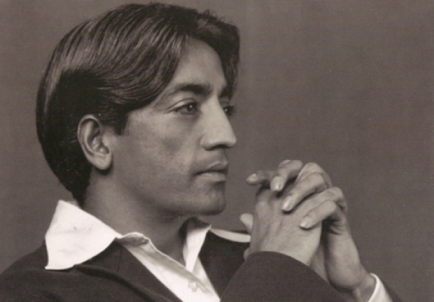
krishnamurti

The following is an excerpt from a talk of Jiddu Krishnamurti that took place in Hamburg, Germany on 5th September 1956. For those of you who are familiar with Krishnamurti’s teachings, you will know that he abhorred the idea of a set method for liberation. However, in his talks he often outlined something that could be called a method in the wider sense, so I have rather cheekily titled this post ‘Krishnamurti’s Method’ 🙂

“So a serious person must surely ask himself this question: is it possible to experience something…beyond the fabrications of the mind? And if it is possible, then what is one to do? How is one to set about it? Continue reading

Is reality impersonal?

Children playing

This is a question that often comes up, and many teachers often state that reality is impersonal. I myself have written a piece stating just this (complete with an impersonal looking image). However, like so many things we can write and say about reality, it is often correct in one way but false in another. As I’ve stated many times before, reality cannot be captured in words.

We could say that reality is impersonal or both personal and impersonal, or we could say that it is neither personal or impersonal. All these statements would be correct in the correct context.

But are these statements helpful? To say that reality is either personal or impersonal is ultimately besides the point. The essential point is to see things as they are, or rather to stop believing in all our concepts about reality – then reality shines, as it always has done. Who cares if it’s personal or impersonal?

Continue reading

Zen Teachings: The Four Kinds of Spiritual People

buddha silver

“There are four kinds of people who study.
The highest are those with practice, with understanding, and with realization.
Next are those with understanding, and with realization but without practice.
Next are those with practice and understanding but without realization.
Lowest are those with practice, but without understanding or realization.”

Zen Dawn, J. C. Cleary

Practice, understanding and realisation are all important, but we can deduce from the quote above that of these realisation is the most important. Next in importance is understanding, and least important is practice.

How can this be? How can understanding be more important than practice? Isn’t it often said that an drop of practice is worth an ocean of theory?
Continue reading

Fleetwood Mac: Women, they will come and they will go

fleetwood mac rumours

‘Women,they will come and they will go
When the rain washes you clean
you’ll know….you’ll know’
from Dreams by Fleetwood Mac

‘Women,they will come and they will go…’
Women will come and go,
Material goods will come and go,
Experiences will come and go,
Power and prestige will come and go,
Continue reading

Absorption in the Treasury of Light by Zen master Ejo

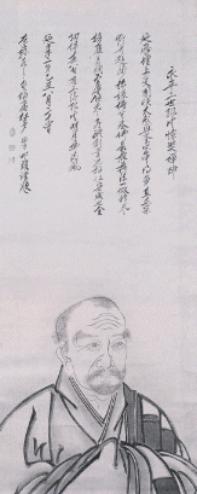
Ejo

So I’ve been reading ‘Absorption in the Treasury of Light’ by Ejo (1198-1290) and to put it simply, it has blown my mind. The way Ejo expresses both the so-called ‘path’ and ‘state’ of realisation is astounding. I love how he speaks from his direct experience but also draws from scripture. His interspersed scriptural excepts sometimes seem to contradict each other, but the way he juxtaposes them, and in the context of his writing…well the combination results in a potent pointer to the Ultimate. Continue reading