moksha
Nisargadatta Maharaj: the essence of his teachings in four simple quotes
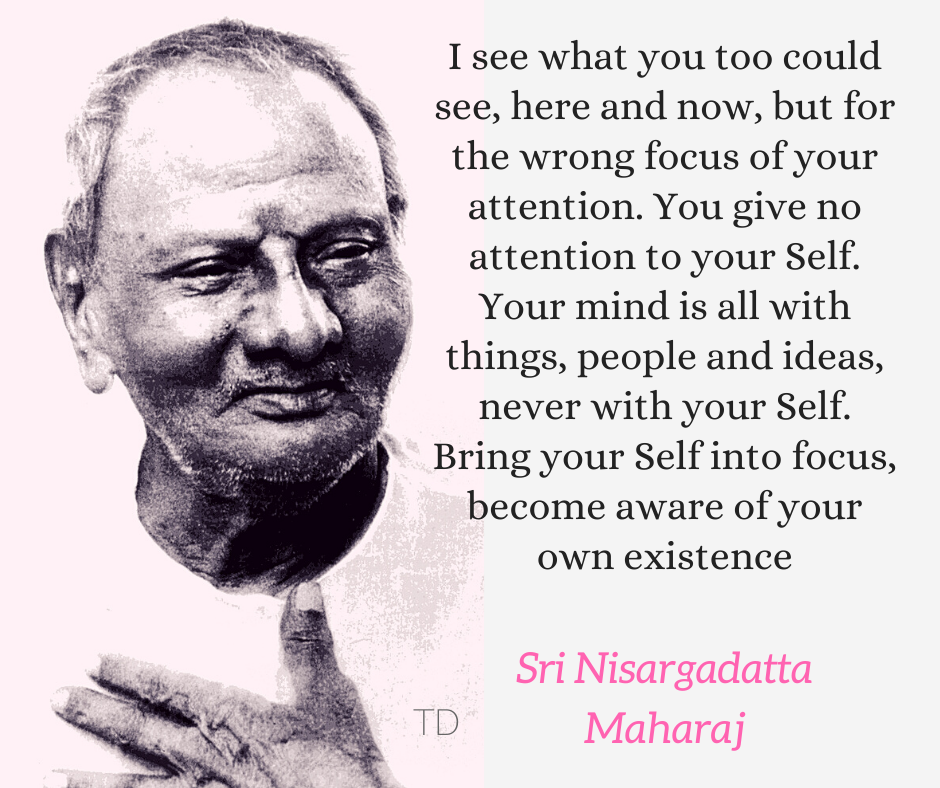
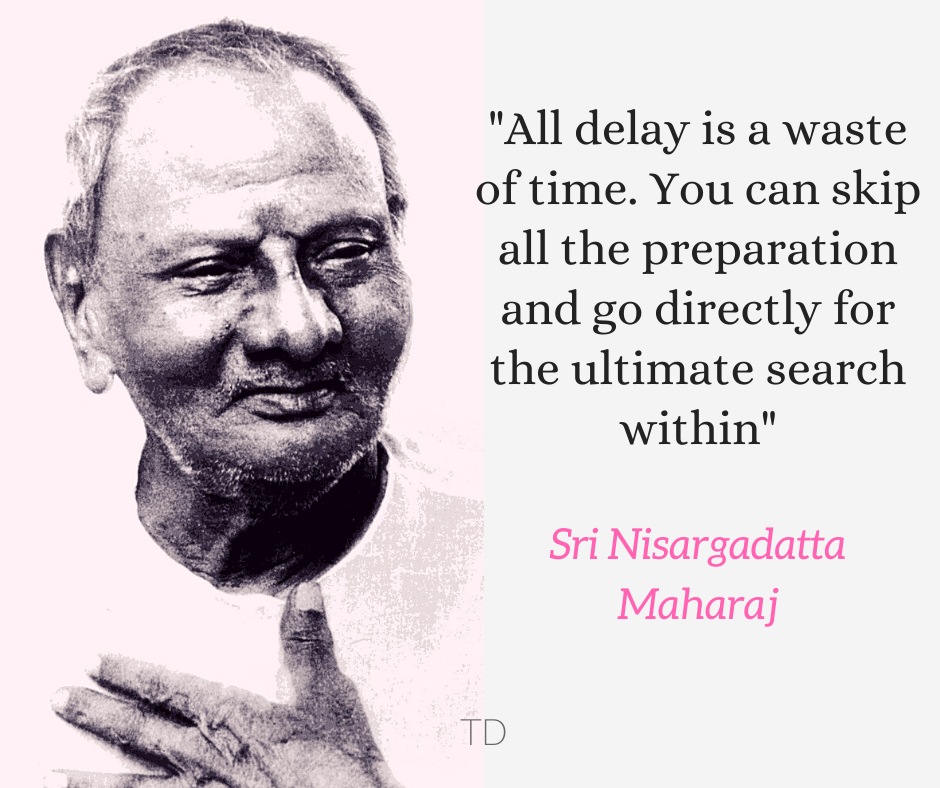
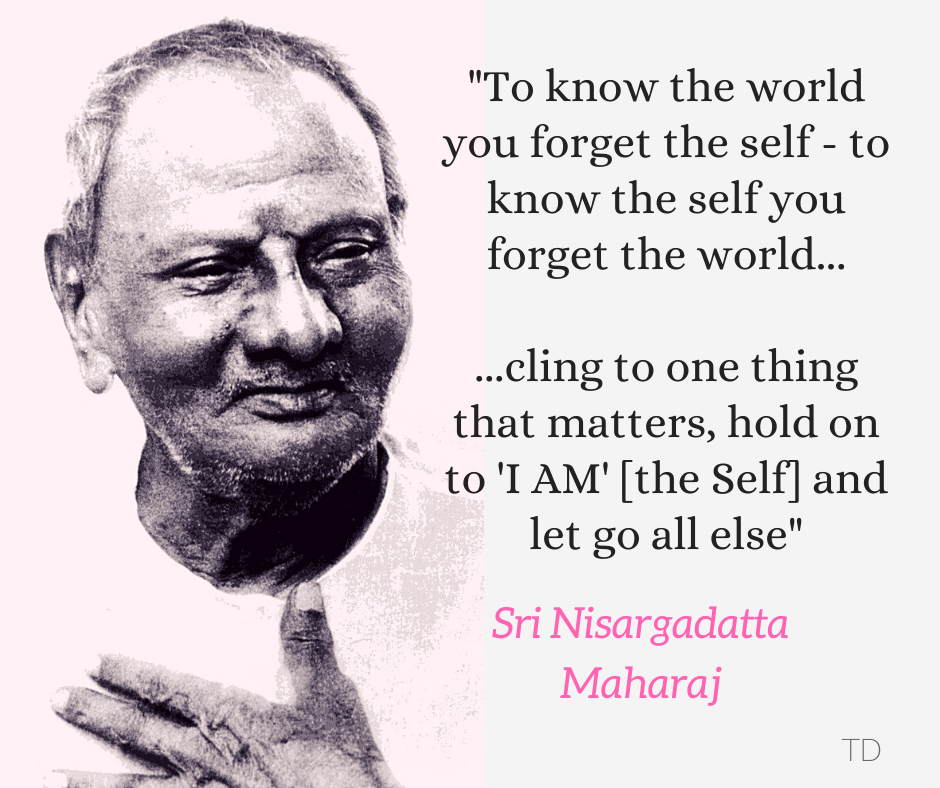
Here are four quotes of Sri Nisargadatta Maharaj that conveys the essence of his teachings. They are all taken from the book I Am That. Read them several times, contemplate what he is trying to convey, and put the teachings into practice.
Best wishes!
See Also:
Nisarga Yoga explained (Nisargadatta Maharaj’s teachings summarised)
How Nisargadatta Maharaj attained self-realisation
How to know God. How to see God
IN BRIEF: HOW TO ATTAIN LIBERATION (MOKSHA)

IN BRIEF: HOW TO ATTAIN LIBERATION (MOKSHA)

This is one of a series of introductory articles – please see the homepage of tomdas.com for more introductory articles. For more detailed explanations of the entire path to liberation please see this following link – I recommend you read and study the two texts found here and put them into practice: The Path of Sri Ramana
Alternatively you can explore one of more of these books: Recommended Reading: Books for Enlightenment, Liberation and Self-Realisation
Suffering: our predicament
Ever-obsessed with the transient*, we suffer. Ever-involved with that which changes*, the Self remains (seemingly) covered** and unrealised, and so we, taking ourselves to be a separate body-mind entity, remain in bondage and illusion and continue to suffer and feel confused.
Our True Nature
What you truly are has never suffered, has never undergone change, has never been confused and never been subject to birth, death, illusion or delusion. It is beyond both happiness/peace and suffering/sorrow. It is that pure consciousness ‘within’, it is That which you truly are.
How to Attain Liberation (Moksha)
Release yourself from this suffering and destroy ignorance in its totality by turning away from transient things and attending to your Self, that Pure Consciousness which is You. Turn your attention to That Which You Are and in doing this Be What You Are. Know the Knower, attend to the Seer, that is, Be Your Self and abide as such, until illusion/suffering/ignorance/doubt is no more.
Why This Practice is Necessary
For most, without this sadhana (spiritual practice), ignorance will continue to rise up again and again due to the strength of the habitual tendencies (vasanas) to identify as a separate body-mind entity, and so confusion and suffering will continue as will the seeking and various doubts.
See here for why other ways tend not to work.
In Summary
So Attend to what You Are, Be what You Are, Abide as the Self until ego/maya/ignorance/delusion is no more 🙏
Also see here: Self-Enquiry is not a ‘doing’, it is a ‘being’
🕉🕉🕉***
OBJECTIONS: Turn within? Really?
For objections that the mind throws our way, please see the following posts:
Q. Turn Within? Really? Isn’t this dualistic and doesn’t this just strengthen the ego?
Q. Isn’t it unhealthy and inhumane to turn away from the world? This kind of denial hasn’t worked for me. Integration is working.
Q. Why turn within? Nonduality as I have experienced it is the actual disappearance of what is considered within and without, one seamless blending
Q. Doesn’t the notion of ‘turning within’ to find yourself create an artificial duality? All is already one!
Q. Who or what does Self-Enquiry? Why still the mind? Isn’t this more mind?
Notes
*’the transient’ or ‘that which changes’ refers to the body, mind (thoughts, feelings, imaginings, experiences, conceptual knowledge) and the world, also known as Maya or illusion.
**for practice purposes of the teaching, in this context it is said that the Self is covered by Maya, as this is how it seems to the suffering seeker of truth and liberation. This aspect of the teaching has a practical orientation and places instruction on the path to liberation above mere conceptual/intellectual notions such as ‘the Self is never covered’, etc. These intellectual notions are are often used by the ego to avoid spiritual practice and liberation, which is the ending of egotism, and perpetuate ignorance-ego-suffering.
***the True Self is symbolised by the symbol ‘Om’, the Pure Consciousness within, that which is beyond name, form, description, conceptualisation, knowledge or experience. It is beyond both suffering and happiness/peace. It is also the meaning of the terms ‘true knowledge’ (Jnana) and ‘direct experience’ (Aparokshanubhuti), Bliss (Ananda) and Peace (Shanti), and Non-Duality (Advaita). It is what is signified in the Mandukya Upanishad as Turiya or AUM
Also see
This first link, The Path of Sri Ramana, contains detailed descriptions and explanations of the entire path in an easy to read way. I recommend you read, study and put into practice these two texts:
The entire path explained: the Path of Sri Ramana (Parts 1 and 2; PDF downloads)
Ramana Maharshi: how to abide as the Self
How to know God. How to see God.
Ramana Maharshi: Know the Knower
Ramana’s own writing: Who Am I? (Nan Yar?) by Sri Ramana Maharshi
Q. What in brief is the means to know one’s own real nature? What is the effort that can bring about the sublime inner vision?
Sri Ramana Maharshi: Strenuously withdrawing all thoughts from sense objects, one should remain fixed in steady, non-objective [ie. subjective] enquiry. This, in brief, is the means of knowing one’s own real nature; this effort alone bring about the sublime inner vision.
Sri Ramana Gita, Chapter 3, verses 4-6
If, on the contrary, you withdraw your mind completely from the world and turn it within and abide thus, that is, if you keep awake always to the Self, which is the substratum of all experience, you will find the world, of which alone you are now aware, just as unreal as the world in which you lived in your dream.
Ramana Maharshi, Maharshi’s Gospel
291. If one wants to be saved, one is given the following true and essential advice: just as the tortoise draws all its five limbs within its shell, so one should draw the five senses within and turn one’s mind Selfward. This alone is happiness.
Sri Ramana Maharshi, Guru Vachaka Kovai verse 291
Commentary from Sri Sadhu Om on the above verse:
This important advice, to withdraw the mind from the five senses and to turn it Selfward, is not given to one and all; it is given only for the benefit of those who wish to save themselves, and not for those who are still vainly hoping to save the world. Such people, who want to save the world, will find no taste for Self-attention, and thus they are not yet fit even to save themselves, let alone to save the world; unless one has first learnt to swim, it is vain and futile to jump into the water to save others.
The Upanishads and Vedanta
I have collated a whole series of quotes from the Upanishads, Shankara and Vedanta texts that give the same teaching here.
Some further very brief examples are given below:
The mind severed from all connection with sensual objects, and prevented from functioning out, awakes into the light of the heart, and finds the highest condition. The mind should be prevented from functioning, until it dissolves itself in the heart. This is Jnana, this is Dhyana, the rest is all mere concoction of untruth.
Advaita Vedanta: Gaudapada’s Method (Mandukya Upanishad Karika):
When the mind…remains unshakable and does not give rise to appearances, it verily becomes Brahman.
The controlled mind is verily the fearless Brahman.
When the mind, after realising the knowledge that Atman alone
is real, becomes free from imaginations and therefore does not
cognise anything, for want of objects to be cognised, it ceases
to be the mind.
Shankara: How to Meditate for Self-Realisation:
Dwelling on external objects will only increase evil propensities, so wisely recognising this fact, one should abandon external objects and and constantly attend to one’s true nature within, the Atman [the Self].
Yoga Vasishta Sara (The essence of the Yoga Vasishta)
Katha Upanishad:
When the five organs of perception become still, together with the mind, and the intellect ceases to be active: that is called the Supreme State [Brahman]
Svetavastara Upanishad:
Be absorbed, through samadhi, in the eternal Brahman.
Brihadaranyaka Upanishad:
The Self alone is to be meditated upon.
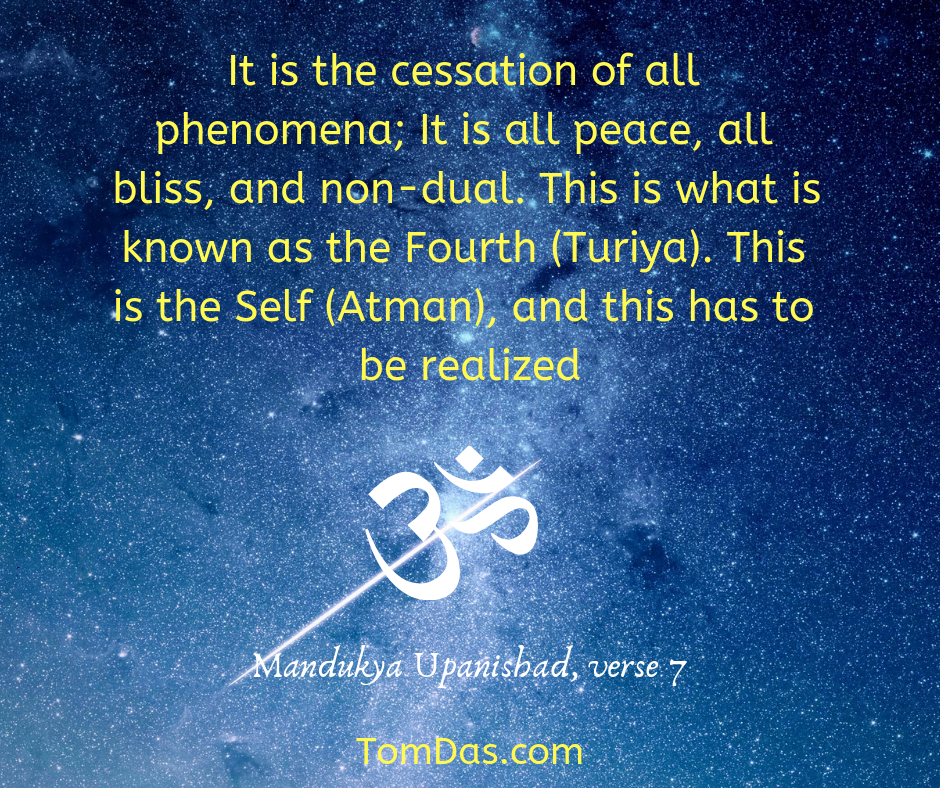
Mandukya Upanishad:

Ramana Maharshi: True Wisdom
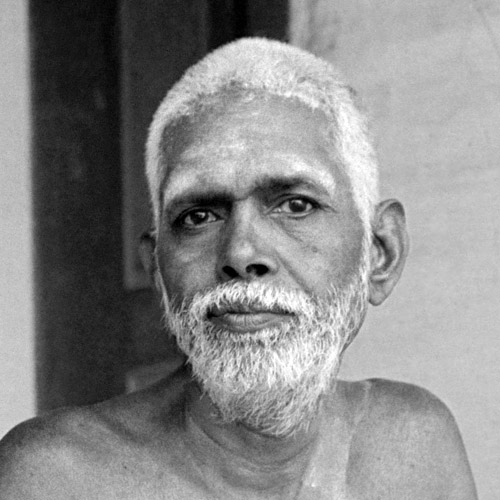
The following are sayings of Sri Ramana Maharshi, taken from the text Guru Vachaka Kovai which is widely accepted as the most precise, systematic and authoritative exposition of Sri Ramana Maharshi’s teachings:
Download Guru Vachaka Kovai as a PDF file here
536.
O worldly folk who long for and run after
An endless series of unenduring things
’Tis wisdom true to seek and know
That one thing, on knowing which
All other things will cease to be.
537.
For those who see with insight keen
The subtle Truth, what is there to gain
From knowledge of gross material things?
What the imperishable inner sense
Perceives surpasses far the sight
Seen by the corporeal eye.
538.
Knowing aright the nature of the Self
And abandoning the non-self as void,
Unreal, is wisdom true.
All other knowledge is ignorance,
And not wisdom.
Silence is the Teaching
Please subscribe for more videos like this and to support the channel.
A reminder that online Satsang is every Sunday at 3pm BST and every Thursday at 8pm BST (UK time). See here for details.
All you have to do for liberation
The Self is like a magnet
If you are seeking, you think you are doing this and that, but actually the Self is doing all. The Self is like a magnet. It’s magnetic force is always drawing you towards it. You are just being moved by the Self.
Please Like & Subscribe to the channel to show your support!
No single teaching is right for everyone
Each teaching has a utility, but no single teaching is right for everyone at any point in time. Sometimes the way is Bhakti (love and devotion), sometimes Silence, sometimes intellectual understanding, sometimes letting things be, sometimes none of these… sometimes the mere notions of a teacher, a teaching and someone to be taught is too much!
God/Life shows us ‘the way’ if we learn how to listen…
Hence the ‘true teacher’ is always with us 
False Gurus & Finding the True Teacher – Nisargadatta Maharaj
The following are quotes from Nisargadatta Maharaj, taken from the book ‘I Am That’. The subheadings are my own additions; I have also added bold type where I felt emphasis would be useful:

False gurus
Questioner: You were telling us that there are many self-styled Gurus, but a real Guru is very rare. There are many jnanis who imagine themselves realised, but all they have is book knowledge and a high opinion of themselves. Sometimes they impress, even fascinate, attract disciples and make them waste their time in useless practices. After some years, when the disciple takes stock of himself, he finds no change. When he complains to his teacher, he gets the usual rebuke that he did not try hard enough. The blame is on the lack of faith and love in the heart of the disciple, while in reality the blame is on the Guru, who had no business in accepting disciples and raising their hopes. How to protect oneself from such Gurus?
Maharaj: Why be so concerned with others? Whoever may be the Guru, if he is pure of heart and acts in good faith, he will do his disciples no harm. If there is no progress, the fault lies with the disciples, their laziness and lack of self-control.
On the other hand, if the disciple is earnest and applies himself intelligently and with zest to his sadhana, he is bound to meet a more qualified teacher, who will take him further.
Your question flows from three false assumptions: that one needs concern oneself with others; that one can evaluate another and that the progress of the disciple is the task and responsibility of his Guru. In reality, the Guru’s role is only to instruct and encourage; the disciple is totally responsible for himself.
On surrender to a guru
Q: We are told that total surrender to the Guru is enough, that the Guru will do the rest.
M: Of course, when there is total surrender, complete relinquishment of all concern with one’s past, presents and future, with one’s physical and spiritual security and standing, a new life dawns, full of love and beauty; then the Guru is not important, for the disciple has broken the shell of self-defence. Complete self-surrender by itself is liberation.
What if both guru and seeker are inadequate?
Q: When both the disciple and his teacher are inadequate, what will happen?
M: In the long run all will be well. After all, the real Self of both is not affected by the comedy they play for a time. They will sober up and ripen and shift to a higher level of relationship.
Q: Or, they may separate.
M: Yes, they may separate. After all, no relationship is forever. Duality is a temporary state.
Is meeting a guru a chance occurrence?
Q: Is it by accident that I met you and by another accident shall we separate never to meet again? Or is my meeting you a part of some cosmic pattern, a fragment in the great drama of our lives?
M: The real is meaningful and the meaningful relates to reality. If our relationship is meaningful to you and me, it cannot be accidental. The future affects the present as much, as the past.
How can I determine a True Guru?
Q: How can I make out who is a real saint and who is not?
M: You cannot, unless you have a clear insight into the heart of man. Appearances are deceptive. To see clearly, your mind must be pure and unattached. Unless you know yourself well, how can you know another? And when you know yourself – you are the other.
Leave others alone for some time and examine yourself. There are so many things you do not know about yourself – what are you, who are you, how did you come to be born, what are you doing now and why, where are you going, what is the meaning and purpose of your life, your death, your future? Have you a past, have you a future? How did you come to live in turmoil and sorrow, while your entire being strives for happiness and peace? These are weighty matters and have to be attended to first. You have no need, nor time for finding who is a jnani and who is not?
Tom: ie. knowing yourself is the chief aim, and this should be the focus of your attention, not concerning yourself about who is a real jnani/guru and who isn’t.
Q: I must select my guru rightly.
M: Be the right man and the right Guru will surely find you.
Q. Can you briefly define Jnana Yoga vs Bhakti Yoga and how they relate to Advaita and Vedanta?
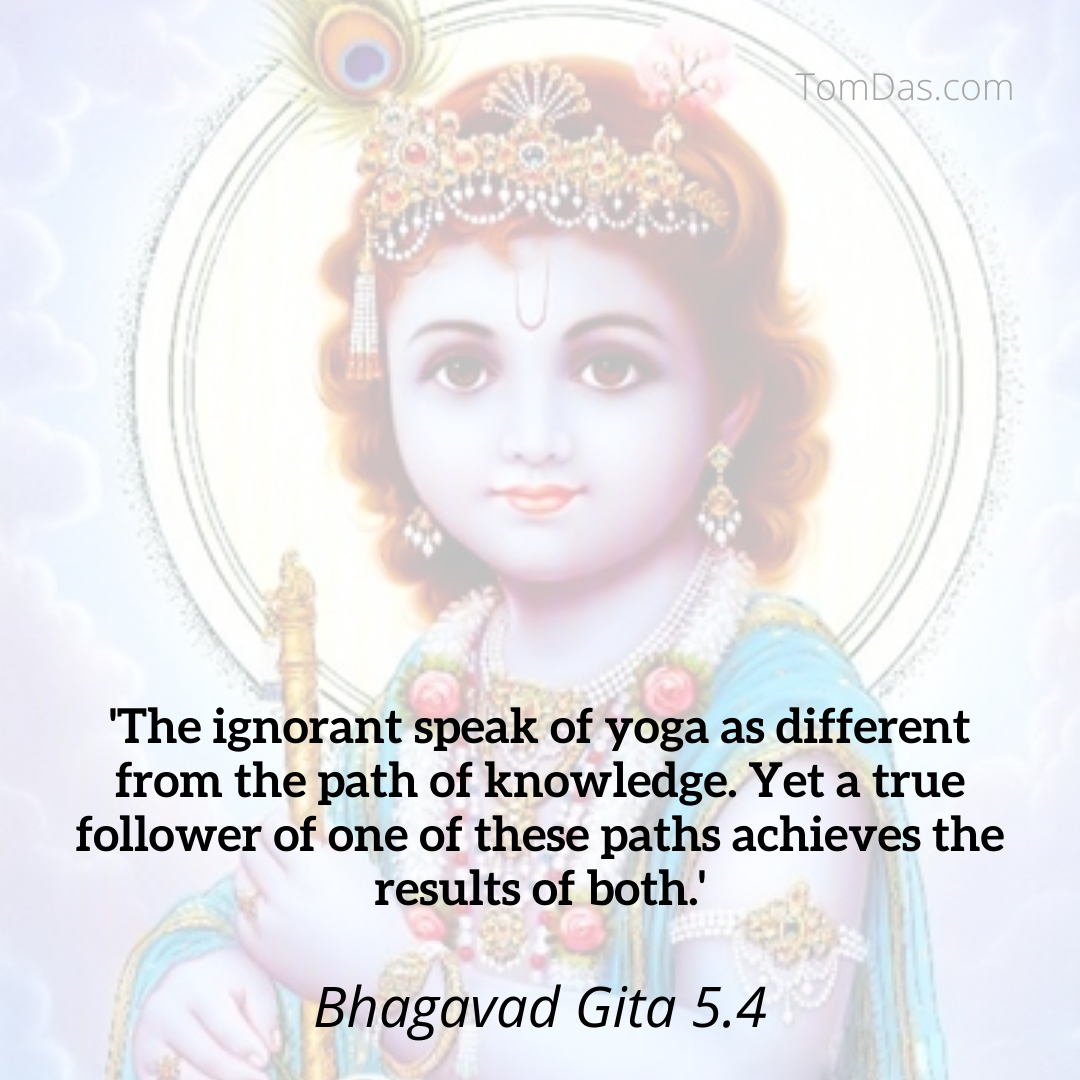
Q. Can you briefly define Jnana Yoga vs Bhakti Yoga and how they relate to Advaita and Vedanta?
Tom: Jnana yoga usually refers to the use of (intellectual) knowledge in the mind used to remove ignorance, a thorn to remove a thorn, and then the thorn of ‘knowledge’ is itself allowed to fall away; Bhakti yoga is faith, love and devotion from the heart to Self/Guru/God. These 2 yogas seem different at first, but then they quickly merge together to remove ignorance and end suffering, which is what the word ‘yoga’ means of course. Both of the above are part and parcel of Advaita Vedanta as per the Upanishads, Gita, etc.
Q. What about Advaita vs. Jnana?
Tom: Advaita Vedanta, as a traditional teaching is the general term used to refer to the teachings of the Upanishads, Bhagavad Gita, Brahma Sutras and a few other traditional texts. Jnana yoga refers to one part of the teachings of Advaita Vedanta. Other aspects of Advaita Vedanta include Bhakti Yoga, Raja Yoga and several other teachings found in the above aforementioned texts.
Advaita, literally means not-two. Jnana means knowledge. Jnana can either mean relative knowledge in the mind, which is the means of jnana yoga, or it can refer to the Absolute, which is not really knowledge per se as it is beyond ideas/conceptualisation, but the word Jnana is sometimes used nonetheless. This ‘absolute Jnana’ is synonymous with Advaita and points to that which is beyond both Advaita and Jnana, ie. God or True Self! It is also known as Parabhakti (divine love), Aparokshanubhuti (direct experience), Moksha (freedom) and various other terms, none of which fully capture what is spoken of!
 Tom Das