Just a reminder that I will be interviewed live today by Rick Archer from Buddha at the Gas Pump today at 11.30am US central time (5.30pm UK time, 4:30pm GMT).
If you want to watch it the interview will be streamed here:
Just a reminder that I will be interviewed live today by Rick Archer from Buddha at the Gas Pump today at 11.30am US central time (5.30pm UK time, 4:30pm GMT).
If you want to watch it the interview will be streamed here:
In spiritual matters, if the first step is in the wrong direction, the whole path follows in being wrong. The very suffering it aims to quench is perpetuated by this initial mistake. Once this tiny mistake is corrected, the path becomes straight and clear and Spirit pours through. What mistake is it that I am talking of? The mistake is to think of yourself as being a limited entity.
The mistake is to think of yourself as being a limited entity.
It is like travelling on a wagon with a stone lodged on one of the wheels: the ride is bumpy and uncomfortable. And the faster you drive, the more effort you put into it, the bumpier the ride – there are no points for effort here.
Effort alone is not enough. Effort has to be skilfully directed for it to be effective. We must attack the problem directly at its root. If you take the time to stop and examine the wagon, then remove the stone from the wheel, the journey becomes smooth. Furthermore, much less effort is required to drive once the root problem is solved. Similarly we must also stop and look at our very basic assumptions about life, challenge them, see how they are erroneous and cause needless suffering and ensure they do not operate in daily life.
Effort alone is not enough. Effort has to be skilfully directed for it to be effective.
And what are these assumptions? They are primarily about our identity, our idea of ‘self’ or ‘me’ or ‘I’, also known as the ego. As long as you assume you are a limited separate entity you will consider yourself to be vulnerable to injury and death, so suffering will continue. You will seek security and pleasure, and fear uncertainty and pain.
As long as you assume you are a limited separate entity you will consider yourself to be vulnerable to injury and death, so suffering will continue.
This in turn gives rise to the notion of doership – the notion that the individual is master and controller of their thoughts and actions. There are many other concepts that we hold, often unconsciously, but all are tied to this notion of a separate ‘I’ (the illusion of separation). If that is rooted out, then all the other branches that grow from it wither and die. If the ‘I’ is left intact, then new falsehoods grow back and suffering continues.
So instead of simply ploughing forwards on a spiritual path, first try to stop and look. Find out who you really are. In terms of spiritual understanding realise that this does not mean that you accumulate more knowledge of ‘who you are’. It means that you dispel falsehoods. Find out your concepts of what you are and critique them. When all false assumptions are seen to be mistaken, then they are naturally discarded and what remains is what you are: Ultimate Truth.
So instead of simply ploughing forwards on a spiritual path, first try to stop and look. Find out who you really are…When all false assumptions are seen to be mistaken, then they are naturally discarded and what remains is what you are
This cannot be described, and need not be described. Every description is misleading, including calling it ‘Ultimate Truth’. It can only be ‘lived’ or ‘experienced’. Self-knowledge is non-conceptual; for how can the Self, what you are, be encapsulated in words? It cannot!
All descriptions of Truth have value as they may be useful pointers on the way but they should be known to be ultimately false. Hold onto helpful teachings while they are useful, then throw them away! (They fall away naturally if you let them)
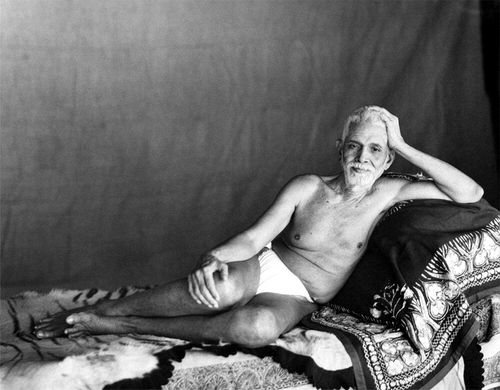
Talks with Sri Ramana Maharshi
Talk 174
Tom’s comments:
Time after time, again and again, Ramana says the only thing needed to do is remove the ego. Reality does not need to be realised, for it is already and always being realised.
Remove the ego, and reality shines by itself, as it always has done.
What is the ego? The ego is the notion of doership.
How to remove the ego? See that the sense of doership is an illusion. It doesn’t exist. There is no doer, there never was a doer, it was all imagined!
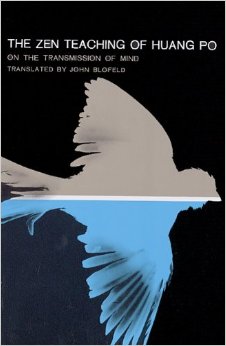
Regarding this Zen Doctrine of ours, since it was first transmitted, it has never been taught that men should seek for learning or form concepts. ‘Studying the Way’ is just a figure of speech. It is a method of arousing people’s interest in the early stages of their development
In fact, the Way is not something which can be studied. Study leads to the retention of concepts and so the Way is entirely misunderstood. Moreover, the Way is not something specially existing; it is something called Mahayana Mind – Mind which is not to be found inside, outside, or in the middle. Truly it is not located anywhere.
‘Studying the Way’ is just a figure of speech…In fact, the Way is not something which can be studied.
The first step is to refrain from knowledge-based concepts. This implies that if you were to follow the empirical method to the utmost limit, on reaching that limit you would still be unable to locate Mind.
The way is spiritual Truth and was originally without name or title. It was only because people ignorantly sought for it empirically that the Buddhas appeared and taught them to eradicate this method of approach.
The first step is to refrain from knowledge-based concepts.
Fearing that no one would understand, they selected the name ‘Way.’ You must not allow this name to lead you into a mental concept of a road. So it is said, ‘When the fish is caught we pay no more attention to the trap.’
When body and mind achieve spontaneity, the Way is reached and Mind is understood.
A shramana [seeker, monk] is so called because he has penetrated to the original source of all things. The fruit of attaining the shramana stage is gained by putting an end to all anxiety; it does not come from book-learning.
Taken from The Zen Teaching of Huang Po (Chun Chou record no. 29)
There is a light. A light that shines within. You can call it the light of consciousness. It is the light by which we can see, hear, smell, taste, touch and think. When we close our eyes and imagine something, it is also illumined by this inner light. When we imagine only darkness but are still thinking, this ‘light’ is that which ‘illumines’ our thoughts as well as the darkness. We know both light and dark because of it. It also illumines our dreams as well as our waking life.
Have you ever noticed this light, this inner light? Have you ever noticed how, peculiarly, it never changes? It is the one constant: your thoughts and opinions have no doubt changed over time; your body has grown and altered over years past; your emotions most probably fluctuate throughout the day. But the light by which you are conscious/aware of these remains the same.
Imagine yourself as a young child. Do you remember what it was like to be you back then? Try to picture a specific memory in your mind. Do you, like me, have a sense that you were basically the same person then as you are now? If so, what is it now that is the same as then? As I said, your thoughts,body and feelings have all changed over time, but something remains the same, unchanged. What is that unchanged essence? This is the inner presence-light that cannot be put into words but is always there.
That light can also be felt as a presence. Actually, it cannot be felt as anything, rather through it feeling occurs and presence is felt. For though it perceives, it cannot be perceived. For though it illumines, it cannot be illuminated/seen (just like how electricity which illumines a light bulb cannot be seen). But it is undeniably present (Please note that putting this into words makes something that is as simple as our own being seem overly complex. If you stick to your own direct experience, you will see how simple it all is).
From the point of view of your own direct experience of living, this illuminating-presence is the essence of what you are. No matter what happens to you, it is unscathed, unchanged, unharmed, unmodified.
‘Blades do not pierce it, fire does not burn it, waters do not wet it, and the wind does not parch it’
Bhagavad Gita 2.23
If you believe your thoughts and take yourself to be a limited body-mind entity, this aware-presence can be felt as something external looking down at you – it can be felt as God’s ever-present gaze lovingly embracing you.
‘For in him we live and move and have our being.’
Acts 17:28
If however you remain silent, as thoughts subside this sense of identification can fall away and you can see that this presence is actually the essence of what you already are. We can see that our true-nature is awareness-consciousness-spirit.
‘The eye with which I see God is the same eye with which God sees me.’
Meister Eckhart
Know that spirit or light within cannot be described or pinned down. It is everywhere, as light is everywhere, but it is no particular thing. Any object you can see/feel/perceive is not that spirit-light. It cannot be experienced, as it is that which allows experience to occur – it transcends experience. And while it is no particular thing and no particular experience, without it no things would be experienced. In this sense all things are dependent on it.
‘They can’t say, ‘Here it is!’ or ‘There it is!’ You see, the kingdom of God is within you.’
Luke 17:21
This is the divine essence that resides in each and every one of us. See, if you believe in God but do not have a feel for this inner spirit-light, then your god is simply a projection of your mind/thought. If however you feel this inner light, then what need have you for belief? Divine spirit is already here lighting up and animating your life. Instead learn to trust it, have faith in it – it is not a projection, but a sense of eternal unchanging presence that is always there patiently waiting, patiently supporting you. Pay attention to it throughout the day, allow it to seep into your being, engulf you and wash you clean.
‘Trust in the Lord with all your heart, and do not lean on your own understanding. In all your ways acknowledge him,and he will make straight your paths.’
Proverbs 3:5-6
Lean on Spirit, the innermost essence of you, and see what happens. Allow God to reveal herself to you. Like falling asleep, this is not something you can do, but something you have to allow to happen.
‘Abandon all varieties of religion and just surrender unto Me. I shall deliver you from all sinful reactions. Do not fear.’
Bhagavad Gita 18.66
Ultimately God is beyond all concepts and labels, even concepts of consciousness or inner light. All concepts of the ultimate dissolve in that Unnameable Reality.
In case anyone wants to hear me talking about this stuff…I’m going to be interviewed LIVE on Buddha at the Gas Pump.
It will take place and be livestreamed on Sat 23rd July 11.30am US central time (5.30pm UK time). Click below for how to watch the livestream ❤
Q: Up to now, you have refuted everything which has been said. You have done nothing to point out the true Dharma [the true teaching, the true way] to us.
Huang Po: In the true Dharma there is no confusion, but you produce confusion by such questions. What sort of ‘true Dharma’ can you go seeking for?
Q: Since the confusion arises from my questions, what – will Your Reverence’s answer be?
Huang Po: Observe things as they are and don’t pay attention to other people. There are some people just like mad dogs barking at everything that moves, even barking when the wind stirs among the grass and leaves.’
Taken from The Zen Teaching of Huang Po (Chun Chou record no. 28)
Tom’s comments:
The questioner appears frustrated at not being able to obtain anything tangible from Huang Po. ‘What is the true teaching? What is The Way?’, he asks.
The master replies: you yourself create the confusion, the questions being evidence of this. Is there even a ‘true Dharma’ to be sought?
The answer? Just be with what is, see things as they are, don’t worry about the words and ideas of others caught up in their own illusions and fears.


The following is Chapter 27 from Commentaries on Living: First Series by Jiddu Krishnamurti
It is obvious that radio music is a marvellous escape. Next door, they kept the thing going all day long and far into the night. The father went off to his office fairly early. The mother and daughter worked in the house or in the garden; and when they worked in the garden the radio blared louder. Apparently the son also enjoyed the music and the commercials, for when he was at home the radio went on just the same. By means of the radio one can listen endlessly to every kind of music, from the classical to the very latest; one can hear mystery plays, news, and all the things that are constantly being broadcast. There need be no conversation, no exchange of thought, for the radio does almost everything for you. The radio, they say, helps students to study; and there is more milk if at milking time the cows have music.
There need be no conversation, no exchange of thought, for the radio does almost everything for you.
The odd part about all this is that the radio seems to alter so little the course of life. It may make some things a little more convenient; we may have global news more quickly and hear murders described most vividly; but information is not going to make us intelligent. The thin layer of information about the horrors of atomic bombing, about international alliances, research into chlorophyll, and so on, does not seem to make any fundamental difference in our lives. We are as war-minded as ever, we hate some other group of people, we despise this political leader and support that, we are duped by organized religions, we are nationalistic, and our miseries continue; and we are intent on escapes, the more respectable and organized the better. To escape collectively is the highest form of security. In facing what is, we can do something about it; but to take flight from what is inevitably makes us stupid and dull, slaves to sensation and confusion.
…we may have global news more quickly and hear murders described most vividly; but information is not going to make us intelligent.
Does not music offer us, in a very subtle way, a happy release from what is? Good music takes us away from ourselves, from our daily sorrows, pettiness and anxieties, it makes us forget; or it gives us strength to face life, it inspires, invigorates and pacifies us. It becomes a necessity in either case, whether as a means of forgetting ourselves or as a source of inspiration. Dependence on beauty and avoidance of the ugly is an escape which becomes a torturing issue when our escape is cut off. When beauty becomes necessary to our well-being, then experiencing ceases and sensation begins. The moment of experiencing is totally different from the pursuit of sensation. In experiencing there is no awareness of the experiencer and his sensations. When experiencing comes to an end, then begin the sensations of the experiencer; and it is these sensations that the experiencer demands and pursues. When sensations become a necessity, then music, the river, the painting are only a means to further sensation. Sensations become all-dominant, and not experiencing. The longing to repeat an experience is the demand for sensation; and while sensations can be repeated, experiencing cannot.
The moment of experiencing is totally different from the pursuit of sensation.
It is the desire for sensation that makes us cling to music, possess beauty. Dependence on outward line and form only indicates the emptiness of our own being, which we fill with music, with art, with deliberate silence. It is because this unvarying emptiness is filled or covered over with sensations that there is the everlasting fear of what is, of what we are. Sensations have a beginning and an end, they can be repeated and expanded; but experiencing is not within the limits of time. What is essential is experiencing, which is denied in the pursuit of sensation. Sensations are limited, personal, they cause conflict and misery; but experiencing, which is wholly different from the repetition of an experience, is without continuity. Only in experiencing is there renewal, transformation.
Sensations have a beginning and an end, they can be repeated and expanded; but experiencing is not within the limits of time. What is essential is experiencing, which is denied in the pursuit of sensation.