spirituality
And the winner for the Best Spiritual Practice 2017 is…
And the winner for Best Spiritual Practice 2017 is….
I got news for you: there are many ways to THIS.
Some people may need a path, a practice or a teacher, others may not.
The way that worked/is working for you may not be the way for everyone.
At the end of it all, you are right where you began: ‘here’.
But with a difference: now you know.
For more quotes see here: tomdas.com/quotes
For more Facebook posts see here: www.facebook.com/tomdas.nd
Am I the body? Am I not the body?
This post is continued from a prior post: Integrating knowledge, spontaneous action
Q. I’ve been reading Ramana Maharshi recently and he keeps on saying ‘I’m not the body’.
Tom: Yes, that’s right.
Q: But I don’t really hear you talk about not being the body.
Tom: Yes, that’s because it’s a ‘thorn’. Remember the phrase I’ve mentioned: ‘Use a thorn to remove and thorn and throw them both away’?
Q: Yes, I’ve heard you say that. Please can you explain it again?
Tom: Sure. The first thorn represents a wrong concept that is active in your mind and causes suffering, just as a thorn in your foot causes suffering. You then take a second thorn and use it as a tool to remove the first thorn, but then you throw them both away. If you don’t throw away the second thorn, then you now have a new thorn (concept) that will cause you to suffer.
Ramana often talks about rooting out the ‘I-am-the-body’ concept, and the concept ‘I-am-not-the-body’ is just to negate the initial thorn. But then you throw it away too.
Q: So I am not the body is not true either?
Tom: Exactly. Or, lets put it like this: for a moment just forget what Ramana says, forget what I say – for all you know we could both be talking a load of rubbish! Afterall, lots of intelligent people believe strange and silly things, and we could be no different, right? So forget what we say.
So let me ask you a question: do you know for sure that you are a body?
Q: Well it often seems like I am a body…
Tom: But do you know for sure?
Q: No, not for sure.
Tom: Good. Now, do you know for sure that you are not the body?
Q: No, not for sure.
Tom: Good. That’s our basic experience. We don’t know either way. The body appears and follows us around, as it were, but we don’t know exactly what it means. Is the body me? Is it not me? The truth is I don’t know. That’s it. That’s the truth. We don’t know. Isn’t that right?
Q: But when I say to myself ‘I am not the body’, it feels so good, it just feels really nice.
Tom: Yes, of course, because you are negating the concept (I-am-the-body) that causes so much suffering. It’s a good thing to practice, it’s a great practice in fact. If it works for you I recommend you practice it.
Q: Oh, I see, so it’s a practice.
Tom: Exactly. We are not saying don’t practice. We may need the second thorn, that’s why it is there, that’s why it is taught. So use that thorn, use that tool, practice ‘I am not the body’. When it has done its work, when it has weeded out the ‘I am the body’ concept, then you won’t need it any more and you can throw it away too.
Q: OK, I got it now. Wow, there are so many thorns, aren’t there?
Tom: Yes!
Q: I often get confused about whether or not the world is a dream or illusion or not, but that’s just another thorn too, right?
Tom: Exactly. ‘The world is an illusion’ – it’s a very powerful thorn, one that benefited me a lot whilst I was seeking. But again, do you know for sure if the world is an illusion?
Q: No, not for sure…I know what you’re going to ask next…
Tom: …And do you know for sure that the world is not an illusion?
Q: No, not for sure . I knew you’d say that.
Tom: (laughing) That’s it! We don’t know either way! It’s so simple – Got it?
Q: (laughing) Got it.
Tom: so you can practice these, all these thorns. All these thorns are concepts. Use them – they are most definately useful – use them if you need them. The concepts are used to weed out the beliefs. You may need to practice them for weeks or months, but when their work is done, and the suffering has dissipated, throw them away.
❤
Also see Ranjit Maharaj talk about this.
Are you or are you not the body?
This follows on from my previous post.
It is an observable fact that our direct experience alone does not provide us with sufficient evidence to say whether or not objects in the world arise solely from consciousness (ie. philosophical idealism), or whether consciousness is a product of the material word (eg. the human brain) which in turn perceives an image of that material world (ie. philosophical realism).
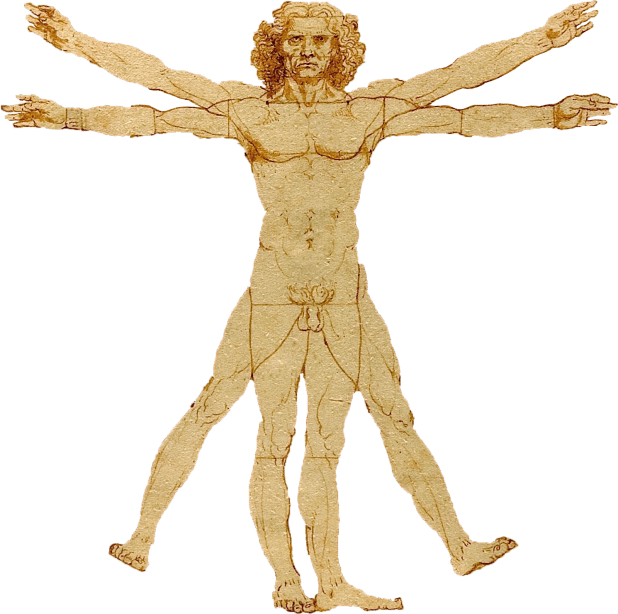
Not that these are the only two possibilities – there other theories that could also account for our present experience, and perhaps other explanations that our limited human minds are incapable of understanding – but for the purposes of this article we will not go into this.
The point is, from our direct experience alone, we do not know if what we call the body is solely an image that arises in our consciousness, or if that image is a representation of a real body somewhere outside our consciousness which in turn gives rise to consciousness.
To be continued here: Why does understanding the body matter?
The sense of being a doer vs. no doer
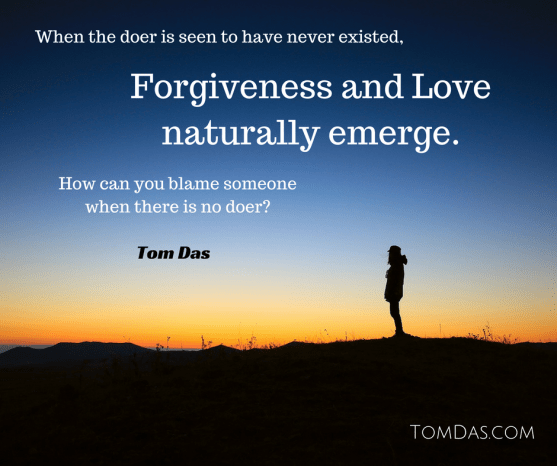
When the doer* is seen to be an illusion, an imagined fiction, the sense/feeling of being a doer may still continue. The sense/feeling of being a doer can arise like any other phenomena arises.
And notice – it arises spontaneously, meaning there is no doer there doing it. You see! It can be seen that even the sense of being a doer is something that has no doer behind it – it just happens, by itself.
So, in my daily life I often feel like I’m doing things, but there is an understanding there that there is no doer-entity doing it. It is all just happening.
This is the difference between experience and knowledge/understanding: I may feel like a doer, but I know/understand I am not a doer.
It is similar to realising the sun does not orbit a stationary earth, even though the appearance of the sun rising and setting each day continues. Or if you realise that a mirage is an illusion, the illusion persists even when not believed in. The sense of doership can continue even when the understanding ‘there is no evidence for a doer’ is present.
*By doer I mean the notion of being a separate entity which creates or authors thoughts and actions
Freedom is Absolute Total Forgiveness
(This question is continued from a prior post: Responsibility: if there is no doer and no-self…then what about responsibility?)
Question: OK, you mentioned total forgiveness? That’s confused me. Why do you say that?
Tom: Well everything is just unconditionally accepted, choicelessly. That’s just the way things are. Whatever happens is whatever happens, and in that sense it is totally accepted regardless of what the body-mind thinks of it.
You could say our naturally awareness accepts and ’embraces’ everything within that happens within our awareness. In that sense there is constantly total forgiveness, or total love, not the emotional love or forgiveness, though these phenomena tend to arise more frequently, but the choiceless acceptance/love/forgiveness of whatever is happening.
Poetry: Notice the tendency to cling

Notice the tendency to cling,
Notice the suffering that ensues,
Clinging…suffering…
Suffering…clinging…
Be sensitive to any psychological discomfort,
See how subtle this suffering can be!
The clinging is the suffering
The suffering is the clinging.
Then, perhaps, notice how the mind sets up another ideal:
The ideal of not clinging.
The goal of no clinging,
And therefore no suffering.
– how wonderful that would be!
(so the mind thinks)
The mind is caught in the same trap!
Learn to see this trap,
Learn to sense this trap,
Learn to feel what this trap feels like,
Learn its taste, its weight,
In all its guises,
Learn the tune it plays in your body and mind.
In Freedom all is allowed:
Clinging, no clinging,
It’s all allowed.
There is no trying to get rid of anything,
No striving for perfection,
But seeing life for what it is,
Naturally emerges.
There is nothing wrong with striving for change,
For trying to achieve an ideal.
Nor is there an issue with letting go,
With allowing things to be as they are.
Both these movements have their role,
Both clinging and lettings go are parts of life.
Freedom doesn’t care,
Freedom doesn’t mind,
And so things naturally balance out,
Or not
– either is ok.
❤
Spirituality: no beliefs required
Non-Duality & Spirituality Meetings with Tom Das

Just a reminder that I hold meetings weekly, both in London (UK) and online. The next meeting is today (Thursday 24th November 2016). Please see one of the links below for details:
http://www.tomdas.com/events
http://www.meetup.com/Non-duality-Kingston-London
Is everything really consciousness?

Lots of spiritual teachers and teachings seem to be saying all there is is consciousness. But is this really true? And even if it was true, would we be able to know this as being true?
From the point of view of experience
Firstly, from the point of view of our experience, yes, everything is consciousness. Whatever you look at, smell, see, touch, feel, think or imagine, etc, appears within your consciousness or awareness. And all these things appear as modulations of that consciousness, so in effect, our entire experience is nothing but consciousness.
Also we cannot directly know or experience anything or go anywhere that is not within our consciousness. If we did then we would, by definition, be conscious of it, and so our experience of it would be consciousness.
Everywhere we go, no matter what we experience, consciousness is, it is always present, effortlessly shining.
So, there we have it. Everything is consciousness. Right? Well…
From the point of view of reality
Just because everything you experience is consciousness, doesn’t mean that everything is consciousness. You see, in one way this is just a play on words. In the way we are using the words, experience and consciousness are synonyms. You cannot have experience without consciousness. If you are conscious you are experiencing. Think about it. Can you have one without the other? So of course, in terms of experience everything is consciousness. But it’s a bit like saying in terms of vision everything is seeing.
You don’t have to be a genius to realise there may be things going on that we are not conscious of, and perhaps we will never be conscious of. From what we know of the universe (via our consciousness!) we know it is vast and complex. Of course all this vastness could be just all happening within our consciousness only, but we don’t know that for sure. It is easily foreseeable that there may exist something beyond our consciousness, something we can never sense (be conscious of) or understand.
From the point of reality, we do not know if all there is is consciousness, and to say that everything is consciousness is going too far. We can only say everything is consciousness in terms of our own experience, but not in terms of reality. If you think that everything is consciousness (and by implication that nothing exists outside of consciouness), I would say that is a belief. Ask yourself, do you know that for sure? How can you know that for sure?
Why is this important?
Does this actually matter? If all we experience is consciousness, then does it matter? If there is something beyond consciousness but we are not aware of it, who cares, right? Well, to me at least, it does matter. If you are interested in what’s true it does matter. If you are a spiritual seeker trying to figure this all out and it doesn’t make any sense, then it does matter. If you are interested in seeing through all false beliefs and discovering a genuine freedom, then yes, it does matter. And if you are interested in science and reducing human suffering through technology based on scientific discoveries, then yes, it does matter.
False beliefs breed suffering as they inevitability conflict with what is true, and false beliefs impede genuine philosophical, ethical and scientific inquiry. Beliefs like this affect how we approach and respond to life and how we treat each other. It affects the philosophical basis upon which scientific progress is made, and so it can affect the technologies we develop and how we develop them. The overall result of clinging to false beliefs is to the detriment of us as individuals and our society at large.
Does that mean that not everything is consciousness?
So, back to consciousness. Does that mean that not everything is consciousness? No! Perhaps everything is consciousness! Perhaps it isn’t. The point is that we do not know. Everything may or may not be consciousness. We don’t know. It’s actually a scientific question and we currently don’t have the evidence either way. It may be impossible to know, as how would you know that there is nothing beyond consciousness?
The point is we should be honest, with ourselves and each other, and not cling to beliefs unnecessarily and unknowingly. Whilst beliefs can be used to make us feel better and give us strength during hard times, clinging to them and thinking they are definately true and that we are definately right causes more suffering in the long term, both for us and often for those around us.
Can the teaching ‘everything is consciousness’ be useful?
Ironically, yes. Even though ultimately we don’t know, the teaching that everything is consciousness can still be useful. How so? Well the teachings aim to undermine the belief in a separate self, or the notion of being an independent doer-entity, and in that regard this philosophical idealism of everything being consciousness can be useful. The idea is that the teaching is an antidote to a fixed belief. More on how that works here. The key is that once the job of the conceptual teaching is done, we don’t cling to this new concept which simply becomes a new problem and a new way of perpetuating the ego.
The consciousness teachings or awareness teachings, as I call them, can also point to a still-point in our experience that is always present, at least whilst we are awake. It is that which never changes and is always ever-present, un-touched and ever-aware. Recognising this aspect of our being can be very liberating and can give us the emotional security to open up to our thoughts and feelings, and allow our emotional-spiritual hearts to open, and can allow us to feel happier and whole.
What about Freedom?
So if we don’t know whether or not everything is consciousness, what do we do now? A part of Freedom, which is already here, is that everything is allowed. It’s ok to not know. That’s ok. There are lots of things we do not know, many things we will never know, and probably many things that are impossible for us to know. Freedom doesn’t mind. It’s just the way things are.
❤
 Tom Das