Zen Master Huang Po: how to remove our illusions

Q: Illusion can hide from us our own mind, but up to now you have not taught us how to get rid of illusion.
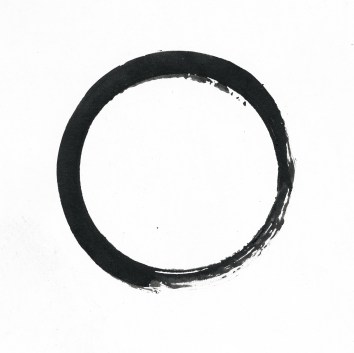
zen circle

A: The arising and the elimination of illusion are both illusory. Illusion is not something rooted in Reality; it exists because of your dualistic thinking.

If you will only cease to indulge in opposed concepts such as ‘ordinary’ and ‘Enlightened’, illusion will cease of itself. And then if you still want to destroy it wherever it may be, you will find that there is not a hairsbreadth left of anything on which to lay hold.

This is the meaning of: ‘I will let go with both hands, for then I shall certainly discover the Buddha in my mind’.

The arising and the elimination of illusion are both illusory…If you will only cease to indulge in opposed concepts such as “ordinary” and “Enlightened,” illusion will cease of itself.

Q: If there is nothing on which to lay hold, how is the Dharma [The Teaching, Enlightenment] to be transmitted?

A: It is a transmission of Mind with Mind [Tom – note that the Chinese word for ‘mind’ can also be translated as ‘heart’, so this could be ‘heart to heart’ transmission].
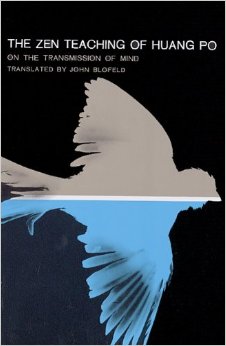
Huang Po Zen Teachings

Q: If Mind is used for transmission, why do you say that Mind too does not exist?

A: Obtaining no Dharma whatever is called Mind transmission. The understanding of this implies no Mind and no Dharma.

Q: If there is no Mind and no Dharma, what is meant by transmission?

A: You hear people speak of Mind transmission and then you talk of something to be received. So Bodhidharma [the first Zen patriarch, the ‘founder of zen’] said:

The nature of the Mind when understood,
No human speech can compass or disclose.
Enlightenment is naught to be attained,
And he that gains it does not say he knows.

If I were to make this clear to you, I doubt if you could stand up to it.

Taken from The Zen Teaching of Huang Po (Chun Chou record no. 32)
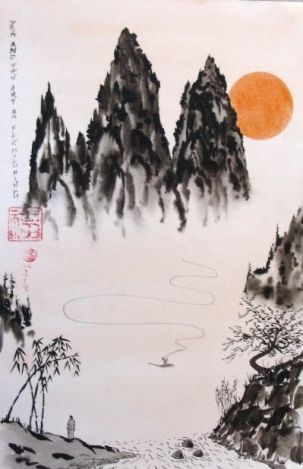
Zen Master Huang Po: stuffing yourself with knowledge

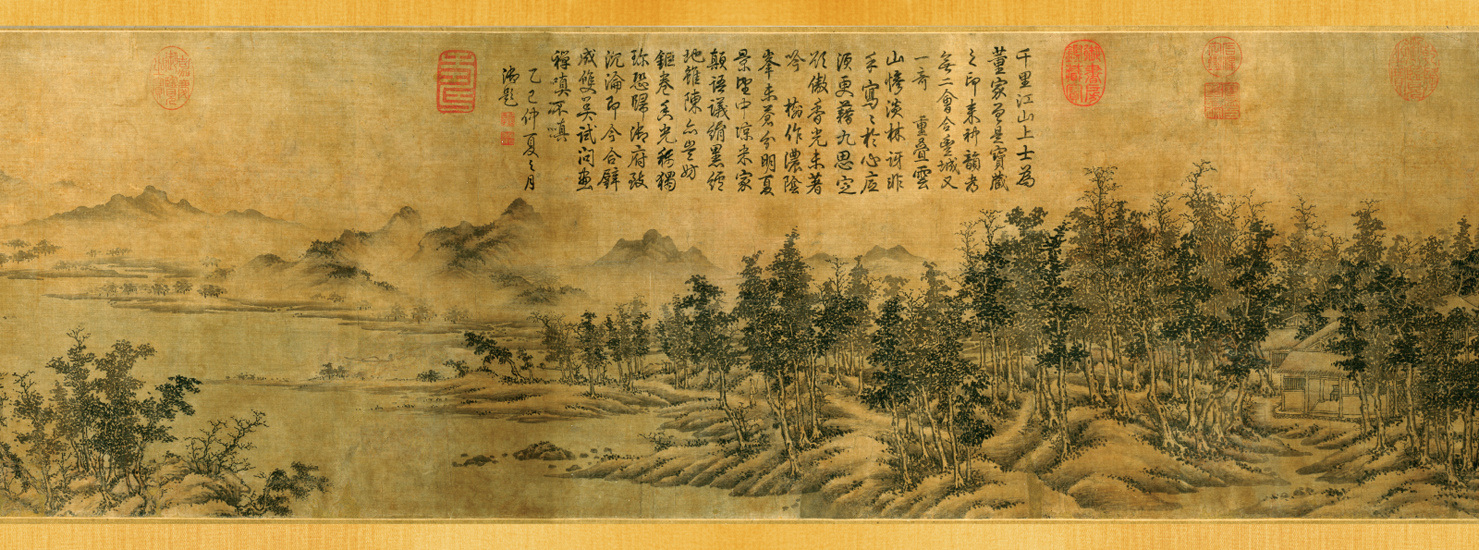
zen mountains

If you now set about using your minds to seek Mind, listening to the teaching of others, and hoping to reach the goal through mere learning, when will you ever succeed? Some of the ancients had sharp minds; they no sooner heard the Doctrine proclaimed than they hastened to discard all learning. So they were called, ‘Sages who, abandoning learning, have come to rest in spontaneity’.

In these days people only seek to stuff themselves with knowledge and deductions, seeking everywhere for book-knowledge and calling this ‘Dharma-practice’ [true practice of The Way]. They do not know that so much knowledge and deduction have just the contrary effect of piling up obstacles. Merely acquiring a lot of knowledge makes you like a child who gives himself indigestion by gobbling too many curds.

Merely acquiring a lot of knowledge makes you like a child who gives himself indigestion by gobbling too many curds.

Huang Po Zen Teachings

Those who study the Way according to the Three Vehicles [the 3 main Buddhist schools of Hinayana, Mahayana and Vajrayana Buddhism] are all like this. All you can call them is people who suffer from indigestion. When so-called knowledge and deductions are not digested, they become poisons, for they belong only to the plane of samsara [the plane of suffering, the unenlightened state]. In the Absolute, there is nothing at all of this kind.

So it is said: ‘In the armoury of my sovereign, there is no Sword of Thusness’. All the concepts you have formed in the past must be discarded and replaced by void…The canonical teachings of the Three Vehicles are just remedies for temporary needs. They were taught to meet such needs and so are of temporary value and differ one from another. If only this could be understood, there would be no more doubts about it.

Above all it is essential not to select some particular teaching suited to a certain occasion, and, being impressed by its forming part of the written canon, regard it as an immutable concept. Why so? Because in truth there is no unalterable Dharma [Teaching, Teaching method] which the Tathagata [The Buddha; a term the Buddha often referred to himself by] could have preached. People of our sect would never argue that there could be such a thing. We just know how to put all mental activity to rest and thus achieve tranquillity. We certainly do not begin by thinking things out and end up in perplexity.

Because in truth there is no unalterable Dharma…We certainly do not begin by thinking things out and end up in perplexity. 

Taken from The Zen Teaching of Huang Po (Chun Chou record no. 30)

Zen Master Huang Po: Studying the Way

Huang Po Zen Teachings

Regarding this Zen Doctrine of ours, since it was first transmitted, it has never been taught that men should seek for learning or form concepts. ‘Studying the Way’ is just a figure of speech. It is a method of arousing people’s interest in the early stages of their development

In fact, the Way is not something which can be studied. Study leads to the retention of concepts and so the Way is entirely misunderstood. Moreover, the Way is not something specially existing; it is something called Mahayana Mind – Mind which is not to be found inside, outside, or in the middle. Truly it is not located anywhere.

‘Studying the Way’ is just a figure of speech…In fact, the Way is not something which can be studied.

The first step is to refrain from knowledge-based concepts. This implies that if you were to follow the empirical method to the utmost limit, on reaching that limit you would still be unable to locate Mind.

The way is spiritual Truth and was originally without name or title. It was only because people ignorantly sought for it empirically that the Buddhas appeared and taught them to eradicate this method of approach.

The first step is to refrain from knowledge-based concepts.

Fearing that no one would understand, they selected the name ‘Way.’ You must not allow this name to lead you into a mental concept of a road. So it is said, ‘When the fish is caught we pay no more attention to the trap.’

When body and mind achieve spontaneity, the Way is reached and Mind is understood.

A shramana [seeker, monk] is so called because he has penetrated to the original source of all things. The fruit of attaining the shramana stage is gained by putting an end to all anxiety; it does not come from book-learning.

Taken from The Zen Teaching of Huang Po (Chun Chou record no. 29)

Zen Master Huang Po: the true teaching

Huang Po Zen Teachings.jpg

Q: Up to now, you have refuted everything which has been said. You have done nothing to point out the true Dharma [the true teaching, the true way] to us.

Huang Po: In the true Dharma there is no confusion, but you produce confusion by such questions. What sort of ‘true Dharma’ can you go seeking for?

Q: Since the confusion arises from my questions, what – will Your Reverence’s answer be?

Huang Po: Observe things as they are and don’t pay attention to other people. There are some people just like mad dogs barking at everything that moves, even barking when the wind stirs among the grass and leaves.’

Taken from The Zen Teaching of Huang Po (Chun Chou record no. 28)


Tom’s comments:

The questioner appears frustrated at not being able to obtain anything tangible from Huang Po. ‘What is the true teaching? What is The Way?’, he asks.

The master replies: you yourself create the confusion, the questions being evidence of this. Is there even a ‘true Dharma’ to be sought?

The answer? Just be with what is, see things as they are, don’t worry about the words and ideas of others caught up in their own illusions and fears.


Tao Te Ching: Before you learnt to smile

mountain river

…Other people are joyous,
as though they were at a spring festival.
I alone am unconcerned and expressionless,
like an infant before it has learned to smile.

Other people have more than they need;
I alone seem to possess nothing.
I am lost and drift about with no place to go.
I am like a fool, my mind is in chaos.

Ordinary people are bright;
I alone am dark.
Ordinary people are clever;
I alone am dull.
Ordinary people seem discriminating;
I alone am muddled and confused.

I drift on the waves on the ocean,
blown at the mercy of the wind.
Other people have their goals,
I alone am dull and uncouth.

I am different from ordinary people.
I nurse from the Great Mother’s breasts.

Tao Te Ching, verse 20

Tom’s comments:

This is one of my favourite verses of this wonderful text. I remember when I first read it as a university student in the 90s, I was particularly struck by the phrase ‘like an infant before it has learned to smile’. We can be free of needing to be happy, to smile, to conform, and we can simply be true to ourselves.

This world can seem so confusing. It can feel like everyone else seems to know what they want and where they are going. Of course, it’s such an illusion! How can anyone know what this is all about? If you think you know, you have surely missed the mark!

The Sage sees through all illusions, she sees through the faux-intelligence, goals and make-believe of people around her. The Sage knows he is but Nature expressing herself: he is dependent on her, as a child is on his mother’s breast milk, and he is also Her.

He sees the inherent unfathomable mystery at the heart of life and lovingly pities those who think ‘they understand’.

Tao Te Ching: How ridiculous!

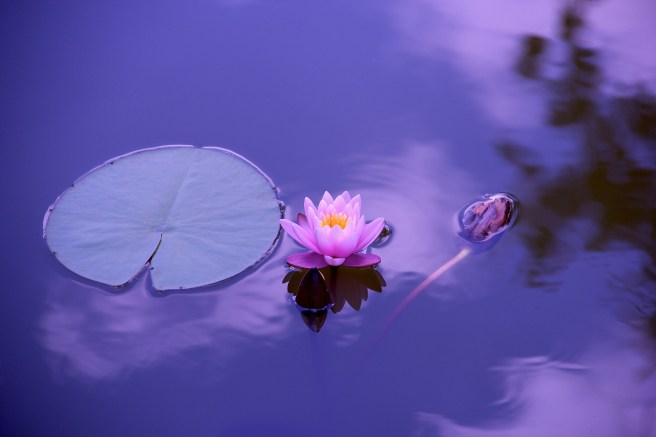
lotus leaf waterStop thinking, and end your problems.
What difference between yes and no?
What difference between success and failure?
Must you value what others value, avoid what others avoid?
How ridiculous!

Tao Te Ching, verse 20

Tom’s comments:

Free of thoughts, where are your problems?

We do not need to shun thought in its entirety, just not buy into the suffering it creates through comparison and moral judgement.

We can see through the values, ideals and standards that other people and society dictate to us. We can see through the received wisdom of the day.

We can let go and be real, discover who we truly are – we can discover what it is to be human for ourselves and not simply force ourselves to fit into an ideological mould, no matter how reasonable it sounds. We can be who we are.

And who are we? Are we separate from the world that gave birth to us? Are we separate from the environment that shaped and influences us? Are we wholly good or bad? 0r can good come from bad and vice versa? Can failure lead to success?

I put it to you: all things are interdependent, and no things exist by themselves.

Onwards, children of God, onwards! 🙂


Tao Te Ching: Mastery of the world

Tao te ching

This is one of my favourite verses from the Tao Te Ching, an ancient Chinese text overflowing with wisdom (If you have not read it, I highly recommend you do – it is easy to find a translation online).

Here in this verse we are instructed to let go, let go and let go again, until not even the notion of our very self remains. Here we have let go of all ideas of spiritual practice, of spiritual paths and of even letting go.

Then, perhaps, non-action will ‘happen’. This is the culmination of the so-called spiritual path: no-doer, nothing more remains to be done, nothing remaining undone – this is ‘mastery of the world’.

One who seeks knowledge,
learns something new everyday.
One who seeks the Tao,
unlearns something new everyday.

Less and less remains,
until you arrive at non-action.
When you arrive at non-action,
nothing will be left undone.*

Mastery of the world is achieved,
by letting things take their natural course.
You can not master the world,
by changing the natural way.

Tao Te Ching verse 48

*An alternative translation is:
When there is no doer,
nothing remains to be done’

Insight

Insight is not personal insight.

With personal insight, you have an insight,
You realise this or that,
You realise x, y or z.

All personal insight is based on concepts or thought,
– they are all subject to change,
– they are all subject to doubt.

With Insight it is the person that is seen through;
Insight is there without a person having an insight:
Everything is just Insight,
There is only Insight.

Like realising the lake is a mirage:
Your personal insights and doubts were just ripples on its surface;

Then the whole of spirituality is done for,
No need for any of it anymore,
What else is there to do?
What can be done when there is no doer?