The following excerpt is taken from the book “How to see yourself as you really are” by the Dalai Lama:
What makes all this trouble in the world? Our own counterproductive emotions. Once they are generated, they harm us both superficially and deeply. These afflictive emotions accomplish nothing but trouble from beginning to end. If we tried to counteract each and every one individually, we would find ourselves in an endless struggle. So what is the root cause of afflictive emotions that we can address more fruitfully? Continue reading →
It just so happens that in the so-called ‘West’ there has been a rapid development of science in the last few centuries. If we want to understand how things work, if we want to develop technologies and medicine, we turn to ‘Western’ science.
Also, it just so happens that when it comes to introspection and exploration of subjective inner states of consciousness, the so-called ‘East’ has had the historical monopoly. There have been a few thousand years of rigorous exploration of consciousness through meditative, contemplative, tantric and various other practices. This has allowed humans to discover and access mental states in which truths about our minds and subjective experience can be discovered and experienced first-hand without the need for belief. Continue reading →
There is no non-duality in non-duality. What do I mean by that? Non-duality is non-conceptual. This means there is also no sense of non-duality in it. If you think this is all about oneness, then that’s not non-duality. That’s a concept of oneness. Same with non-duality. If you think this is all about non-duality or ‘x’ ‘y’ or ‘z’ other concepts, then that’s also wrong. There are no concepts in non-duality, yet all concepts operate within it. Continue reading →
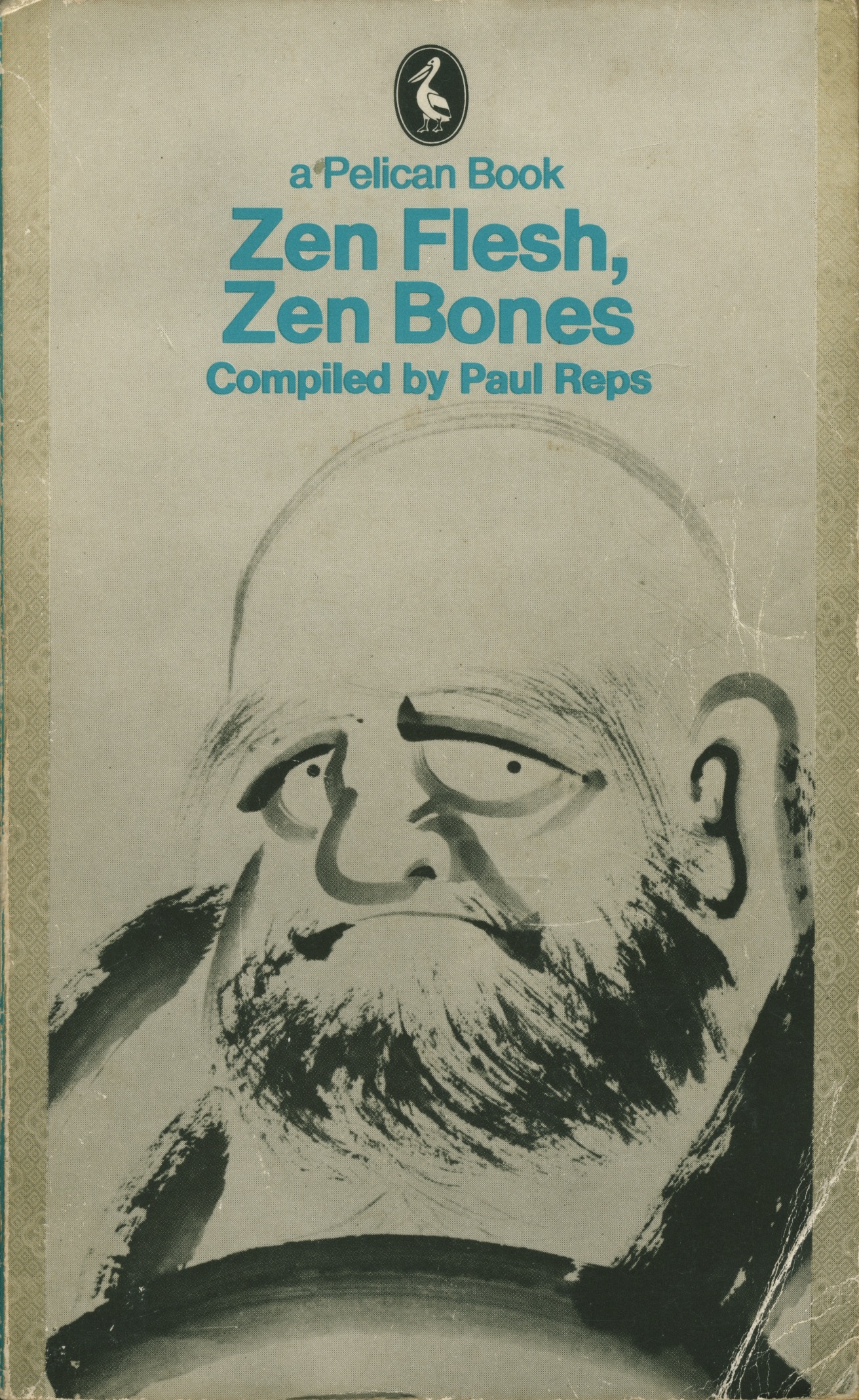
Another short story taken from the glorious little collection, Zen Flesh, Zen Bones:
The Thief Who Became a Disciple
One evening as Shichiri Kojun was reciting sutras (Buddhist scriptures) a thief with a sharp sword entered, demanding either his money or his life. Shichiri told him: ‘Do not disturb me. You an find the money in that drawer.’ Then he resumed his recitation.
A little while afterwards he stopped and called: ‘Don’t take it all. I need some to pay taxes with tomorrow.’
The intruder gathered up most of the money and started to leave. ‘Thank a person when you receive a gift,’ Shichiri added. The man thanked him and made off.
A few days afterwards the fellow was caught and confessed, among others, the offence against Shichiri. When Shichiri was called as a witness he said: ‘This man is no thief, at least as far as I am concerned. I gave him the money and he thanked me for it.’
After he had finished his prison term, the men went to Shichiri and became his disciple.
 There is no ‘you’




 Tom Das
