Author: Tom Das
Why did we turn away from the Self? Why does ignorance arise? Why is there maya or illusion at all? Why do we suffer if we are really the Self? Advaita Vedanta | Sri Ramana Maharshi
Why did ignorance arise? Why is there maya or illusion at all? Why do we suffer if we are really the Self? What does Advaita Vedanta say about this? What was Sri Ramana Maharshi’s view? What does Tom think about this? The Law of attraction will also be mentioned and we will also hear a story from the Buddha about this…
Sri Ramana Maharshi: the necessity of Meditation | Upasana | The Natural State | Sri Ramana Gita

The following verses are teachings of Sri Ramana Maharshi taken from Sri Ramana Gita, Chapter 1 ‘The Importance of Upasana’. Let us start at verse 12:
- The seeker of knowledge does not achieve his end merely by a study of the scriptures. Without upasana [meditation] there cannot be attainment for him; this is definite.
Tom: But what is this Upasana? The next verse explains:
- Experiencing the natural state, during spiritual practice, is called upasana and when that state becomes firm and permanent that itself is called jnana [knowledge].
Tom: But what is this Natural State? Again, the next verse explains
- When discarding sense-objects, one abides in one’s own true nature as a flame of jnana, this state of being is termed sahaja sthiti [the natural state].
Tom: so we can see here that the teaching is to discard sense-objects, and abide in one’s own nature. This is called Jnana or Sahaja Sthiti. Remaining in this state is the principle sadhana (spiritual practice) – this is Upasana (meditation) and this leads to liberation, not just mere study of the scriptures.
The nature of liberation | Manonasa by Michael Langford | Ramana Maharshi | PDF download
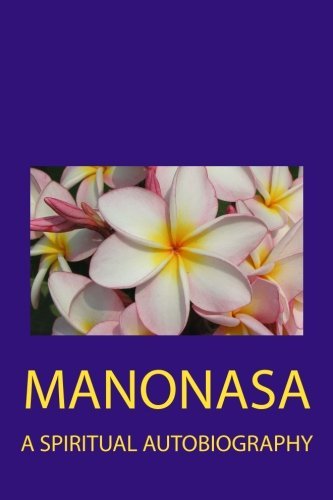
This is one of a series of introductory articles – please see the homepage of tomdas.com for more introductory articles.
In the following PDF file below, the nature of liberation or self-realisation is described, in detail, in a way I have not seen elsewhere.
A cautionary note is that the teachings in the PDF below are very radical, and agreement with these teachings is not required for liberation; ie. an in-depth intellectual understanding of liberation is not a pre-requisite for liberation, although it may be helpful for some. More important than understanding what liberation is, is understanding the path to liberation and following this path until the very end.
One of the books I highly recommend on my recommended reading list is ‘Manonasa’ by Michael Langford. There are many wonderful aspects about this book that give the genuine seeker of liberation many hints, tips and instructions that are not commonly found elsewhere, hence the potential value of this book. As with many of Michael Langford’s books, the style in which it is written will not suit everyone, but a genuine seeker will hopefully be able to look past any apparent or perceived stylistic deficiencies to find the treasure buried within.
So therefore I do recommend you buy and read this book for yourself.
There is a section of the book that describes Liberation or Manonasa in great detail in a way I have not found elsewhere – and this can be particularly valuable to some seekers – you can download the relevant section below as a PDF file:
In the PDF file the following is explained:
-The nature of Manoasa (Manonasa is a traditonal word for liberation, rather like Nirvana)
-An important barrier to Manonasa
-Quotes from various different sources and sages to show that this is the traditional teaching of various sages and not just Michael Langford’s personal views
-Explanations as to how this can actually be the case
Download Understanding Manonasa by Michael Langford
Namaste & Blessings
Tom
For more articles that further expand upon this same topic, please also see here:
How can the Jnani (sage) function with NO THOUGHTS? Sri Ramana Maharshi
Ramana Maharshi: how to abide as the Self, the world is not real, attend to yourself
Does the Sage (Jnani) see the world? Does the world appearance exist after liberation?
Multiplicity, plurality and polarity ARE duality | Non-duality | Sri Ramana Maharshi
Who can conceive of the state of the Jnani? Sri Sadhu Om | The true nature of the Jnani
What exactly is Jnana (knowledge) according to Shankara and Gaudapada and the vedanta scriptures?
Is the Self a witness? Or is it everything? Or both? How to realise the Self?
Ramana Maharshi: The world should be considered like a dream
You intuitively already know this in your heart | Self-Knowledge | Advaita Vedanta | Non-duality
This knowledge is already fully within you
All the Spiritual Knowledge you ever need is already within you (it actually is you). What is this Spiritual Knowledge? It is knowledge of what you truly are, namely Pure Ever-Blissful Ever-Full Eternal Formless Spirit.
You already fully know this
You already know this. You have always eternally known this. This knowledge has always been within you, intuitively, meaning non-verbally ie. NOT knowledge in the mind and NOT knowledge known by a person. It is innate inborn knowledge that cannot be lost, ever, and does not need to be gained ever.
If you look within, take the time to really feel, then perhaps you will intuit that you have always known that you are infinite, formless and divine, beyond time and space.
Intuitively you have always known that you are not merely flesh and bone, you are not this mere body and mind.
You do not need any new knowledge or understanding in the mind for this path.
So, what’s the problem?
Well, in truth there is no problem, and there never has been, and never will be (no problems are real, and time such as past and future are also not actually real)…and you already intuitively and deeply know that there is no problem…but…
…But so long as you believe the limiting ideas thrown out by the mind – and all the mind’s ideas are limiting – then you will consider yourself to be limited. You will consider yourself to have name and form, you will consider yourself to be flesh and blood, and to be subject to birth, disease, suffering and death. You will consider the world to be real and you will consider problems to be real.
In Truth you are Spirit Divine, Eternal, Lumonious, Blissfull, devoid of time, space, individuality, devoid of one iota of suffering, devoid of one iota of multiplicity or duality, ever whole, pure, pristine Beauty and Love.
This ‘knowledge’ is not in the mind – no body or mind is required for this ‘knowledge
As I said, you know this already – ‘in your heart’ – meaning intuitively this is known, ie. this is not known and can never be known with the mind or with concepts/thoughts, but it is always known in your Heart or Being.
Your True Nature always knows itself to be Divine, fully. This knowledge does not require and body or mind, both of which, together with the world, are non-existent and unreal.
In truth there is no you and me. There is only ONE, THAT. And ‘we’ are THAT ONE.
The only ‘issue’ (not that there really is any issue) is that we take on wrong concepts, believing ourselves to be a body-mind entity living in a world when actually these are all false and non-existent In Truth.
‘Ignorance’
All ‘we have to do’ to realise this is lose the wrong concepts, lose the wrong beliefs, which means to stop attending to them, to stop paying attention to the body + mind + world, especially our thoughts and concepts. All we have to do is have faith in our own innate unborn non-mental non-conceptual knowledge of what we are, and attend to and nurture that intuitive-faith-knowingness-self.
Then, as ignorance slips away, all will eventually be seen to be One and Yourself, Shining as Pure Consciousness, initially with Objects Present (Savikalpa, with forms or with objects) and then in its pure Divine Form devoid of objective phenomena (Nirvikalpa, without form or without objects).
‘Self-Knowledge’
This is Self-Knowledge devoid of a shred ignorance, this is what already IS, this is what you already are, this is what is already and eternally intuitively known ‘in the heart’, meaning never with the mind.
The Self always fully knows itself to be Divine and Full, without words, without a body and without a mind – ignorance never really ever was.
If anything is needed, all we have to do is to nurture and attend to this intuitive self-knowledge. It is the guru, it will teach us, it will reveal itself to us.
‘The Teaching’
Therefore the teaching is simply: KNOW THYSELF or BE THYSELF or ATTEND TO THYSELF or HAVE FAITH IN AND NURTURE YOUR OWN INNATE INTUITIVE KNOWING/KNOWLEDGE
Ignore body/mind/world and see/intuit only consciousness-beingness-love-bliss. Attend to your beingness-knowingness, which is Self-Knowledge. Nurture, stoke and tend to this intuitive knowing – it will grow and consume everything. This is what you truly are.
And of course, you know all of this already
Namaste
❤️🕉
“The teachings of Jesus have come alive for me through the teachings of Ramana Maharshi” | The Lord’s Prayer
Q. Why turn within? Nonduality as I have experienced it is the actual disappearance of what is considered within and without, one seamless blending


Also see: IN BRIEF: HOW TO ATTAIN LIBERATION (MOKSHA)
Q. Why turn within at all? Nonduality as I have experienced it is the actual disappearance of what is considered within and without. One seamless blending.
Tom: It’s fairly easy for many to realise there is no real within or without, ie. that what we consider inner, such as the mind and thoughts, are non-separate from the supposed outer world. It is all one movement. But it is usually the mind that realises this, in combination with some kind of a genuine seeing.
However these teachings I share here are to end suffering. Most people interested in non-duality do realise on some level the false dividing line between self and other (ie. inner and outer), but suffering still continues due to the habitual egoic tendencies (vasanas).
Basically, the false identity as the ego-mind entity remains intact at a deeper level, and…
View original post 144 more words
Surrender it all to Bhagavan! | Sri Ramana Maharshi | Self-Surrender | Who am I?
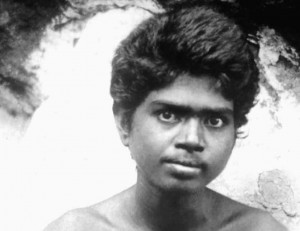
‘Firm and disciplined inherence in the Atman, without giving the least scope for the rise of any thought other than the deep contemplative thought of the Self, constitutes self-surrender to the Supreme Lord.
‘Let any amount of burden be laid on Him, He will bear it all. It is, in fact, the indefinable power of the Lord that ordains, sustains, and controls everything that happens.
‘Why then should we worry, tormented by vexatious thoughts, saying: ‘Shall we act this way? No, that way,’ instead of meekly but happily submitting to that Power?
‘Knowing that the train carries all the weight, why indeed should we, the passengers travelling in it, carry our small individual articles of luggage on our laps to our great discomfort, instead of putting them aside and sitting at perfect ease?’
~from ‘Who Am I?’ by Bhagavan Sri Ramana Maharshi
Sadguru – the true teacher within | Satguru
Knower, knowing and known are all ego | Self-Knowledge | Jnana
True Knowledge is Being devoid of knowledge as well as ignorance of objects. Knowledge of objects is not true knowledge.
~ Forty Verses on Reality, Verse 12, written by Sri Ramana Maharishi
—–
In Self-Knowledge, neither the knower, the knowing, or the known remain. If any of these three remain, that is ego, that is duality, that is suffering.
So how can this even be called ‘knowledge’? Know that the word ‘knowledge’ is just used to signify that thoughtless non-dual intuition of Reality that is Self.
It, the Self, is indescribable, so various words and phrases, all insufficient, are used, such as ‘knowledge’, ‘know thyself’, ‘be thyself’, etc, etc. None of these are quite right, but these words and phrases can convey something nonetheless, for you ‘know’ this already. You already fully know yourself, so these words can seemingly awaken you to that which you already know.
—–
To know the Self is just to, having severed the identity with body-mind-name-form-ego, it is just to BE the Self, that which you ARE.
—–
Self-knowledge is an inherent quality of the Self. Self and Self-Knowledge are one and the same. The Self always fully knows itself. You always fully know what you are. Not that the ego or mind knows – that is maya – but the Self, that which you are, always knows itself non-conceptually, without words, without any mediation by the body or mind.
—–
This can never be known by the mind-ego. That is why even brain-damage will not remove self-realisation – because self-realisation is not related to the body-mind! Realisation ‘takes’ one ‘beyond body-mind-world! If it didn’t, it would itself be temporary, and liberation is neither temporary nor is it affected by time!
—–
The Self is Self-Knowledge. But because there is no other that the Self, it cannot be said to be knowledge really, for there is no knower/knowing/known!
❤️🙏❤️
 Tom Das